
Personal Training

Be Your Own BFF

self-support health fitness

Everyone wants friends who will always be there for us. And we all hope to BE that kind of friend for others.

But can you do it for yourself?

Are you “there” for yourself like you are for others?

Even after you commit to healthy habits, sometimes things start to feel hard, and you might want to give up.

Instead, remember these steps to support yourself every day…

Commit to yourself — in writing – about consistently applying your best efforts toward a goal or new habit.

Stop insulting yourself. A little self-deprecating humor can be charming. But don’t undercut your talents or ambitions. Not to others, and not to yourself.

Forgive yourself. We all make mistakes, so learn what you can, try to not do it again – and move on. Isn’t that what you’d say to a friend? So why not say it to yourself?

Set boundaries with others. When we’re always trying to please people by accepting every request, we diminish our time and resources. Saying “no” isn’t selfish; it’s empowering.

Practice daily affirmations to celebrate little successes and keep your perspective in the face of challenges.

Finally, if all else fails, remember what flight attendants tell passengers at the start of every flight. If those air masks drop, get yours on right first before trying to help anybody else.

If you can’t support yourself, how can you be there for anyone else?

P.S. Having a good support system means that you are looked out for body, mind, and soul. You want to have a good relationship with the person or people helping you, but don’t be fooled that you are getting the program you need just because you are friends. Get into a program that focuses on the areas of your body other programs miss and a support system that cares for you and holds you to your goals. [Book a free consult] to learn more.

it’s not just working out, it’s building a foundation for a better life.

Find out more @

Facebook

LinkedIn

Pinterest

Instagram

Youtube

Bluesky

This concept can change your life

personal responsibility health

We’ve all heard about “passing the buck,” an expression that means a reluctance to accept responsibility. It’s often used to describe dysfunctional organizations, but it’s helpful when talking about our individual health, too.

I know people who take this as their daily approach to life. Nothing is ever their responsibility because they’re always trying to dodge blame.

😶“It’s not my fault I can’t lose the weight – it’s my genetics.”
🤐“My body is different and can’t move  that way.”
😬“It’s too  late for me, I’m old,  and my body is beaten up?”

Well, let’s forget about “blame” for just a moment, OK? It never creates anything helpful.

Let’s talk about “responsibility,” instead – particularly taking responsibility for ourselves. It’s necessary if we hope to begin prioritizing our efforts, acting in line with our values, and avoiding the same mistakes over and over again.

Practice these powerful, no-nonsense steps every day.

➡️ Resist blaming others. Instead, when delays or problems come up, think about your own actions and what you might do differently next time.
➡️ Stop complaining constantly. Look for the positive aspect of a situation and try to learn something from it.
➡️ Remember to stay present every day. Write in a journal, make gratitude lists, or meditate – whatever works to keep your blessings top of mind. It’ll keep you from regretting too much of the past and worrying about what’s to come.
➡️ Practice self-care. Try to eat right, exercise, get plenty of rest, and manage your stress.
➡️ Pursue clear goals. Write down your aims, along with steps to reach them. Throughout the day, look for opportunities to move the needle.
➡️ See “problems” as opportunities. Think creatively and positively when given a setback. What’s the best course of action that YOU can take now.
➡️ Accept that bad things happen. Difficulties occur. People let us down. This is just a part of life for literally everyone.
➡️ Look in the mirror. You are responsible for your own happiness. No one else is – not your boss or your partner or whoever it is that messed up traffic today. Just… YOU.

Play the role of CEO in your own life, and say it every day: “I’m responsible for everything in my life.”

P.S If you are an active person who has had to slow down or stop the activities you love,  then take responsibility for getting yourself back to functioning. Cycling through all the therapy and corrective exercises that haven’t given you sustained results is consciously setting yourself up to fail. You need to do something different. Use the link below to find out how holistic therapy, strengthening,  and stretching with funny-looking  exercises has helped hundreds of people just like you get out of pain and stiffness and back to the life they want to live. 

[Book a free consult]

it’s not just working out, it’s building a foundation for a better life.

Find out more @
Facebook

LinkedIn

Pinterest

Instagram

Youtube

Bluesky

Change Your Trajectory by 1%—The Slight Edge Principle

slight edge daily habits

If you truly understood the impact of changing your trajectory by just 1%, you’d never underestimate a small shift again. Imagine you’re flying an airplane, and the path veers off by only 1%. Over hundreds or thousands of miles, you end up on a different continent! Your destination changes completely.

In life especially your health, fitness, and happiness the same principle applies. Every single habit, thought, or small decision creates your trajectory. There are no neutral choices. Every choice puts you on the curve toward your goals and vibrant success, or away from them.

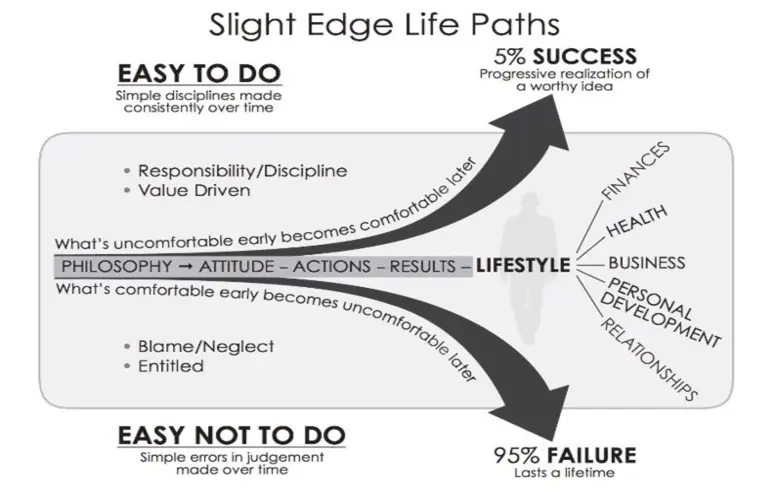
This is the core concept of “The Slight Edge” by Jeff Olson. The idea is simple: Small, easy-to-do actions compound over time into massive results. What’s comfortable early becomes uncomfortable later if you neglect it (easy NOT to do leads to 95% failure, lasting a lifetime), but when you choose small disciplines and values (easy TO do), you move onto the path of 5% success and progressive realization.

What does 1% change look like in real life?

It’s not overwhelming. It’s about adding just a touch—changing the curve by a hair, but letting it multiply through consistency.

  • 💤 Sleeping 1% longer each night (just a few minutes gives you more recovery and better energy)
  • 🥗 Adding 1% more vegetables to your diet (an extra bite or serving improves nutrient density)
  • 🤓 Devoting 1 extra minute to corrective exercise (supporting an area that needs help)
  • 📚 Reading 1% more—maybe a page or two—fueling your mind and attitude
  • 🧘 Spending 1 minute a day on meditation or gratitude lists for clearer mindset and less stress
  • 🏃 Going just 1% farther on your walk or workout to build strength, endurance, and confidence

As the image illustrates, what’s uncomfortable or unfamiliar now becomes easy and life-changing if you keep at it. Responsibility, discipline, and daily values create a success path across finances, health, business, personal development, and relationships. Neglect and “passing the buck” create a very different story.

The Slight Edge Life Paths

“What’s uncomfortable early becomes comfortable later. What’s comfortable early becomes uncomfortable later.”
Success comes from simple disciplines made consistently over time.

Once your 1% change feels natural, push another 1%. Then another. Small disciplines accumulate. Soon, you’re living a bigger, more vibrant, more inspired life without heroic effort.

The Magic Is in the Easy—But You Must Choose It

The things that move the needle are easy to do… and easy NOT to do. That’s the slight edge. You decide, every day, which version of yourself you’re becoming.

Question for you:
What’s the 1% change you’re ready to commit to today? It can be as tiny as a few more minutes of movement, a bit more positivity, one extra healthy choice. Name it, write it down, and let’s see how far it takes you.

If you’d like support designing your small daily shifts or want actionable coaching, check out [Free Consultation] to take the first step toward your new trajectory.

To Your Success,

it’s not just working out, it’s building a foundation for a better life.

Find out more @
Facebook

LinkedIn

Pinterest

Instagram

Youtube

Bluesky

Do Or Not Do, There is No Try

Take Action for Success: Lessons from Yoda

Did you know the phrase, “Do or do not. There is no try,” comes from Yoda in Star Wars? This single line is famous for a reason: it’s the foundation for meaningful change. If you want results—in health, fitness, or life—you must take action for success.

In today’s fast-paced, high-pressured world, life is always happening around us. So many things are beyond our control—all the people, institutions, and events swirling around us. But here’s what we can control: our own choices. What you do is up to you.

Why Action Defines Success

Success isn’t just about what happens to you or around you. It’s what you do about it yourself. It’s the daily decisions—the small moments—that build the foundation for long-term change.

When you take action for success, you stop waiting for the perfect conditions and start creating progress.

Everyday Examples of Action vs Excuses

et’s look at a few real-life scenarios:

  • The Weather Excuse: You’ve committed to running outside three times a week, but thunderstorms keep rolling through. Do you skip workouts—or do you adjust, head to the gym, and run on a treadmill?
  • Corrective Exercise Commitment: You have a program designed to help you get out of pain and move freely again. Do you make excuses because you “don’t feel like it”? Or do you carve out just 15 minutes to remind your body it deserves care and attention?

These small moments of choice define whether you succeed—or stay stuck. As Yoda said, there is no “try.” There is only doing.

Take Action for Success in Your Health

When it comes to health and fitness, mindset and action go hand-in-hand. Excuses pile up easily: busy schedules, family obligations, low motivation. But every time you take action for success—even a small step—you’re building resilience and progress.

This is the approach we use at SolCore Fitness & Therapy. We combine corrective exercise, fascia-focused training, and osteopathic-inspired therapy to help you create meaningful, lasting results.

Guided Action Makes Progress Easier

Sometimes, knowing what to do isn’t the hard part—the challenge is staying consistent. That’s where expert guidance makes all the difference.

Founder and manual therapist Ekemba Sooh has spent years helping people move past pain, stiffness, and limitation by focusing on what they can do. His philosophy: action + awareness = transformation.

When you pair the right mindset with the right training and therapy, success is no longer “someday.” It becomes your daily reality.

Are You Ready to Choose “Do”?

So—decide right now. When it comes to taking care of yourself, are you in or are you out?

If you’re an active person who’s dealing with pain, stiffness, or lack of mobility—but you’re motivated to make a change—then it’s time to take action.

👉 Book a free consultation and let’s map out where you are now, what you’ve tried in the past, and how you can finally move forward.

Because success doesn’t happen by accident. You create it every time you choose to take action for success.

Building a foundation for a better life.

Find out more @

Facebook

LinkedIn

Pinterest

Instagram

Youtube

Bluesky

Transformation is a Process, Not An Event

transformation is a process

I see so many people get frustrated with their healthy living plans. They try to eat right and exercise for a little while. But then they give up when they don’t quickly, magically become what they want to be—pain-free, mobile, stronger, etc.

So, let me tell you:
Transformation is not an event. It is a PROCESS.

And that process is comprised of countless decisions and choices you make over time. They build on each other, bringing small changes that manifest in the bigger results you’re seeking. 👊🏽

I’m reminded of the Rule of 10,000 Hours, which Malcolm Gladwell wrote about in “Outliers.” He found that genius-level achievement is only possible after putting in that much time. (And don’t worry you’re not trying to reach genius level here!)

For example, he wrote about the pre-fame Beatles moving from England to Germany, where bars stayed open all night and they could play in front of an audience into the wee hours all week. They learned to anticipate each other’s moves. They honed their harmonies and rhythms. They learned how to pace a show. 💯 All that time transformed them from being four talented boys into, well, the Beatles. 🎸

It didn’t happen magically after they practiced for a few weeks, right? And, what’s best, you don’t have to spend 10,000 hours dieting and exercising to reach your goals. Remember, the Beatles changed the world. You just want to change yourself.

You’ve got to wrap your brain and heart around this impactful idea: Success takes time, no matter the endeavor.

So develop your plans. Align your priorities. Do what you need to do to ensure that you’re exercising regularly, eating right, managing stress, and maintaining a positive outlook. You’ll learn the intricacies of your body and mind. You’ll discover more about your likes and dislikes. You’ll make progress along the way and learn to overcome disappointment.

The rest will come IN TIME.

P.S. If you are an active person being forced to slow down or stop the activities you love because you are in pain and stiff, then you have to do something different than you are now and have patience. It is really important to know where you might be different and get the EXACT exercises that work for you. You won’t find what you need on youtube, in magazines, or from your friend Ralph who has exercises that worked for him that he THINKS will work for you.

[Book a free consult] to schedule a free consultation and get help on what it is you need to get back to life and activities you love.

it’s not just working out, it’s building a foundation for a better life.

Find out more @
Facebook

LinkedIn

Pinterest

Instagram

Youtube

Bluesky

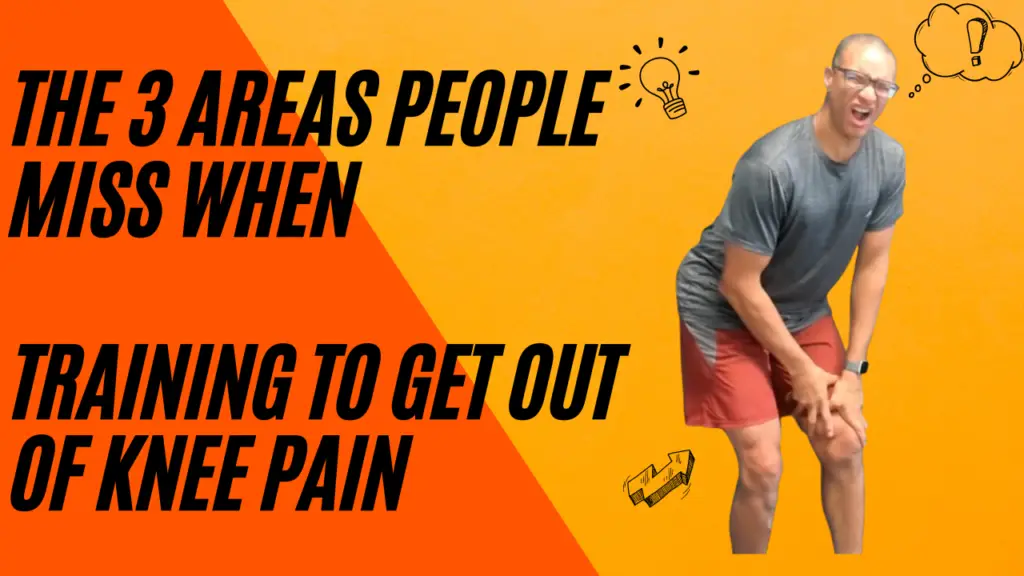
Knee Pain After Running? Don’t Forget These 3 Areas!

Knee pain after running

Is knee pain after running slowing you down—or keeping you from your favorite workouts altogether? Are you frustrated because you’re diligently doing the preventive and corrective exercises you think you “should,” yet the pain keeps returning?

You’re not alone, and you’re not wrong in your effort. You’re just likely missing three specific, essential areas every runner must address to stay truly pain-free your Patellofemoral Joint, Vastus Medialis Oblique (VMO), and Articular Genu.

Why Does Knee Pain After Running Happen?

Knee pain during or after running is incredibly common, and often strikes when you least expect it. Maybe you’re feeling great on one run then, out of nowhere, that familiar ache or sharp pain flares up. Most knee pain from running is due to overuse and improper distribution of force not necessarily a traumatic injury. Common causes include weak muscles, alignment issues, worn-down cartilage (patellofemoral syndrome/chondromalacia), or tight fascia and tendons.

The reality is: Running is a dynamic, full-body movement. Every stride sends tons (literally!) of force through your legs, up your hips and spine, and across your entire kinetic chain. If your muscles, ligaments, and critically your fascia and joint structures aren’t working optimally, that force gets lost or stuck at the knee, causing pain and, eventually, injury.

The Common Mistakes

Standard “solutions” typically target the symptoms instead of the source: ice, pain meds, generic foam rolling, or a few basic stretches. While these may help a little short-term, they don’t address the deeper mechanical misalignments or the most important stabilization muscles and connective tissues.

The 3 Areas Every Runner Needs to Address

1. Patellofemoral Joint
This is the joint between your kneecap (patella) and your femur. It’s responsible for smooth, efficient motion every time you bend or straighten your knee. When it gets “asleep” (i.e., isn’t actively engaged or well-lubricated), pain and tracking issues become inevitable. Training the Patellofemoral Joint through specific balance and mobility exercises “wakes it up,” helping it communicate with your brain and spinal cord so each stride aligns and functions correctly.

2. Vastus Medialis Oblique (VMO)
The VMO is a part of the quadriceps that attaches to the kneecap and is largely responsible for holding the patella in the right position as you move. Most traditional leg workouts and stretches miss the unique activation needed for the VMO. For running, this small, oblique section is critical—its proper firing pattern keeps your kneecap tracking smoothly and prevents it from drifting to the outside, which is a root cause of runner’s knee. Think: targeted, soccer-kick style resistance or functional movements—not just generic quad extensions.

3. Articular Genu
This lesser-known but vital structure sits deep in the thigh and attaches to the synovial membrane beneath the kneecap. Its role is to generate fluid movement under the kneecap (critical for nutrition, waste removal, and shock absorption). Standard knee routines will never touch the articular genu. Specific exercises are needed to activate this area—typically by fixing the kneecap and using isolated, precise tension to target only the articular genu fibers. When this muscle is strong and flexible, your knees recover and function properly after every run.

The Power of a Specific, Holistic Approach

Fixing knee pain after running isn’t about one stretch or trendy treatment. It’s about a targeted, holistic program that addresses not only the muscles and joints, but the connective tissue and the hidden stabilizers and fluid channels.
If you’re stuck in the pain–rest–relapse loop, or you’re always trying a mix of magazine or YouTube workouts, you’re missing the specific, lasting solution your body needs to thrive as a runner and stay active as you age.

Here’s Your Action Plan:

  1. Warm Up the Right Areas: Before you run, activate the ankles, knees, hips, and spine. Use dynamic movements and gently increase internal body temp and mobility.
  2. Stretch and Normalize Afterwards: After running, use myofascial and specific chain stretches to address shins, calves, hamstrings, deep hip rotators, glutes, and trunk—all crucial for knee function.
  3. Target the 3 Key Areas: Add corrective, focused exercises for your Patellofemoral Joint, VMO, and Articular Genu. If you’re not sure how, don’t guess—this is where specialized coaching makes all the difference.

Real Results Happen With the Right Focus

Remember, pain doesn’t disappear from generic advice or random routines. One client—a dedicated runner plagued for years by “patellofemoral syndrome”—saw her pain vanish completely within three months of following a true corrective routine. Best of all, her overall mobility and confidence soared, proving that targeted training builds more than just pain relief: it’s the foundation for lifelong activity and enjoyment.

You are only as strong and mobile as your weakest area. Instead of letting knee pain sideline your progress, address the real drivers. Your daily routine should empower you to not just manage but transform your running experience.

If you’re ready to stop cycling through ineffective fixes and finally address the root of your knee pain, the next step is simple:
[Book a free consult] to get access to individualized evaluation and a proven, practical path forward so you can return to running, exercise, and the activities you love with lasting comfort and strength.

it’s not just working out, it’s building a foundation for a better life.

Find out more @
Facebook

LinkedIn

Pinterest

Instagram

Youtube

Bluesky

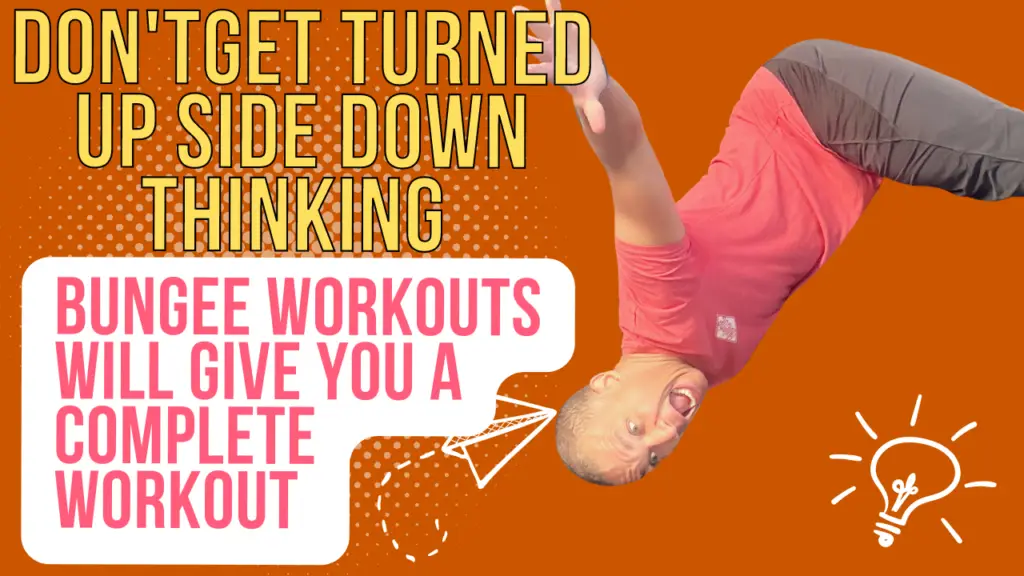
Bungee Workout?! Why Fad Fitness Hurts More Than It Helps

bungee workout risks

Click on the image to watch the video

The flashy world of bungee workouts seems to promise a shortcut to the body—and the life—you want. Maybe you’ve seen ads with people bouncing in harnesses, grinning from ear to ear. Sure, it looks exciting, novel, and fun. But before you sign up, let’s get real: as a 25+ year fitness and manual therapy pro, I can assure you this approach is more likely to set you back than move you forward.

[The Ultimate Guide For A Holistic Exercises And Fitness Program]

The Fad Fitness Problem

This industry is littered with quick-fix fitness fads and miracle solutions—bungee workouts are just the latest example. Fads catch our attention, make wild promises with clever marketing, and always seem to parade a handful of “success stories” and cherry-picked scientific stats. But here’s the catch: they’re built on half-truths, not the tested foundations that keep you healthy, strong, and mobile over a lifetime.

The issue with fads:

  • They’re not sustainable
  • They rarely deliver long-term results
  • They rely on hype instead of foundational science
  • Most dangerously, they can increase your risk of pain and injury

Bungee Workouts: Fun… But Safe or Smart?

While bungee cord workouts might have entertainment value for some, they introduce multiple risks and rarely develop the most important aspects of a functional, pain-free body. Wearing a bungee harness places significant, dynamic force through your body—fast shifts in direction, instability, and jerking motions that can trigger pain or worsen pre-existing imbalances.
The harness can place uncomfortable pressure on the abdomen and lower back, posing extra risks for people with back issues, cardiovascular conditions, or if you’re pregnant. Vertigo, joint and ligament strain, and loss of balance are all common complaints.

Because the harness “reduces” apparent weight, it can mask true deficiencies, letting you move through advanced planes of motion without ever developing the foundation your body needs. This leads to:

  • Compensation patterns going unnoticed
  • Weak links getting weaker
  • Forces accumulating in the wrong areas—like your knees, back, or neck
  • Increased chances of strain, sprains, or even falls

Bungee workouts can give you a false sense of accomplishment, but underneath, you haven’t strengthened the stabilizers or “deep system” that keeps your body aligned, resilient, and pain-free.

“Stimulating your body is good. Jumping around from trend to trend without respecting progression or foundational integrity is a recipe for injury.”

Build Your Foundation—the “Boring” Secret to Real Results

Think of your body like a pyramid—without a strong base, the top will never stand tall. Your foundation is built from:

  • Mobility and strength in deep muscles
  • Balanced myofascial chains and connective tissues
  • True neuromuscular connection—awareness, coordination, balance

If you’re missing any piece, your system breaks down with more activity or, worse, the more complicated or “fun” (read: advanced) the workout. It’s no different than stacking heavy loads on a wobbly table. Eventually, you’ll see dysfunction, pain, or injury.

“If your muscles and fascia aren’t aligned, if you don’t feel connected in your movement, every new challenge will magnify your weak link. Maybe that’s your back, your knees, your digestion, or just your motivation.”

How Do Fads Gain So Much Traction?

These programs are built to sell—slick marketing and “success” testimonials pull you in, get you emotionally excited, and make you think this is the missing link. But most people quickly realize: gimmicks may bring quick entertainment, but never sustainable, functional change.

Do What Works Even if It’s Not Flashy

If you truly want to build a body that moves well, is pain-free, and is up for life’s adventures, you need:

  • A scientific, systematic approach
  • A strong, mobile, and balanced musculoskeletal and fascial system
  • Movement progression rooted in your actual needs, not hype
  • Persistence, education, and a tailored plan for your unique body

It’s not always “sexy” or instant but the rewards are exponential. You get the skills to stay out of pain, keep up with your favorite activities, and become your own best trainer and therapist for life.

it’s not just working out, it’s building a foundation for a better life.

Find out more @
Facebook

LinkedIn

Pinterest

Instagram

Youtube

Bluesky

Working Out FOR a BETTER Life: It’s About the Foundation, Not Just Fitness

holistic health fitness program

It’s not just working out—it’s building a foundation for a better life. That’s not just a slogan. It’s the driving insight behind what a true health and fitness routine is supposed to achieve. When approached holistically, fitness is the gateway for transformation: physically, mentally, emotionally, and even spiritually.

My Journey to Holistic Fitness

I’ve felt this in my bones since I was young—even before I had the words. Sports, movement, and healthy eating gave me structure and focus growing up, and I soon realized the value of incorporating mindset, visualization, and positive belief alongside physical training. What began just as sports and healthy eating soon became routines in goal setting, journaling, and affirmations. These simple but powerful strategies enabled me to go beyond what teachers or diagnoses thought possible—and most importantly, to start believing in my own potential.

You’re More Than a Body. Fitness Should Reflect That.

As I grew and eventually became the owner of SolCore Fitness, I kept seeing the same problem: too many programs—especially in big-box gyms—treat exercise like a checklist. Do these reps, burn these calories, and move on. But a fitness foundation built only on the latest routine, without guidance or purpose, can’t address the depth of who you are or the layered challenges you face.

holistic fitness plan must consider:

  • Physical Health: Building strength, mobility, and injury resistance so you can move, play, and age well.
  • Mental Health: The right routine improves focus, battles distraction, calms a busy mind, and boosts creativity and resilience.
  • Emotional Wellbeing: True fitness reduces stress, increases confidence, and helps you bounce back from setbacks.
  • Social Connection & Purpose: Working out becomes a vehicle for belonging, accountability, and compassion—for yourself and others.
  • Spiritual Health: Movement connects you to what matters—whether it’s a sense of purpose, gratitude, or something greater than yourself.

True Holistic Fitness Builds on Strong, Integrated Foundations

Every phase of your life brings new challenges, losses, and opportunities. Sometimes you might feel invincible; other times, a single injury or setback can shake your identity to its core. I know this firsthand—after a significant injury, I had to rethink everything. Gone were the routines that used to work. In their place, I found osteopathy and the “structure dictates function” principle. I became obsessed with weaving together strength, nutrition, movement, mindset, and deeper learning.

When you combine physical, mental, and emotional progress, transformation happens:

  • You learn to appreciate what your body CAN do (not just what it looks like)
  • You wake up parts of yourself—muscle chains, mental habits, creativity—that had “fallen asleep”
  • You discover new reserves of resilience and motivation, even when you “fail” or meet resistance

Most importantly, you realize: Every challenge is an opportunity to know yourself more deeply, and every victory unlocks another level of growth.

It’s Not “Just” About Longevity—It’s About Quality and Purpose

We all want to live as long as possible, but what about living vibrantly and joyfully, every step of the way? A holistic fitness program is about creating that positive trajectory, so you can:

  • Stay active and pain-free through every decade
  • Play with kids, grandkids (or great-grandkids!)
  • Try new activities, travel, garden, or pursue passion projects
  • Feel mentally clear, socially connected, and emotionally grounded—even when times get tough

A complete, individualized fitness plan helps YOU decide what kind of life you want to live…and then gives you the tools (and the confidence) to achieve it.

[Book a free consult] if you’re ready to discover what a true holistic health and fitness plan can do—not just for your muscles, but for your entire life journey. Let’s build the foundation that keeps you strong, joyful, and inspired for decades to come.

it’s not just working out, it’s building a foundation for a better life.

Find out more @
Facebook

LinkedIn

Pinterest

Instagram

Youtube

Bluesky

Osteoporosis AND Bending Over: What’s Safe, What’s Not, and How to Move Better

osteoporosis bending over safety

If you’ve been diagnosed with osteoporosis, chances are you’ve heard some version of this warning: “Don’t bend over you might break your back!” But is it really that simple? What if you drop something, need to garden or vacuum, or want to play with your grandkids? Does having osteoporosis mean you’re forever doomed to a life of restricted movement or is there a more balanced, empowering approach?

[The Ultimate Guide For A Holistic Exercises And Fitness Program]

The Standard Warning and Why It Exists

Osteoporosis thins your bones and makes them more fragile, especially at the spine. Standard advice is to avoid:

  • Forward flexion (bending at the waist with a rounded back)
  • Twisting (especially while flexed)
  • Lifting heavy items with poor body mechanics

The reason is simple: These moves sharply increase compressive forces on your spine, particularly the front part of your vertebral bodies, and this is exactly where bone is most fragile with osteoporosis. In fact, statistics show the majority of osteoporosis-related spinal fractures happen with simple, daily movements—not from falls or accidents. Even something as simple as bending to tie your shoes or pick up a pet can trigger a vertebral fracture if your posture is poor and your bones are weak.

Why This Advice Isn’t the Whole Story

But real life isn’t lived in a bubble. You WILL need to bend, reach, and twist from time to time. And here’s the truth: No two people with osteoporosis are exactly alike. Your risk of fracture is determined by far more than just your diagnosis. It’s about your overall bone density (as measured by your T-score), your history of fractures (or lack thereof), your balance and strength levels, your soft tissue health, your nutrition, and even your hydration and stress levels.

Did you know…?

  • A T-score from −1 to −2.5 is considered osteopenia (lower than average bone mass but not yet true osteoporosis).
  • Osteoporosis is diagnosed at −2.5 or below, and deeper negatives signal greater risk.
  • If you have had a previous spinal fracture, your risk of another is much higher.

What About Everyday Life?

Imagine you have beginning osteoporosis or osteopenia. You still want to hike, garden, travel, and play with your grandkids. Should you be terrified to bend? No! But should you move with greater awareness and make smart modifications? Absolutely.

Let’s break down the top considerations:

  1. Your Bone Density and History
    If your osteoporosis is advanced (lower T-score and/or history of spinal fractures), you must be extra cautious—especially with high-risk, forceful, or repetitive bends. If you’re earlier in the process and otherwise active, movement is critical for maintaining bone and muscle!
  2. Your Current Fitness and Mobility
    How balanced and strong is your body right now? If you have good posture, strong legs and hips, and flexible fascia, you’re already more resilient. If you’re already a little frail, dehydrated, or consistently out of alignment, your risk is higher—and so your plan needs to start with foundations.
  3. Your Technique: Bending Smart
    The key for everyone—regardless of bone density—is learning and practicing safe movement patterns:
  4. Hip hinge, not spine curl: Bend at the hips and knees, sticking your chest out, so your back stays straight and the force is safely absorbed in your larger stabilizer muscles.
  5. Keep movement slow and controlled: No quick, abrupt bends. Avoid bouncing or twisting motions.
  6. Keep weight close to your body: Don’t reach, stretch, and twist while holding something heavy or awkward.
  7. The Power of Whole-Body Training
    Here’s what’s often missing from most online advice: Total body balance, hydration, fascia health, and postural training are all crucial. Balance helps prevent falls. Hydration and soft tissue health support bone health, nutrient delivery, and safe movement.
  8. Training for balance and stability protects you from both falls and spinal stress.
  9. Maintaining your four spinal curves and strengthening your deep core (abs, back, and trunk muscles) disperses forces more safely.
  10. Hydration supports disc “fluffiness” and joint health—reducing spinal compression and painful movements.
  11. You CAN Build (or Re-Build) Bone Strength Safely!
    Safe weight-bearing, resistance, and low-impact exercises (like walking, light resistance, Nordic walking, and gentle yoga—avoiding loaded flexion and twisting) stimulate new bone growth, help you maintain muscle, and boost confidence.
  12. Every Program Must Be Personal
    Your daily routine, goals (hiking, playing, gardening, or just remaining independent), nutrition, supplement needs, and even sleep and stress must be considered together—not just one-size-fits-all rules. If you’re deeper into osteoporosis, all activity should be customized, and for some people, only micro-movements and balance work are appropriate.

Practical “Yes/No” for Bending Over With Osteoporosis

  • Beginning osteopenia, active & balanced: Yes—with good technique, body awareness, and gradual progression.
  • Moderate osteoporosis, no previous fractures, working on fitness & nutrition: Cautious yes, with modifications and under expert supervision.
  • Advanced osteoporosis with previous fractures or other serious risk factors: Very limited—avoid flexion, get expert advice, focus on postural and functional strength, microstimulation, and sustainable movement patterns.

Never try to “push through” pain, round your back under load, or perform high-impact, jerky, or twisting exercises without guidance.

The Bottom Line

Bending over with osteoporosis is NOT an all-or-nothing rule. It’s a nuanced, highly individual decision, and it’s about good technique, foundational strength, and building your resilience over time. Most importantly, it’s about creating balance—throughout your day, your body, and your routine. With the right plan, support, and progression, you can stay strong, independent, and active for life.

it’s not just working out, it’s building a foundation for a better life.

Find out more @
Facebook

LinkedIn

Pinterest

Instagram

Youtube

Bluesky

How to Tell if It’s Low Back, SI Joint, or Hip Pain

back pain diagnosis

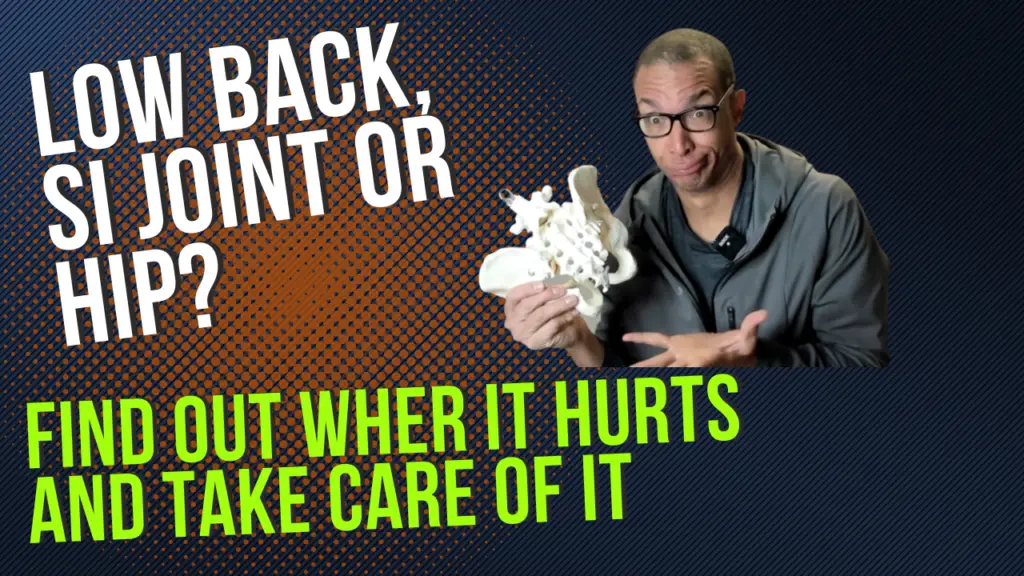
Click on the image to watch the full video

Ever feel a nagging ache, sharp jolt, or deep stiffness somewhere around your lower back, hip, or pelvis—but can’t tell exactly where it’s coming from? You’re not alone. These areas are interconnected and can easily “refer” pain to each other. Pinpointing the true source is key—since the wrong approach may not only fail to solve your pain, but actually make it worse.

Why Accurate Diagnosis Matters

Each area low back, SI joint, hip has its own causes, pain patterns, and best next steps. Back pain can show up from disc/herniation, strained ligaments, facet joints, or nerve compression, often signaled by pain with bending, twisting, or sitting. SI joint issues cause sharp or aching pain at the dimples above your buttocks, sometimes radiating to the hip or thigh, usually worse with transitions like standing, stairs, or getting up from a chair. Hip pain tends to show deep, achy, or sharp pain in the groin, outer hip, or buttock, and is aggravated by walking, weight bearing, or rotating the leg.

[OMT: Osteopathic Manual Therapy]

Where Does Your Pain Fit?

  • Low Back: Pain between lower ribs and pelvis, worse with bending/lifting, may radiate down into the buttocks or leg (sciatica).
  • SI Joint: Achy, stabbing pain at the upper buttock “dimples,” worse with sitting, stairs, standing from a chair, or rolling in bed.
  • Hip: Deep, aching or sharp pain in front of the groin, outer hip, or buttock, worse walking or rotating the leg, or standing up.

Because these tissues share nerves and muscle attachments, problems frequently overlap. SI joint instability can create tension and pain in both the low back and hip, and vice versa.

What to Do Next

  • Get Assessed Holistically: A great intake includes physical tests, history, movement screening, posture, past injuries, and lifestyle.
  • Prioritize Mobility and Balance: Include corrective exercises for the suspected culprit, but address every link in the chain—muscles, joints, connective tissue, and posture.
  • Integrate Injury Prevention: Pain in these regions can lead to compensation injuries, so proactive balance, core work, and muscle activation are essential.
  • Choose the Right Help: If your symptoms persist, get help from a pro who specializes in holistic, functional movement (not just isolated fixes).

Takeaway:

The right approach starts with locating your pain and understanding your personal pattern. With clear information and targeted training, you can restore efficient movement without setbacks or guesswork.

it’s not just working out, it’s building a foundation for a better life.

Find out more @

Facebook

LinkedIn

Pinterest

Instagram

Youtube

Bluesky