
Mind-body connection

This concept can change your life

personal responsibility health

We’ve all heard about “passing the buck,” an expression that means a reluctance to accept responsibility. It’s often used to describe dysfunctional organizations, but it’s helpful when talking about our individual health, too.

I know people who take this as their daily approach to life. Nothing is ever their responsibility because they’re always trying to dodge blame.

😶“It’s not my fault I can’t lose the weight – it’s my genetics.”
🤐“My body is different and can’t move  that way.”
😬“It’s too  late for me, I’m old,  and my body is beaten up?”

Well, let’s forget about “blame” for just a moment, OK? It never creates anything helpful.

Let’s talk about “responsibility,” instead – particularly taking responsibility for ourselves. It’s necessary if we hope to begin prioritizing our efforts, acting in line with our values, and avoiding the same mistakes over and over again.

Practice these powerful, no-nonsense steps every day.

➡️ Resist blaming others. Instead, when delays or problems come up, think about your own actions and what you might do differently next time.
➡️ Stop complaining constantly. Look for the positive aspect of a situation and try to learn something from it.
➡️ Remember to stay present every day. Write in a journal, make gratitude lists, or meditate – whatever works to keep your blessings top of mind. It’ll keep you from regretting too much of the past and worrying about what’s to come.
➡️ Practice self-care. Try to eat right, exercise, get plenty of rest, and manage your stress.
➡️ Pursue clear goals. Write down your aims, along with steps to reach them. Throughout the day, look for opportunities to move the needle.
➡️ See “problems” as opportunities. Think creatively and positively when given a setback. What’s the best course of action that YOU can take now.
➡️ Accept that bad things happen. Difficulties occur. People let us down. This is just a part of life for literally everyone.
➡️ Look in the mirror. You are responsible for your own happiness. No one else is – not your boss or your partner or whoever it is that messed up traffic today. Just… YOU.

Play the role of CEO in your own life, and say it every day: “I’m responsible for everything in my life.”

P.S If you are an active person who has had to slow down or stop the activities you love,  then take responsibility for getting yourself back to functioning. Cycling through all the therapy and corrective exercises that haven’t given you sustained results is consciously setting yourself up to fail. You need to do something different. Use the link below to find out how holistic therapy, strengthening,  and stretching with funny-looking  exercises has helped hundreds of people just like you get out of pain and stiffness and back to the life they want to live. 

[Book a free consult]

it’s not just working out, it’s building a foundation for a better life.

Find out more @

Facebook

LinkedIn

Pinterest

Instagram

Youtube

Bluesky

Change Your Trajectory by 1%—The Slight Edge Principle

slight edge daily habits

If you truly understood the impact of changing your trajectory by just 1%, you’d never underestimate a small shift again. Imagine you’re flying an airplane, and the path veers off by only 1%. Over hundreds or thousands of miles, you end up on a different continent! Your destination changes completely.

In life especially your health, fitness, and happiness the same principle applies. Every single habit, thought, or small decision creates your trajectory. There are no neutral choices. Every choice puts you on the curve toward your goals and vibrant success, or away from them.

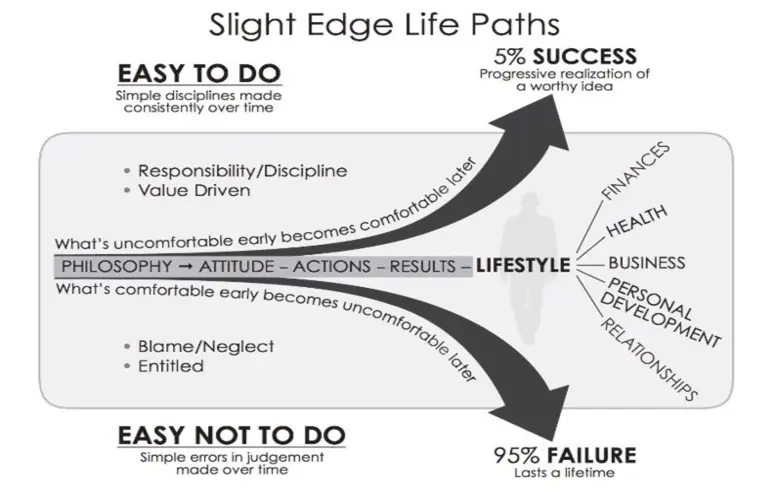
This is the core concept of “The Slight Edge” by Jeff Olson. The idea is simple: Small, easy-to-do actions compound over time into massive results. What’s comfortable early becomes uncomfortable later if you neglect it (easy NOT to do leads to 95% failure, lasting a lifetime), but when you choose small disciplines and values (easy TO do), you move onto the path of 5% success and progressive realization.

What does 1% change look like in real life?

It’s not overwhelming. It’s about adding just a touch—changing the curve by a hair, but letting it multiply through consistency.

  • 💤 Sleeping 1% longer each night (just a few minutes gives you more recovery and better energy)
  • 🥗 Adding 1% more vegetables to your diet (an extra bite or serving improves nutrient density)
  • 🤓 Devoting 1 extra minute to corrective exercise (supporting an area that needs help)
  • 📚 Reading 1% more—maybe a page or two—fueling your mind and attitude
  • 🧘 Spending 1 minute a day on meditation or gratitude lists for clearer mindset and less stress
  • 🏃 Going just 1% farther on your walk or workout to build strength, endurance, and confidence

As the image illustrates, what’s uncomfortable or unfamiliar now becomes easy and life-changing if you keep at it. Responsibility, discipline, and daily values create a success path across finances, health, business, personal development, and relationships. Neglect and “passing the buck” create a very different story.

The Slight Edge Life Paths

“What’s uncomfortable early becomes comfortable later. What’s comfortable early becomes uncomfortable later.”
Success comes from simple disciplines made consistently over time.

Once your 1% change feels natural, push another 1%. Then another. Small disciplines accumulate. Soon, you’re living a bigger, more vibrant, more inspired life without heroic effort.

The Magic Is in the Easy—But You Must Choose It

The things that move the needle are easy to do… and easy NOT to do. That’s the slight edge. You decide, every day, which version of yourself you’re becoming.

Question for you:
What’s the 1% change you’re ready to commit to today? It can be as tiny as a few more minutes of movement, a bit more positivity, one extra healthy choice. Name it, write it down, and let’s see how far it takes you.

If you’d like support designing your small daily shifts or want actionable coaching, check out [Free Consultation] to take the first step toward your new trajectory.

To Your Success,

it’s not just working out, it’s building a foundation for a better life.

Find out more @

Facebook

LinkedIn

Pinterest

Instagram

Youtube

Bluesky

Do Or Not Do, There is No Try

Take Action for Success: Lessons from Yoda

Did you know the phrase, “Do or do not. There is no try,” comes from Yoda in Star Wars? This single line is famous for a reason: it’s the foundation for meaningful change. If you want results—in health, fitness, or life—you must take action for success.

In today’s fast-paced, high-pressured world, life is always happening around us. So many things are beyond our control—all the people, institutions, and events swirling around us. But here’s what we can control: our own choices. What you do is up to you.

Why Action Defines Success

Success isn’t just about what happens to you or around you. It’s what you do about it yourself. It’s the daily decisions—the small moments—that build the foundation for long-term change.

When you take action for success, you stop waiting for the perfect conditions and start creating progress.

Everyday Examples of Action vs Excuses

et’s look at a few real-life scenarios:

  • The Weather Excuse: You’ve committed to running outside three times a week, but thunderstorms keep rolling through. Do you skip workouts—or do you adjust, head to the gym, and run on a treadmill?
  • Corrective Exercise Commitment: You have a program designed to help you get out of pain and move freely again. Do you make excuses because you “don’t feel like it”? Or do you carve out just 15 minutes to remind your body it deserves care and attention?

These small moments of choice define whether you succeed—or stay stuck. As Yoda said, there is no “try.” There is only doing.

Take Action for Success in Your Health

When it comes to health and fitness, mindset and action go hand-in-hand. Excuses pile up easily: busy schedules, family obligations, low motivation. But every time you take action for success—even a small step—you’re building resilience and progress.

This is the approach we use at SolCore Fitness & Therapy. We combine corrective exercise, fascia-focused training, and osteopathic-inspired therapy to help you create meaningful, lasting results.

Guided Action Makes Progress Easier

Sometimes, knowing what to do isn’t the hard part—the challenge is staying consistent. That’s where expert guidance makes all the difference.

Founder and manual therapist Ekemba Sooh has spent years helping people move past pain, stiffness, and limitation by focusing on what they can do. His philosophy: action + awareness = transformation.

When you pair the right mindset with the right training and therapy, success is no longer “someday.” It becomes your daily reality.

Are You Ready to Choose “Do”?

So—decide right now. When it comes to taking care of yourself, are you in or are you out?

If you’re an active person who’s dealing with pain, stiffness, or lack of mobility—but you’re motivated to make a change—then it’s time to take action.

👉 Book a free consultation and let’s map out where you are now, what you’ve tried in the past, and how you can finally move forward.

Because success doesn’t happen by accident. You create it every time you choose to take action for success.

Building a foundation for a better life.

Find out more @
Facebook

LinkedIn

Pinterest

Instagram

Youtube

Bluesky

Transformation is a Process, Not An Event

transformation is a process

I see so many people get frustrated with their healthy living plans. They try to eat right and exercise for a little while. But then they give up when they don’t quickly, magically become what they want to be—pain-free, mobile, stronger, etc.

So, let me tell you:
Transformation is not an event. It is a PROCESS.

And that process is comprised of countless decisions and choices you make over time. They build on each other, bringing small changes that manifest in the bigger results you’re seeking. 👊🏽

I’m reminded of the Rule of 10,000 Hours, which Malcolm Gladwell wrote about in “Outliers.” He found that genius-level achievement is only possible after putting in that much time. (And don’t worry you’re not trying to reach genius level here!)

For example, he wrote about the pre-fame Beatles moving from England to Germany, where bars stayed open all night and they could play in front of an audience into the wee hours all week. They learned to anticipate each other’s moves. They honed their harmonies and rhythms. They learned how to pace a show. 💯 All that time transformed them from being four talented boys into, well, the Beatles. 🎸

It didn’t happen magically after they practiced for a few weeks, right? And, what’s best, you don’t have to spend 10,000 hours dieting and exercising to reach your goals. Remember, the Beatles changed the world. You just want to change yourself.

You’ve got to wrap your brain and heart around this impactful idea: Success takes time, no matter the endeavor.

So develop your plans. Align your priorities. Do what you need to do to ensure that you’re exercising regularly, eating right, managing stress, and maintaining a positive outlook. You’ll learn the intricacies of your body and mind. You’ll discover more about your likes and dislikes. You’ll make progress along the way and learn to overcome disappointment.

The rest will come IN TIME.

P.S. If you are an active person being forced to slow down or stop the activities you love because you are in pain and stiff, then you have to do something different than you are now and have patience. It is really important to know where you might be different and get the EXACT exercises that work for you. You won’t find what you need on youtube, in magazines, or from your friend Ralph who has exercises that worked for him that he THINKS will work for you.

[Book a free consult] to schedule a free consultation and get help on what it is you need to get back to life and activities you love.

it’s not just working out, it’s building a foundation for a better life.

Find out more @
Facebook

LinkedIn

Pinterest

Instagram

Youtube

Bluesky

Meditation. Everybody Can Do It.

meditation benefits

Yes, You Really Can Meditate – and Here’s Why You Should.

Of all the loving, nonjudgmental and supportive methods we can use to practice self-care, maybe the most misunderstood is meditation. It seems like every time I mention it in conversation, someone says dismissively, “Oh, I could never do that! Stop my mind completely and just not have any thoughts at all? I don’t know HOW you do it!”

Misunderstood Meditation

Too many people misunderstand the idea of meditation. So, they don’t even try it—and never get the benefits. What are those benefits? Ah… Let me share some…

☺️ Better focus and concentration
☺️ Improved self-esteem
☺️ Lower stress, depression, and anxiety
☺️ Lower blood pressure
☺️ Improved circulation
☺️ Less pain
☺️ Better memory and sleep
☺️ And most importantly, it gives you space between your thoughts, feelings, and you!

Sounds great, doesn’t it?

All from a practice that requires no equipment and no money. Plus, you can do it anywhere—while walking, riding a bus, or sweating out an endless work meeting. During meditation, you sit or lie comfortably and focus your attention on one simple thing commonly your breathing as you inhale deeply through your nose and exhale slowly through your mouth. When your mind wanders or you remember an errand on your “to do” list, that’s fine. It’s going to happen.

Our minds are CONSTANTLY generating thousands of thoughts. The goal is not to stop that process. Just gently pull your focus back to your breathing, over and over, without judgment. You might repeat a thought as you breathe “Joy in…Anger out…” It’s that simple.

You’re not trying to reach ultimate enlightenment or control your thoughts. You’re just tapping into an ancient practice that has helped countless people pause during a busy day, take a few deep breaths, and slow it down for a few minutes.

You can do it.

[Book a free consult] to learn more about how you can take care of your body, pinpoint overlooked areas, get out of pain, and stay as active as you want.

it’s not just working out, it’s building a foundation for a better life.

Find out more @

Facebook

LinkedIn

Pinterest

Instagram

Youtube

Bluesky

Train Your Fascia to Avoid Getting Hurt During Your Activities

train your fascia

Happy Friday. Let’s talk about what may be the most important thing you can do to avoid injury and maximize performance in your sports and daily activities: train your fascia.

What Is Fascia, and Why Does It Matter?

Your body isn’t just a collection of muscles, bones, joints, and viscera that operate in isolation. All these systems are integrated and connected via fascia a web-like soft tissue network that unites every part of your body. Imagine one continuous sheet of connective tissue weaving through and wrapping around bones, muscles, ligaments, and even organs. The more this “fabric” is balanced, the more balanced and functional your entire body becomes.

Rods—your bones—form the framework, while joints act as junction points and the fascia is the ever-present, adaptable tissue holding it all together. This system doesn’t just run through the muscles and bones, but actually connects deeper into the joints, ligaments (like the periosteum along your bones), and even the layers of nerves. When your fascia is connected and hydrated, you have a body “suspension system” that’s resilient, responsive, and strong.

“What holds you up isn’t just bones; it’s the many layers of fascia. When trained, healthy, and hydrated, these layers help distribute forces and keep you moving pain-free even under stress or repetitive activities.” (Transcript excerpt)

Balance & Integrity: The Secret of Injury Prevention

So why do people get hurt—during sports, movement, or even ordinary activities like walking? It’s usually not because a single part fails, but because the balance and integrity of the entire fascial network has been compromised. When fascia is out of place, dried out, or not functioning, force from movement isn’t properly distributed. This results in overload, compensation, and—eventually—pain or injury, especially during higher-demand activities like running, skiing, or cycling.

In other words, healthy fascia is your insurance policy against injury. You’re “good” if this system works. You’re at risk if you neglect it.

“The more balanced your fascia is, the more likely you are to move without pain and build strength and coordination in everything you do.” (Transcript)

How to Train Your Fascia (and Why It’s For Everyone)

The good news: anyone can train fascia. You don’t need fancy equipment. You don’t have to be an elite athlete. It’s for active people of all backgrounds—especially anyone feeling slowed down by pain, stiffness, or lack of mobility.

Here’s what fascia-focused training involves:

  • Targeted Stretching and Strengthening: Not your average stretching. These are specialized movements (like ELDOA, myofascial stretching, segmentation, and GPS exercises) designed to mobilize the entire connective network, not just a single muscle or joint.
  • Layered Progressions: Fascia needs multi-planar, multi-layered work. The same way your hip or spine has layers of fascia, training builds up each layer so you create long-lasting resilience, not just fleeting flexibility.
  • Hydration and Recovery: Hydrated fascia is pliable and responsive. Drink plenty of water and prioritize restorative practices like bodywork and massage.
  • Connection and Awareness: Every stretch, movement, or exercise should be done with attention—mind-body connection is crucial! Awareness enhances neuromuscular re-patterning and the effectiveness of the fascia work.
  • Holistic Strength: Fascia supports and integrates strength—when you train the whole system, you improve posture, energy transfer, and even joint health.

If you think you’re “just not flexible,” or that your body is different or too old to move well, think again. Fascia adapts at every age if trained with a program tailored to YOUR needs and movement patterns.

Why Most Injury-Prevention Programs Miss the Mark

Most injury-prevention routines focus just on muscles, joints, or isolated corrective exercises. But if you leave out the fascial connection, you’ll always be working uphill.

Our holistic program is different. We assess and address your entire fascial landscape pinpointing weak, restricted, or dehydrated areas and integrating strength, mobility, and balance training that gets YOU moving, pain-free and confident.

This approach has helped hundreds just like you not through magic, but through a sustainable, individualized plan that respects your unique body and goals.

Ready to Move With Freedom?

If you’re active but slowed by pain or stiffness, it’s time to do something different and smarter. Focus on exactly what your body needs, not generic programs from YouTube or quick fixes from friends.

[Book a free consult] to talk with me about a holistic fascia program available both in-person and online customized to get you back to the life and activities you love.

it’s not just working out, it’s building a foundation for a better life.

Find out more @

Facebook

LinkedIn

Pinterest

Instagram

Youtube

Bluesky

Honor Your Word To Yourself

personal integrity self-commitment

You probably like to think that you have integrity.

You’re proud that you follow through and do what you tell others you’ll do…that you honor commitments to friends, family, coworkers, and others, right?

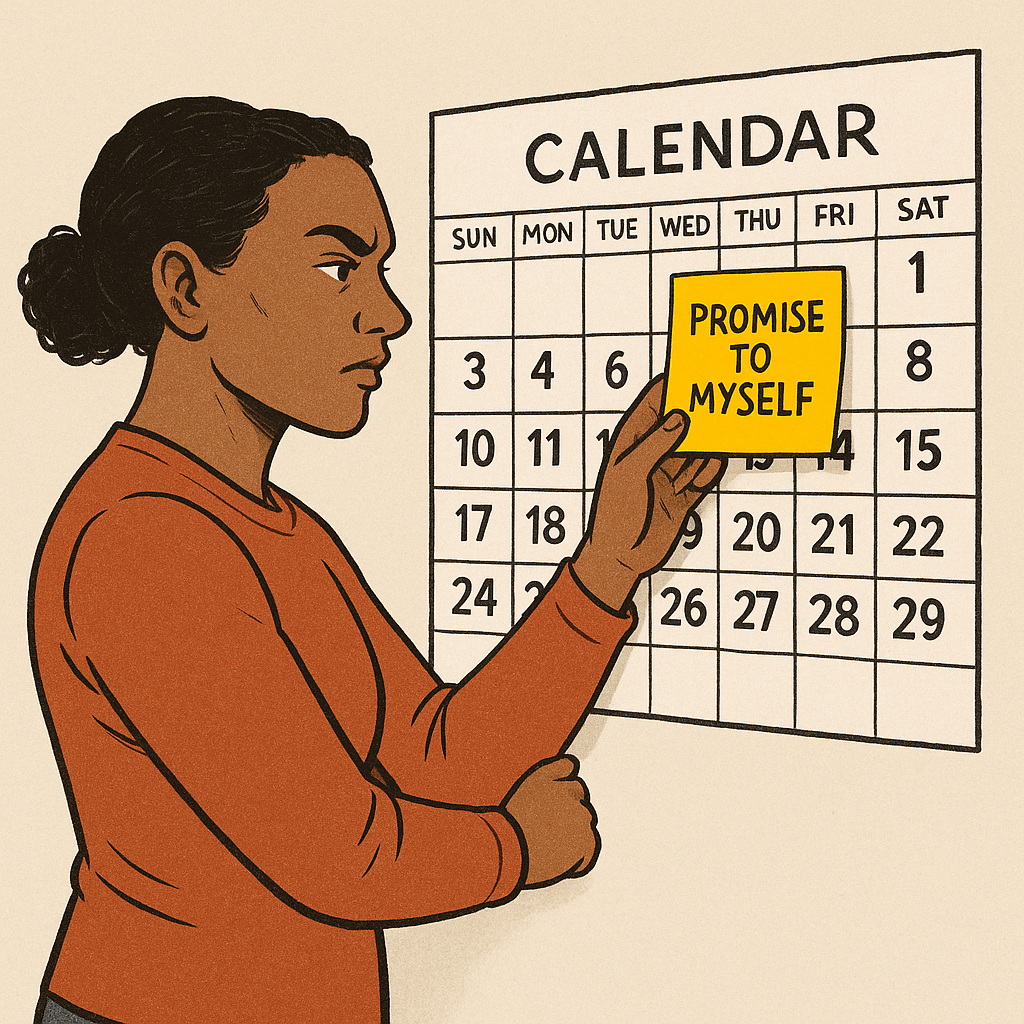
But what about keeping promises to yourself? 🤔 It’s so much easier to let those slide, isn’t it?

We’ve all done it countless times. We’ve said we’ll do our self-care “later,”… and then we get busy or don’t feel like it. We’ve promised to stop being overly critical of ourselves… until we make the first mistake and beat ourselves up. We’ve assured ourselves that tomorrow, next week, or next month things would be different…but we fail to take the necessary action to stay true to our word. 😓

It’s all about nurturing the right mindset.

![Visual representation of honoring your promises to yourself: scheduling self in two simple steps:

👉🏾 Don’t overcommit, even TO yourself. Set a reasonable, achievable goal and agree to take a certain, specific action on a certain, specific time to begin reaching it. Write it down in your journal.

👉🏾 Then pretend you’ve made that commitment to a parent, a boss, or a neighbor you want to impress—someone you would NEVER leave hanging. Show yourself that same respect and STICK TO YOUR WORD. Treat yourself the way you treat others—and want to be treated by them.

It really is that simple. And it’ll change your life.

[Book a free consult] if you struggle to follow through, or if you’re seeking a program tailored to your specific needs that actually addresses those little areas traditional fitness and therapy often miss. Whether you want to get out of pain, get mobile, or return to the activities you love, I’m here to help online or in-house.

It’s not just working out, it’s building a foundation for a better life.

Find out more @
Facebook

Twitter

Pinterest

Instagram

Youtube

Live Life ‘As if’ To Accomplish Your Goals

accomplish your goals

Accomplish your goals.

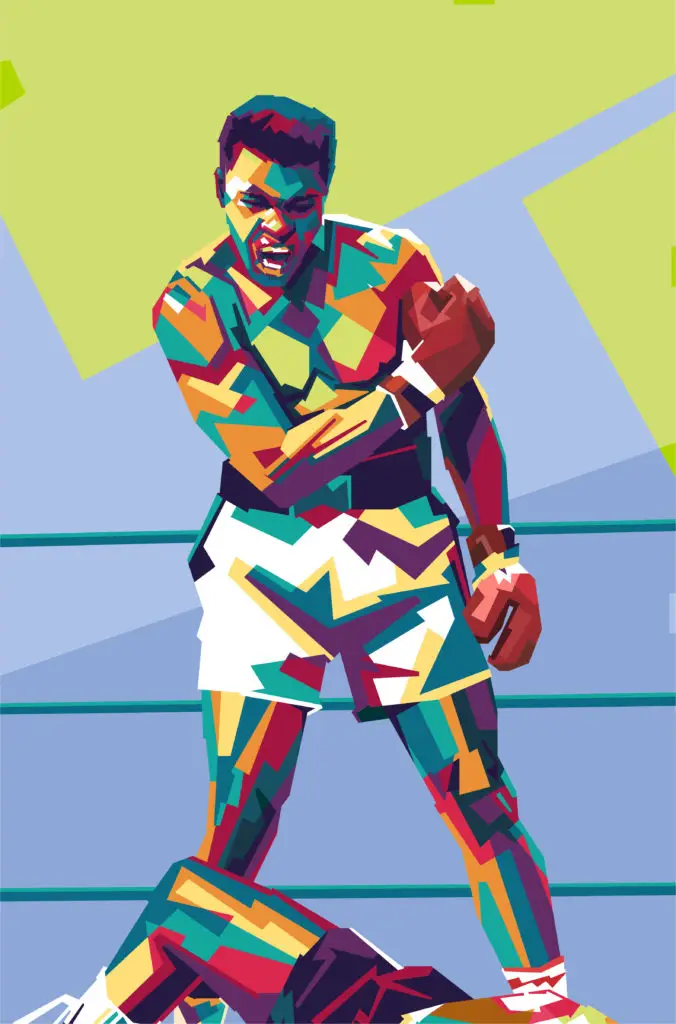
Muhammad Ali famously said he “hated every minute of training, but I said, ‘Don’t quit. Suffer now and live the rest of your life as a champion.’” This mindset—enduring discomfort today in service of something greater tomorrow—is a hallmark of champions, and one of the most powerful mental shifts you can adopt to achieve your goals in any area of life.

Even Ali admitted: it’s not always glamorous. It can be boring, grueling, and sometimes feel totally pointless. But instead of letting that defeat you, he chose to live “as if” the outcome was already his. What if you could harness the same focus and vision, not just in the gym, but in your daily life?

Here’s how you can do it:

  • Imagine your life after you’ve achieved your goal.
    Visualize the specifics:
    👍🏽 How brightly will you smile, feeling your body working properly while you play with your kids?
    👍🏽 How much will you enjoy saying YES to new activities—kayaking, traveling, running, or lifting—thanks to your confidence and balanced, healthy body?
    👍🏽 How will it feel to embrace opportunities, not hide from them?

Don’t just glaze over these questions with a quick “oh, that’d be nice.” Let yourself go deep. Fully invest your senses—imagine the environment, your mood, the people, even the sounds and smells.

  • What’s your mood? Are you proud of yourself, or do you retreat and feel disappointed?
  • Will you be the person who tries new things, or who stays home thinking about what could have been?

Fire up that imagination. Science and experience agree: acting as if you’re already the champion, parent, entrepreneur, or athlete you aspire to be, builds pathways in your mind and behaviors that make those outcomes possible.

Ali’s secret wasn’t just about suffering through the hard stuff—it was about believing in the outcome every single day and acting accordingly. As he put it:

“Don’t quit. Suffer now and live the rest of your life as a champion.”

What’s your vision? What does your “as if” victory look like? Try living in that future, today and then take every small action with the pride and confidence you’ll feel when you finally reach it.

Have you tried this mental strategy to accomplish your goals? Let me know in the comments your story could inspire someone else to live “as if” their dreams are coming true.

[Book a free consult] if you’re ready to envision and build your healthiest, most active life, start here.

it’s not just working out, it’s building a foundation for a better life.

Find out more @
Facebook

LinkedIn

Pinterest

Instagram

Youtube

Bluesky

Knowing THIS Will Help Your Balance (And Prevent Falls!)

balance and proprioception

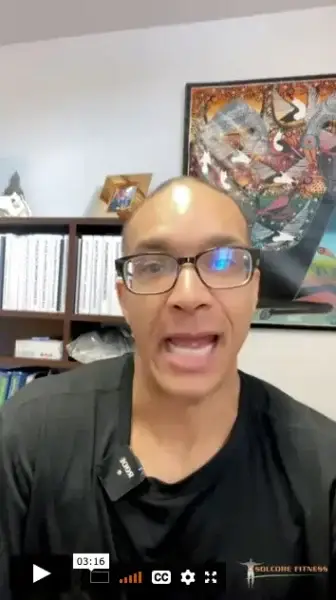
Click on the image to watch the video

Feeling off-balance or constantly afraid you’ll fall is more than a worry. It impacts your life, holding you back from activities you want to do and sapping your confidence. Many balance programs focus on standing on one foot or doing random balance drills, but true stability is much more complex, and so is the path to improving it.

Why Most Balance Routines Fail and What Actually Works

Cookie-cutter approaches to balance just aren’t enough. They’re too general, ignoring the layered complexity and uniqueness of every body. To truly improve your balance, you need a holistic plan that addresses your structure, your “soft tissue” (muscles, ligaments, fascia), and your neurological “computers”—your proprioceptors.

1. Structural Alignment Your Foundation

Imagine your body as a house. If the foundation or walls are off, everything above is unstable. Your bones must be aligned, and your hips and pelvis balanced, to channel force smoothly through your entire frame. This is more than posture—it’s about the interplay of hard (bone) and soft tissue (muscles, fascia, ligaments) all working together for stable movement.

Fun fact: Your bones adapt to repeated forces and movement—if you’re off balance or compensating, your skeleton will actually remodel around those forces, making misalignment worse over time. That’s why generic “adjustments” alone never last; your muscles and fascia must be trained, too.

2. Biotensegrity The Body’s Inner Suspension Bridge

Ever heard of “tensegrity”? It just means the harmony between tension and compression—how your soft tissue web, not just bones, is what actually keeps you upright and balanced. Your muscles, tendons, ligaments, and fascia are all interconnected and play a major role in stability, not just movement.

If you’re missing strength or mobility in one area, the whole system suffers. Generic exercise routines or bouncing between fad workouts without addressing your personal gaps won’t help. The key is specificity—testing and building up your weak links.

3. The Glute Medius Your Hip’s Hidden Hero

Your glute medius stabilizes the pelvis and is foundational for staying upright, stepping, and shifting your weight. If it’s weak or poorly coordinated, your “house” tips and daily movements become risky. The best assessment and strengthening moves isolate different fibers in the glute medius (not just doing “clamshells”), with your leg in various angles and a strong, fixed core for real-world benefit.

4. Proprioception Training Your Balance “Computers”

Balance isn’t just muscle—it’s knowing where your body is in space, thanks to proprioceptors (“position sensors”) in your feet, spine, TMJ, eyes, and ears. If one system’s off, your brain’s internal map is wrong—you feel “off” even when you look straight, and compensations leak through the whole body.

To improve this, you need:

  • Targeted foot and ankle work: barefoot balance, one-leg stances, standing on soft surfaces
  • Spine awareness: core and trunk engagement, rotational exercises
  • Head, jaw, eye, and ear alignment: gentle neck exercises, gaze stability drills

Proprioceptive training should progress from simple (e.g., static one-leg balance) to complex (eyes closed, dynamic reaches, unstable surfaces, dual-tasking). Key: Always train specifically for your deficits—not just generic drills.

5. Start Where YOU Are

You can’t address everything at once—successful balance training means finding your lowest-hanging fruit. Use a notepad, test your strengths and weaknesses, and focus on two or three new habits or drills at a time.

If you want a body that’s truly balanced and ready for life—whether that’s hiking, gardening, or just moving with confidence and without fear of falling—you need to address all the interconnected parts: structure, soft tissue, proprioception.

[Book a free consult] for a holistic assessment and personalized program that will target exactly what you need to regain control, improve your balance, and enjoy every activity with confidence.

it’s not just working out, it’s building a foundation for a better life.

Find out more @
Facebook

LinkedIn

Pinterest

Instagram

Youtube

Bluesky

Working Out FOR a BETTER Life: It’s About the Foundation, Not Just Fitness

holistic health fitness program

It’s not just working out—it’s building a foundation for a better life. That’s not just a slogan. It’s the driving insight behind what a true health and fitness routine is supposed to achieve. When approached holistically, fitness is the gateway for transformation: physically, mentally, emotionally, and even spiritually.

My Journey to Holistic Fitness

I’ve felt this in my bones since I was young—even before I had the words. Sports, movement, and healthy eating gave me structure and focus growing up, and I soon realized the value of incorporating mindset, visualization, and positive belief alongside physical training. What began just as sports and healthy eating soon became routines in goal setting, journaling, and affirmations. These simple but powerful strategies enabled me to go beyond what teachers or diagnoses thought possible—and most importantly, to start believing in my own potential.

You’re More Than a Body. Fitness Should Reflect That.

As I grew and eventually became the owner of SolCore Fitness, I kept seeing the same problem: too many programs—especially in big-box gyms—treat exercise like a checklist. Do these reps, burn these calories, and move on. But a fitness foundation built only on the latest routine, without guidance or purpose, can’t address the depth of who you are or the layered challenges you face.

holistic fitness plan must consider:

  • Physical Health: Building strength, mobility, and injury resistance so you can move, play, and age well.
  • Mental Health: The right routine improves focus, battles distraction, calms a busy mind, and boosts creativity and resilience.
  • Emotional Wellbeing: True fitness reduces stress, increases confidence, and helps you bounce back from setbacks.
  • Social Connection & Purpose: Working out becomes a vehicle for belonging, accountability, and compassion—for yourself and others.
  • Spiritual Health: Movement connects you to what matters—whether it’s a sense of purpose, gratitude, or something greater than yourself.

True Holistic Fitness Builds on Strong, Integrated Foundations

Every phase of your life brings new challenges, losses, and opportunities. Sometimes you might feel invincible; other times, a single injury or setback can shake your identity to its core. I know this firsthand—after a significant injury, I had to rethink everything. Gone were the routines that used to work. In their place, I found osteopathy and the “structure dictates function” principle. I became obsessed with weaving together strength, nutrition, movement, mindset, and deeper learning.

When you combine physical, mental, and emotional progress, transformation happens:

  • You learn to appreciate what your body CAN do (not just what it looks like)
  • You wake up parts of yourself—muscle chains, mental habits, creativity—that had “fallen asleep”
  • You discover new reserves of resilience and motivation, even when you “fail” or meet resistance

Most importantly, you realize: Every challenge is an opportunity to know yourself more deeply, and every victory unlocks another level of growth.

It’s Not “Just” About Longevity—It’s About Quality and Purpose

We all want to live as long as possible, but what about living vibrantly and joyfully, every step of the way? A holistic fitness program is about creating that positive trajectory, so you can:

  • Stay active and pain-free through every decade
  • Play with kids, grandkids (or great-grandkids!)
  • Try new activities, travel, garden, or pursue passion projects
  • Feel mentally clear, socially connected, and emotionally grounded—even when times get tough

A complete, individualized fitness plan helps YOU decide what kind of life you want to live…and then gives you the tools (and the confidence) to achieve it.

[Book a free consult] if you’re ready to discover what a true holistic health and fitness plan can do—not just for your muscles, but for your entire life journey. Let’s build the foundation that keeps you strong, joyful, and inspired for decades to come.

it’s not just working out, it’s building a foundation for a better life.

Find out more @

Facebook

LinkedIn

Pinterest

Instagram

Youtube

Bluesky