

Mind-body connection

Why Mixing Yoga, PT, and Fitness Videos Failed Michelle’s Body

Michelle — professional artist whose mixed yoga, PT, and fitness video routine left her worse until she found a coherent fascia-based system

Michelle did everything right. That’s the part that used to confuse her — and it’s the part most people get wrong when they try to explain why their body isn’t improving.

She wasn’t lazy. She wasn’t skipping days. She was moving constantly: yoga classes, YouTube fitness videos, a physical therapist her doctor sent her to. Three different sources. All of them credible. All of them “good for you.”

Her body got worse anyway.

Coach’s Corner

I hear some version of Michelle’s confusion in my studio every week: “I do yoga twice a week, I follow a YouTube routine, I saw a PT for six months — why do I still hurt?”

The answer isn’t effort. It’s architecture. Yoga, generic fitness content, and standard PT are three separate systems, each built around a different philosophy, a different assumption about what your body needs. None of them were designed to talk to each other. Stack them on top of each other and you don’t get a bigger system — you get contradiction.

The Problem With Mixing Yoga, PT, and Random Fitness Videos

Yoga wasn’t built for this. Yogis developed it to prepare the body for meditation — to sit still, to breathe, to quiet the nervous system. It can secondarily help with strength and mobility, and often does. But secondary isn’t primary. If you’re choosing yoga because you think it’s a strength and mobility program, you’re using a tool for a job it wasn’t designed to do — and you won’t get the specificity a real structural program requires.

Generic fitness videos reflect the general knowledge and general exercise choices of whoever’s on screen. I know this one from the inside — it’s where I started, as a personal trainer. That world runs on broad fitness principles: reps, sweat, general programming. Real, but general. General knowledge produces general results, not the specificity a structural problem requires.

And standard PT is often built around partial information delivered as a whole program. Most PT exercises isolate a single muscle or joint without accounting for the fascial chain that muscle belongs to. It’s not incompetence. It’s how the field is generally trained: symptom, isolated structure, isolated fix.

Michelle was pulling from all three every week. Each one legitimate on its own terms. None of them looking at the whole picture — the actual demand her body was under.

What Her Body Was Trying to Tell Her

Michelle is a professional artist. A painter. She stands at an easel for hours at a time — a sustained, repetitive postural demand that’s specific to her life, not generic. None of her three sources were built around that demand. Yoga didn’t know about the easel. Her fitness videos didn’t know about the easel. Her PT gave her exercises for “general strengthening” that never once accounted for how many hours she spends locked in that one posture.

Almost no space left in her spine. Chronic pain in her hips. Her body was communicating clearly — but without a framework that connects the dots, “working out consistently and getting worse” doesn’t look like a structural clue. It looks like bad luck. Or aging. Or “my body’s just like this now.”

It’s not. The soft tissue always wins — it doesn’t care how many different classes you took this month. It responds to whether the work addresses the actual pattern, the actual chain, the actual demand your life puts on your body.

What Changed

Once Michelle started one coherent system — not another layer stacked on top of yoga, videos, and PT, but a single approach built around her actual structure — everything shifted. Three days a week. Consistent. What she was learning alleviated her pain AND built strength and mobility at the same time.

In her own words: “I know that these stretches are helping, and I even do some of them on days I don’t have class. SolCore Fitness has become a part of my life. I am a full-time artist and my posture while standing at the easel had previously been a strain. Now I am cognizant of how I stand and hold my body while painting.”

She now has a growing list of strategies she uses on her own. Not because someone assigned them — because she finally understands why each one matters.

Where to Start

If you’ve been mixing your own combination of yoga, PT, and fitness videos and wondering why nothing adds up — that’s not a discipline problem. It’s an architecture problem.

The Lower Back ELDOA course is $52. Lifetime access. It’s not the whole answer — it’s the first piece of a system that’s built to grow, with each course designed to fit with what comes next. Every posture has a reason. Every sequence builds on the one before it.

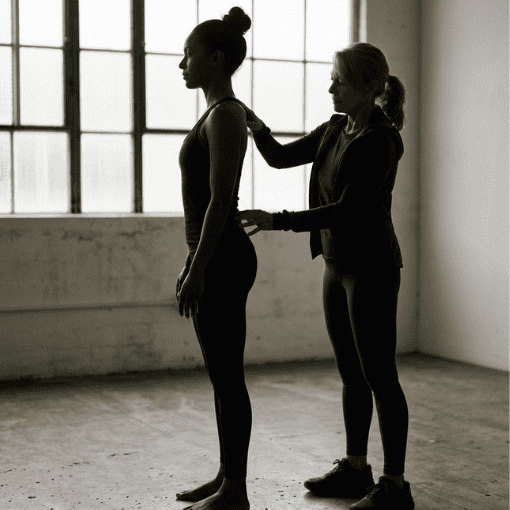
Don’t make me come check your form.

Follow the Thread — Where Movement, Fascia, and Freedom Align

Facebook

Bluesky

Pinterest

Instagram

YouTube

It’s Never Free. The Real Cost of Following Random People on YouTube.

Person searching for free workout videos online instead of a structured fascia-based exercise system"

Your free YouTube workout routine is costing you more than you think. Not in dollars — in dysfunction.

Here’s what happens: your lower back is tight. You Google it. YouTube gives you 10,000 results. You pick one. Looks professional. Nice production. Millions of views. Must be good, right?

You follow along. It feels like you’re doing something. Your endorphins fire. You feel productive. Three days later — the tightness is back. Or it’s moved. Or it’s worse. So you find another video. A different stretch. A different person who doesn’t know your body, doesn’t know your history, and has never met the last person whose video you followed.

Now you’re building a routine out of random pieces from random people. Throwing together an exercise routine with random stretches and exercises is like trying to form a sentence by picking random words out of a book. It might look like something. But it doesn’t say anything.

Coach’s Corner

Michelle was doing everything right — or so she thought. Professional artist. Painter. She spent years building her own exercise routine from YouTube yoga and other classes. She was consistent. She was dedicated. And her body got worse.

Almost no space left in her spine. Chronic back pain. Her doctor had to refer her to me. She’d been to PT first — the exercises they gave her were terrible and made things worse. And I’m not just picking on her PT. These are exercises most PTs give people, but they’re based on partial information presented as a whole program. The connecting links — the fascia, how it holds your body in place — aren’t even considered.

Michelle wasn’t lazy. She wasn’t uninformed. She was doing exactly what everyone tells you to do. And it cost her years.

The Hidden Cost of “Free” Fitness Content

Every exercise you do reinforces whatever pattern your body is already in. If your fascia is restricted and your joints are stuck, that free video doesn’t fix it — it cements it. You get stronger in a dysfunctional pattern. You get more flexible in a compensatory range. You feel like you’re making progress because you’re sweating and your endorphins are telling you that you did something good — but your body is just digging deeper into the same groove.

And here’s the part nobody warns you about: the more compensations your body stacks, the quicker things break down. It’s not a slow decline — it accelerates. Each compensation creates the next one, and the whole system gets more fragile with every layer. Research confirms that these structural changes in fascia and muscle tissue compound over time.

Getting treatments for the symptoms that show up — the massage, the adjustments, the ibuprofen — without ever fixing the underlying pattern? That’s not maintenance. That’s making the problem worse. Your body compensates around the “fix,” builds new patterns on top of broken ones, and now you’ve got two problems instead of one.

The soft tissue always wins. It doesn’t care what video you watched.

What a Real System Does That Random Videos Can’t

A system has intention. Every exercise, every stretch, every technique is chosen for a specific reason and builds on the one before it.

Second, you need targeted work that addresses the specific restriction. Not general stretching. Not random exercises. ELDOA, myofascial stretching, and corrective work that goes after the exact tissue, the exact segment, the exact chain that’s holding the pattern in place.

Third — and this is the one people struggle with — you need patience.

It’s difficult when you do it right.

That’s not a warning. That’s a promise. If it feels easy, you’re compensating. If it feels hard in a way you’ve never felt before — you’re finally doing the work.

Michelle started our program. Consistent. Three days a week. What she was learning alleviated her issue AND developed her strength and mobility at the same time. She now has a growing list of strategies to keep moving away from dysfunction into fully functional. That’s what a real program does — it doesn’t just manage your pain. It makes you capable.

Watch the Full Breakdown

I made a video that goes deeper into everything in this post — including a live demonstration of what those “free” exercises are actually doing to your body and what the alternative looks like.

Watch it Here. https://youtu.be/Khqwr-5K36k

Where to Start

If you’ve been cobbling together free content and wondering why nothing changes, here are your options:

The Lower Back ELDOA course is $52. Lifetime access. 17 minutes, 3-4 times a week. The same postures I use with my in-person clients — a system, not a random video.

Or if you want the bigger picture — the Lower Back ELDOA ($52) plus the Big Bang ($216 add-on) gives you a complete lower body foundation system for $268. The bump offer is on the checkout page.

Not ready for either? Download the free Empower Your Health Guide — it’ll change how you think about what your body actually needs.

Don’t make me come check your form.

Follow the Thread — Where Movement, Fascia, and Freedom Align

Find more insight, reflection, and fascia-informed care:
Facebook

Bluesky

Pinterest

Instagram

YouTube

LinkedIn

Working Out Is Not Just for Your Muscles

Working Out Is Not Just for Your Muscles

If your idea ofa holistic fitness program starts and ends with muscles, you’re missing the bigger picture. Your muscles are, to put it bluntly, stupid pieces of meat. They don’t decide anything. They don’t organize your movement. They don’t determine your posture. They just contract when they’re told to.

The question is: who’s doing the telling?

Coach’s Corner

I say this to clients all the time and they look at me like I’ve lost my mind: “Your muscles are stupid pieces of meat.”

But it’s true. Your muscles don’t know what good posture is. They don’t know the difference between a healthy movement pattern and a compensatory one. They just fire when the nervous system says fire, along the lines that the fascia has organized.

So if your fascia is restricted, your joints are stuck, and your nervous system is sending signals through compensated pathways — it doesn’t matter how strong your muscles are. They’re just going to be strong in the wrong pattern.

That’s why I’ve seen people who can dead lift 300 pounds but can’t touch their toes without their whole body compensating. Strong muscles. Dysfunctional system.

The System Underneath the Muscles

The soft tissue always wins. That’s not a slogan — it’s biomechanics.

Your fascia is a continuous network of connective tissue that wraps every muscle, bone, nerve, and organ in your body. It doesn’t just passively hold things together — it actively organizes how your body moves, holds tension, and distributes force. Research confirms that fascia plays a central role in movement coordination, force transmission, and proprioception.

When you train only your muscles, you’re training the employees but ignoring the management structure. The fascia determines which muscles activate, in what order, with how much force, and along which lines oftension. If that system is dysfunctional, your muscles will just reinforce the dysfunction — with more force.

A real holistic fitness program trains the whole system: fascia, joints, proprioception, segmental strength, and global movement patterns. The muscles get stronger as a byproduct — but they get stronger in the right pattern, along the right lines, with the right coordination.

What a Holistic Fitness Program Actually Looks Like

It’s not yoga and green smoothies. It’s not random stretches before your workout. And it’s definitely not throwing together exercises you found on YouTube and hoping they form a coherent sentence.

A real holistic fitness program has intention. Every exercise, every stretch, every technique is chosen for a specific reason and builds on the one before it. Here’s what that includes:

ELDOA — targeted joint decoaptation that creates space between specific segments of your spine and joints. This restores segmental independence so each part of your body can do its own job instead of compensating for a neighbor.

Myofascial stretching — active stretching that doesn’t just lengthen a muscle, but reorganizes the entire fascial chain it belongs to. This is how you actually change the tissue, not just temporarily relax it.

Segmental strengthening — building strength at specific fiber directions within individual muscles, in the context of their fascial chains. This is precision, not just power.

Proprioception training — teaching your body to sense and control its position in space. This is how you build the brain-body connection that Marja talks about — the difference between blindly following exercises and actually feeling what your body is doing.

Global strengthening — training the whole system to work as an integrated unit through functional movement patterns.

Each one matters. Skip one and the system has a gap. That gap becomes a compensation.

That compensation becomes your next problem.

Why This Matters for Performance

Ifyou’re active and training hard, this isn’t about slowing down. It’s about removing the ceiling.

Every dysfunction in your fascia, every stuck joint, every compensatory pattern is limiting your output. You might not feel it as pain — you feel it as a plateau. The lift that won’t go up. The mobility that won’t improve. The recovery that takes longer than it should.

ELDOA corrects dysfunction at specific segments. The more you do them, the more functional and optimized those areas become. That’s not rehab. That’s performance.

The Takeaway

Stop training your muscles like they’re the whole story. They’re the last chapter. Start at the beginning — fascia, joints, proprioception, structure — and the muscles will follow.

If you want to see what this system looks like in practice, the Lower Back ELDOA course is the entry point. $52. It targets the segments most people have been ignoring while they chase muscle.

Started HERE

And stay tuned — next week I’m introducing the Big Bang, a structured routine that targets the entire lumbo-pelvic-hip region your spine sits on. The foundation underneath the foundation.

Don’t make me come check your form.

Follow the Thread — Where Movement, Fascia, and Freedom Align 

Find more insight, reflection, and fascia-informed care:  

Facebook

Bluesky

Pinterest

Instagram

YouTube

LinkedIn 

You Must Break Bad Patterns Before You Can Build New Ones

You Must Break Bad Patterns Before You Can Build New Ones

If you want to break bad movement patterns, you need to understand something first: your body doesn’t care what you want. It cares what you’ve trained it to do.

Every time you sit the same way, move the same way, compensate the same way — your fascia adapts to that. Your muscles organize around it. Your nervous system treats it as normal. And now that dysfunction isn’t a glitch. It’s your operating system.

You can’t install new software on top ofa corrupted system. You have to fix the corruption first.

Coach’s Corner

I watch people do this all the time. They come in motivated. They want to get stronger, move better, feel good. So they start a program — any program — and they work hard.

But they’re working hard on top of patterns that are already broken. Their body is compensating every rep, every stretch, every movement. And the harder they work, the deeper those compensations get.

It’s like putting fresh paint on a cracked wall. It looks better for a week. Then the cracks come back. And they’re always a little worse than before.

The way is through — but “through” means going back to the foundation first. That’s the part most people skip because it doesn’t feel productive. It feels slow. It feels basic. But it’s the only thing that actually works.

Why Your Body Keeps Defaulting to Dysfunction

Here’s what’s happening under the surface: your fascia has memory. Not the kind you think about — structural memory. It physically reorganizes itself around the positions and patterns you repeat most often.  Research published in Frontiers in Physiology confirms that these structural changes in fascia and muscle tissue compound over time.

So when you sit hunched for 8 hours a day, your fascia doesn’t just “get tight.” It literally reshapes itselfto support that hunched position. Your muscles shorten. Your joints lose range. And your nervous system stops sending signals to the areas that aren’t being used.

Now you stand up and try to do a squat, a stretch, a workout — and your body defaults to the pattern it knows. The dysfunction. The compensation. The path ofleast resistance.

You’re not weak. You’re not lazy. You’re patterned. And patterns don’t change just because you decided to start working out.

What It Actually Takes to Rewire a Pattern

This is where most programs fail. They add exercises on top ofexisting dysfunction and hope the body figures it out. It doesn’t. It just compensates harder. And here’s the part nobody warns you about: the more compensations your body stacks, the quicker things break down. It’s not a slow decline — it accelerates. Each compensation creates the next one, and the whole system gets more fragile with every layer.

Breaking a pattern requires three things:

First, you need to identify where the dysfunction actually lives. Not where you feel pain — where the pattern originates. Those are rarely the same place. Your lower back might hurt, but the pattern might start in your hip, your fascia, your pelvis.

Second, you need targeted work that addresses the specific restriction. Not general stretching. Not random exercises.  My ofascial stretching, ELDOA, and corrective exercises that go after the exact tissue, the exact segment, the exact chain that’s holding the pattern in place.

Third — and this is the one people struggle with — you need patience. If it took ten years to build the pattern, you’re not undoing it in a week. The first three months are the hardest because your body is literally learning a new way to organize itself. But once it clicks — once you develop that brain-body connection — everything changes.

It’s difficult when you do it right.

That’s not a warning. That’s a promise. If it feels easy, you’re compensating. If it feels hard in a way you’ve never felt before — you’re finally doing the work.

Marja knows this. She came to me after breaking three vertebrae. Doctors said she’d never garden again. The first three months were brutal — her body was learning entirely new patterns. But she stayed consistent. Years later? Pain-free. Gardening an hour and a half at a time. Moving better than before the injury. She’ll tell you herself: “Being present in this routine is huge. Ifyou just blindly follow, you won’t get it. But ifyou think and try, like any skill, eventually you become your best therapist.”

Watch Marja tell her story in her own words:

Want the full case study? Download Marja’s complete story HERE:

This Applies Whether You’re in Pain or Not

If you’re in pain, the bad pattern is what’s causing it. Breaking it is how you get out.

If you’re not in pain, the bad pattern is still there — it just hasn’t announced itself yet. Breaking it now is how you make sure it never does. That’s what prevention actually looks like. Not avoiding activity — correcting the dysfunction that’s building quietly in the background.

And if you’re chasing performance, every unaddressed pattern is a ceiling on what your body can do. Break the pattern, raise the ceiling.

Where to Start

Ask yourself this: am I actually working on what I think I’m working on, or am I compensating?

If you’re not sure, that’s your answer.

The Lower Back ELDOA course is $52 and it’s built to address dysfunction at specific segments — the kind oftargeted work that actually breaks patterns instead of reinforcing them. It’s the starting point.

Get started HERE

Don’t make me come check your form.

Follow the Thread — Where Movement, Fascia, and Freedom Align

Find more insight, reflection, and fascia-informed care:  

Facebook

Bluesky

Pinterest

Instagram

YouTube

LinkedIn

Self-Care for Better Relationships: The Valentine’s Gift That Keeps Giving

self-care for better relationships

Valentine’s Day gets reduced to flowers, chocolates, and dinner reservations. But here’s the truth nobody talks about “self-care for better relationships”: you can’t show up for the people you love when you’re running on empty.

That chronic lower back pain? The stiffness that makes you irritable? The fatigue that leaves you too drained for your kids?

That’s not just affecting you. It’s affecting everyone around you.

This Valentine’s Day, let’s talk about real love—the kind that starts with taking care of yourself so you actually have something to give.

Why Self-Care Isn’t Selfish—It’s Required

You know the airplane oxygen mask rule: secure yours first before helping others.

Your body works the same way.

When Pain Controls Your Energy and Mindset

When your fascia is restricted and you’re compensating through every movement, your nervous system operates in constant low-level stress. You’re irritable. Exhausted. Operating at half capacity.

But here’s what most people miss: a dysfunctional body creates a negative worldview.

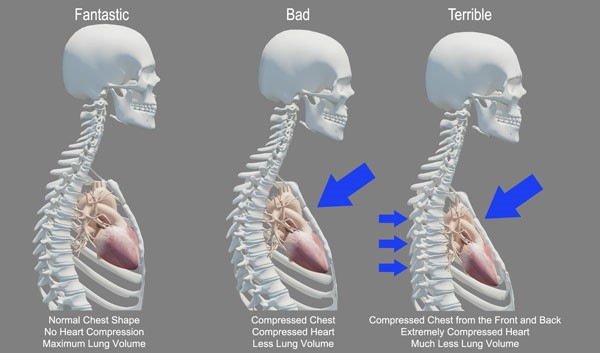
Bad posture isn’t just physical—it’s mental and emotional. Research shows that good posture allows the body to move more efficiently, use less energy, and create a better body-mind connection. When your structure is collapsed and your spine is compressed, you can’t take a full breath. Your diaphragm doesn’t work. Your nervous system stays locked in stress mode.

The result? The world feels harder than it actually is. Everything seems like a struggle because your body is struggling just to maintain basic function.

All Your Energy Turns Inward

When you’re managing chronic pain or dysfunction, all your focus turns inward. You’re protecting injured areas. Compensating around restrictions. Managing discomfort.

There’s no bandwidth left for anyone else.

You think you’re “powering through” for your family. But you’re giving them a diminished version of yourself—and seeing the world through a filter of discomfort that colors every interaction.

Taking care of your body flips this dynamic completely.

When you address fascial restrictions, decompress your spine, and move without compensation:

  • Energy flows outward again instead of being consumed by pain management
  • You have capacity for your partner, your kids, your friends
  • You see possibilities instead of obstacles
  • You show up with patience instead of irritation
  • The world stops feeling like such a grind

The version of you that feels good in your body is a better partner, parent, friend, and colleague. Period.

From “I” to “We”: How Fixing Your Body Helps Your Inner Circle

Here’s what happens when you prioritize self-care for better relationships:

Your partner notices you’re less grumpy in the morning. You don’t wince getting up from the couch. You have energy for evening walks again.

Your kids notice you can play without wincing. You’re not constantly saying “not right now, my back hurts.”

Your friends notice you’re actually available instead of canceling plans because you’re too sore.

Real Change: Amber’s Story

Amber, a 45-year-old accountant who practiced yoga, hiked, and traveled, developed low back and SI joint problems. The therapist she’d been seeing for decades couldn’t fix it.

She tried everything—yoga (which she thought would replace physical therapy), rolfing, chiropractic, acupuncture, diet changes. Temporary relief, but nothing stuck.

Here’s what was actually happening: her therapist didn’t understand how to support her with exercises and wasn’t educated on the different areas of the SI joint. He was chasing symptoms instead of addressing the fascial system.

At SolCore, we gave her the right exercises for her structure. Not generic PT protocols—exercises based on how her fascia was actually restricted.

She became consistent with the homework. Started feeling better.

Then with one in-person treatment using osteopathic manual therapy? Pain gone.

Why? Because we addressed the system, not just the symptom.

Now Amber can show up for her work without distraction. She can hike and travel. She has capacity for volunteer work she cares about. Her partner got the engaged, active version of her back—not the one constantly managing pain.

[Read Amber’s full story →]

When you fix your own body, the people closest to you benefit immediately. That’s not abstract—that’s how relationships actually work.

From “We” to “Us”: The Community Ripple Effect

Social connections and support networks are essential for maintaining independence and well-being. But when you’re stuck in pain and dysfunction, you withdraw. You can’t volunteer. You can’t show up for community events. You don’t have capacity to help others.

When your body works properly, you can participate again.

How Self-Care for Better Relationships Extends Beyond Your Home (H3)

Your coworker notices you’re not constantly complaining about pain. They ask what changed. You share what actually worked.

Your neighbor sees you moving better. Asks how you fixed your shoulder. You point them toward real solutions.

Someone at the coffee shop mentions chronic back pain. You can actually help instead of just commiserating.

This isn’t about being evangelical—it’s what happens naturally when you experience real change.

People notice. They ask. You share.

And suddenly, the decision to take care of yourself—the one that seemed “selfish” at first—has impacted dozens of people you’ll never even know about.

What Real Love Actually Looks Like

Real love isn’t about grand gestures on February 14th.

It’s about:

  • Having energy to be present for your partner
  • Being able to play with your kids without pain
  • Showing up for friends instead of canceling plans
  • Contributing to your community instead of just surviving
  • Seeing the world as full of possibility instead of obstacles

All of that starts with taking care of your body. Not “someday.” Now.

Because the people you love deserve the best version of you. And you can’t give them that version when you’re operating from restriction, compensation, and chronic discomfort.

Because your community needs you showing up, not withdrawing.

Because the world needs people who have the capacity to help others—and that capacity starts with a body that functions.

Ready to Start Your Self-Care Journey?

If You’re in Santa Fe

Our Kickstart programs give you the foundation—private assessment, group classes, or personalized sessions addressing your specific fascial restrictions and compensation patterns.

Not a generic fitness program. A system designed around how your body actually works.

If You’re Outside Santa Fe

Book a free consultation. We’ll discuss what’s happening with your body, what you’ve tried, and whether our approach makes sense for your situation.

We also offer online programming for people who can’t train with us in person.

The Bottom Line

You can’t pour from an empty cup. You can’t help others when you’re barely holding it together.

Taking care of your body isn’t selfish. It’s the most loving thing you can do—for yourself, for your family, for your community, for everyone who needs you to show up.

This Valentine’s Day, give yourself the gift that keeps giving.

Fix your body. Help your people. Change your world.

Follow the Thread—Where Movement, Fascia, and Freedom Align

Find more insight, reflection, and fascia-informed care:

Facebook

Bluesky

Pinterest

Instagram

YouTube

LinkedIn

Why Body Awareness Training Matters More Than Any Exercise Program

body awareness training

Body awareness training isn’t about learning more exercises. It’s about learning your body’s language—and that skill is worth more than any workout I could ever give you.

Most people come in wanting a prescription. Tell me what’s wrong. Give me the exercises. Fix me.

I get it. You’re busy. You want results. You trust experts to have answers.

But research on therapeutic exercise adherence shows that understanding your body’s signals matters as much as the exercises themselves. When you only want exercises, you stay dependent. You need me to tell you what to do next week, next month, next year. And your body? It never gets a vote.

COACH’S CORNER

I’ll confess something: my favorite clients aren’t the ones who follow instructions perfectly. They’re the ones who ask, “Why does this feel different today?” or “Should I be feeling this in my hip?”

Those questions tell me they’re paying attention. They’re developing body literacy. And that means eventually, they won’t need me as much—which is exactly the point.

The “Give Me Three Exercises” vs Body Awareness Training Problem

When you only want exercises, two things happen:

You create dependence. You need someone else to tell you what to do. Every time something changes—new pain, different schedule, injury—you’re back at square one waiting for instructions.

You ignore context. Your body changes day to day. What you needed Monday might not be what you need Friday. But if you’re blindly following a program, you miss those signals.

Body awareness training flips this. Instead of following, you learn to listen.

What Body Literacy Actually Looks Like

Body literacy means reading your body’s signals. You learn the difference between:

Protective pain (sharp, acute, “stop now”) vs. adaptive discomfort (challenging but tolerable, “this is new but manageable”)

Fatigue (rest needed) vs. lack of challenge (time to progress)

Restriction (needs addressing) vs. natural limitation (needs respect)

This isn’t abstract. It’s practical. And it’s exactly what we teach in our holistic exercise program.

Marja, one of my long-time clients, came in years ago confused by every exercise. She needed constant cuing, constant correction. She’d ask, “Am I doing this right?” every thirty seconds.

Now? She feels it. When I introduce a new stretch, she knows within seconds if she’s positioned correctly. She adjusts without me saying a word. She’s become her own best therapist.

“At my age,” she says, “this brain-body connection is incredibly important.”

She’s right. And she’s not special—she just practiced paying attention.

Why This Matters for Long-Term Success

When you develop body awareness training, you:

Know when to push and when to back off. You don’t need someone else to tell you if you’re overdoing it. You feel it. You adjust.

Catch problems early. You notice restriction, compensation, or dysfunction before it becomes pain. Prevention beats treatment every time.

Understand why something works. You’re not following a recipe—you’re learning principles. That knowledge transfers to everything you do.

Adapt when life changes. New injury? Different schedule? Aging body? You don’t need a whole new program. You adjust what you know.

This is empowerment. Not dependence.

The “Give Me Exercises” Trap

Here’s what happens when you only want exercises:

You do them for a while. They help. Then life gets busy. You stop. The problem comes back. You need new exercises. The cycle repeats.

You never learned why your body responded. You never developed the skill of listening. You never became your own guide.

Exercises are tools. Body awareness is the skill.

Without the skill, the tools are useless. With the skill, you can use any tool effectively.

What This Means for You

If you’ve been dependent on practitioners to tell you what to do, this is why you’re stuck.

If you keep coming back with the same problem, this is why.

If you feel lost when you don’t have someone guiding you, this is why.

Your body is speaking. You just need to learn its language.

And once you do, everything changes.

Body Awareness Training – Start Listening

Body awareness training doesn’t happen overnight. It takes practice, patience, and presence.

But it’s the difference between renting your health from experts and owning it yourself.

Want to start developing body literacy? Try this:

Next time you do any exercise—whether it’s one of mine or something you found online—ask yourself:

  • What do I feel? (Be specific. “My left hip” beats “somewhere down there.”)
  • Is this protective pain or adaptive discomfort?
  • What would happen if I adjusted slightly?

That’s body awareness training. Three questions. Every exercise. Over time, you’ll stop needing me to tell you what’s working.

And that’s the whole point.

Ready to learn your body’s language? Book a free consultation and let’s start building body literacy, not just strength.

Follow the Thread—Where Movement, Fascia, and Freedom Align

Find more insight, reflection, and fascia-informed care:

Facebook

Bluesky

Pinterest

Instagram

YouTube

LinkedIn

Neither Snow Nor Rain: The Postal Service’s Lesson in Consistency

U.S. postal worker delivering mail in all weather, postal motto, resilience

What Is National Neither Snow Nor Rain Day?

Every September 7th, National Neither Snow Nor Rain Day honors the determination of U.S. postal workers, inspired by the famous postal creed: “Neither snow nor rain nor heat nor gloom of night stays these couriers from the swift completion of their appointed rounds.” This unofficial motto, inscribed on New York’s iconic James A. Farley Post Office since 1914, embodies a spirit of reliability and grit that goes beyond just delivering mail. It traces its roots all the way back to couriers of the ancient Persian Empire, celebrated for their unstoppable delivery—even in the harshest conditions.

Bringing Postal Resilience Into Fitness and Health

While most people aren’t trekking through snowstorms with letters in hand, everyone faces days where “rain, heat, or gloom” can stall healthy habits or self-care routines. The real lesson from National Neither Snow Nor Rain Day isn’t just about mail—it’s about showing up, no matter what.

Imagine applying this mindset to movement, nutrition, or personal wellness.

  • Maybe it’s a walk on a chilly morning instead of skipping activity because of the weather.
  • Maybe it’s prepping real food, even when “too busy” could be an excuse.
  • Maybe it’s sticking to a sleep schedule, even after a long day.

Small acts of consistency, over time, deliver big results—just like the post office, rain or shine.

Celebrating Determination—Relatable Examples

  • Family routines: Parents who keep up family walks or games, regardless of a bit of drizzle or chill.
  • Work routines: Professionals who show up, support the team, and achieve goals, even when circumstances change.
  • Wellness routines: Clients who stay the course on holistic exercise programs, even when motivation dips.

How to Build “Postal Persistence” Into Your Life

If you want to celebrate this week’s theme and build your own “neither snow nor rain” mindset:

  • Pick one routine—movement, meal planning, or mindfulness—and do it honestly, no matter the weather inside or out.
  • Acknowledge when it’s tough, but take pride like a postal worker in simply delivering today’s “mail” for your health.

Ready to commit to positive routines, come rain or shine? Explore how structured, personal wellness programs make consistency easier:

Personalized Workout Page
https://www.solcorefitness.com/personalized-workout-program/

Follow the Thread—Where Movement, Fascia, and Freedom Align
Find more insight, reflection, and fascia-informed care:


Facebook

Bluesky

Pinterest

Instagram

YouTube

LinkedIn

The Quiet Power of Acceptance: Recovery as the Foundation for Resilience

Woman in Acceptance in Recovery

When it comes to building a strong foundation for wellness, most of us don’t immediately think about the power of acceptance in recovery. But understanding and embracing this vital skill is the key to sustainable health—a lesson that supports not just our bodies but our mindset as well.

Why Acceptance in Recovery Matters

We live in a world that values more—more steps, more reps, more improvement—but less appreciation for necessary pauses. Acceptance in recovery isn’t about settling; it’s recognizing where you truly are, granting yourself permission to rest, and letting your body rebuild. This is where deep, lasting progress begins. Reminder that you’re on the right path—reach out. You’re not alone.

How to Practice Acceptance for Better Results

It’s simple, but not always easy. Try these steps this week:

  1. Pause: Take a gentle breath and notice what’s happening inside your body.
  2. Reflect: Identify what form of rest or slow movement calls to you—maybe a walk, restorative stretching, or even a day off.
  3. Trust: Honor your answer, no matter how different it might look from your usual “best.”

Example: On busy weeks, our core Santa Fe members sometimes use guided fascia work instead of a traditional workout. This is real progress.

The Science Behind Rest and Adaptation

Your muscles, fascia, and nervous system all require downtime to strengthen and adapt. Studies like this one from Rest and recovery for athletes – physiological & psychological well-being show that real resilience comes not just from stress, but from quality recovery as well.

Building Sustainable Health Over Time

Accepting the need for rest now actually sets you up for even better results later. Consistent recovery is the building block of longevity and vitality—for deeper science on holistic progress, see our resource:
The Ultimate Guide For A Holistic Exercises And Fitness Program 

Acceptance is the quiet, powerful force that allows you to age well, stay resilient, and enjoy your body longer. This week, choose at least one act of kindness for your body and trust that recovery is where progress truly begins.

If you want tips on restorative movement or ways to integrate rest, just reach out. You’re not alone on this path. Schedule a one-on-one consult to see how you can use holistic exercise and fitness to give your body what it needs. Complimentary consultation.

Follow the Thread—Where Movement, Fascia, and Freedom Align
Find more insight, reflection, and fascia-informed care across the platforms where we stay connected:

Facebook

Blue Sky

Pinterest

Instagram

Youtube

Linkedin

Reset Your Body and Mind This Back-to-School Season

back to school body reset with fascia-focused movement

August is always a quiet invitation—not just the end of summer, but the beginning of a rhythm shift that ripples through my home, my body, and my mind. This year, that shift feels different. Heavier. More alive.

Soleil, my oldest, is stepping into middle school. She’s twelve, standing in that in-between space where childhood’s openness meets the first hints of independence. There’s a new energy about her—sometimes light and playful, other times more measured and thoughtful. She doesn’t always share what’s on her mind, but I can sense the mix of excitement, uncertainty, and curiosity that comes with entering a new world.

Bodhi, my youngest, is heading into third grade. At eight, he still meets change like it’s a grand adventure—full of enthusiasm and optimism. His excitement is a reminder that not all transitions have to feel like a challenge; some can feel like pure possibility.

And yet, as their father, I feel both of their worlds within my own. The steady rhythm of our summer days is giving way to earlier mornings, tighter schedules, and a shift in emotional focus. It’s in moments like this that I’m reminded: a reset isn’t just something my kids need. I need it too—not as a “get back on track” plan, but as a recalibration of my presence and priorities so I can meet them fully in this new season, not just watch them step into it.

Why Change in Routine Affects the Body

A change in schedule is more than just different wake-up times or new carpools. Your body’s structure — especially your fascia — is deeply influenced by rhythm, routine, and the emotional undercurrent of your days. When you shift from summer’s looseness into the structured demands of a school year, your fascia responds to the change.

For some, that means tension building in the spine and neck. For others, it’s subtle fatigue or that tight, compressed feeling in the chest and shoulders. It’s your body’s way of saying, “We’re adapting — but we need help.”

Fascia and the Back-to-School Reset

Fascia is the connective tissue that shapes and supports everything you do. It doesn’t just hold you together; it transmits force, stores energy, and influences how you feel in your own skin.

This is why I center so much of my training and therapy around fascia. A reset this time of year isn’t about “working harder” — it’s about moving in a way that creates space, restores balance, and allows your nervous system to breathe. Research supports this approach, showing that while stretching can feel good in the moment, it’s only part of the picture — lasting change requires addressing deeper structural balance and movement habits (Why Stretching Alone Isn’t Enough to Fix Your Pain).

It’s also why I encourage people to explore our guides on how to work with your body holistically as a way to work with the body’s natural adaptation process, rather than fighting it. These services all work together as opposed to different modalities giving you different outcomes.

The Reset Isn’t Just Physical

Here’s where it gets philosophical. Back-to-school season mirrors life transitions of all kinds. Change is constant, but our bodies and minds can either brace against it or move with it. Fascia-focused movement teaches you how to move with it.

When you create more space in your body, you create more space for patience, resilience, and presence. For me, that means I can be more available to my kids — not just physically at the drop-off line, but mentally, emotionally, and energetically.

A Simple Starting Point

This week, try this:

  • Take five minutes each morning to move your spine in all directions — gently and with awareness.
  • Focus on length, not force. Imagine you’re creating space between each vertebra.
  • Notice how this shifts not just your posture, but your state of mind.

Over time, these small acts of care ripple outward. The structure of your body supports the structure of your life. And that’s what allows you to step into each season — school year or otherwise — with a sense of steadiness.

Follow the Thread—Where Movement, Fascia, and Freedom Align

Find more insight, reflection, and fascia-informed care across the platforms where we stay connected:

Facebook

Blue Sky

Pinterest

Instagram

Youtube

Linkedin

Intention in Movement: Why How You Move Matters More Than Just Moving

Young woman practicing intentional movement in a bright studio, highlighting body awareness and fascia-focused control

We live in a world that tells us “just move.” And while movement is better than doing nothing, most people don’t realize how much intention in movement changes the outcome. They go through the motions — lift, stretch, sweat — but without any purpose guiding it. Over time, their body reflects that.

It’s not just about getting through your workout. It’s about what your body learns while doing it.

They plateau. They get stiff again. They end up injured, frustrated, or just plain confused about why they’re not getting results. That’s because movement without intention doesn’t build a better body — it just rehearses your current pattern.

What Is Intention in Movement?

Intention means you’re not just moving for movement’s sake — you’re moving with a purpose. That might be to decompress your spine, to support your posture, or to re-pattern your fascia. Intention gives your nervous system something to organize around.

This is where fascia-based, osteopathic movement shines. Because in this approach, every exercise is a conversation with your structure. You’re not just working muscles — you’re communicating with your body’s connective tissue, joints, and postural systems.


Intention vs. Repetition

Let’s say you do a hamstring stretch every day. If you’re doing it just to “get it done,” you’ll likely stay stuck. But if you approach that same stretch with the intention to open specific lines of tension in your fascia — now your brain is involved. Your whole body starts to change.

Repetition without intention just reinforces compensation.
Repetition with intention creates transformation.


How We Apply This at SolCore Fitness

Every session here — whether it’s a private therapy session or a group training class — is built around this principle. Intention is embedded into everything we do.

That includes:

  • Postural assessments before prescribing movement
  • Targeted fascial and joint techniques (like ELDOA) to decompress and realign
  • Teaching you how to feel what’s working, not just how to sweat

We don’t throw random exercises at a wall to see what sticks. We teach you how to move better so you can feel better.


What Happens When You Move With Intention?

  • You get stronger, but with freedom instead of stiffness
  • You become more resilient — fewer injuries, better energy
  • You notice a shift not just in your body, but in how you feel mentally
  • You learn what your body actually needs (and stop following generic plans)

Final Thoughts

Your body is always adapting — the question is, what is it adapting to? If you train without intention, you stay in the same loop. But when you move with clarity and purpose, you rewire your system from the inside out.

“As multiple neuroscience studies have shown, intention activates specific brain networks before movement even begins — reshaping both perception and performance.”

This is what our holistic training is built on.
If you’re tired of going through the motions, maybe it’s time to shift how you move — and why.

Want to move with more purpose and feel the difference for yourself?
At SolCore, we help you rebuild your body from the inside out — using precise movement, osteopathic techniques, and intentional training built around you.

book a consult to start moving forward — intentionally.

Follow the Thread—Where Movement, Fascia, and Freedom Align

Find more insight, reflection, and fascia-informed care across the platforms where we stay connected:

Facebook

Blue Sky

Pinterest

Instagram

Youtube

Linkedin