
Back Pain

It’s Never Free. The Real Cost of Following Random People on YouTube.

Person searching for free workout videos online instead of a structured fascia-based exercise system"

Your free YouTube workout routine is costing you more than you think. Not in dollars — in dysfunction.

Here’s what happens: your lower back is tight. You Google it. YouTube gives you 10,000 results. You pick one. Looks professional. Nice production. Millions of views. Must be good, right?

You follow along. It feels like you’re doing something. Your endorphins fire. You feel productive. Three days later — the tightness is back. Or it’s moved. Or it’s worse. So you find another video. A different stretch. A different person who doesn’t know your body, doesn’t know your history, and has never met the last person whose video you followed.

Now you’re building a routine out of random pieces from random people. Throwing together an exercise routine with random stretches and exercises is like trying to form a sentence by picking random words out of a book. It might look like something. But it doesn’t say anything.

Coach’s Corner

Michelle was doing everything right — or so she thought. Professional artist. Painter. She spent years building her own exercise routine from YouTube yoga and other classes. She was consistent. She was dedicated. And her body got worse.

Almost no space left in her spine. Chronic back pain. Her doctor had to refer her to me. She’d been to PT first — the exercises they gave her were terrible and made things worse. And I’m not just picking on her PT. These are exercises most PTs give people, but they’re based on partial information presented as a whole program. The connecting links — the fascia, how it holds your body in place — aren’t even considered.

Michelle wasn’t lazy. She wasn’t uninformed. She was doing exactly what everyone tells you to do. And it cost her years.

The Hidden Cost of “Free” Fitness Content

Every exercise you do reinforces whatever pattern your body is already in. If your fascia is restricted and your joints are stuck, that free video doesn’t fix it — it cements it. You get stronger in a dysfunctional pattern. You get more flexible in a compensatory range. You feel like you’re making progress because you’re sweating and your endorphins are telling you that you did something good — but your body is just digging deeper into the same groove.

And here’s the part nobody warns you about: the more compensations your body stacks, the quicker things break down. It’s not a slow decline — it accelerates. Each compensation creates the next one, and the whole system gets more fragile with every layer. Research confirms that these structural changes in fascia and muscle tissue compound over time.

Getting treatments for the symptoms that show up — the massage, the adjustments, the ibuprofen — without ever fixing the underlying pattern? That’s not maintenance. That’s making the problem worse. Your body compensates around the “fix,” builds new patterns on top of broken ones, and now you’ve got two problems instead of one.

The soft tissue always wins. It doesn’t care what video you watched.

What a Real System Does That Random Videos Can’t

A system has intention. Every exercise, every stretch, every technique is chosen for a specific reason and builds on the one before it.

Second, you need targeted work that addresses the specific restriction. Not general stretching. Not random exercises. ELDOA, myofascial stretching, and corrective work that goes after the exact tissue, the exact segment, the exact chain that’s holding the pattern in place.

Third — and this is the one people struggle with — you need patience.

It’s difficult when you do it right.

That’s not a warning. That’s a promise. If it feels easy, you’re compensating. If it feels hard in a way you’ve never felt before — you’re finally doing the work.

Michelle started our program. Consistent. Three days a week. What she was learning alleviated her issue AND developed her strength and mobility at the same time. She now has a growing list of strategies to keep moving away from dysfunction into fully functional. That’s what a real program does — it doesn’t just manage your pain. It makes you capable.

Watch the Full Breakdown

I made a video that goes deeper into everything in this post — including a live demonstration of what those “free” exercises are actually doing to your body and what the alternative looks like.

Watch it Here. https://youtu.be/Khqwr-5K36k

Where to Start

If you’ve been cobbling together free content and wondering why nothing changes, here are your options:

The Lower Back ELDOA course is $52. Lifetime access. 17 minutes, 3-4 times a week. The same postures I use with my in-person clients — a system, not a random video.

Or if you want the bigger picture — the Lower Back ELDOA ($52) plus the Big Bang ($216 add-on) gives you a complete lower body foundation system for $268. The bump offer is on the checkout page.

Not ready for either? Download the free Empower Your Health Guide — it’ll change how you think about what your body actually needs.

Don’t make me come check your form.

Follow the Thread — Where Movement, Fascia, and Freedom Align

Find more insight, reflection, and fascia-informed care:

Facebook

Bluesky

Pinterest

Instagram

YouTube

LinkedIn

The Difference Between Having a Routine and Having a System

The Difference Between Having a Routine and Having a System

Here’s the truth about your exercise system vs routine: throwing together exercises with random stretches is like trying to form a sentence by picking random words out of a book. It might look like something. But it doesn’t say anything.

Most people have a routine. Very few have a system. And the difference between those two things is the difference between spinning your wheels and actually changing your body.

Coach’s Corner

I had a client tell me once, “I’ve been working out consistently for 15 years.” And I said, “Great. How do you feel?” She paused. “Honestly? About the same as when I started. Maybe worse.”

Fifteen years. Consistent. Dedicated. And her body was no better — arguably worse — because she’d been doing the wrong work consistently. She had a routine. She did not have a system.

The aches and pains that come with getting old usually come from doing a bunch of dumb shit for a long time. And sometimes that “dumb shit” looks responsible. It looks like going to the gym three times a week. It looks like a stretching routine before bed. It looks like effort.

But effort without intention is just wear and tear with good PR.

Why Routines Fail

A routine is a list of things you do. Monday is legs. Wednesday is arms. You stretch after. You foam roll sometimes. You picked most of it up from a trainer five years ago, a YouTube

video, a friend who “knows about fitness.”

The problem isn’t that the individual exercises are bad. Some ofthem might be fine. The problem is they don’t connect. There’s no strategy linking one exercise to the next. No understanding of which fascial chain needs work, which segment needs decoaptation, which pattern needs breaking before you can build something new.

You’re doing activities. You’re not following a progression.

And here’s what makes it worse: every exercise you do reinforces whatever pattern your body is already in. If your fascia is restricted and your joints are stuck, your routine doesn’t fix that — it cements it. You get stronger in a dysfunctional pattern. You get more flexible in a compensatory range. You feel like you’re making progress because you’re sweating and your endorphins are telling you that you did something good — but your body is just digging deeper into the same groove.

Getting treatments for the symptoms that show up — the massage, the adjustments, the ibuprofen — without ever fixing the underlying pattern? That’s not maintenance. That’s making the problem worse. Your body compensates around the “fix,” builds new patterns on top of broken ones, and now you’ve got two problems instead ofone.

What a System Does That a Routine Can’t

A system starts with a question: what does your body actually need?

Not what does your routine say. Not what’s popular. Not what your friend does. What does YOUR body — with its specific restrictions, compensations, imbalances, and goals — actually need to function better?

A system answers that question and then builds a progression:

First, identify and correct dysfunction. This is where E LDOA comes in — targeted decoaptation that creates space at specific segments. You can’t build on a foundation that’s stuck. You have to unstick it first.

Second, retrain the fascia and restore segmental independence. Myofascial stretching, corrective exercises, proprioception work — all targeted at the specific chains and segments that need attention. This is where patterns actually change.

Third, build strength and movement capacity on top ofthe corrected foundation. Now your strength training means something. Now your mobility work sticks. Because the system underneath supports it instead ofundermining it.

Each step builds on the one before it. Skip a step and the whole thing falls apart — which is exactly what routines do. They skip straight to step three and wonder why nothing changes.

The Age ofthe Passport vs. The Age ofthe Body

My teacher, Guy Voyer, said something I’ve never forgotten: the age ofthe passport and the age ofthe body can be different. You can be 50 with a 30-year-old body. Or you can be 50 with a 70-year-old body.

The difference isn’t genetics. It’s not luck. It’s whether you had a system or just a routine.

A routine can keep you busy for decades and leave you no better than where you started. A system changes the age ofyour body — because it addresses the actual structure, not just the surface.

Pain. Prevention. Performance. One System.

If you’re in pain — the system corrects the dysfunction causing it. That’s what Marja experienced. Three broken vertebrae. Doctors said she’d never garden again. The system brought her back to pain-free independence.

If you’re preventing — the system corrects dysfunction before it becomes a problem. The same issues that cause pain are already building in your body. A system catches them before they announce themselves.

If you’re chasing performance — the system removes the ceiling. Every stuck joint, every restricted fascial chain, every compensatory pattern is limiting your output. Correct it and your body can do more than your routine ever allowed.

The Lower Back ELDOA + Big Bang Bundle

I built two programs that work together as one complete lower body system.

The Lower Back ELDOA course targets your lower back — the specific segments where most people feel the problem. $52. Lifetime access. 17 minutes, 3–4 times a week.

The Big Bang goes deeper. It targets the entire lumbo-pelvic-hip region — the iliopsoas, the deep glutes, the obturator internus, and the L5/S1 connection. This is the foundation your spine sits on. On its own, it’s $350.

But buy the Lower Back ELDOA course and you can add the Big Bang for $216 — that’s $268 total instead of$350. You save $134.

Why cheaper together? Because the two programs are designed to work as a system. The Lower Back course fixes the point ofpain. The Big Bang addresses the entire region around it. Together they give you a complete lower body foundation — not a routine, a system.

Start HERE

Buy the Lower Back course and you’ll see the Big Bang add-on for $216. Don’t miss the bump.

Or if you want the Big Bang on its own: Get HERE

Either way — stop collecting exercises. Start following a system.

Don’t make me come check your form.

Follow the Thread — Where Movement, Fascia, and Freedom Align

Find more insight, reflection, and fascia-informed care:  

Facebook

Bluesky

Pinterest

Instagram

YouTube

LinkedIn

Why Your Lower Back Pain Keeps Coming Back

If you’re dealing with lower back pain, you already know the cycle. It flares up. You do something about it — ibuprofen, ice, a massage, maybe a trip to the chiropractor. It feels better for a few days. Then it comes back. So you do it all again.

And again.

And again.

Here’s the part nobody’s telling you: that cycle isn’t managing your pain. It’s making it worse.

Coach’s Corner

I’ve had clients walk into my studio who’ve spent years — and thousands of dollars — on this exact loop. Adjustments. Massage. PT. Injections. And they’re no better than when they started. Sometimes they’re worse. And the first thing they say is, “I think it’s just my age.”

No. It’s not your age. It’s the fact that every treatment you’ve tried has been aimed at the symptom — the pain — without ever addressing the cause. And every time you treat a symptom without fixing the root, your body compensates. It builds new patterns on top of broken ones. Now you don’t have one problem. You have three.

The Cycle That’s Making It Worse

Your lower back pain isn’t random. It’s the result of dehydrated fascia and a spine that’s lost its segmental independence. That means instead of each vertebra doing its own job, whole sections of your spine are moving as one locked block.

When you get an adjustment or a massage, you might temporarily relieve the pressure. But the segments are still stuck. The fascia is still restricted. Nothing has actually changed at the source. So your body goes right back to where it was — or worse, because now it’s compensating around the “fix.”

Research published in Frontiers in Physiology confirms what I’ve seen for 30+ years: these structural changes in fascia and muscle tissue happen over time and compound when they’re not addressed at the source.

Getting treatments for symptoms without fixing the problem isn’t helping you. It’s making the problem worse.

What Your Lower Back Actually Needs

Your lower back needs decoaptation — real, sustained, intentional space created between the joint surfaces so each segment can do its job independently. Your spine actually needs compression to hold itself in place. The problem isn’t compression itself — it’s when segments get stuck together and lose their individual movement. ELDOA creates space between those segments so they can function the way they were designed to, rehydrating the fascia and restoring segmental independence.

That’s exactly what ELDOA does.

ELDOA stands for Étirements Longitudinaux avec Décoaptation Ostéo-Articulaire — longitudinal stretching with joint decoaptation. Each posture targets a specific segment of the spine. You hold it for 60 seconds. And in that time, your body does something no adjustment, massage, or pill can do: it creates space where there was none.

And here’s what most people miss: ELDOA isn’t just for people in pain. The same dysfunction that causes pain also limits performance. When a segment is stuck, you lose function — whether that shows up as pain or as your body just not moving as well as it could. ELDOA corrects the dysfunction either way. If you’re in pain, it gets you out. If you’re not in pain, it makes you more functional and optimized. The more you do them, the better those areas work.

This isn’t stretching. It’s not yoga. It’s not core work. It’s a targeted, intentional technique developed by osteopath Guy Voyer — and it’s the foundation of everything I do.

T8/T9 ELDOA

Breaking the Cycle

If you’ve been in the treat-flare-repeat loop, here’s what I want you to understand: it’s not that nothing works. It’s that nothing you’ve tried has gone deep enough. You’ve been patching the surface while the foundation keeps cracking.

Your lower back pain keeps coming back because nobody’s addressed why it started. And it started with fascial restriction, segments getting stuck together, and a spine that lost its ability to move the way it was designed to.

The fix isn’t another treatment. It’s a system — one that targets the actual segments, de-coapts the joints, and gives your fascia what it needs to function.

I built a Lower Back ELDOA course for exactly this. It’s $52, it gives you access to the full Movement Portal, and it walks you through the specific ELDOA postures for your lower back — the same ones I teach my in-person clients. It’s not a generic stretching routine. It’s the real thing.

Whether you’re trying to get out of pain or you want your body functioning at its best — this is where you start.

If you’re ready to stop patching and start fixing: Lower Back ELDOA Course

Don’t make me come check your form.😉

Follow the Thread—Where Movement, Fascia, and Freedom Align

Find more insight, reflection, and fascia-informed care:

Facebook

Bluesky

Pinterest

Instagram

YouTube

LinkedIn

Why Your Spine Isn’t Rehydrating Overnight — and What to Do About It

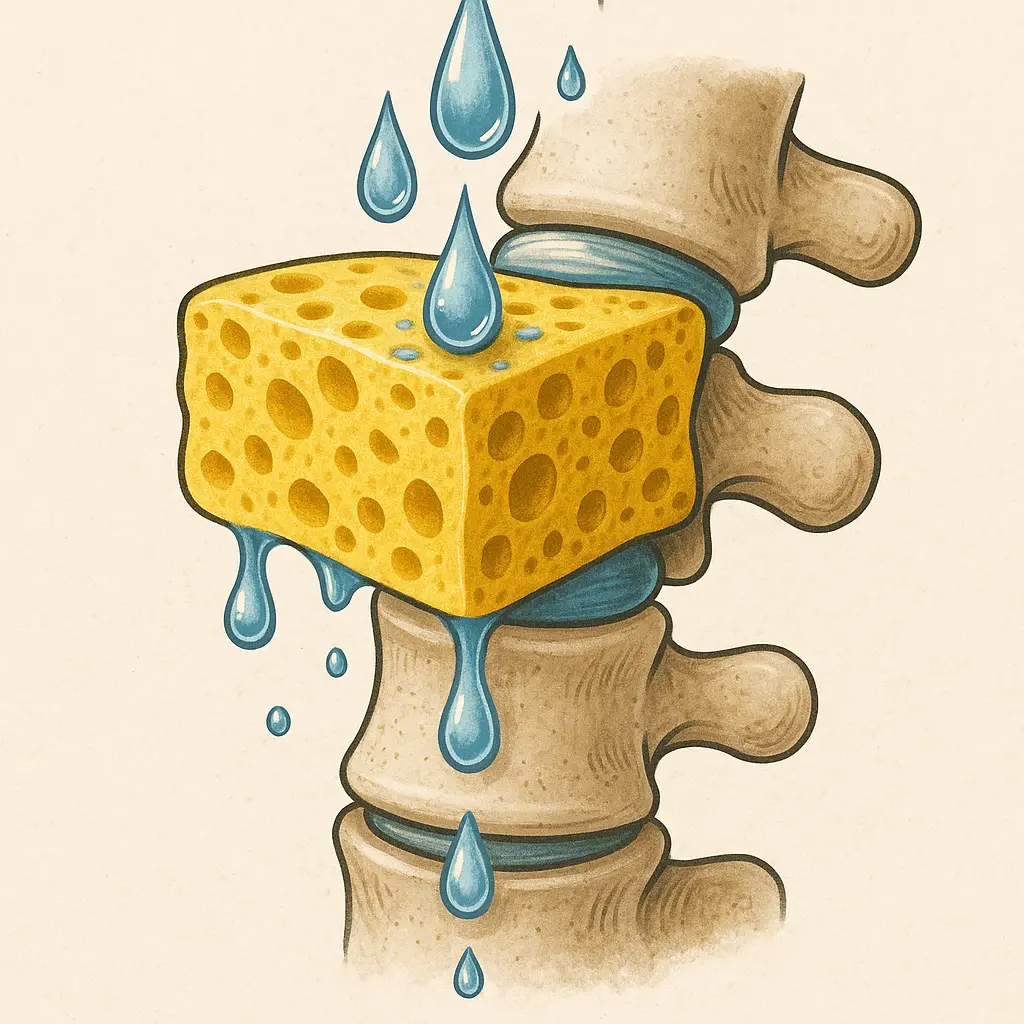
disc hydration ELDOA. Illustration of a yellow sponge between two vertebrae with water droplets rehydrating the spine — metaphor for disc hydration through ELDOA and TV Stretching.

💡 Your spinal disc doesn’t just “recover” with hydration while you sleep. It responds to what you do before you rest.


🟠 Your Discs Aren’t Lazy — They’re Just Dehydrated

Most people think spinal health and disc hydration is a waiting game: take the pressure off, rest a bit, and hope the body “fixes itself.” But that mindset overlooks one of the most basic truths of physiology: structure needs input.

Your intervertebral discs — the soft cushions between each vertebra — don’t have a direct blood supply. They rely entirely on your movement, posture, and hydration mechanics to stay supple and healthy. If you’ve ever felt stiff or achy in the morning despite a “good night’s sleep,” there’s a reason for that.


🧠 The Science of Disc Hydration — in Plain Speak

Discs rehydrate in two ways:

1. Passive Rehydration (Osmotic Pressure)

When you lie down at night, gravity is removed. This creates an osmotic gradient — water is slowly drawn back into the discs. Think of it like setting a sponge in a shallow bowl of water. It’ll eventually soak in… but only as much as its tissue allows.

2. Active Rehydration (Mechanical Stimulus)

When you de-coapt your spine through targeted movement — like ELDOA stretches — you create negative pressure and fascial tension. This primes the disc to pull in more fluid. It’s like squeezing and releasing that sponge right before soaking it — it absorbs far more water when prepped this way.


🌙 Why ELDOA “TV Stretching” Works So Well for Disc Hydration

“TV Stretching” is the term we use for doing your ELDOA decompression work 1–2 hours before bed. This timing allows you to:

  • Decompress your spine actively
  • Prime your discs to absorb water
  • Then follow it with passive overnight rehydration

You’re combining two mechanisms, not relying on just one.

This is especially effective if you’re dealing with:

  • Degenerative disc issues
  • Postural compression from sitting or lifting
  • Chronic stiffness that doesn’t resolve with sleep alone

🛠 Try This Tonight: 2-Step Reset (L5/S1 Focus)

Before bed, try this:

  1. Get into the L5/S1 ELDOA position, but keep your knees bent.
    This protects the popliteal artery, which runs behind the knee and can be compressed during long-duration stretches with extended legs.
  2. Stay in the posture passively — just hold the position and breathe for 5, 10, or even 15 minutes.
    You’re not actively reaching or tensioning yet — just letting the spine settle and decompress through position alone.
  3. Then do a single, focused ELDOA hold — no more than 1 minute.
    Engage the full fascial lines. Create vertical tension. Be precise.
    (Too long and you’ll reverse the effect — ELDOAs are about quality, not duration.)
  4. Lie down and rest.
    This primes your spine for both active and passive hydration during the night.

Try this for a few nights and feel the difference. It’s a strategy rooted in somatic intelligence — not guesswork.


🌀 Recovery Starts with Awareness

This is about more than hydration — it’s about being in your body enough to know what it needs and when.
If you’re curious how body awareness and healing are deeply connected, this Psychology Today overview of somatic therapy breaks it down beautifully. It echoes what we practice here — movement that starts with presence, not just position.


✅ Feel Different in the Morning — Not Just Rested

If you want to feel strong, tall, and fluid in the morning, you don’t need more sleep.
You need smarter pre-sleep recovery.

This approach is simple, targeted, and doesn’t take long. But it’s rooted in deep science and even deeper respect for the body’s rhythms.

🔗 Want help applying this to your specific structure?
Book a free 30–45 minute strategy call and we’ll walk through the right ELDOA and hydration approach for your spine.

Or join us for our monthly Free Community ELDOA class, to try it for yourself.

Follow the Thread—Where Movement, Fascia, and Freedom Align
Find more insight, reflection, and fascia-informed care across the platforms where we stay connected:

Facebook

Blue Sky

Pinterest

Instagram

Youtube

Linkedin

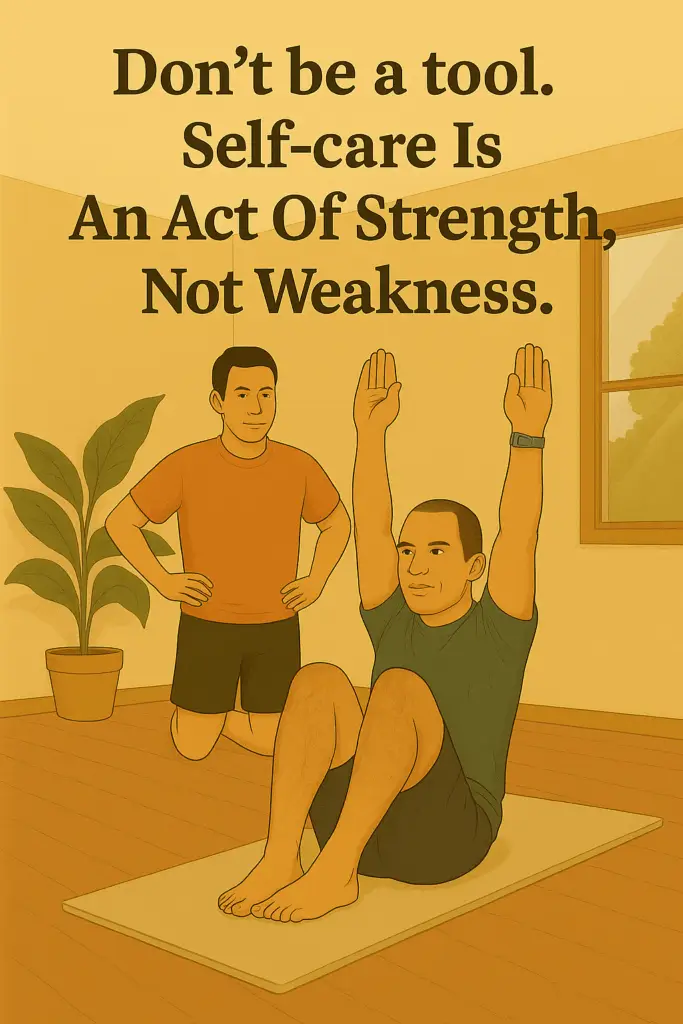
Your Body Is Not a Tool: It’s a Tensegrity System

Mens Health. Your Body is not a tool - tensegrity system body

Your Body Is Not a Tool—It’s a Tensegrity System

Most men treat their body like a tool.
Use it. Push it. Sharpen it. And when it breaks—tape it up and keep going.

But what if that’s the wrong model?

What if your body is less like a hammer… and more like a suspension bridge?

🧬 What Is a Tensegrity Structure?

Tensegrity is a principle of architecture and biology that describes how a system holds its shape through tension and compression in balance.

In your body, that means:

  • Fascia suspends bones, not just muscles.
  • Muscles work in continuous loops—not linear pairs.
  • Stability comes from distributed force, not just strong joints.

This concept is well explored in tensegrity structures in the body, where bones float in a sea of soft tissue and movement is the result of dynamic relationships—not rigid levers.

When one area tightens or collapses, everything else has to adjust—sometimes with pain, sometimes with compensation.

🧠 The “Tool Mindset” Is Costly

Most men were taught to push through discomfort, to train harder, and to earn results through effort alone.

But this approach overlooks the systemic balance that your body depends on:

  • Strength in one plane + stiffness in another = injury
  • Big lifts without joint hydration = compression, not growth
  • No fascia prep = poor rebound and reduced circulation

Fascia doesn’t just wrap muscles—it governs how force travels through the body. Fascia’s role in structural balance is central to preventing overload and sustaining performance.

A tensegrity system doesn’t respond well to brute force. It needs strategy.

🔧 The Shift: From Hammer to Suspension Bridge

What if instead of forcing your body, you prepared it?

  • What if warm-ups focused on joint mobility and fascial hydration, not just heat?
  • What if your training helped restore balance before pushing capacity?
  • What if you saw self-care as performance insurance, not a luxury?

🛠️ ELDOA: Biotensegral Fitness in Action

This is where tools like ELDOA, myofascial stretching, and segmental reinforcement come in.

They create:

✅ Precise decompression
✅ Vector-aligned tension
✅ Functional hydration of discs and joints
✅ Endurance without compensation

It’s not flashy. But it works. And it lasts.

In fact, fascia-related dysfunction is often a root cause of training breakdown. Learn more about overuse injuries and movement compensation and how smarter prep can make the difference.

📣 Final Thought: Pride in Structure

During Men’s Health Month and Pride Month, the message is simple:

➡️ Pride in yourself starts with knowing yourself.
➡️ You can’t give what you don’t have.
➡️ A resilient body supports a fulfilling life.

The goal isn’t to push harder—it’s to train smarter.
Your body isn’t a tool. It’s a system. Treat it that way—and it will carry you far.

Want to experience what real body architecture feels like?

Follow the Thread—Where Movement, Fascia, and Freedom Align
Find more insight, reflection, and fascia-informed care across the platforms where we stay connected:

Facebook

Blue Sky

Pinterest

Instagram

Youtube

Katy G – When All Else Failed, She Tried Again And Succeeded

The big smile that Katy comes in with is always a joy to see. But situations with her body were trying to take that smile away. You see, 10 years ago, she was injured at work. The pain and limited activity were constant companions. 

She tried PT, Cranial Sacral, and all types of bodywork massage, including Rolfing, Feldenkreis, acupuncture, chiropractic, ergonomic office assessments, and yoga classes, and bought various DVDs specific to back issues. In 2023, I had spine surgery for sciatica and stenosis. She suspected her back would have been worse sooner without these efforts, but they didn’t fix matters.

Activities like gardening, bending, walking, and sitting were severely limited and painful. She had sciatica every day and neuropathy in her shin and foot. The walking distance was short, and her speed was slow. Sitting down really locked up her back and glutes. Standing was more comfortable. Lying prone with ice offered some relief.

Medicare cut off her PT five months after surgery, but she was still not okay. To make matters worse, and her frustration, PT had not helped much anyway. She was praying for direction when she saw an ad for a free SolCore Fitness trial class on Facebook (this is our Monthly Free ELDOA class).

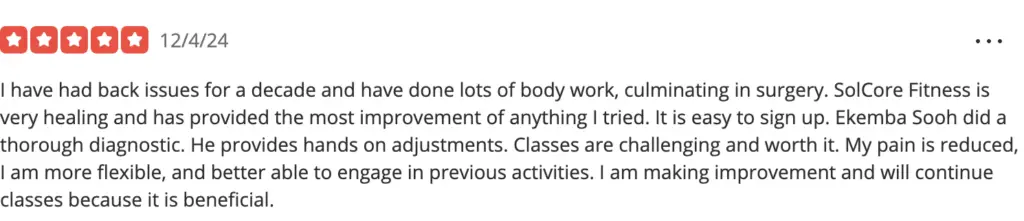
She signed up online and attended the free Saturday group class, and since she found it so beneficial, she signed up for the 2-week trial to give SolCore Fitness a fair test. Ekemba Sooh did an assessment of my issues so he knows what is safe to do. Ekemba is active in class, hands-on, adjusting student postures, and he is very aware of our abilities and injuries. She also signed up for some individual sessions to include the manual therapy techniques because “I was desperate to get better.”

After six months of classes, she continues to improve. She walks better, moves easier, can sit longer, has reduced duration, is less frequent, and travels more efficiently. Since she continues to make progress, she is motivated to keep going and continue to improve her body, health, and life. So, She is sticking with the program that got her there.

Find out more @

Facebook

Blue Sky

Pinterest

Instagram

Youtube

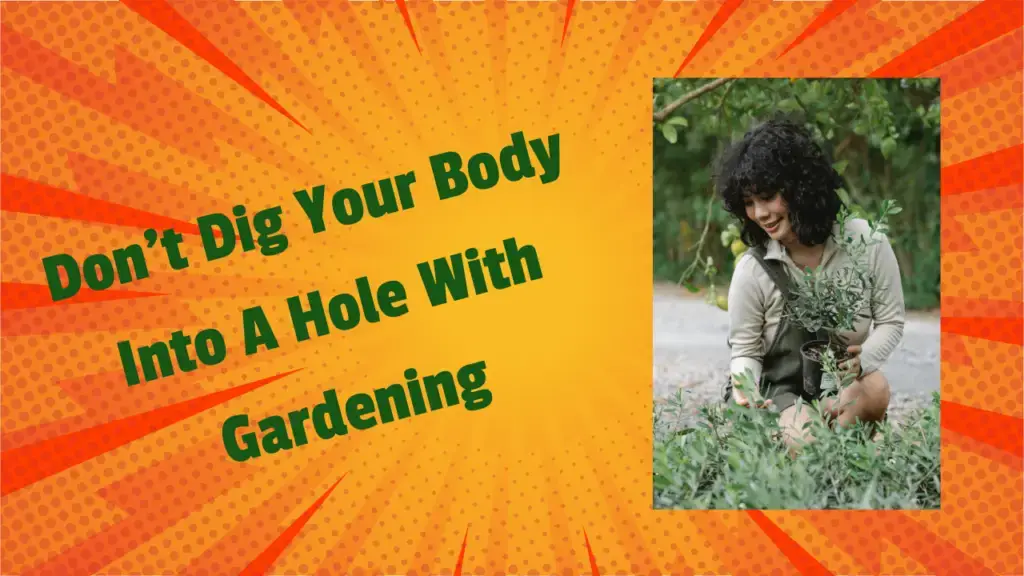
Gardening. The Unwanted Effects On Your Body.

🌱 Gardening Hurts? How to Protect Your Body While Doing What You Love

Gardening brings joy to so many people — the satisfaction of growing your own food or flowers, the quiet peace of working in the soil. But for many, it also brings back pain, neck stiffness, sore knees, or overall fatigue. It doesn’t have to be that way.

I’m Ekemba Sooh, owner of SolCore Fitness. I’ve been in the health and fitness field for over 30 years, working under the osteopathic model. And here’s what I want you to know:

Gardening is a sport. It’s physically demanding. And like any sport, if you don’t prepare your body for it, you’ll pay for it.

In this blog, I’ll break down:

Simple things you can do to avoid injury and feel better

Why gardening leads to pain

What’s really happening to your knees, back, and spine

Click on the image to watch the video

🌻 Gardening is More Demanding Than You Think

Here’s what most people miss: gardening places a huge load on the body.

You’re squatting, bending, twisting, lifting, and often holding these positions for long periods. That’s a combination of:

  • External load (heavy pots, rocks, plants)
  • Postural load (static crouching, awkward angles)
  • Repetitive strain (hours of weeding, digging)

One of my clients — an art teacher — came to me years ago with chronic pain. After months of work, she felt great and was living her life again… until one weekend she gardened for five hours straight. No warm-up. No cool-down. She undid months of progress in one afternoon.

This isn’t about fear — it’s about awareness.


🦵 Your Knees: Why Squatting Hurts Later

Gardening involves constant squatting, both dynamic and static. The knee joint is most stable at 90 degrees — but once you drop lower, things start to rub.

A law in biomechanics called Delpech’s Law tells us that high pressure on a surface leads to the body producing more tissue. In the knees, this can lead to roughened cartilage, causing pain, grinding, and inflammation — especially if you do it over and over without support.


🧍‍♂️ Your Lower Back: Lever Arms & Fascia Fatigue

Ever notice how heavy things feel when you’re bent forward? That’s the lever arm principle. The further out the weight (or your torso), the more strain on your lower back.

From your belly button to your pelvis, you don’t have bones to hold things together. Your fascia — soft tissue layers — does the job. But fascia needs to be hydrated, supple, and trained to support load.

If your fascia isn’t prepped, long hours in bent-over positions can overwhelm it. That leads to tightness, spasms, or worse.


🌀 Your Spine: Why Flexing and Twisting Are Dangerous

Most gardening tasks involve two risky combinations:

  • Flexion + Rotation (scooping dirt, weeding)
  • Extension + Rotation (reaching up and twisting)

Both compress the spine’s joints and increase the risk of disc issues like bulges, herniations, or pinched nerves — especially if your spine isn’t stabilized by surrounding muscles and fascia.

This isn’t about avoiding movement. It’s about training your body to handle those movements safely.


🏋️‍♀️ What You Can Do to Prevent Gardening Injuries

Here are the three keys to keeping your body pain-free while gardening:

1. Train Like It’s a Sport

You wouldn’t try to deadlift 500 pounds without a program, right? Gardening is no different. Your body needs a holistic strength and mobility plan based on what you’re asking it to do — not just general workouts, but targeted prep for your spine, knees, pelvis, and fascia.

2. Warm Up Before Gardening

Your body is like an old car — it needs a few minutes to “rev the engine.” A proper warm-up turns on your muscular and neurological systems, thins out the fluids in your joints and fascia, and helps prevent injury.

Here’s a short warm-up that targets the most stressed areas:

👣 Knees

  • Knee Circles (clockwise and counterclockwise)
  • Figure 8s (vertical and horizontal)
    These gentle movements lubricate the joint and prep ligaments for squatting.

🧘 Pelvis

  • Pelvic Rocks in a wide-stance position with knees bent and torso upright. Helps activate the hips and lumbar spine.

🌀 Spine

  • Torso Translations & Tilts with arms in external rotation. Warms the ribcage and mid-back while protecting from over-compression.

Just 5–7 minutes of this can drastically improve how your body handles the demands of gardening.

3. Recover After Gardening

You’ve loaded the system — now you have to unload it. Stretch the areas you used. Use fascia-specific movements or myofascial stretches to rebalance the body. Don’t just sit down and let it tighten up.

Using Osteopathic manual therapy techniques like TTLS, work with the body and speed up healing to regain function.


🌿 Want to Keep Gardening for Life?

If gardening brings you joy, it’s worth protecting. And if you want help, I’ve got 3 easy ways to start:

Let me help you garden smarter, not harder — and keep doing what you love for years to come.

Building a foundation for a better life.

Find out more @

Facebook

BlueSky

Pinterest

Instagram

Youtube

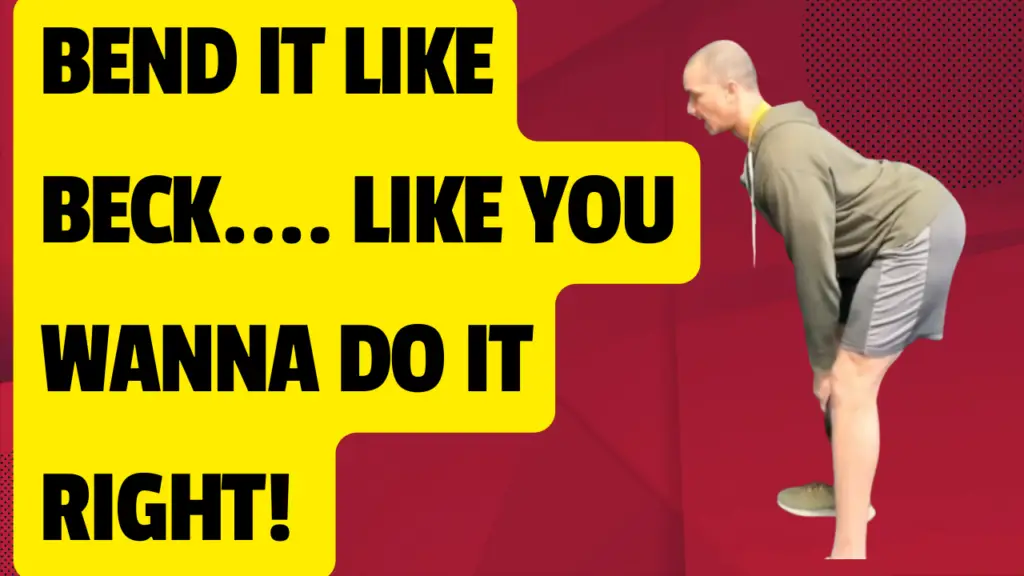
Do You Know the Truth About The Bend Pattern?

Bending is one of the most common movements we use in everyday life—picking up your kids, moving a box, swinging a golf club. But most people don’t do it well. That poor movement adds up, leading to tightness, pain, or injury over time.

So should you jump straight into Romanian deadlifts (RDLs) or kettlebell swings to “fix” it?

Not quite.

Let’s unpack what the bend pattern really is, which muscle chains are involved, and how to approach this movement holistically so your body gets stronger—not more worn down.

Click the image to watch the full video

What Is the Bend Pattern, Really?

In training, the bend pattern refers to a hip-dominant movement like an RDL or deadlift. You’ll see this pattern show up solo or combined with other movements during everyday life—lifting, twisting, walking, squatting.

But just “doing” the movement doesn’t mean you’re doing it well.

If your muscle chains are out of balance—some tight, some weak, some misfiring—practicing the bend pattern without addressing the root causes can reinforce dysfunction and eventually lead to pain or breakdown.


The Bend Pattern Is a Global Movement

Unlike isolated exercises, the bend pattern is what we call a “global” movement. It requires the whole body to coordinate and act as one. That’s why I don’t just teach the movement—I assess how your body is functioning within the movement.

We look at the full chain: the muscles, fascia, tendons, ligaments, and how they interact.

The primary chain behind the bend pattern is your posterior chain—from your heel to your calves, hamstrings, glutes, deep back muscles, and even your neck and shoulders. But your anterior and lateral chains help stabilize that pattern too.

Here’s a quick snapshot of the key players:

  • Soleus
  • Gastrocnemius (calf muscles)
  • Hamstrings
  • Gluteus maximus
  • Four layers of spinal muscles
  • Trapezius
  • Rhomboids
  • Levator scapulae
  • Shoulder stabilizers

The Problem with Just “Doing” the Bend

Too often, people start loading up barbells without assessing the quality of their chain or how their fascia is functioning.

The bend pattern naturally places more mechanical load on the lower back than a squat—simply due to leverage. That’s not a bad thing. But it becomes a problem if:

  • You haven’t trained segmentally
  • Your fascia is out of balance
  • You’ve overloaded the system
  • You’re dealing with an acute back issue

Force isn’t the enemy. Misapplied force is.


How to Learn the Bend Pattern: Start Pure

To truly master this pattern, you must start with clean motor control. I teach the butt-back, bow-forward drill from a kneeling position. It’s the most stripped-down, brain-friendly way to teach your body how to move properly.

From there:

  1. Kneeling →
  2. Bodyweight standing RDL →
  3. Light weight →
  4. Full deadlift (hip + knee bend)

At each step, you’re grooving the right motor pattern—building a motor engram in your brain so you move properly without having to think about it.

Key pointers:

  • Keep a neutral spine (don’t over-arch or round)
  • Maintain all four natural curves in your back
  • Shift weight back into heels—but don’t lift your toes
  • Move as one unit—don’t break at the spine
  • Engage your abs and lats for support

Common Mistakes (That Will Wreck Your Back)

  • Rounding the spine
  • Overarching the lower back
  • Losing foot contact
  • Using too much weight too soon
  • Not progressing through proper training stages

Instagram might celebrate a rounded-back deadlift, but your body won’t. You want smooth, controlled, segmental movement—built over time with intention.


The Fascia Piece (Why It Matters)

Muscles don’t work in isolation. They’re wrapped in and connected by fascia—a living, communicative network that governs structure, neurology, and coordination.

If your fascia is dehydrated, compressed, or restricted, your body can’t move well—even if your muscles are “strong.”

Here’s what affects fascia health:

  • 🚰 Dehydration (aim for half your body weight in ounces of plain water daily)
  • 😰 Chronic stress
  • 🧍‍♂️ Not working the fascia directly (training in multiple planes and ranges)

Want a better bend pattern? Take care of your fascia first.


Deadlift vs. RDL

Once you master the RDL, you can layer in the deadlift by adding controlled knee flexion. The movement stays hip-dominant, but now you’re handling more force and range of motion.

Both movements are important—but only if you’ve earned the right to do them well.


Slow Is Smooth. Smooth Is Strong.

Building a bend pattern takes time. Don’t rush. Train your brain, train your chains, and train your fascia. It’s not about how much weight you lift. It’s about how well you move—now and for the rest of your life.


Want Help?

If you’re 40+ and looking to be strong, mobile, and pain-free for the long haul, I’ve got a few ways to support you:

All links are in the description below.

See you next week—take care.

— Ekemba Sooh
SolCore Fitness & Therapy

it’s not just working out, it’s building a foundation for a better life.

Find out more @

Facebook

Twitter

Pinterest

Instagram

Youtube

Is Hanging For Back Pain A Real And Safe Solution? 🧐

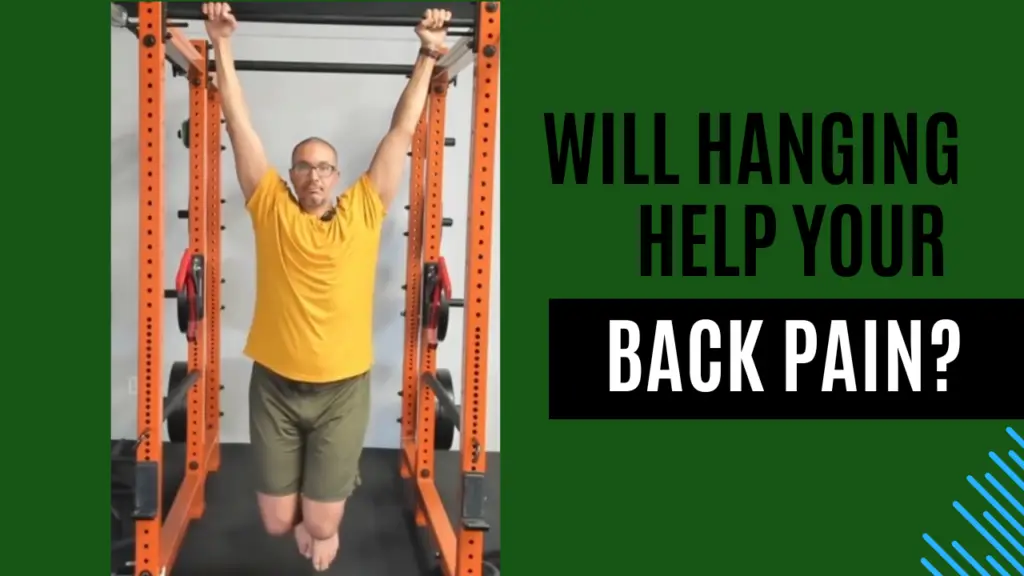
Back pain affects over 550 million people worldwide, and with that kind of number, it’s no surprise people are searching for relief—fast. One of the more popular trends? Hanging from a pull-up bar to decompress the spine. But is this method really helping, or could it be doing more harm than good?

Let’s break it down through a holistic, fascia-informed lens, so you can understand what’s really happening when you hang—and whether it’s a smart choice for your back.

Click on the image to watch the full video

🔍 Why People Hang for Back Pain

The theory is simple: when you hang, your body weight creates a gentle pull on the spine, which seems to decompress the vertebrae. It’s popular among physical therapists and fitness influencers who promote spinal decompression as a fix for bulging discs, tight backs, or just general discomfort.

But like most things in health and fitness, simple doesn’t mean effective—and it certainly doesn’t mean safe for everyone.


🚫 When Hanging Might Do More Harm Than Good

Let’s start by understanding what kind of back pain you’re dealing with. Here’s a simple breakdown:

  1. No pain – Fine for general feel-good movement
  2. Semi-chronic – Occasional flare-ups
  3. Chronic – Consistent daily discomfort
  4. Acute – Sharp, intense pain or injury

🔴 Acute or chronic pain? Avoid hanging. Your body is already inflamed and dysregulated. Hanging adds unpredictable force to an unstable system—it’s not specific, and it can worsen the problem.

🟡 Semi-chronic? Maybe—but only for brief relief, not correction.

🟢 No pain? You’re free to experiment, but don’t expect it to fix much.


🌀 What Really Happens When You Hang?

When you lift your feet and hang from a bar, your body wobbles. That instability triggers your core and spinal muscles to contract constantly in small ways just to keep you from falling.

That means instead of fully relaxing and lengthening your spine, your body is busy protecting itself. And contraction ≠ decompression.


📌 The Specificity Problem

Even if hanging did decompress the spine, it doesn’t target where you need it most.

Back pain often shows up in specific areas—like L4-L5, T12-L1, or T8-T9. But when you hang, your body moves where it’s already free and open—not where it’s stuck.

➡️ Correction requires specificity. If you can’t direct the force to the exact spinal segment in need, you’re just stretching the wrong places.


🪢 No Fixed Point = No Progress

To correct posture or decompress a joint, your body needs fixed points above and below the target area. Hanging removes that control. It’s like trying to stretch a rubber band without holding the ends.

You can’t direct the force. You can’t stabilize. You can’t be specific. And without that, no real change happens.


🔄 Twisting While Hanging? Please Don’t.

Some videos promote twisting your body while hanging. That’s biomechanically dangerous.

When you twist your spine under load (yes, hanging counts), you create compression, not decompression. The spinal discs and surrounding ligaments are not built to rotate freely under tension—especially not in a compromised state.


🏗️ Hanging Is a Closed Kinetic Chain

If you’re trying to create space in your spine, you need open kinetic chain movement—freedom at the end joint. But hanging is closed-chain. Your arms are fixed; your spine becomes the weak link under tension.

That’s the opposite of what you want if your goal is spinal decompression.


🔧 So What Should You Do Instead?

Back pain isn’t always caused by your back. Common culprits include:

  • Herniated or bulging discs
  • Pinched nerves or blood vessels
  • Structural imbalance
  • Weakness or asymmetry in trunk muscles
  • Poor fascial tension distribution

You need to balance strength and mobility across your entire structure. That includes your spine, diaphragm, abs, ribs, back muscles, and everything connected via fascia.

🧠 And most importantly—you must re-educate your body. Passive hanging doesn’t do that. You need specific exercises and postures that restore function, reduce compression, and create stability through proper alignment.


✅ Here’s What Works Better

  • ELDOA – Targeted spinal decompression with fascial tension
  • Myofascial Stretching – Postural rebalancing to relieve tension
  • Holistic Training – Programs designed to move you from dysfunction to function
  • Structural Assessment – To identify where to start and how to build safely

💬 Final Word: Hanging Feels Easy—But That Doesn’t Make It Effective

It’s tempting to think hanging can fix your back pain. It’s quick. It’s simple. But the body isn’t simple—it’s complex, interconnected, and intelligent.

If you want sustainable relief and a stronger, more mobile spine, don’t rely on hacks. Invest in your body’s full system.


🎁 Want Help?

Get started for free:

Let’s move beyond hacks—and help your body become something greater.

it’s not just working out, it’s building a foundation for a better life.

Find out more @

Facebook

Twitter

Pinterest

Instagram

Youtube

Unlocking the Power of the Squat Exercise

The squat exercise is one of the seven primal movements. But unlike the others, a properly executed squat is the only one that can directly improve your posture.

Most people learn to squat the wrong way. Fitness classes, trainers, and online videos often pass down bad form like it’s tradition. Challenges like “100 squats a day” only reinforce poor patterns. They don’t teach you how to move—they teach your body how to compensate.

That’s a problem.

Click the image to watch the full video.

Why the Squat Exercise Matters So Much

A squat isn’t just for building legs or glutes. It’s a global movement that involves your whole body working together. In fact, it’s made up of multiple smaller systems working in harmony—from your pelvic floor to your jaw.

Done right, it’s one of the most powerful tools you have for long-term strength, mobility, and posture.

Done wrong, it becomes a slow leak—wearing down your body over years until the damage is finally too loud to ignore.


Most People Are Taught the Squat All Wrong

When I started training back in my teens, I was told to arch my back, stick my butt out, and look up. It felt powerful—but it placed massive stress on my lower back and neck. I didn’t feel pain for years. But by the time I hit 35, that form had helped cause a spinal issue and sciatic pain.

That’s how compensation patterns work. You don’t feel them until they’ve done damage.

And unfortunately, a lot of fitness systems still teach that exact form today.


The Squat and Posture: A Unique Relationship

Unlike bending, pushing, or pulling, the squat uses and improves your posture—if done correctly.

Your postural system is made up of:

  • The Plumb Line (ear, shoulder, hip, knee, ankle alignment)
  • The Gravity Line (a 4-degree cone rising from your pubic bone)

The squat interacts with both. If your plumb line is off, squatting can make things worse. But if you squat with awareness and alignment, it actually helps reinforce your posture inside that gravity cone.


What It Takes to Do a Proper Squat Exercise

The squat is built from many parts. Each part needs to function independently before it can function together.

Here’s what that means:

✅ The Beam Phenomenon

Your torso needs to move like a solid beam—no wobble. That requires training your:

  • Pelvic floor
  • Abs (especially lower abs)
  • Diaphragm
  • Lats
  • Pecs
  • Fascia in the mouth and throat

✅ Foot and Ankle Mechanics

Your feet are your foundation. A weak or collapsed arch (especially at the navicular bone) throws off everything above. You may need arch support or proper shoes when lifting heavy.

✅ Pelvic Tuck and Knee Drive

A good squat is knee-dominant. That means knees move first—not hips.

At the same time, keep your pelvis tucked and chin tucked to stay in the beam. This requires both abdominal strength and fascial flexibility in the back.

If your soleus and calves are tight, your heels will lift and stop your knees from driving forward. So you may need to stretch and strengthen your calves to get full range.


Learning to Squat Means Slowing Down

If you’re constantly focused on performance or fat loss, you’re not giving your body the time it needs to learn proper form. And in a class environment, correcting your form often isn’t the priority.

That’s like trying to learn typing by mashing keys as fast as possible without learning the keyboard.

It’s not a matter of willpower—it’s just bad input. And bad input = bad output.


Good Squat = Good Life

Learning how to do a proper squat gives you a relationship with your body.

You’ll learn where you’re tight, where you’re weak, and where you’ve been compensating without even knowing it. And when you address those things, your body responds.

You get stronger. You feel better. You age slower.


Want Help With Your Squat?

I’ve helped thousands of people reconnect to their bodies through correct, holistic training. Here’s how you can start:

You’ve been given a body that can last 90+ years. The squat exercise is one of the best ways to take care of it.

Let’s make sure you’re doing it right.

it’s not just working out, it’s building a foundation for a better life.

Find out more @

Facebook

BlueSky

Pinterest

Instagram

Youtube