

Posture

You Must Break Bad Patterns Before You Can Build New Ones

You Must Break Bad Patterns Before You Can Build New Ones

If you want to break bad movement patterns, you need to understand something first: your body doesn’t care what you want. It cares what you’ve trained it to do.

Every time you sit the same way, move the same way, compensate the same way — your fascia adapts to that. Your muscles organize around it. Your nervous system treats it as normal. And now that dysfunction isn’t a glitch. It’s your operating system.

You can’t install new software on top ofa corrupted system. You have to fix the corruption first.

Coach’s Corner

I watch people do this all the time. They come in motivated. They want to get stronger, move better, feel good. So they start a program — any program — and they work hard.

But they’re working hard on top of patterns that are already broken. Their body is compensating every rep, every stretch, every movement. And the harder they work, the deeper those compensations get.

It’s like putting fresh paint on a cracked wall. It looks better for a week. Then the cracks come back. And they’re always a little worse than before.

The way is through — but “through” means going back to the foundation first. That’s the part most people skip because it doesn’t feel productive. It feels slow. It feels basic. But it’s the only thing that actually works.

Why Your Body Keeps Defaulting to Dysfunction

Here’s what’s happening under the surface: your fascia has memory. Not the kind you think about — structural memory. It physically reorganizes itself around the positions and patterns you repeat most often.  Research published in Frontiers in Physiology confirms that these structural changes in fascia and muscle tissue compound over time.

So when you sit hunched for 8 hours a day, your fascia doesn’t just “get tight.” It literally reshapes itselfto support that hunched position. Your muscles shorten. Your joints lose range. And your nervous system stops sending signals to the areas that aren’t being used.

Now you stand up and try to do a squat, a stretch, a workout — and your body defaults to the pattern it knows. The dysfunction. The compensation. The path ofleast resistance.

You’re not weak. You’re not lazy. You’re patterned. And patterns don’t change just because you decided to start working out.

What It Actually Takes to Rewire a Pattern

This is where most programs fail. They add exercises on top ofexisting dysfunction and hope the body figures it out. It doesn’t. It just compensates harder. And here’s the part nobody warns you about: the more compensations your body stacks, the quicker things break down. It’s not a slow decline — it accelerates. Each compensation creates the next one, and the whole system gets more fragile with every layer.

Breaking a pattern requires three things:

First, you need to identify where the dysfunction actually lives. Not where you feel pain — where the pattern originates. Those are rarely the same place. Your lower back might hurt, but the pattern might start in your hip, your fascia, your pelvis.

Second, you need targeted work that addresses the specific restriction. Not general stretching. Not random exercises.  My ofascial stretching, ELDOA, and corrective exercises that go after the exact tissue, the exact segment, the exact chain that’s holding the pattern in place.

Third — and this is the one people struggle with — you need patience. If it took ten years to build the pattern, you’re not undoing it in a week. The first three months are the hardest because your body is literally learning a new way to organize itself. But once it clicks — once you develop that brain-body connection — everything changes.

It’s difficult when you do it right.

That’s not a warning. That’s a promise. If it feels easy, you’re compensating. If it feels hard in a way you’ve never felt before — you’re finally doing the work.

Marja knows this. She came to me after breaking three vertebrae. Doctors said she’d never garden again. The first three months were brutal — her body was learning entirely new patterns. But she stayed consistent. Years later? Pain-free. Gardening an hour and a half at a time. Moving better than before the injury. She’ll tell you herself: “Being present in this routine is huge. Ifyou just blindly follow, you won’t get it. But ifyou think and try, like any skill, eventually you become your best therapist.”

Watch Marja tell her story in her own words:

Want the full case study? Download Marja’s complete story HERE:

This Applies Whether You’re in Pain or Not

If you’re in pain, the bad pattern is what’s causing it. Breaking it is how you get out.

If you’re not in pain, the bad pattern is still there — it just hasn’t announced itself yet. Breaking it now is how you make sure it never does. That’s what prevention actually looks like. Not avoiding activity — correcting the dysfunction that’s building quietly in the background.

And if you’re chasing performance, every unaddressed pattern is a ceiling on what your body can do. Break the pattern, raise the ceiling.

Where to Start

Ask yourself this: am I actually working on what I think I’m working on, or am I compensating?

If you’re not sure, that’s your answer.

The Lower Back ELDOA course is $52 and it’s built to address dysfunction at specific segments — the kind oftargeted work that actually breaks patterns instead of reinforcing them. It’s the starting point.

Get started HERE

Don’t make me come check your form.

Follow the Thread — Where Movement, Fascia, and Freedom Align

Find more insight, reflection, and fascia-informed care:  

Facebook

Bluesky

Pinterest

Instagram

YouTube

LinkedIn

Why Your Lower Back Pain Keeps Coming Back

If you’re dealing with lower back pain, you already know the cycle. It flares up. You do something about it — ibuprofen, ice, a massage, maybe a trip to the chiropractor. It feels better for a few days. Then it comes back. So you do it all again.

And again.

And again.

Here’s the part nobody’s telling you: that cycle isn’t managing your pain. It’s making it worse.

Coach’s Corner

I’ve had clients walk into my studio who’ve spent years — and thousands of dollars — on this exact loop. Adjustments. Massage. PT. Injections. And they’re no better than when they started. Sometimes they’re worse. And the first thing they say is, “I think it’s just my age.”

No. It’s not your age. It’s the fact that every treatment you’ve tried has been aimed at the symptom — the pain — without ever addressing the cause. And every time you treat a symptom without fixing the root, your body compensates. It builds new patterns on top of broken ones. Now you don’t have one problem. You have three.

The Cycle That’s Making It Worse

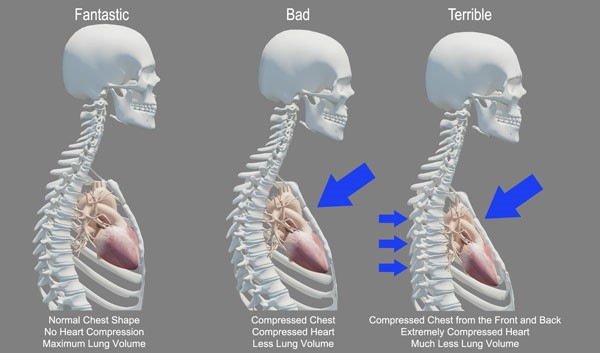
Your lower back pain isn’t random. It’s the result of dehydrated fascia and a spine that’s lost its segmental independence. That means instead of each vertebra doing its own job, whole sections of your spine are moving as one locked block.

When you get an adjustment or a massage, you might temporarily relieve the pressure. But the segments are still stuck. The fascia is still restricted. Nothing has actually changed at the source. So your body goes right back to where it was — or worse, because now it’s compensating around the “fix.”

Research published in Frontiers in Physiology confirms what I’ve seen for 30+ years: these structural changes in fascia and muscle tissue happen over time and compound when they’re not addressed at the source.

Getting treatments for symptoms without fixing the problem isn’t helping you. It’s making the problem worse.

What Your Lower Back Actually Needs

Your lower back needs decoaptation — real, sustained, intentional space created between the joint surfaces so each segment can do its job independently. Your spine actually needs compression to hold itself in place. The problem isn’t compression itself — it’s when segments get stuck together and lose their individual movement. ELDOA creates space between those segments so they can function the way they were designed to, rehydrating the fascia and restoring segmental independence.

That’s exactly what ELDOA does.

ELDOA stands for Étirements Longitudinaux avec Décoaptation Ostéo-Articulaire — longitudinal stretching with joint decoaptation. Each posture targets a specific segment of the spine. You hold it for 60 seconds. And in that time, your body does something no adjustment, massage, or pill can do: it creates space where there was none.

And here’s what most people miss: ELDOA isn’t just for people in pain. The same dysfunction that causes pain also limits performance. When a segment is stuck, you lose function — whether that shows up as pain or as your body just not moving as well as it could. ELDOA corrects the dysfunction either way. If you’re in pain, it gets you out. If you’re not in pain, it makes you more functional and optimized. The more you do them, the better those areas work.

This isn’t stretching. It’s not yoga. It’s not core work. It’s a targeted, intentional technique developed by osteopath Guy Voyer — and it’s the foundation of everything I do.

T8/T9 ELDOA

Breaking the Cycle

If you’ve been in the treat-flare-repeat loop, here’s what I want you to understand: it’s not that nothing works. It’s that nothing you’ve tried has gone deep enough. You’ve been patching the surface while the foundation keeps cracking.

Your lower back pain keeps coming back because nobody’s addressed why it started. And it started with fascial restriction, segments getting stuck together, and a spine that lost its ability to move the way it was designed to.

The fix isn’t another treatment. It’s a system — one that targets the actual segments, de-coapts the joints, and gives your fascia what it needs to function.

I built a Lower Back ELDOA course for exactly this. It’s $52, it gives you access to the full Movement Portal, and it walks you through the specific ELDOA postures for your lower back — the same ones I teach my in-person clients. It’s not a generic stretching routine. It’s the real thing.

Whether you’re trying to get out of pain or you want your body functioning at its best — this is where you start.

If you’re ready to stop patching and start fixing: Lower Back ELDOA Course

Don’t make me come check your form.😉

Follow the Thread—Where Movement, Fascia, and Freedom Align
Find more insight, reflection, and fascia-informed care:

Facebook

Bluesky

Pinterest

Instagram

YouTube

LinkedIn

Why Quick Fixes Fail (And What Real Progression Looks Like)

Why quick fixes fail. Image of woman in her 60's showing how it takes time with progression fascia training.

Quick fixes fail. Every single time.

Quick fixes will only lead to frustration or hurt quickly.

“Six weeks to a pain-free back.”

“Transform your body in 30 days.”

“Three exercises to fix your shoulder.”

These promises are everywhere. And they’re physiologically impossible.

If only your fascia could read marketing copy, it might actually remodel that fast.

Coach’s Corner

Marja came to me after breaking three vertebrae. Doctors said she’d never garden again—her favorite activity.

She didn’t accept that.

But she also didn’t expect miracles. She understood that rebuilding a body after that kind of trauma takes time.

Years later? She’s pain-free, gardening regularly, and moving better than she did before the injury.

Watch her full video interview to see what real progression looks like.

The Quick-Fix Culture Problem

We live in a culture that sells speed. Six-week programs. 30-day challenges. Weekend workshops that promise to “reset” your body.

And I get it. You’re in pain. You want relief. You want it now.

But here’s the truth most practitioners won’t tell you: your body doesn’t work on a marketing timeline.

Tissue adaptation is a biological process. It has a pace. You can’t hack it, shortcut it, or Instagram it into happening faster.

You can only respect it or ignore it.

And when you ignore it by chasing quick fixes, you get temporary relief followed by the same problem—or a new one.

Why Tissue Takes Time

Let’s talk about what actually happens when your body adapts.

Acute pain relief: Can happen quickly (days to weeks) with the right intervention. This is inflammation decreasing, nervous system calming, immediate restrictions releasing.

Movement pattern changes: 4-8 weeks of consistent practice. This is your brain learning new motor patterns, your nervous system rewiring compensation habits.

Tissue remodeling: 3-6 months of progressive loading. This is fascia reorganizing its collagen structure, muscles adapting to new demands, joints stabilizing differently. Research shows that skeletal muscle ECM turns over approximately 0.5-2% of its collagen per day—meaning complete remodeling takes months, not weeks.

Structural integration: 6-12+ months of sustained work. This is your entire system learning to function differently—not just one area, but how everything connects. This is what holistic exercise and fitness programs are designed to address—the whole system, not just isolated parts.

Quick fixes might give you the first one. Temporary relief.

But they skip the rest. And that’s why the problem returns.

The Difference Between Relief and Change

Relief is what you feel when inflammation goes down or a muscle releases.

Change is what happens when your body learns a new pattern and maintains it.

Most programs sell relief and call it change.

You feel better for a few weeks. The pain comes back. You need another program. The cycle repeats.

This isn’t healing. It’s symptom management.

And there’s nothing wrong with symptom management—sometimes you need relief to function. But if you stop there, you’re not building anything that lasts.

Real change requires progression. And progression takes time.

What Progression Actually Looks Like

Ashley came in limping with plantar fasciitis. Within weeks, she was pain-free.

That sounds like a quick fix. But here’s what actually happened:

Week 1: Myofascial release and manual therapy addressed the immediate restriction. Pain dropped significantly. This was relief.

Weeks 2-4: Exercises that progressively loaded her foot, ankle, and lower leg. Her nervous system learned it was safe to move again. This was pattern change.

Weeks 4-8: Continued loading and integration work. Her fascia began remodeling. The change started becoming structural.

Months 2-3: Maintenance and refinement. The new pattern became default. This was lasting change.

If she’d stopped at week 1 when the pain went away, it would have come back. The relief was real, but the change wasn’t complete yet.

That’s the difference between a quick fix and progression.

The Compound Effect

Small, consistent improvements stack.

A 1% gain repeated over months becomes transformational.

This is how you:

  • Eliminate pain that’s been around for years
  • Restore mobility you thought was gone
  • Build strength that transfers to real life
  • Create resilience that prevents future injury

Not in 6 weeks. In 6 months. 12 months. A lifetime of practice.

And here’s what’s interesting: the people who understand this get better results faster than the people chasing speed.

Because they show up consistently. They trust the process. They don’t bail when week 3 isn’t Instagram-worthy.

Why Quick Fixes Always Fail

Quick fixes fail because they don’t address the system. They target symptoms.

Your shoulder hurts. They give you three shoulder exercises.

But your shoulder doesn’t hurt because it’s weak. It hurts because your thoracic spine is restricted, your scapula isn’t moving properly, and your fascia has been compensating for years.

Three shoulder exercises might make it feel better temporarily. But they don’t address why it started hurting in the first place.

So six weeks later, it’s back. Or your neck starts hurting. Or your elbow acts up.

This is how you end up chasing symptoms for years.

The system is still broken. You’re just moving the problem around.

The “Just Tell Me What to Do” Problem

Most people want a prescription. “Just tell me what exercises to do.”

I understand. You’re busy. You want efficiency.

But here’s the issue: your body isn’t static. What you need today might not be what you need next week.

If you’re only following instructions without understanding why, you can’t adapt when things change.

This is why so many people do PT, feel better, then stop—and six months later, they’re back where they started.

They got exercises. They didn’t get education.

They got relief. They didn’t get ownership.

What Real Progression Requires

1. Time

There’s no way around this. Tissue remodels at its own pace. You can optimize it, but you can’t force it.

2. Consistency

Showing up matters more than intensity. Three focused sessions a week beats one heroic effort followed by two weeks off.

3. Progression

You can’t do the same thing forever and expect different results. Load has to increase. Complexity has to advance. Your body has to be asked to adapt.

4. Awareness

You need to learn what your body is telling you. What’s protective pain vs. adaptive discomfort. When to push and when to back off.

5. Patience

Not the passive kind. Active patience. Trusting the process while staying engaged with it.

This isn’t sexy. It doesn’t fit on an Instagram post. But it works.

And it lasts.


The Three-Month Reality Check

I tell new clients: give me three months of consistent work before you decide if this is working.

Not because nothing happens before that. Often, relief comes quickly.

But real change—the kind that lasts—takes about three months to start showing up structurally.

After three months of consistent fascia-focused training:

  • Movement patterns have started to shift
  • Compensation habits are beginning to release
  • Tissue is remodeling
  • Your nervous system trusts the new patterns

This is when people say: “I move differently now. I feel different in my body.”

Not after six weeks. After three months.

And if you want that change to be permanent? Keep going for another three. And another three after that.

It’s easier to sell quick fixes than real progression.

It’s easier to promise “pain-free in 6 weeks” than to say “this will take months, and it won’t always feel good.”

It’s easier to give people three exercises than to teach them to understand their own bodies.

But easy doesn’t work.

If rest and quick fixes solved chronic pain, you wouldn’t still be dealing with it.

If six-week programs created lasting change, you wouldn’t need a new program every few months.

The way forward is slower. But it’s also the only way that actually gets you there.

What Changes When You Embrace Progression

When you shift from chasing quick fixes to trusting progression:

You stop panicking when pain shows up. You understand it’s information, not an emergency.

You stop bouncing between programs. You commit to one approach long enough to see if it works.

You stop chasing symptoms. You address the system creating them.

You build something that lasts. Not just relief, but real change.

This is what holistic training actually means. Not quick. Not easy. But effective.

And permanent.

Ready to Build Real, Lasting Change?

If you’re tired of quick fixes that don’t last, this is why.

Your body needs time, consistency, and intelligent progression.

Want to go deeper? Download The Fascia Fix Framework—a free 20-page guide covering all 5 principles missing from most fitness and therapy programs.

Local to Santa Fe? Book a free consultation to discuss whether SolCore’s progression-based approach is right for you.

See what real progression looks like: Read Ashley’s case study—how she went from not being able to walk, back to her active self.

Questions? Contact us at info@solcorefitness.com or call (505) 577-2171.

Follow the Thread—Where Movement, Fascia, and Freedom Align

Find more insight, reflection, and fascia-informed care:

Facebook

Bluesky

Pinterest

Instagram

YouTube

LinkedIn

Global Postural Stretching—The Smart Way to Real Balance

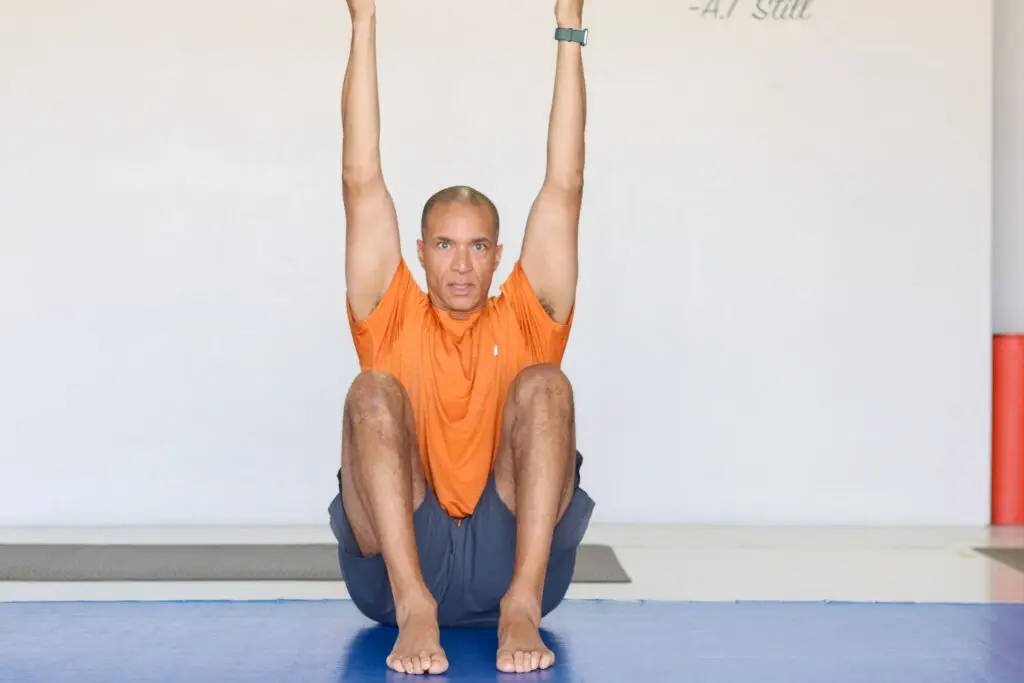
Person demonstrating global postural stretching for whole-body balance

Global Postural Stretching: Align Your Whole Body, Move with Real Balance

Why do some people handle life’s bumps, trips, and quick pivots with steady ease, while others feel wobbly even on a flat floor? The secret often lies in the state of the body’s global fascial chains—and not all stretching is created equal.

Why Not All Stretching Gives You Better Balance

You might see plenty of basic stretches online or at the gym. They usually focus on a single muscle or small group: think toe touches, quad pulls, or triceps stretches. These can add a bit of flexibility. But if only one link in the body’s chain loosens and everything else stays tight? Balance and true stability are still out of reach.

What Sets Global Postural Stretching Apart

With global postural stretching, we work the entire fascial chains at once—from the bottoms of the feet, up the legs, around the hips, and across the core, all the way into the neck and head. Instead of just momentarily lengthening a muscle, this method organizes the whole body around proper alignment and stability. It’s the difference between tuning a single string and tuning the whole instrument: only one gives you music.

Practical examples:

  • The marathon runner who swaps out isolated calf stretches for a GPS sequence and suddenly feels less “clunky” and more stable on uneven ground.
  • The busy parent who does a few chain-based stretches and notices their posture and energy both shift—even after hours at a desk or wrangling kids.
  • The senior who, after adopting GPS, can stand longer, move more confidently in crowds, and catch themself if they stumble.

Why GPS Wins for Whole-Body Alignment and Balance

Research backs this up: muscle chain stretching—like GPS—outperforms traditional spot stretching for balance, range of motion, and even pain relief in the real world. By working on the body’s linked-up structures, you gain steadiness from head to toe, not just a quick fix in one spot.

Want a steadier way to move through life? Choose a stretching approach that respects and rebalances your whole body, not just a single muscle. Global postural stretching is a step ahead—a smarter foundation for lasting balance and confidence.

These specific techniques need to be taught to you and used in conjunction with a holistic exercise and fitness program. Reach out for a free consultation.

Follow the Thread—Where Movement, Fascia, and Freedom Align
Find more insight, reflection, and fascia-informed care:

Facebook

Bluesky

Pinterest

Instagram

YouTube

LinkedIn

The Quiet Power of Acceptance: Recovery as the Foundation for Resilience

Woman in Acceptance in Recovery

When it comes to building a strong foundation for wellness, most of us don’t immediately think about the power of acceptance in recovery. But understanding and embracing this vital skill is the key to sustainable health—a lesson that supports not just our bodies but our mindset as well.

Why Acceptance in Recovery Matters

We live in a world that values more—more steps, more reps, more improvement—but less appreciation for necessary pauses. Acceptance in recovery isn’t about settling; it’s recognizing where you truly are, granting yourself permission to rest, and letting your body rebuild. This is where deep, lasting progress begins. Reminder that you’re on the right path—reach out. You’re not alone.

How to Practice Acceptance for Better Results

It’s simple, but not always easy. Try these steps this week:

  1. Pause: Take a gentle breath and notice what’s happening inside your body.
  2. Reflect: Identify what form of rest or slow movement calls to you—maybe a walk, restorative stretching, or even a day off.
  3. Trust: Honor your answer, no matter how different it might look from your usual “best.”

Example: On busy weeks, our core Santa Fe members sometimes use guided fascia work instead of a traditional workout. This is real progress.

The Science Behind Rest and Adaptation

Your muscles, fascia, and nervous system all require downtime to strengthen and adapt. Studies like this one from Rest and recovery for athletes – physiological & psychological well-being show that real resilience comes not just from stress, but from quality recovery as well.

Building Sustainable Health Over Time

Accepting the need for rest now actually sets you up for even better results later. Consistent recovery is the building block of longevity and vitality—for deeper science on holistic progress, see our resource:
The Ultimate Guide For A Holistic Exercises And Fitness Program 

Acceptance is the quiet, powerful force that allows you to age well, stay resilient, and enjoy your body longer. This week, choose at least one act of kindness for your body and trust that recovery is where progress truly begins.

If you want tips on restorative movement or ways to integrate rest, just reach out. You’re not alone on this path. Schedule a one-on-one consult to see how you can use holistic exercise and fitness to give your body what it needs. Complimentary consultation.

Follow the Thread—Where Movement, Fascia, and Freedom Align

Find more insight, reflection, and fascia-informed care across the platforms where we stay connected:

Facebook

Blue Sky

Pinterest

Instagram

Youtube

Linkedin

Reset Your Body and Mind This Back-to-School Season

back to school body reset with fascia-focused movement

August is always a quiet invitation—not just the end of summer, but the beginning of a rhythm shift that ripples through my home, my body, and my mind. This year, that shift feels different. Heavier. More alive.

Soleil, my oldest, is stepping into middle school. She’s twelve, standing in that in-between space where childhood’s openness meets the first hints of independence. There’s a new energy about her—sometimes light and playful, other times more measured and thoughtful. She doesn’t always share what’s on her mind, but I can sense the mix of excitement, uncertainty, and curiosity that comes with entering a new world.

Bodhi, my youngest, is heading into third grade. At eight, he still meets change like it’s a grand adventure—full of enthusiasm and optimism. His excitement is a reminder that not all transitions have to feel like a challenge; some can feel like pure possibility.

And yet, as their father, I feel both of their worlds within my own. The steady rhythm of our summer days is giving way to earlier mornings, tighter schedules, and a shift in emotional focus. It’s in moments like this that I’m reminded: a reset isn’t just something my kids need. I need it too—not as a “get back on track” plan, but as a recalibration of my presence and priorities so I can meet them fully in this new season, not just watch them step into it.

Why Change in Routine Affects the Body

A change in schedule is more than just different wake-up times or new carpools. Your body’s structure — especially your fascia — is deeply influenced by rhythm, routine, and the emotional undercurrent of your days. When you shift from summer’s looseness into the structured demands of a school year, your fascia responds to the change.

For some, that means tension building in the spine and neck. For others, it’s subtle fatigue or that tight, compressed feeling in the chest and shoulders. It’s your body’s way of saying, “We’re adapting — but we need help.”

Fascia and the Back-to-School Reset

Fascia is the connective tissue that shapes and supports everything you do. It doesn’t just hold you together; it transmits force, stores energy, and influences how you feel in your own skin.

This is why I center so much of my training and therapy around fascia. A reset this time of year isn’t about “working harder” — it’s about moving in a way that creates space, restores balance, and allows your nervous system to breathe. Research supports this approach, showing that while stretching can feel good in the moment, it’s only part of the picture — lasting change requires addressing deeper structural balance and movement habits (Why Stretching Alone Isn’t Enough to Fix Your Pain).

It’s also why I encourage people to explore our guides on how to work with your body holistically as a way to work with the body’s natural adaptation process, rather than fighting it. These services all work together as opposed to different modalities giving you different outcomes.

The Reset Isn’t Just Physical

Here’s where it gets philosophical. Back-to-school season mirrors life transitions of all kinds. Change is constant, but our bodies and minds can either brace against it or move with it. Fascia-focused movement teaches you how to move with it.

When you create more space in your body, you create more space for patience, resilience, and presence. For me, that means I can be more available to my kids — not just physically at the drop-off line, but mentally, emotionally, and energetically.

A Simple Starting Point

This week, try this:

  • Take five minutes each morning to move your spine in all directions — gently and with awareness.
  • Focus on length, not force. Imagine you’re creating space between each vertebra.
  • Notice how this shifts not just your posture, but your state of mind.

Over time, these small acts of care ripple outward. The structure of your body supports the structure of your life. And that’s what allows you to step into each season — school year or otherwise — with a sense of steadiness.

Follow the Thread—Where Movement, Fascia, and Freedom Align
Find more insight, reflection, and fascia-informed care across the platforms where we stay connected:

Facebook

Blue Sky

Pinterest

Instagram

Youtube

Linkedin

Train for the You 10 Years from Now: Preventive Movement for Lasting Health

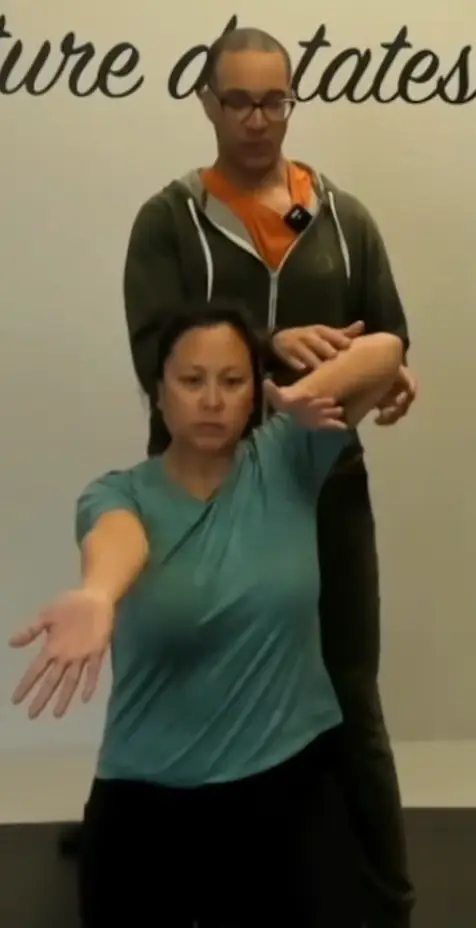
60 year olds doing iliopsoas Myofascial Stretch for preventive training for long-term health

When it comes to your health, the smartest thing you can do is stop thinking short-term. Preventive training for long-term health means investing in how your body functions years from now—before injuries or limitations take hold.

This is the essence of preventive training for long-term health. It’s not reactive. It’s proactive. And it’s one of the most powerful ways you can take control of your aging process—starting today.

You Are Your Future

Here’s the truth: the body you’ll live in 10 years from now is the one you’re building right now—through your habits, your movement, your training, and even your rest.

Fascia doesn’t just react to injury. It adapts to how you move and load it every day. This means today’s imbalances become tomorrow’s dysfunction—unless you interrupt the pattern.

That’s why at SolCore Fitness & Therapy, we don’t just train you to feel better now. We teach your body how to age better—intelligently, holistically, and with a deep respect for structure and complexity.

A Holistic Approach = A Long-Term Win

Preventive training isn’t about going harder. It’s about going wiser.

That’s where our fascia-based system shines. Instead of isolated muscles, we work with your full structure. Instead of chasing symptoms, we build resilience from the inside out.

Want to see how it works? Read our Ultimate Guide for a Holistic Fitness Program to get a feel for the principles we use every day.

And here’s a great overview from the National Institute on Aging about the role of physical activity in preventing age-related decline.

Future You Will Thank You

So the real question isn’t whether you should train.

It’s this: What kind of body do you want to live in 10 years from now?

Let’s build that—together.

👉 Book a Complimentary Consultation Today and start moving toward the future you deserve

Follow the Thread—Where Movement, Fascia, and Freedom Align

Find more insight, reflection, and fascia-informed care across the platforms where we stay connected:

Facebook

Blue Sky

Pinterest

Instagram

Youtube

Why Your Spine Isn’t Rehydrating Overnight — and What to Do About It

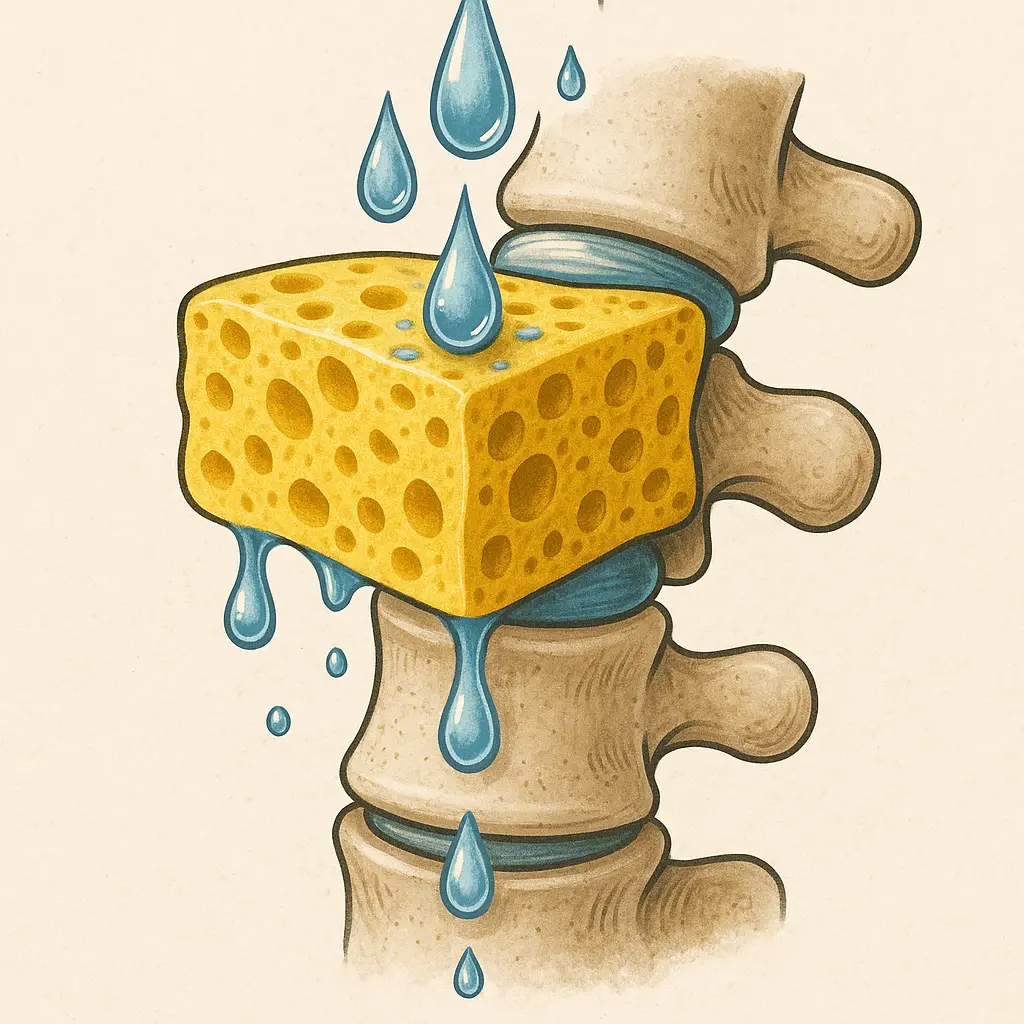
disc hydration ELDOA. Illustration of a yellow sponge between two vertebrae with water droplets rehydrating the spine — metaphor for disc hydration through ELDOA and TV Stretching.

💡 Your spinal disc doesn’t just “recover” with hydration while you sleep. It responds to what you do before you rest.


🟠 Your Discs Aren’t Lazy — They’re Just Dehydrated

Most people think spinal health and disc hydration is a waiting game: take the pressure off, rest a bit, and hope the body “fixes itself.” But that mindset overlooks one of the most basic truths of physiology: structure needs input.

Your intervertebral discs — the soft cushions between each vertebra — don’t have a direct blood supply. They rely entirely on your movement, posture, and hydration mechanics to stay supple and healthy. If you’ve ever felt stiff or achy in the morning despite a “good night’s sleep,” there’s a reason for that.


🧠 The Science of Disc Hydration — in Plain Speak

Discs rehydrate in two ways:

1. Passive Rehydration (Osmotic Pressure)

When you lie down at night, gravity is removed. This creates an osmotic gradient — water is slowly drawn back into the discs. Think of it like setting a sponge in a shallow bowl of water. It’ll eventually soak in… but only as much as its tissue allows.

2. Active Rehydration (Mechanical Stimulus)

When you de-coapt your spine through targeted movement — like ELDOA stretches — you create negative pressure and fascial tension. This primes the disc to pull in more fluid. It’s like squeezing and releasing that sponge right before soaking it — it absorbs far more water when prepped this way.


🌙 Why ELDOA “TV Stretching” Works So Well for Disc Hydration

“TV Stretching” is the term we use for doing your ELDOA decompression work 1–2 hours before bed. This timing allows you to:

  • Decompress your spine actively
  • Prime your discs to absorb water
  • Then follow it with passive overnight rehydration

You’re combining two mechanisms, not relying on just one.

This is especially effective if you’re dealing with:

  • Degenerative disc issues
  • Postural compression from sitting or lifting
  • Chronic stiffness that doesn’t resolve with sleep alone

🛠 Try This Tonight: 2-Step Reset (L5/S1 Focus)

Before bed, try this:

  1. Get into the L5/S1 ELDOA position, but keep your knees bent.
    This protects the popliteal artery, which runs behind the knee and can be compressed during long-duration stretches with extended legs.
  2. Stay in the posture passively — just hold the position and breathe for 5, 10, or even 15 minutes.
    You’re not actively reaching or tensioning yet — just letting the spine settle and decompress through position alone.
  3. Then do a single, focused ELDOA hold — no more than 1 minute.
    Engage the full fascial lines. Create vertical tension. Be precise.
    (Too long and you’ll reverse the effect — ELDOAs are about quality, not duration.)
  4. Lie down and rest.
    This primes your spine for both active and passive hydration during the night.

Try this for a few nights and feel the difference. It’s a strategy rooted in somatic intelligence — not guesswork.


🌀 Recovery Starts with Awareness

This is about more than hydration — it’s about being in your body enough to know what it needs and when.
If you’re curious how body awareness and healing are deeply connected, this Psychology Today overview of somatic therapy breaks it down beautifully. It echoes what we practice here — movement that starts with presence, not just position.


✅ Feel Different in the Morning — Not Just Rested

If you want to feel strong, tall, and fluid in the morning, you don’t need more sleep.
You need smarter pre-sleep recovery.

This approach is simple, targeted, and doesn’t take long. But it’s rooted in deep science and even deeper respect for the body’s rhythms.

🔗 Want help applying this to your specific structure?
Book a free 30–45 minute strategy call and we’ll walk through the right ELDOA and hydration approach for your spine.

Or join us for our monthly Free Community ELDOA class, to try it for yourself.

Follow the Thread—Where Movement, Fascia, and Freedom Align

Find more insight, reflection, and fascia-informed care across the platforms where we stay connected:

Facebook

Blue Sky

Pinterest

Instagram

Youtube

Linkedin

Somatic Pride: Finding Strength in Feeling at Home in Your Body

Man meditating Somatic Pride

We often talk about self-confidence or resilience like it’s just a mindset — but your body has to believe it, too. That’s somatic pride. And for many men, that’s where the disconnect lies.

Cultural norms often teach men to disconnect from discomfort, push through pain, and stay strong by numbing out. Over time, this creates a gap between who we are and what we actually feel. That gap becomes tension. Disconnection. Even shame.

You can’t take pride in a body you’re constantly overriding.
You can’t feel strong when you’re always fighting your own signals.
And you can’t be fully present for others — or even yourself — when you’ve been trained to tune out.

Somatic awareness changes this.

Learning to inhabit your body fully — to feel it, trust it, and work with it — creates an inner confidence that doesn’t need performance or perfection. For a thoughtful look at how somatic awareness bridges the mind–body gap, Psychology Today’s article on “Somatic Awareness: Connecting Mind and Body” is a great primer → Psychology Today – Somatic Awareness.

That’s why our approach to strength includes tools like ELDOA and decompression training — techniques that help your body unwind and realign from the inside out. These aren’t just exercises. They’re invitations to come back into your body.

That’s what real self-respect looks like: not a posture of dominance, but a relationship of honesty and care with your own body.

Read our guides on therapy and training to get a fuller picture

Want to explore what that kind of somatic pride feels like?

Book a free 30- 45 minute strategy call to talk about how somatic training and decompression work can help you feel stronger, more present, and at home in your body — without pushing through pain or numbing out.

This isn’t a sales call. It’s a space to get clarity, ask questions, and see what’s possible.

Follow the Thread—Where Movement, Fascia, and Freedom Align

Find more insight, reflection, and fascia-informed care across the platforms where we stay connected:

Facebook

Blue Sky

Pinterest

Instagram

Youtube

Linkedin

Your Body Is Not a Tool: It’s a Tensegrity System

Mens Health. Your Body is not a tool - tensegrity system body

Your Body Is Not a Tool—It’s a Tensegrity System

Most men treat their body like a tool.
Use it. Push it. Sharpen it. And when it breaks—tape it up and keep going.

But what if that’s the wrong model?

What if your body is less like a hammer… and more like a suspension bridge?

🧬 What Is a Tensegrity Structure?

Tensegrity is a principle of architecture and biology that describes how a system holds its shape through tension and compression in balance.

In your body, that means:

  • Fascia suspends bones, not just muscles.
  • Muscles work in continuous loops—not linear pairs.
  • Stability comes from distributed force, not just strong joints.

This concept is well explored in tensegrity structures in the body, where bones float in a sea of soft tissue and movement is the result of dynamic relationships—not rigid levers.

When one area tightens or collapses, everything else has to adjust—sometimes with pain, sometimes with compensation.

🧠 The “Tool Mindset” Is Costly

Most men were taught to push through discomfort, to train harder, and to earn results through effort alone.

But this approach overlooks the systemic balance that your body depends on:

  • Strength in one plane + stiffness in another = injury
  • Big lifts without joint hydration = compression, not growth
  • No fascia prep = poor rebound and reduced circulation

Fascia doesn’t just wrap muscles—it governs how force travels through the body. Fascia’s role in structural balance is central to preventing overload and sustaining performance.

A tensegrity system doesn’t respond well to brute force. It needs strategy.

🔧 The Shift: From Hammer to Suspension Bridge

What if instead of forcing your body, you prepared it?

  • What if warm-ups focused on joint mobility and fascial hydration, not just heat?
  • What if your training helped restore balance before pushing capacity?
  • What if you saw self-care as performance insurance, not a luxury?

🛠️ ELDOA: Biotensegral Fitness in Action

This is where tools like ELDOA, myofascial stretching, and segmental reinforcement come in.

They create:

✅ Precise decompression
✅ Vector-aligned tension
✅ Functional hydration of discs and joints
✅ Endurance without compensation

It’s not flashy. But it works. And it lasts.

In fact, fascia-related dysfunction is often a root cause of training breakdown. Learn more about overuse injuries and movement compensation and how smarter prep can make the difference.

📣 Final Thought: Pride in Structure

During Men’s Health Month and Pride Month, the message is simple:

➡️ Pride in yourself starts with knowing yourself.
➡️ You can’t give what you don’t have.
➡️ A resilient body supports a fulfilling life.

The goal isn’t to push harder—it’s to train smarter.
Your body isn’t a tool. It’s a system. Treat it that way—and it will carry you far.

Want to experience what real body architecture feels like?

Follow the Thread—Where Movement, Fascia, and Freedom Align
Find more insight, reflection, and fascia-informed care across the platforms where we stay connected:

Facebook

Blue Sky

Pinterest

Instagram

Youtube