
SolCoreFitness

How to Know If You Actually Need Someone Else’s Eyes

How to tell if a balance or structural problem is something you can fix yourself”

This month we covered the real, quantified cost of misalignment and why you can’t always trust how balanced you feel. This morning’s free class was one place to actually find out where you stand. Here’s the question that actually matters either way: how do you know if this is something you can work on yourself, or something that means you need someone else’s eyes?

Coach’s Corner

People ask me this constantly, usually phrased as “can’t I just do this myself?” Sometimes, yes. Sometimes, genuinely no — and the reason isn’t about effort or discipline.sek

Why You Sometimes Need Someone Else’s Eyes

The pattern across everything we covered this month is the same: your body doesn’t always tell you the truth about itself. Misalignment costs real energy whether you notice it or not. And self-assessment is notoriously wrong across almost every domain it’s been studied in — high performers tend to underestimate themselves, low performers tend to overestimate. That’s not unique to balance. It’s just how self-perception works.

If you can feel when something’s off, and you can identify which direction, that’s genuinely something you can work on. But if you can’t feel it — or you’re confident about something that turns out to be wrong — no amount of effort fixes that on your own, because you can’t correct what you can’t perceive.

The Real Test

That’s the actual dividing line. Not how hard you’re willing to work. Whether you can accurately perceive the thing that needs fixing in the first place. That’s genuinely worth sitting with before you decide your next move — it changes what “trying harder” is even supposed to look like.

Where to Start

If you’re not sure which category you’re in, the free Empower Your Health guide is a good next step — it walks through how to actually start assessing your own structure honestly.

Don’t make me come check your form.

Follow the Thread — Where Movement, Fascia, and Freedom Align

Find more insight, reflection, and fascia-informed care:
Facebook

Bluesky

Pinterest

Instagram

YouTube

LinkedIn

Why You Can’t Trust How Balanced You Feel

If you think you can trust how balanced you feel, researchers found something unsettling: you’re probably wrong — and the direction of the error depends on how good your actual balance is. That’s on top of what last week’s piece on the real energy cost of misalignment already covered — this one’s about a different problem entirely.

Coach’s Corner

I go deep on the structural and neurological side of this in an earlier piece — the feet, spine, proprioceptors, all of it. This one’s about something different: the gap between how balanced you feel and how balanced you actually are.

Why You Can’t Trust How Balanced You Feel Without Checking

A 2025 study out of the University of Utah had athletes estimate their own performance on a narrowing balance beam, then compared those estimates to what actually happened. The pattern was clear: people with genuinely poor balance tended to overestimate their ability. People with genuinely good balance tended to underestimate it.

That’s not a small quirk. Roughly a third of older adults misjudge their own balance ability — and the consequences run in both directions. Overestimating leads people to attempt movements beyond their actual stability, which raises fall risk directly. Underestimating leads to unnecessary caution and activity restriction, which — counterintuitively — also raises fall risk, because avoiding movement erodes the very capacity you’re trying to protect.

Even trained athletes, in a controlled study, couldn’t accurately judge their own balance the first time they tried a new task. It took repeated practice on that specific task before their self-perception lined up with reality.

The Test That Reveals Which Category You’re In

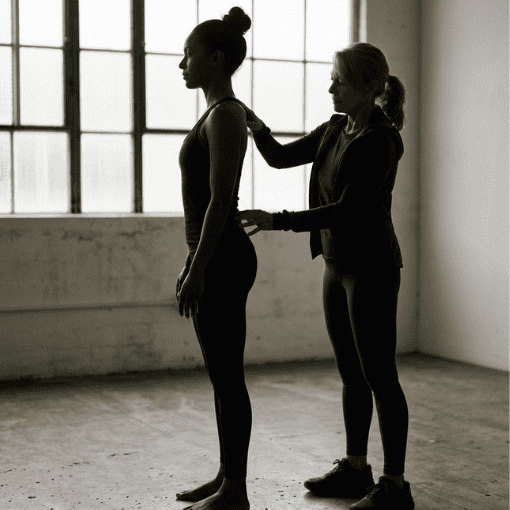
This is exactly why I run a specific test in my studio that requires a second person. You stand straight, close your eyes, lift your toes. I watch for sway — and I don’t correct you back to center. I hold you exactly where your body naturally drifted, using an index finger at T3 and the sternum. I’m not fixing anything. I’m documenting where you actually went.

Then: open your eyes, feet down. I ask — did you move? Which direction?

If you know you swayed, and you know which way, your gravity line might be off, but your awareness is intact. That’s the more fixable problem. But if you genuinely didn’t feel it — or you’re confident you went one way when you actually went the other — that’s not one problem, it’s two. You can’t self-correct something you can’t feel happening.

Where to Start

If you’ve never had this tested, you don’t actually know which category you’re in — and per the research, guessing isn’t reliable. If you want to think through what this might mean for your specific situation before booking anything, ask my AI clone — it’s trained on my actual approach and available anytime, no cost.

Don’t make me come check your form.

Follow the Thread — Where Movement, Fascia, and Freedom Align

Find more insight, reflection, and fascia-informed care:

Facebook

Bluesky

Pinterest

Instagram

YouTube

LinkedIn

The Hidden Cost of Bad Balance

The real, measurable energy cost of standing off-balance

There’s a hidden cost of bad balance most people never think to check: if your ear, shoulder, hip, and ankle don’t actually line up, your body’s been quietly spending energy just to keep you from tipping over. Not from moving. From standing there.

That’s not a feeling. Researchers actually measured this directly — they tracked real energy expenditure at different standing positions and found that being out of alignment increased energy cost by up to 31 percent. Leaning backward cost almost twice as much as leaning forward the same amount. That’s not an estimate. That’s people hooked up to equipment measuring exactly how much energy your body burns just holding itself up.

Coach’s Corner

I’ve already gone deep on why balance and coordination have to come first, and what actually happens when you skip them — if you haven’t seen that breakdown, it’s worth your time. This piece is about something narrower: the actual, quantified cost of getting it wrong.

What Actually Drives the Hidden Cost of Bad Balance

Most people think of bad posture or bad balance as a comfort problem — you feel a little off, maybe your back aches by the end of the day. But what the data shows is more specific than that. Being outside your optimal alignment isn’t neutral. It’s an ongoing energy drain, all day, every day, whether you notice it or not.

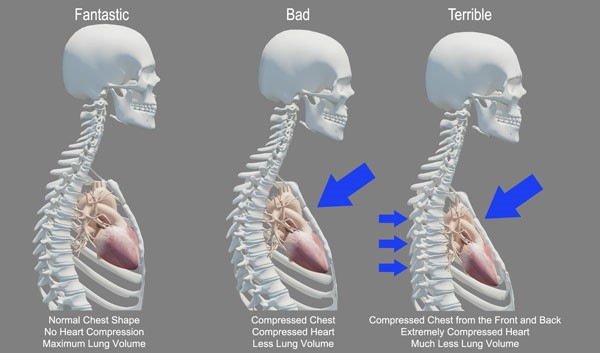
Three structures drive this: your feet — specifically the calcaneus, feeding your brain constant information about where you are relative to the ground. Your spine — which needs four natural curves, not flattened, not exaggerated, to distribute load the way a spring does instead of a rigid rod. And your head’s position relative to your shoulder girdle, which determines whether your eyes, ears, and TMJ can actually do their job feeding your brain accurate information.

When any of those three are off, your body doesn’t just feel unstable — it spends real energy compensating, continuously, without you asking it to.

Why This Matters More Than You Think

This is the part people miss: that energy cost doesn’t stay contained to “standing.” It’s a tax on everything else. Less energy available for your workout. Less recovery capacity. That tired-for-no-reason feeling at the end of a day where you didn’t do anything especially hard.

And here’s the part that matters even if it turns out you need actual manual therapy or a specific corrective protocol: working on your structural alignment still helps regardless. You’re not wasting effort — you’re giving your body a better foundation to work from, whether you handle the rest yourself or someone else’s hands are involved.

Where to Start

If you’ve never had this tested, you don’t actually know which category you’re in — and per the research, guessing isn’t reliable. If you want to think through what this might mean for your specific situation before booking anything, ask my AI clone — it’s trained on my actual approach and available anytime, no cost.

Don’t make me come check your form.

Follow the Thread — Where Movement, Fascia, and Freedom Align

Find more insight, reflection, and fascia-informed care:

Facebook

Bluesky

Pinterest

Instagram

YouTube

LinkedIn

How to Tell If Your Workout Has Intention — A Self-Check

Three weeks ago I told you effort without intention is just wear and tear. The question I get back every time is some version of: “Okay, but how do I know which one I’m doing?”

Fair question. Here’s how you check.

Coach’s Corner

I don’t ask new clients “does it hurt.” I ask “what does it feel like, exactly, and where.” Most people can’t answer that in detail. Not because they’re not paying attention — because most training, for most of their life, has never asked them to pay attention to anything more specific than “did I finish the set.”

That’s the tell. Intention requires noticing. If you can’t describe what a movement is doing in your body beyond “it burns” or “it feels good,” you’re not tracking intention — you’re tracking sensation, and sensation lies.

Five Signs Your Effort Has Intention (and Five That It Doesn’t)

Run your current routine through these:

  • You know why you’re doing each exercise — specifically. Not “it’s good for my back.” Specifically: this targets this segment, because this segment is where my restriction lives. If your answer is “my trainer/app/video told me to,” that’s not intention. That’s compliance.
  • You can feel a difference between reps, not just fatigue. Intention means each repetition teaches you something about your own structure. If every rep feels identical and the only thing that changes is how tired you are, you’re repeating a motion, not refining a pattern.
  • The difficulty feels specific, not generalized. “This is hard” is sensation. “This is hard because this segment is more restricted than I realized” is intention. If you can’t locate where the difficulty actually lives, you’re not tracking it — you’re enduring it.
  • You adjust based on what your body tells you that day, not just the plan on paper. A system built with intention still requires you to notice — some days a segment needs more work, some days less. If your routine is identical regardless of what your body is communicating, the intention lives in the plan, not in you.
  • You could explain your own body’s compensations to someone else. If you understand your own restrictions well enough to describe them, that’s intention internalized. If you’re just following instructions without understanding why, you’re borrowing someone else’s intention, not building your own.

If most of your answers land on the “not intention” side — that’s not a failure. It’s information. It means your effort, however real, has been aimed at general fitness instead of your specific structure.

Research on interoceptive awareness — the capacity to notice and interpret what’s happening inside your own body — backs this up directly. A large validation study found that people with structured physical training scored measurably higher on noticing, attention regulation, and body awareness than those without it. Intention isn’t a personality trait. It’s a trained skill, and untrained bodies default to generalized sensation instead of specific information.

What to Do If You Fail the Self-Check

Failing this check doesn’t mean you need to work harder. It means you need a system that teaches you to notice, not just perform.

If you made it to this morning’s free ELDOA class, you already felt a piece of that — what decoaptation, done with intention, actually feels like in your own body. If you couldn’t make it, the Lower Back ELDOA course teaches the same principle: $52, one part of a system built to grow with you, 17 minutes, 3-4 times a week.

Either way, the next step is the same: stop asking what you should do, and start asking whether what you’re doing has a reason behind it.

Don’t make me come check your form.

Follow the Thread — Where Movement, Fascia, and Freedom Align

Find more insight, reflection, and fascia-informed care:

Facebook

Bluesky

Pinterest

Instagram

YouTube

LinkedIn

Why Effort Without Intention Is Just Wear and Tear

“Why effort without intention in exercise leads to wear and tear instead of results”

You showed up. You worked hard. You sweated. You’re sore. You feel like you did something.

But did you?

The aches and pains that come with getting old usually come from doing a bunch of dumb shit for a long time. And sometimes that “dumb shit” looks responsible. It looks like going to the gym three times a week. It looks like a stretching routine before bed. It looks like effort.

But effort without intention is just wear and tear with good PR.

Coach’s Corner

I’ve been doing this for over 30 years. I’ve watched hundreds of people walk into my studio with the same story: “I work out consistently. I stretch. I do everything I’m supposed to. Why does my body feel worse?”

Because they’re working hard at the wrong things. Their effort is real. Their dedication is real. But every rep, every stretch, every routine is reinforcing the patterns that are breaking them down.

Michelle was one of them. Professional artist. Years of YouTube routines. Consistent. Dedicated. Her body got worse. Not because she was lazy. Because her effort had no intention behind it.

She’s not alone. Most of the people who end up in my studio aren’t lazy people. They’re hard workers who were working hard in the wrong direction.

The Effort Trap

Here’s how it works. You feel tight, so you stretch. The stretch feels good — your endorphins fire and tell you that you did something productive. Three days later the tightness is back. So you stretch again. Harder this time. Maybe a different stretch. Maybe one you found on YouTube or one your friend showed you.

Every time you do this, your fascia adapts to the pattern you’re reinforcing. Your muscles organize around it. Your nervous system treats it as normal. The more you do, the deeper the groove gets.

A prospective study tracking physically active adults over six months found that the quality of a person’s movement patterns predicted injury risk more accurately than flexibility did — low-quality movement patterns were the stronger warning sign. Effort doesn’t cancel that risk out. Aiming the effort correctly does.

And here’s the part that makes people angry when I tell them: the harder you work without intention, the faster you break down. Compensation accelerates. Each layer of compensation creates the next one. Your body gets more fragile with every “good workout” that’s aimed in the wrong direction.

The soft tissue always wins. It doesn’t care how hard you worked. It cares whether the work was aimed at the right thing.

What Intention Actually Looks Like

Intention means every exercise answers a specific question: what does YOUR body need right now?

Not what does the YouTube algorithm recommend. Not what your friend’s PT told them. Not what looks impressive on Instagram. What does your specific body, with its specific restrictions, compensations, and patterns, actually need?

A system built on intention starts by identifying where the dysfunction lives — not where you feel pain, because those are rarely the same place. Then it targets the specific restriction with work designed for that exact tissue, that exact segment, that exact fascial chain.

ELDOA does this. Every posture targets a specific segment. Every sequence builds on the one before it. There’s no guessing. There’s no “this should work.” There’s only “this is what your body needs and here’s why.”

It’s difficult when you do it right.

If your workout feels easy, you’re compensating. Your body found the shortcut. If it feels hard in a way you’ve never experienced — you’re finally doing the work with intention.

The Difference in Practice

My teacher, Guy Voyer, said something I’ve never forgotten: the age of the passport and the age of the body can be different. You can be 50 with a 30-year-old body. Or you can be 50 with a 70-year-old body.

The difference isn’t how hard you worked. It’s whether your work had intention.

Michelle worked hard for years. Her body aged faster than it should have. Once she found a system with intention, everything reversed. Pain-free. Stronger. More mobile. She does the work on her own now — not because someone told her to, but because she understands why every movement matters.

That’s what intention does. It turns effort into results instead of wear and tear.

Where to Start

Stop asking “what should I do?” and start asking “why am I doing this?”

The Lower Back ELDOA COURSE is $52. Every posture has a reason. Every sequence has a progression. It’s effort with intention — 17 minutes, 3-4 times a week.

Or add the Big Bang for the complete foundation — $268 total on the checkout page.

I also made a VIDEO that breaks all of this down with a live demonstration:


https://www.youtube.com/watch?v=Khqwr-5K36k

Don’t make me come check your form.

Follow the Thread — Where Movement, Fascia, and Freedom Align

Find more insight, reflection, and fascia-informed care:

Facebook

Bluesky

Pinterest

Instagram

YouTube

Why Mixing Yoga, PT, and Fitness Videos Failed Michelle’s Body

Michelle — professional artist whose mixed yoga, PT, and fitness video routine left her worse until she found a coherent fascia-based system

Michelle did everything right. That’s the part that used to confuse her — and it’s the part most people get wrong when they try to explain why their body isn’t improving.

She wasn’t lazy. She wasn’t skipping days. She was moving constantly: yoga classes, YouTube fitness videos, a physical therapist her doctor sent her to. Three different sources. All of them credible. All of them “good for you.”

Her body got worse anyway.

Coach’s Corner

I hear some version of Michelle’s confusion in my studio every week: “I do yoga twice a week, I follow a YouTube routine, I saw a PT for six months — why do I still hurt?”

The answer isn’t effort. It’s architecture. Yoga, generic fitness content, and standard PT are three separate systems, each built around a different philosophy, a different assumption about what your body needs. None of them were designed to talk to each other. Stack them on top of each other and you don’t get a bigger system — you get contradiction.

The Problem With Mixing Yoga, PT, and Random Fitness Videos

Yoga wasn’t built for this. Yogis developed it to prepare the body for meditation — to sit still, to breathe, to quiet the nervous system. It can secondarily help with strength and mobility, and often does. But secondary isn’t primary. If you’re choosing yoga because you think it’s a strength and mobility program, you’re using a tool for a job it wasn’t designed to do — and you won’t get the specificity a real structural program requires.

Generic fitness videos reflect the general knowledge and general exercise choices of whoever’s on screen. I know this one from the inside — it’s where I started, as a personal trainer. That world runs on broad fitness principles: reps, sweat, general programming. Real, but general. General knowledge produces general results, not the specificity a structural problem requires.

And standard PT is often built around partial information delivered as a whole program. Most PT exercises isolate a single muscle or joint without accounting for the fascial chain that muscle belongs to. It’s not incompetence. It’s how the field is generally trained: symptom, isolated structure, isolated fix.

Michelle was pulling from all three every week. Each one legitimate on its own terms. None of them looking at the whole picture — the actual demand her body was under.

What Her Body Was Trying to Tell Her

Michelle is a professional artist. A painter. She stands at an easel for hours at a time — a sustained, repetitive postural demand that’s specific to her life, not generic. None of her three sources were built around that demand. Yoga didn’t know about the easel. Her fitness videos didn’t know about the easel. Her PT gave her exercises for “general strengthening” that never once accounted for how many hours she spends locked in that one posture.

Almost no space left in her spine. Chronic pain in her hips. Her body was communicating clearly — but without a framework that connects the dots, “working out consistently and getting worse” doesn’t look like a structural clue. It looks like bad luck. Or aging. Or “my body’s just like this now.”

It’s not. The soft tissue always wins — it doesn’t care how many different classes you took this month. It responds to whether the work addresses the actual pattern, the actual chain, the actual demand your life puts on your body.

What Changed

Once Michelle started one coherent system — not another layer stacked on top of yoga, videos, and PT, but a single approach built around her actual structure — everything shifted. Three days a week. Consistent. What she was learning alleviated her pain AND built strength and mobility at the same time.

In her own words: “I know that these stretches are helping, and I even do some of them on days I don’t have class. SolCore Fitness has become a part of my life. I am a full-time artist and my posture while standing at the easel had previously been a strain. Now I am cognizant of how I stand and hold my body while painting.”

She now has a growing list of strategies she uses on her own. Not because someone assigned them — because she finally understands why each one matters.

Where to Start

If you’ve been mixing your own combination of yoga, PT, and fitness videos and wondering why nothing adds up — that’s not a discipline problem. It’s an architecture problem.

The Lower Back ELDOA course is $52. Lifetime access. It’s not the whole answer — it’s the first piece of a system that’s built to grow, with each course designed to fit with what comes next. Every posture has a reason. Every sequence builds on the one before it.

Don’t make me come check your form.

Follow the Thread — Where Movement, Fascia, and Freedom Align

Facebook

Bluesky

Pinterest

Instagram

YouTube

It’s Never Free. The Real Cost of Following Random People on YouTube.

Person searching for free workout videos online instead of a structured fascia-based exercise system"

Your free YouTube workout routine is costing you more than you think. Not in dollars — in dysfunction.

Here’s what happens: your lower back is tight. You Google it. YouTube gives you 10,000 results. You pick one. Looks professional. Nice production. Millions of views. Must be good, right?

You follow along. It feels like you’re doing something. Your endorphins fire. You feel productive. Three days later — the tightness is back. Or it’s moved. Or it’s worse. So you find another video. A different stretch. A different person who doesn’t know your body, doesn’t know your history, and has never met the last person whose video you followed.

Now you’re building a routine out of random pieces from random people. Throwing together an exercise routine with random stretches and exercises is like trying to form a sentence by picking random words out of a book. It might look like something. But it doesn’t say anything.

Coach’s Corner

Michelle was doing everything right — or so she thought. Professional artist. Painter. She spent years building her own exercise routine from YouTube yoga and other classes. She was consistent. She was dedicated. And her body got worse.

Almost no space left in her spine. Chronic back pain. Her doctor had to refer her to me. She’d been to PT first — the exercises they gave her were terrible and made things worse. And I’m not just picking on her PT. These are exercises most PTs give people, but they’re based on partial information presented as a whole program. The connecting links — the fascia, how it holds your body in place — aren’t even considered.

Michelle wasn’t lazy. She wasn’t uninformed. She was doing exactly what everyone tells you to do. And it cost her years.

The Hidden Cost of “Free” Fitness Content

Every exercise you do reinforces whatever pattern your body is already in. If your fascia is restricted and your joints are stuck, that free video doesn’t fix it — it cements it. You get stronger in a dysfunctional pattern. You get more flexible in a compensatory range. You feel like you’re making progress because you’re sweating and your endorphins are telling you that you did something good — but your body is just digging deeper into the same groove.

And here’s the part nobody warns you about: the more compensations your body stacks, the quicker things break down. It’s not a slow decline — it accelerates. Each compensation creates the next one, and the whole system gets more fragile with every layer. Research confirms that these structural changes in fascia and muscle tissue compound over time.

Getting treatments for the symptoms that show up — the massage, the adjustments, the ibuprofen — without ever fixing the underlying pattern? That’s not maintenance. That’s making the problem worse. Your body compensates around the “fix,” builds new patterns on top of broken ones, and now you’ve got two problems instead of one.

The soft tissue always wins. It doesn’t care what video you watched.

What a Real System Does That Random Videos Can’t

A system has intention. Every exercise, every stretch, every technique is chosen for a specific reason and builds on the one before it.

Second, you need targeted work that addresses the specific restriction. Not general stretching. Not random exercises. ELDOA, myofascial stretching, and corrective work that goes after the exact tissue, the exact segment, the exact chain that’s holding the pattern in place.

Third — and this is the one people struggle with — you need patience.

It’s difficult when you do it right.

That’s not a warning. That’s a promise. If it feels easy, you’re compensating. If it feels hard in a way you’ve never felt before — you’re finally doing the work.

Michelle started our program. Consistent. Three days a week. What she was learning alleviated her issue AND developed her strength and mobility at the same time. She now has a growing list of strategies to keep moving away from dysfunction into fully functional. That’s what a real program does — it doesn’t just manage your pain. It makes you capable.

Watch the Full Breakdown

I made a video that goes deeper into everything in this post — including a live demonstration of what those “free” exercises are actually doing to your body and what the alternative looks like.

Watch it Here. https://youtu.be/Khqwr-5K36k

Where to Start

If you’ve been cobbling together free content and wondering why nothing changes, here are your options:

The Lower Back ELDOA course is $52. Lifetime access. 17 minutes, 3-4 times a week. The same postures I use with my in-person clients — a system, not a random video.

Or if you want the bigger picture — the Lower Back ELDOA ($52) plus the Big Bang ($216 add-on) gives you a complete lower body foundation system for $268. The bump offer is on the checkout page.

Not ready for either? Download the free Empower Your Health Guide — it’ll change how you think about what your body actually needs.

Don’t make me come check your form.

Follow the Thread — Where Movement, Fascia, and Freedom Align

Find more insight, reflection, and fascia-informed care:

Facebook

Bluesky

Pinterest

Instagram

YouTube

LinkedIn

The Difference Between Having a Routine and Having a System

The Difference Between Having a Routine and Having a System

Here’s the truth about your exercise system vs routine: throwing together exercises with random stretches is like trying to form a sentence by picking random words out of a book. It might look like something. But it doesn’t say anything.

Most people have a routine. Very few have a system. And the difference between those two things is the difference between spinning your wheels and actually changing your body.

Coach’s Corner

I had a client tell me once, “I’ve been working out consistently for 15 years.” And I said, “Great. How do you feel?” She paused. “Honestly? About the same as when I started. Maybe worse.”

Fifteen years. Consistent. Dedicated. And her body was no better — arguably worse — because she’d been doing the wrong work consistently. She had a routine. She did not have a system.

The aches and pains that come with getting old usually come from doing a bunch of dumb shit for a long time. And sometimes that “dumb shit” looks responsible. It looks like going to the gym three times a week. It looks like a stretching routine before bed. It looks like effort.

But effort without intention is just wear and tear with good PR.

Why Routines Fail

A routine is a list of things you do. Monday is legs. Wednesday is arms. You stretch after. You foam roll sometimes. You picked most of it up from a trainer five years ago, a YouTube

video, a friend who “knows about fitness.”

The problem isn’t that the individual exercises are bad. Some ofthem might be fine. The problem is they don’t connect. There’s no strategy linking one exercise to the next. No understanding of which fascial chain needs work, which segment needs decoaptation, which pattern needs breaking before you can build something new.

You’re doing activities. You’re not following a progression.

And here’s what makes it worse: every exercise you do reinforces whatever pattern your body is already in. If your fascia is restricted and your joints are stuck, your routine doesn’t fix that — it cements it. You get stronger in a dysfunctional pattern. You get more flexible in a compensatory range. You feel like you’re making progress because you’re sweating and your endorphins are telling you that you did something good — but your body is just digging deeper into the same groove.

Getting treatments for the symptoms that show up — the massage, the adjustments, the ibuprofen — without ever fixing the underlying pattern? That’s not maintenance. That’s making the problem worse. Your body compensates around the “fix,” builds new patterns on top of broken ones, and now you’ve got two problems instead ofone.

What a System Does That a Routine Can’t

A system starts with a question: what does your body actually need?

Not what does your routine say. Not what’s popular. Not what your friend does. What does YOUR body — with its specific restrictions, compensations, imbalances, and goals — actually need to function better?

A system answers that question and then builds a progression:

First, identify and correct dysfunction. This is where E LDOA comes in — targeted decoaptation that creates space at specific segments. You can’t build on a foundation that’s stuck. You have to unstick it first.

Second, retrain the fascia and restore segmental independence. Myofascial stretching, corrective exercises, proprioception work — all targeted at the specific chains and segments that need attention. This is where patterns actually change.

Third, build strength and movement capacity on top ofthe corrected foundation. Now your strength training means something. Now your mobility work sticks. Because the system underneath supports it instead ofundermining it.

Each step builds on the one before it. Skip a step and the whole thing falls apart — which is exactly what routines do. They skip straight to step three and wonder why nothing changes.

The Age ofthe Passport vs. The Age ofthe Body

My teacher, Guy Voyer, said something I’ve never forgotten: the age ofthe passport and the age ofthe body can be different. You can be 50 with a 30-year-old body. Or you can be 50 with a 70-year-old body.

The difference isn’t genetics. It’s not luck. It’s whether you had a system or just a routine.

A routine can keep you busy for decades and leave you no better than where you started. A system changes the age ofyour body — because it addresses the actual structure, not just the surface.

Pain. Prevention. Performance. One System.

If you’re in pain — the system corrects the dysfunction causing it. That’s what Marja experienced. Three broken vertebrae. Doctors said she’d never garden again. The system brought her back to pain-free independence.

If you’re preventing — the system corrects dysfunction before it becomes a problem. The same issues that cause pain are already building in your body. A system catches them before they announce themselves.

If you’re chasing performance — the system removes the ceiling. Every stuck joint, every restricted fascial chain, every compensatory pattern is limiting your output. Correct it and your body can do more than your routine ever allowed.

The Lower Back ELDOA + Big Bang Bundle

I built two programs that work together as one complete lower body system.

The Lower Back ELDOA course targets your lower back — the specific segments where most people feel the problem. $52. Lifetime access. 17 minutes, 3–4 times a week.

The Big Bang goes deeper. It targets the entire lumbo-pelvic-hip region — the iliopsoas, the deep glutes, the obturator internus, and the L5/S1 connection. This is the foundation your spine sits on. On its own, it’s $350.

But buy the Lower Back ELDOA course and you can add the Big Bang for $216 — that’s $268 total instead of$350. You save $134.

Why cheaper together? Because the two programs are designed to work as a system. The Lower Back course fixes the point ofpain. The Big Bang addresses the entire region around it. Together they give you a complete lower body foundation — not a routine, a system.

Start HERE

Buy the Lower Back course and you’ll see the Big Bang add-on for $216. Don’t miss the bump.

Or if you want the Big Bang on its own: Get HERE

Either way — stop collecting exercises. Start following a system.

Don’t make me come check your form.

Follow the Thread — Where Movement, Fascia, and Freedom Align

Find more insight, reflection, and fascia-informed care:  

Facebook

Bluesky

Pinterest

Instagram

YouTube

LinkedIn

Working Out Is Not Just for Your Muscles

Working Out Is Not Just for Your Muscles

If your idea ofa holistic fitness program starts and ends with muscles, you’re missing the bigger picture. Your muscles are, to put it bluntly, stupid pieces of meat. They don’t decide anything. They don’t organize your movement. They don’t determine your posture. They just contract when they’re told to.

The question is: who’s doing the telling?

Coach’s Corner

I say this to clients all the time and they look at me like I’ve lost my mind: “Your muscles are stupid pieces of meat.”

But it’s true. Your muscles don’t know what good posture is. They don’t know the difference between a healthy movement pattern and a compensatory one. They just fire when the nervous system says fire, along the lines that the fascia has organized.

So if your fascia is restricted, your joints are stuck, and your nervous system is sending signals through compensated pathways — it doesn’t matter how strong your muscles are. They’re just going to be strong in the wrong pattern.

That’s why I’ve seen people who can dead lift 300 pounds but can’t touch their toes without their whole body compensating. Strong muscles. Dysfunctional system.

The System Underneath the Muscles

The soft tissue always wins. That’s not a slogan — it’s biomechanics.

Your fascia is a continuous network of connective tissue that wraps every muscle, bone, nerve, and organ in your body. It doesn’t just passively hold things together — it actively organizes how your body moves, holds tension, and distributes force. Research confirms that fascia plays a central role in movement coordination, force transmission, and proprioception.

When you train only your muscles, you’re training the employees but ignoring the management structure. The fascia determines which muscles activate, in what order, with how much force, and along which lines oftension. If that system is dysfunctional, your muscles will just reinforce the dysfunction — with more force.

A real holistic fitness program trains the whole system: fascia, joints, proprioception, segmental strength, and global movement patterns. The muscles get stronger as a byproduct — but they get stronger in the right pattern, along the right lines, with the right coordination.

What a Holistic Fitness Program Actually Looks Like

It’s not yoga and green smoothies. It’s not random stretches before your workout. And it’s definitely not throwing together exercises you found on YouTube and hoping they form a coherent sentence.

A real holistic fitness program has intention. Every exercise, every stretch, every technique is chosen for a specific reason and builds on the one before it. Here’s what that includes:

ELDOA — targeted joint decoaptation that creates space between specific segments of your spine and joints. This restores segmental independence so each part of your body can do its own job instead of compensating for a neighbor.

Myofascial stretching — active stretching that doesn’t just lengthen a muscle, but reorganizes the entire fascial chain it belongs to. This is how you actually change the tissue, not just temporarily relax it.

Segmental strengthening — building strength at specific fiber directions within individual muscles, in the context of their fascial chains. This is precision, not just power.

Proprioception training — teaching your body to sense and control its position in space. This is how you build the brain-body connection that Marja talks about — the difference between blindly following exercises and actually feeling what your body is doing.

Global strengthening — training the whole system to work as an integrated unit through functional movement patterns.

Each one matters. Skip one and the system has a gap. That gap becomes a compensation.

That compensation becomes your next problem.

Why This Matters for Performance

Ifyou’re active and training hard, this isn’t about slowing down. It’s about removing the ceiling.

Every dysfunction in your fascia, every stuck joint, every compensatory pattern is limiting your output. You might not feel it as pain — you feel it as a plateau. The lift that won’t go up. The mobility that won’t improve. The recovery that takes longer than it should.

ELDOA corrects dysfunction at specific segments. The more you do them, the more functional and optimized those areas become. That’s not rehab. That’s performance.

The Takeaway

Stop training your muscles like they’re the whole story. They’re the last chapter. Start at the beginning — fascia, joints, proprioception, structure — and the muscles will follow.

If you want to see what this system looks like in practice, the Lower Back ELDOA course is the entry point. $52. It targets the segments most people have been ignoring while they chase muscle.

Started HERE

And stay tuned — next week I’m introducing the Big Bang, a structured routine that targets the entire lumbo-pelvic-hip region your spine sits on. The foundation underneath the foundation.

Don’t make me come check your form.

Follow the Thread — Where Movement, Fascia, and Freedom Align 

Find more insight, reflection, and fascia-informed care:  

Facebook

Bluesky

Pinterest

Instagram

YouTube

LinkedIn 

You Must Break Bad Patterns Before You Can Build New Ones

You Must Break Bad Patterns Before You Can Build New Ones

If you want to break bad movement patterns, you need to understand something first: your body doesn’t care what you want. It cares what you’ve trained it to do.

Every time you sit the same way, move the same way, compensate the same way — your fascia adapts to that. Your muscles organize around it. Your nervous system treats it as normal. And now that dysfunction isn’t a glitch. It’s your operating system.

You can’t install new software on top ofa corrupted system. You have to fix the corruption first.

Coach’s Corner

I watch people do this all the time. They come in motivated. They want to get stronger, move better, feel good. So they start a program — any program — and they work hard.

But they’re working hard on top of patterns that are already broken. Their body is compensating every rep, every stretch, every movement. And the harder they work, the deeper those compensations get.

It’s like putting fresh paint on a cracked wall. It looks better for a week. Then the cracks come back. And they’re always a little worse than before.

The way is through — but “through” means going back to the foundation first. That’s the part most people skip because it doesn’t feel productive. It feels slow. It feels basic. But it’s the only thing that actually works.

Why Your Body Keeps Defaulting to Dysfunction

Here’s what’s happening under the surface: your fascia has memory. Not the kind you think about — structural memory. It physically reorganizes itself around the positions and patterns you repeat most often.  Research published in Frontiers in Physiology confirms that these structural changes in fascia and muscle tissue compound over time.

So when you sit hunched for 8 hours a day, your fascia doesn’t just “get tight.” It literally reshapes itselfto support that hunched position. Your muscles shorten. Your joints lose range. And your nervous system stops sending signals to the areas that aren’t being used.

Now you stand up and try to do a squat, a stretch, a workout — and your body defaults to the pattern it knows. The dysfunction. The compensation. The path ofleast resistance.

You’re not weak. You’re not lazy. You’re patterned. And patterns don’t change just because you decided to start working out.

What It Actually Takes to Rewire a Pattern

This is where most programs fail. They add exercises on top ofexisting dysfunction and hope the body figures it out. It doesn’t. It just compensates harder. And here’s the part nobody warns you about: the more compensations your body stacks, the quicker things break down. It’s not a slow decline — it accelerates. Each compensation creates the next one, and the whole system gets more fragile with every layer.

Breaking a pattern requires three things:

First, you need to identify where the dysfunction actually lives. Not where you feel pain — where the pattern originates. Those are rarely the same place. Your lower back might hurt, but the pattern might start in your hip, your fascia, your pelvis.

Second, you need targeted work that addresses the specific restriction. Not general stretching. Not random exercises.  My ofascial stretching, ELDOA, and corrective exercises that go after the exact tissue, the exact segment, the exact chain that’s holding the pattern in place.

Third — and this is the one people struggle with — you need patience. If it took ten years to build the pattern, you’re not undoing it in a week. The first three months are the hardest because your body is literally learning a new way to organize itself. But once it clicks — once you develop that brain-body connection — everything changes.

It’s difficult when you do it right.

That’s not a warning. That’s a promise. If it feels easy, you’re compensating. If it feels hard in a way you’ve never felt before — you’re finally doing the work.

Marja knows this. She came to me after breaking three vertebrae. Doctors said she’d never garden again. The first three months were brutal — her body was learning entirely new patterns. But she stayed consistent. Years later? Pain-free. Gardening an hour and a half at a time. Moving better than before the injury. She’ll tell you herself: “Being present in this routine is huge. Ifyou just blindly follow, you won’t get it. But ifyou think and try, like any skill, eventually you become your best therapist.”

Watch Marja tell her story in her own words:

Want the full case study? Download Marja’s complete story HERE:

This Applies Whether You’re in Pain or Not

If you’re in pain, the bad pattern is what’s causing it. Breaking it is how you get out.

If you’re not in pain, the bad pattern is still there — it just hasn’t announced itself yet. Breaking it now is how you make sure it never does. That’s what prevention actually looks like. Not avoiding activity — correcting the dysfunction that’s building quietly in the background.

And if you’re chasing performance, every unaddressed pattern is a ceiling on what your body can do. Break the pattern, raise the ceiling.

Where to Start

Ask yourself this: am I actually working on what I think I’m working on, or am I compensating?

If you’re not sure, that’s your answer.

The Lower Back ELDOA course is $52 and it’s built to address dysfunction at specific segments — the kind oftargeted work that actually breaks patterns instead of reinforcing them. It’s the starting point.

Get started HERE

Don’t make me come check your form.

Follow the Thread — Where Movement, Fascia, and Freedom Align

Find more insight, reflection, and fascia-informed care:  

Facebook

Bluesky

Pinterest

Instagram

YouTube

LinkedIn