
Strength Training

Why Quick Fixes Fail (And What Real Progression Looks Like)

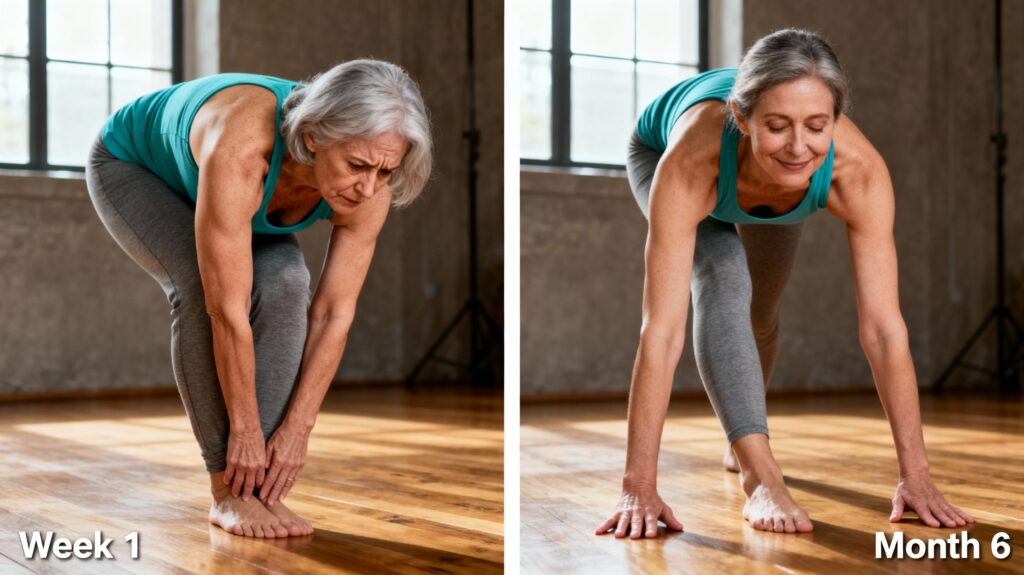
Why quick fixes fail. Image of woman in her 60's showing how it takes time with progression fascia training.

Quick fixes fail. Every single time.

Quick fixes will only lead to frustration or hurt quickly.

“Six weeks to a pain-free back.”

“Transform your body in 30 days.”

“Three exercises to fix your shoulder.”

These promises are everywhere. And they’re physiologically impossible.

If only your fascia could read marketing copy, it might actually remodel that fast.

Coach’s Corner

Marja came to me after breaking three vertebrae. Doctors said she’d never garden again—her favorite activity.

She didn’t accept that.

But she also didn’t expect miracles. She understood that rebuilding a body after that kind of trauma takes time.

Years later? She’s pain-free, gardening regularly, and moving better than she did before the injury.

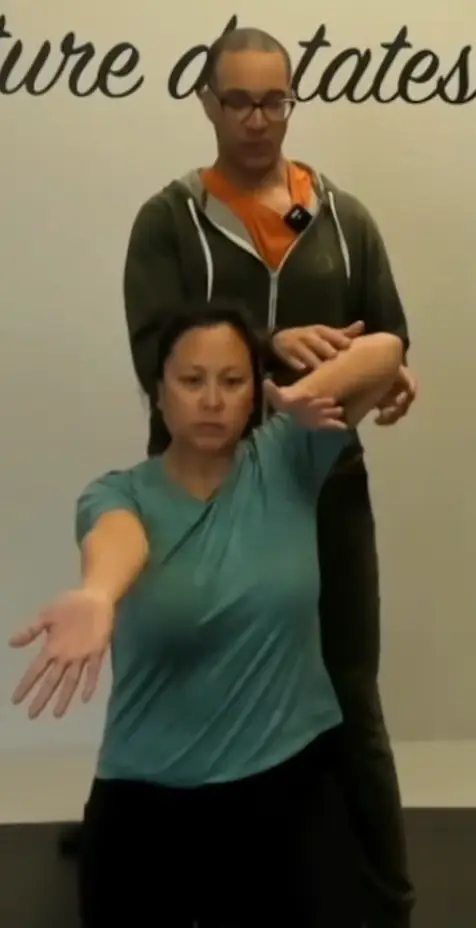
Watch her full video interview to see what real progression looks like.

The Quick-Fix Culture Problem

We live in a culture that sells speed. Six-week programs. 30-day challenges. Weekend workshops that promise to “reset” your body.

And I get it. You’re in pain. You want relief. You want it now.

But here’s the truth most practitioners won’t tell you: your body doesn’t work on a marketing timeline.

Tissue adaptation is a biological process. It has a pace. You can’t hack it, shortcut it, or Instagram it into happening faster.

You can only respect it or ignore it.

And when you ignore it by chasing quick fixes, you get temporary relief followed by the same problem—or a new one.

Why Tissue Takes Time

Let’s talk about what actually happens when your body adapts.

Acute pain relief: Can happen quickly (days to weeks) with the right intervention. This is inflammation decreasing, nervous system calming, immediate restrictions releasing.

Movement pattern changes: 4-8 weeks of consistent practice. This is your brain learning new motor patterns, your nervous system rewiring compensation habits.

Tissue remodeling: 3-6 months of progressive loading. This is fascia reorganizing its collagen structure, muscles adapting to new demands, joints stabilizing differently. Research shows that skeletal muscle ECM turns over approximately 0.5-2% of its collagen per day—meaning complete remodeling takes months, not weeks.

Structural integration: 6-12+ months of sustained work. This is your entire system learning to function differently—not just one area, but how everything connects. This is what holistic exercise and fitness programs are designed to address—the whole system, not just isolated parts.

Quick fixes might give you the first one. Temporary relief.

But they skip the rest. And that’s why the problem returns.

The Difference Between Relief and Change

Relief is what you feel when inflammation goes down or a muscle releases.

Change is what happens when your body learns a new pattern and maintains it.

Most programs sell relief and call it change.

You feel better for a few weeks. The pain comes back. You need another program. The cycle repeats.

This isn’t healing. It’s symptom management.

And there’s nothing wrong with symptom management—sometimes you need relief to function. But if you stop there, you’re not building anything that lasts.

Real change requires progression. And progression takes time.

What Progression Actually Looks Like

Ashley came in limping with plantar fasciitis. Within weeks, she was pain-free.

That sounds like a quick fix. But here’s what actually happened:

Week 1: Myofascial release and manual therapy addressed the immediate restriction. Pain dropped significantly. This was relief.

Weeks 2-4: Exercises that progressively loaded her foot, ankle, and lower leg. Her nervous system learned it was safe to move again. This was pattern change.

Weeks 4-8: Continued loading and integration work. Her fascia began remodeling. The change started becoming structural.

Months 2-3: Maintenance and refinement. The new pattern became default. This was lasting change.

If she’d stopped at week 1 when the pain went away, it would have come back. The relief was real, but the change wasn’t complete yet.

That’s the difference between a quick fix and progression.

The Compound Effect

Small, consistent improvements stack.

A 1% gain repeated over months becomes transformational.

This is how you:

  • Eliminate pain that’s been around for years
  • Restore mobility you thought was gone
  • Build strength that transfers to real life
  • Create resilience that prevents future injury

Not in 6 weeks. In 6 months. 12 months. A lifetime of practice.

And here’s what’s interesting: the people who understand this get better results faster than the people chasing speed.

Because they show up consistently. They trust the process. They don’t bail when week 3 isn’t Instagram-worthy.

Why Quick Fixes Always Fail

Quick fixes fail because they don’t address the system. They target symptoms.

Your shoulder hurts. They give you three shoulder exercises.

But your shoulder doesn’t hurt because it’s weak. It hurts because your thoracic spine is restricted, your scapula isn’t moving properly, and your fascia has been compensating for years.

Three shoulder exercises might make it feel better temporarily. But they don’t address why it started hurting in the first place.

So six weeks later, it’s back. Or your neck starts hurting. Or your elbow acts up.

This is how you end up chasing symptoms for years.

The system is still broken. You’re just moving the problem around.

The “Just Tell Me What to Do” Problem

Most people want a prescription. “Just tell me what exercises to do.”

I understand. You’re busy. You want efficiency.

But here’s the issue: your body isn’t static. What you need today might not be what you need next week.

If you’re only following instructions without understanding why, you can’t adapt when things change.

This is why so many people do PT, feel better, then stop—and six months later, they’re back where they started.

They got exercises. They didn’t get education.

They got relief. They didn’t get ownership.

What Real Progression Requires

1. Time

There’s no way around this. Tissue remodels at its own pace. You can optimize it, but you can’t force it.

2. Consistency

Showing up matters more than intensity. Three focused sessions a week beats one heroic effort followed by two weeks off.

3. Progression

You can’t do the same thing forever and expect different results. Load has to increase. Complexity has to advance. Your body has to be asked to adapt.

4. Awareness

You need to learn what your body is telling you. What’s protective pain vs. adaptive discomfort. When to push and when to back off.

5. Patience

Not the passive kind. Active patience. Trusting the process while staying engaged with it.

This isn’t sexy. It doesn’t fit on an Instagram post. But it works.

And it lasts.


The Three-Month Reality Check

I tell new clients: give me three months of consistent work before you decide if this is working.

Not because nothing happens before that. Often, relief comes quickly.

But real change—the kind that lasts—takes about three months to start showing up structurally.

After three months of consistent fascia-focused training:

  • Movement patterns have started to shift
  • Compensation habits are beginning to release
  • Tissue is remodeling
  • Your nervous system trusts the new patterns

This is when people say: “I move differently now. I feel different in my body.”

Not after six weeks. After three months.

And if you want that change to be permanent? Keep going for another three. And another three after that.

It’s easier to sell quick fixes than real progression.

It’s easier to promise “pain-free in 6 weeks” than to say “this will take months, and it won’t always feel good.”

It’s easier to give people three exercises than to teach them to understand their own bodies.

But easy doesn’t work.

If rest and quick fixes solved chronic pain, you wouldn’t still be dealing with it.

If six-week programs created lasting change, you wouldn’t need a new program every few months.

The way forward is slower. But it’s also the only way that actually gets you there.

What Changes When You Embrace Progression

When you shift from chasing quick fixes to trusting progression:

You stop panicking when pain shows up. You understand it’s information, not an emergency.

You stop bouncing between programs. You commit to one approach long enough to see if it works.

You stop chasing symptoms. You address the system creating them.

You build something that lasts. Not just relief, but real change.

This is what holistic training actually means. Not quick. Not easy. But effective.

And permanent.

Ready to Build Real, Lasting Change?

If you’re tired of quick fixes that don’t last, this is why.

Your body needs time, consistency, and intelligent progression.

Want to go deeper? Download The Fascia Fix Framework—a free 20-page guide covering all 5 principles missing from most fitness and therapy programs.

Local to Santa Fe? Book a free consultation to discuss whether SolCore’s progression-based approach is right for you.

See what real progression looks like: Read Ashley’s case study—how she went from not being able to walk, back to her active self.

Questions? Contact us at info@solcorefitness.com or call (505) 577-2171.

Follow the Thread—Where Movement, Fascia, and Freedom Align

Find more insight, reflection, and fascia-informed care:

Facebook

Bluesky

Pinterest

Instagram

YouTube

LinkedIn

Global Postural Stretching—The Smart Way to Real Balance

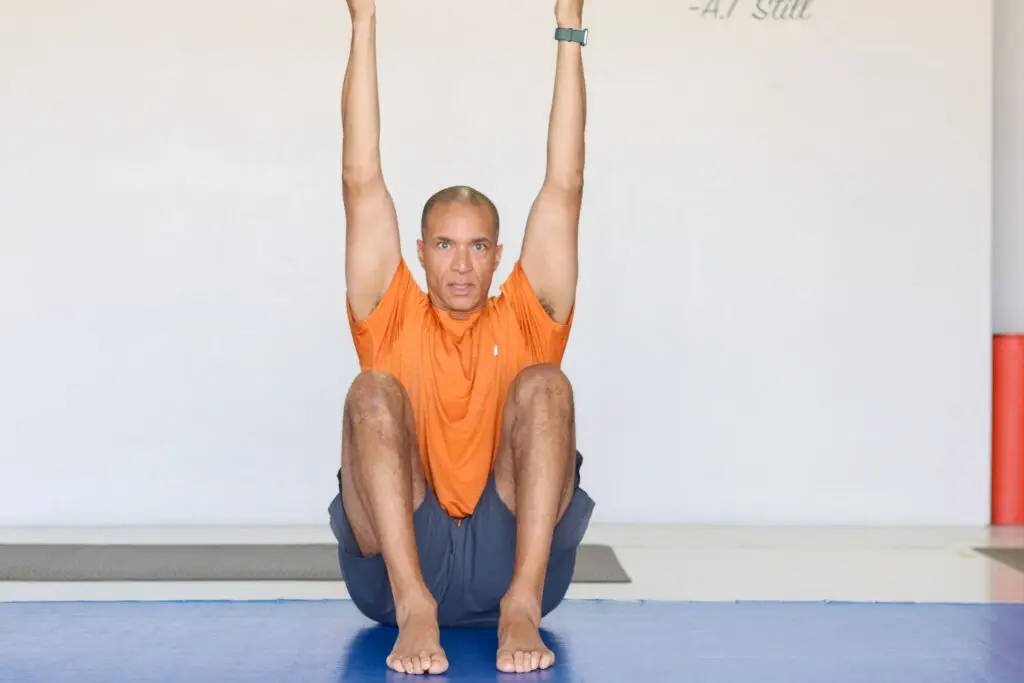
Person demonstrating global postural stretching for whole-body balance

Global Postural Stretching: Align Your Whole Body, Move with Real Balance

Why do some people handle life’s bumps, trips, and quick pivots with steady ease, while others feel wobbly even on a flat floor? The secret often lies in the state of the body’s global fascial chains—and not all stretching is created equal.

Why Not All Stretching Gives You Better Balance

You might see plenty of basic stretches online or at the gym. They usually focus on a single muscle or small group: think toe touches, quad pulls, or triceps stretches. These can add a bit of flexibility. But if only one link in the body’s chain loosens and everything else stays tight? Balance and true stability are still out of reach.

What Sets Global Postural Stretching Apart

With global postural stretching, we work the entire fascial chains at once—from the bottoms of the feet, up the legs, around the hips, and across the core, all the way into the neck and head. Instead of just momentarily lengthening a muscle, this method organizes the whole body around proper alignment and stability. It’s the difference between tuning a single string and tuning the whole instrument: only one gives you music.

Practical examples:

  • The marathon runner who swaps out isolated calf stretches for a GPS sequence and suddenly feels less “clunky” and more stable on uneven ground.
  • The busy parent who does a few chain-based stretches and notices their posture and energy both shift—even after hours at a desk or wrangling kids.
  • The senior who, after adopting GPS, can stand longer, move more confidently in crowds, and catch themself if they stumble.

Why GPS Wins for Whole-Body Alignment and Balance

Research backs this up: muscle chain stretching—like GPS—outperforms traditional spot stretching for balance, range of motion, and even pain relief in the real world. By working on the body’s linked-up structures, you gain steadiness from head to toe, not just a quick fix in one spot.

Want a steadier way to move through life? Choose a stretching approach that respects and rebalances your whole body, not just a single muscle. Global postural stretching is a step ahead—a smarter foundation for lasting balance and confidence.

These specific techniques need to be taught to you and used in conjunction with a holistic exercise and fitness program. Reach out for a free consultation.

Follow the Thread—Where Movement, Fascia, and Freedom Align
Find more insight, reflection, and fascia-informed care:

Facebook

Bluesky

Pinterest

Instagram

YouTube

LinkedIn

Pauwels Balance: How Hip Mechanics Affect Everyday Movement

Hip biomechanics, Pauwels Balance, daily posture

Pauwels Balance—The Science Behind Joint Pressure

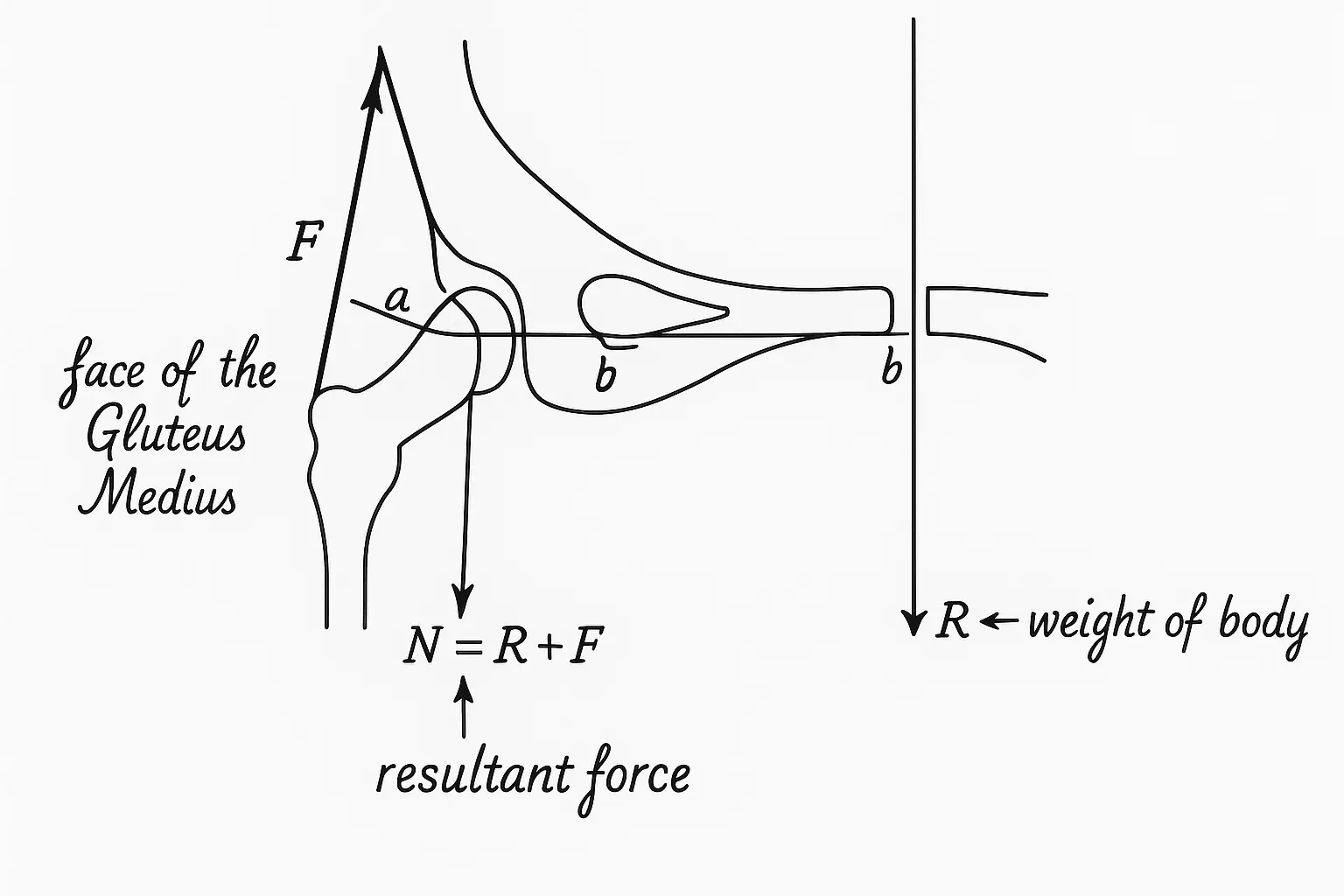
Pauwels Balance is a biomechanical concept that reveals how posture, movement habits, and even minor weight changes dramatically influence the pressure within the hip joint. By understanding this concept, active people in Santa Fe can make smarter choices to protect their hips and prevent joint injuries over a lifetime.

The Formula—How Pressure Is Determined

Pressure inside the hip joint is calculated using Pauwels’ formula:Pr=NSPr=SN

Where NN is the total force (body weight, adjusted for movement) and SS is the contact surface area between femur and socket (cm2cm2). A smaller surface area or higher force both result in more pressure per square centimeter.

Real-World Pauwels Examples

  • Neutral Standing
    For a 72 kg person, body force is about 240 kg distributed over a hip surface of 12 cm²:Pr=24012=20 kg/cm2Pr=12240=20 kg/cm2This even distribution represents an optimal scenario for minimizing joint stress.
  • Turned-Out Leg (Reduced Surface Area)
    Same person, but with hip rotated outwards (as seen in ballet, yoga, or poor standing habits):Pr=2406=40 kg/cm2Pr=6240=40 kg/cm2The pressure doubles because the same force is distributed over half the surface area.
  • More Weight + Turned-Out Hips
    A 90 kg person (heavier, with turned-out hips):Pr=3606=60 kg/cm2Pr=6360=60 kg/cm2Triple the pressure compared to the neutral stance, making the joint more vulnerable over time.

Why Pauwels Balance Matters—Relatable Scenarios and Risks

Daily movement, sports participation, aging, and even footwear choices can all shift the balance between healthy and harmful pressures at the hip joint. Doubling or tripling joint pressure through habit or body weight quickly raises risks for cartilage damage, arthritis, or injury.

Applying Pauwels Principles for Hip Health

  • Recover Alignment: Coaches and therapists use exercises (like myofascial stretching, segmental strengthening, ELDOA, and posture exercises to maximize hip contact area, sharing pressure safely.
  • Personal Example: If standing with toes out or always crossing legs, consider retraining posture—it directly impacts joint longevity.
  • Athlete’s Perspective: Dancers or martial artists should be strategic about hip turnout; recreational athletes benefit from alignment-focused warmups.

building a foundation for a better life.

Find out more @

Facebook

Bluesky

Pinterest

Instagram

Youtube

Linkedin

Your Muscles Are Just Stupid Pieces of Meat

Your Muscles Are Just Stupid Pieces of Meat” — a philosophical correction about how people misunderstand the role of muscles vs fascia and systems-based thinking

There’s this idea floating around that muscles are the star of the show. Build them. Stretch them. Strengthen them. But when it comes to fascia vs muscle, there’s no real contest — fascia is what runs the show.

Your muscles are just stupid pieces of meat.

They don’t think. They don’t initiate. They don’t stabilize or protect you. They do what they’re told — and what tells them what to do is your fascia.

Fascia is the complex web of connective tissue that gives your body structure, transmits force, absorbs impact, and controls the way you move — or don’t move. It’s what shapes your posture, influences your pain patterns, and determines your ability to recover.

And yet, most people are training around fascia — claiming they’re working it, but not following how it actually needs to be trained. Even worse, they’re often destroying it with tools or programs that pretend to target fascia but do the exact opposite.

Stretching muscles, loading muscles, isolating muscles… and wondering why they’re still tight, still in pain, still not performing like they want.

💡 So What’s the Problem?

Training your body like a dumb machine ignores how your system actually works. If your fascia is tight, disorganized, or overloaded, it doesn’t matter how many reps you do or how “strong” your muscles are. You’ll keep reinforcing the same dysfunctional patterns.

That’s why most people plateau. Or get injured. Or end up in my office after going through 5 different physical therapists and chiropractors.

Because muscles aren’t the problem.
Fascia is the system.
And when you work with the system — not just the parts — everything changes.

🚫 Stop Blaming Age. Stop Blaming Injury.

I hear this every day:

“Well, I’m just getting older.”
“It’s because I used to play sports.”

Nope. It’s because you’ve never been taught how your body actually functions. You’ve been trained by a fragmented model.

But your body is whole.
It’s connected.
And it’s smarter than the programs you’ve been sold.

🔁 What To Do Instead

The solution isn’t more workouts.
It’s better input.

At SolCore, we use fascia-based movement and therapy to give your body the input it needs to reset patterns at the deepest level.

✅ More mobility
✅ Less pain
✅ Longer-lasting strength

And it doesn’t take hours a day or fancy

Ready to stop working against your body and finally train with it?

Start by learning how your fascia actually works — and why it’s been the missing link all along.

👉 [Reach out to get started] with a consult to begin truly working with your body holistically — and see how our in-house or online programs can help

Want to learn more about why fascia isn’t just “support tissue”?

Check out this scientific overview →
Fascia as a regulatory system in health and disease (2024) — and discover how fascia actively contributes to your movement, posture, and pain regulation

Follow the Thread—Where Movement, Fascia, and Freedom Align

Find more insight, reflection, and fascia-informed care across the platforms where we stay connected:

Facebook

Blue Sky

Pinterest

Instagram

Youtube

Strength and Proprioception: You Can’t Strengthen What You Can’t Feel

Strength and proprioception are more connected than most people realize.
You’ve been told to get stronger. And maybe you’ve tried…
But here’s the thing no one tells you:
You can’t strengthen what you can’t feel.

If your body’s sensory map is fuzzy — if the nervous system can’t accurately locate joints, muscles, or tension — then you’re not building strength. You’re reinforcing confusion.

When the Signal’s Off, So Is the Output

That means:

  • The wrong muscles doing the work
  • Extra tension where you don’t need it
  • And a body that gets tighter, not stronger

This is why traditional strength training often fails people with chronic pain or poor posture. It piles output on top of dysfunction.

The nervous system is always prioritizing safety. And it won’t let you generate real force from an unsafe map.

Real Strength Starts with Signal Clarity

That’s where proprioception comes in — your body’s sense of position and movement. And it’s not just in the muscles… it’s in the fascia.

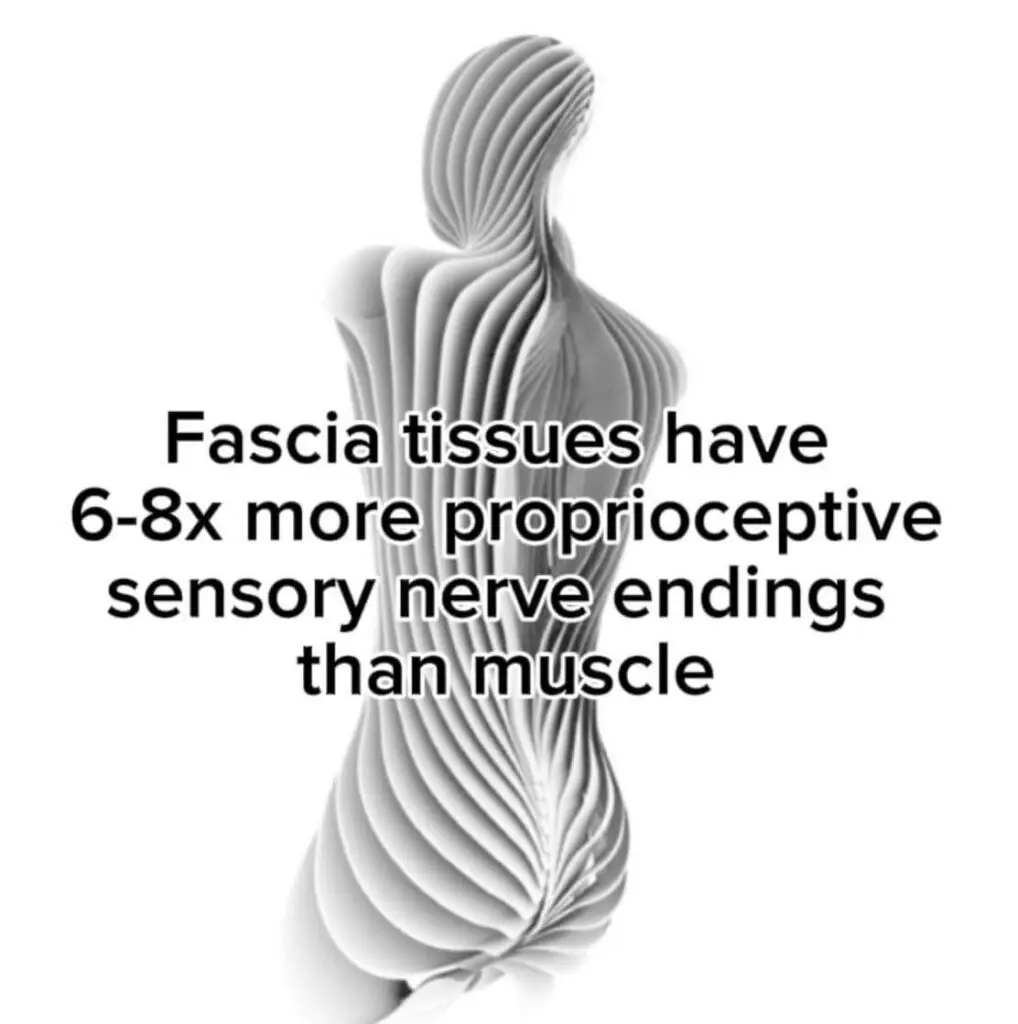
Fascia is one of the body’s most proprioceptive organs — a network of sensory receptors, both introceptive and extroceptive, woven throughout your entire structure.

To train it, we don’t start with load. We start with input.

That’s why methods like:

  • Segmental strengthening (precise isometric loading to re-educate joint control)
  • ELDOA (decompression to create space and normalize tension)
  • Myofascial Stretching (length + tension reset through fascial chains)
  • Proprioception exercises (low-load, high-precision training to refine joint feedback)

…form the foundation of intelligent strength development.

They wake up the system. They create clarity. And that’s what allows true strength to build.

From Signal to Strength — The Science Behind the Shift

Real strength doesn’t start with muscle. It starts with mapping.

According to Hill’s Muscle Model, force output depends on more than just fiber length and tension — it also relies on neural coordination and proprioceptive input. If the body can’t feel itself accurately, it can’t produce efficient force.

Your introceptors (internal signals: breath, organ tone, intra-abdominal pressure) and extroceptors (external cues: joint angles, balance, spatial orientation) work together to create a somatic map in the brain.

When that map is distorted, strength gets sloppy and injury risk climbs.
But when the map is clear?

  • Your system becomes more efficient
  • Force transfer improves
  • Strength becomes sustainable — not just performative

Fascia doesn’t just surround muscles — it interweaves with them.
It wraps around every muscle fiber, including actin and myosin, and envelopes the proprioceptors themselves — like muscle spindles and Golgi tendon organs.

So when you train fascially — through decompression, tension normalization, segmental loading, and lengthened isometrics — you’re not just building strength…

You’re upgrading the entire system that strength depends on.

Related Resources:

📎 Internal Link: What Makes Holistic Fitness Actually Work
📖 External Source: FASCIA AS A SENSORY ORGAN: Clinical Applications (Schleip)

Ready to train from the inside out?
👉 Book your free 30–45 min strategy call and learn how to build sustainable strength from your structure up.

Follow the Thread—Where Movement, Fascia, and Freedom Align
Find more insight, reflection, and fascia-informed care across the platforms where we stay connected:

Facebook

Blue Sky

Pinterest

Instagram

Youtube

Why Your Spine Isn’t Rehydrating Overnight — and What to Do About It

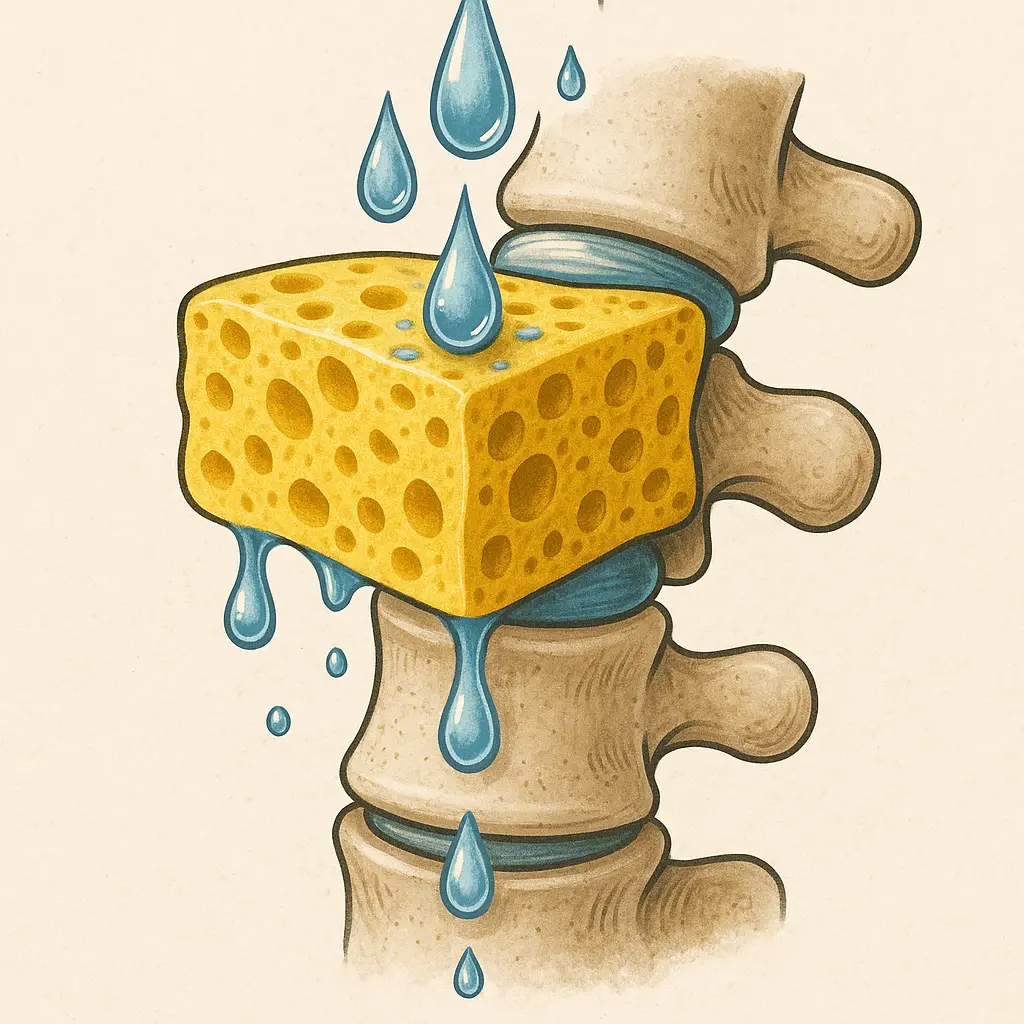
disc hydration ELDOA. Illustration of a yellow sponge between two vertebrae with water droplets rehydrating the spine — metaphor for disc hydration through ELDOA and TV Stretching.

💡 Your spinal disc doesn’t just “recover” with hydration while you sleep. It responds to what you do before you rest.


🟠 Your Discs Aren’t Lazy — They’re Just Dehydrated

Most people think spinal health and disc hydration is a waiting game: take the pressure off, rest a bit, and hope the body “fixes itself.” But that mindset overlooks one of the most basic truths of physiology: structure needs input.

Your intervertebral discs — the soft cushions between each vertebra — don’t have a direct blood supply. They rely entirely on your movement, posture, and hydration mechanics to stay supple and healthy. If you’ve ever felt stiff or achy in the morning despite a “good night’s sleep,” there’s a reason for that.


🧠 The Science of Disc Hydration — in Plain Speak

Discs rehydrate in two ways:

1. Passive Rehydration (Osmotic Pressure)

When you lie down at night, gravity is removed. This creates an osmotic gradient — water is slowly drawn back into the discs. Think of it like setting a sponge in a shallow bowl of water. It’ll eventually soak in… but only as much as its tissue allows.

2. Active Rehydration (Mechanical Stimulus)

When you de-coapt your spine through targeted movement — like ELDOA stretches — you create negative pressure and fascial tension. This primes the disc to pull in more fluid. It’s like squeezing and releasing that sponge right before soaking it — it absorbs far more water when prepped this way.


🌙 Why ELDOA “TV Stretching” Works So Well for Disc Hydration

“TV Stretching” is the term we use for doing your ELDOA decompression work 1–2 hours before bed. This timing allows you to:

  • Decompress your spine actively
  • Prime your discs to absorb water
  • Then follow it with passive overnight rehydration

You’re combining two mechanisms, not relying on just one.

This is especially effective if you’re dealing with:

  • Degenerative disc issues
  • Postural compression from sitting or lifting
  • Chronic stiffness that doesn’t resolve with sleep alone

🛠 Try This Tonight: 2-Step Reset (L5/S1 Focus)

Before bed, try this:

  1. Get into the L5/S1 ELDOA position, but keep your knees bent.
    This protects the popliteal artery, which runs behind the knee and can be compressed during long-duration stretches with extended legs.
  2. Stay in the posture passively — just hold the position and breathe for 5, 10, or even 15 minutes.
    You’re not actively reaching or tensioning yet — just letting the spine settle and decompress through position alone.
  3. Then do a single, focused ELDOA hold — no more than 1 minute.
    Engage the full fascial lines. Create vertical tension. Be precise.
    (Too long and you’ll reverse the effect — ELDOAs are about quality, not duration.)
  4. Lie down and rest.
    This primes your spine for both active and passive hydration during the night.

Try this for a few nights and feel the difference. It’s a strategy rooted in somatic intelligence — not guesswork.


🌀 Recovery Starts with Awareness

This is about more than hydration — it’s about being in your body enough to know what it needs and when.
If you’re curious how body awareness and healing are deeply connected, this Psychology Today overview of somatic therapy breaks it down beautifully. It echoes what we practice here — movement that starts with presence, not just position.


✅ Feel Different in the Morning — Not Just Rested

If you want to feel strong, tall, and fluid in the morning, you don’t need more sleep.
You need smarter pre-sleep recovery.

This approach is simple, targeted, and doesn’t take long. But it’s rooted in deep science and even deeper respect for the body’s rhythms.

🔗 Want help applying this to your specific structure?
Book a free 30–45 minute strategy call and we’ll walk through the right ELDOA and hydration approach for your spine.

Or join us for our monthly Free Community ELDOA class, to try it for yourself.

Follow the Thread—Where Movement, Fascia, and Freedom Align
Find more insight, reflection, and fascia-informed care across the platforms where we stay connected:

Facebook

Blue Sky

Pinterest

Instagram

Youtube

Linkedin

Your Body Is Not a Tool: It’s a Tensegrity System

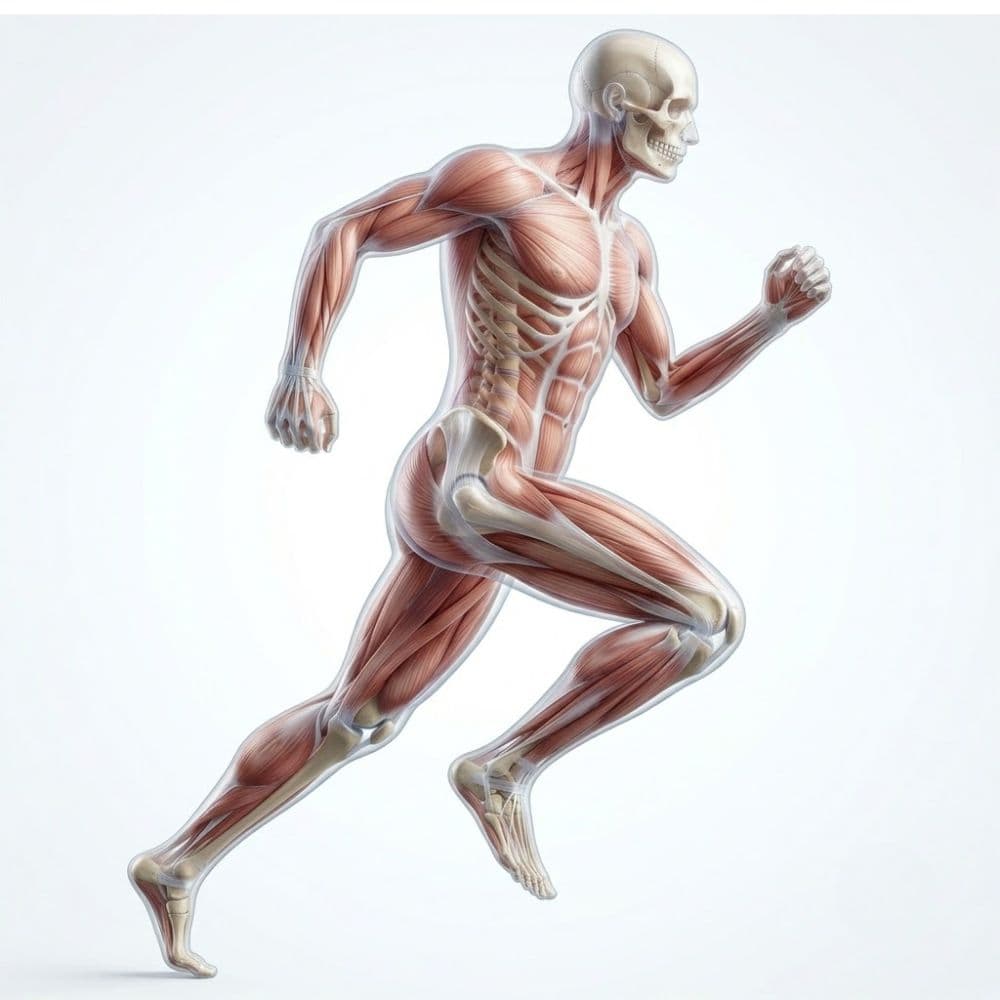
Mens Health. Your Body is not a tool - tensegrity system body

Your Body Is Not a Tool—It’s a Tensegrity System

Most men treat their body like a tool.
Use it. Push it. Sharpen it. And when it breaks—tape it up and keep going.

But what if that’s the wrong model?

What if your body is less like a hammer… and more like a suspension bridge?

🧬 What Is a Tensegrity Structure?

Tensegrity is a principle of architecture and biology that describes how a system holds its shape through tension and compression in balance.

In your body, that means:

  • Fascia suspends bones, not just muscles.
  • Muscles work in continuous loops—not linear pairs.
  • Stability comes from distributed force, not just strong joints.

This concept is well explored in tensegrity structures in the body, where bones float in a sea of soft tissue and movement is the result of dynamic relationships—not rigid levers.

When one area tightens or collapses, everything else has to adjust—sometimes with pain, sometimes with compensation.

🧠 The “Tool Mindset” Is Costly

Most men were taught to push through discomfort, to train harder, and to earn results through effort alone.

But this approach overlooks the systemic balance that your body depends on:

  • Strength in one plane + stiffness in another = injury
  • Big lifts without joint hydration = compression, not growth
  • No fascia prep = poor rebound and reduced circulation

Fascia doesn’t just wrap muscles—it governs how force travels through the body. Fascia’s role in structural balance is central to preventing overload and sustaining performance.

A tensegrity system doesn’t respond well to brute force. It needs strategy.

🔧 The Shift: From Hammer to Suspension Bridge

What if instead of forcing your body, you prepared it?

  • What if warm-ups focused on joint mobility and fascial hydration, not just heat?
  • What if your training helped restore balance before pushing capacity?
  • What if you saw self-care as performance insurance, not a luxury?

🛠️ ELDOA: Biotensegral Fitness in Action

This is where tools like ELDOA, myofascial stretching, and segmental reinforcement come in.

They create:

✅ Precise decompression
✅ Vector-aligned tension
✅ Functional hydration of discs and joints
✅ Endurance without compensation

It’s not flashy. But it works. And it lasts.

In fact, fascia-related dysfunction is often a root cause of training breakdown. Learn more about overuse injuries and movement compensation and how smarter prep can make the difference.

📣 Final Thought: Pride in Structure

During Men’s Health Month and Pride Month, the message is simple:

➡️ Pride in yourself starts with knowing yourself.
➡️ You can’t give what you don’t have.
➡️ A resilient body supports a fulfilling life.

The goal isn’t to push harder—it’s to train smarter.
Your body isn’t a tool. It’s a system. Treat it that way—and it will carry you far.

Want to experience what real body architecture feels like?

Follow the Thread—Where Movement, Fascia, and Freedom Align
Find more insight, reflection, and fascia-informed care across the platforms where we stay connected:

Facebook

Blue Sky

Pinterest

Instagram

Youtube

Who is Borelli and How Can His Muscle Range Of Motion Length Law Help You in Your Fitness Routine?

Muscle range of motion is an important factor in training yourself properly. But it’s not just about moving your body. There are different range of motions for different effects. Read more to find out.

Meet Borelli: The First Biomechanic

Borelli lived in the 1600s and was a true Renaissance man — a mathematician, physicist, and physiologist all rolled into one. He’s often called the Father of Biomechanics because he was one of the first to look at the human body and say, “Hey, our muscles and bones work like levers, springs, and pulleys!”

What is Borelli’s Length Law?

In a nutshell, Borelli’s Length Law states: The length of a muscle is proportional to the range of its contraction. Muscles behave differently — and produce different types of strength — depending on whether they’re shortened, lengthened, or somewhere in between. In short, it’s the Muscle range of motion and what they can do for you.

Borelli’s 5 Ranges of Muscle Motion (And How They Help You)

Internal Range Full flexion (muscle fully shortened), very little extension.

Why it matters: Builds stability, tight control, and joint protection.

External Range

Total extension with a bit of flexion.
Why it matters: Strengthens muscles in their stretched, vulnerable positions.

Middle Range

Partial flexion and partial extension.
Why it matters: Where muscles are strongest and most efficient — builds power.

Total Range

Moving from full flexion to full extension.
Why it matters: Trains adaptability and real-world functionality.

Extrem Range

Muscle stretched to max while still contracting — e.g. ELDOA.
Why it matters: Improves deep structural resilience and tissue quality.

Final Thought: Your Fitness Journey is Bigger Than 3 Sets of 10

The world of fitness is vast and full of possibilities. Muscle range of motion is just one factor that you can work with. If you’re willing to look beyond sitting on a machine and doing 3 sets of 10–15 reps.
By training all muscle ranges of motion, you open up new levels of strength, movement, and vitality that most people never tap into.

Borelli’s old-school insights still hold true today: “The body is a masterpiece of mechanics. Train it fully — and you’ll live fully.

When you start combining Borelli’s Length Law with other timeless principles — like Pascal’s Law, Hill’s Muscle Model, the Delmas Index — through the holistic lens of Biotensegrity, your training, your movement, and your life will expand exponentially.

Methods like ELDOA are modern reflections of this timeless science — helping you build not just strength, but deep, intelligent resilience.

Read more about how holistic exercise and fitness program can help you feel your best and have a body that can keep up with the way you want to live.

Follow the Thread—Where Movement, Fascia, and Freedom Align
Find more insight, reflection, and fascia-informed care across the platforms where we stay connected:

Facebook

Blue Sky

Pinterest

Instagram

Youtube

Mastering the Push Pattern: It’s Not Just For Your Pecs

Mastering the push-pattern. The bench press. The chest press. The push-up.

Whatever you call it, this push pattern is one of the seven primal movements—and it’s about a lot more than just building your pecs.

In this post (and video), we’ll explore how mastering the push pattern isn’t just a matter of technique, but of understanding the full-body biomechanics behind it. When you treat it as a holistic movement, you unlock strength, mobility, and injury resilience across your entire body.

Check out the full video by clicking on the image below.

The Push Pattern Is a Full-Body, Compound Movement

Yes, the push pattern trains your pecs—but it also demands the coordination of your:

  • Lats
  • Deltoids
  • Biceps & triceps
  • Forearms, wrists, and hands
  • Elbows, shoulders, and spine
  • Rib cage, sternum, and even your pelvis

When you perform a push correctly, these systems integrate through your fascia to create a strong, stable, and safe motion.

But when you lack strength or coordination in any of these areas, your body compensates. That’s where problems start.


Compensation = Cheating Your Body

Let’s say your pecs are underdeveloped. You can still bench press—but your body cheats by overusing the lats, delts, or even your spine.

Over time, this imbalance leads to:

  • Shoulder pain
  • Poor posture
  • Limited progress
  • Injury

To avoid this, you must train the push pattern segmentally first—then globally.


Segmental Training Before Full Patterns

Instead of jumping straight into compound movements, train the individual components:

  • Pec flies at diagonal angles to match muscle fiber lines
  • Serratus anterior strength (fan-shaped movement)
  • Rhomboid work in glenohumeral-friendly positions
  • Posterior chain and thoracic posture development
  • Psoriatic joint mobilization and therapy (behind shoulder blades)

This builds neuromuscular coordination, muscle mass, blood flow, and fascial integration—giving your body the tools to execute the push without compensation.


Choosing the Right Push Pattern Progression

Once you’ve built the foundation, you can progress the push pattern intelligently:

  • Open chain (free end movement): barbell bench press, dumbbell press
  • Closed chain (fixed end): push-ups from wall, bench, knees, or toes
  • Unilateral (one side): single-arm press
  • With rotation or combination: functional push + twist variations

Start with the basics. Don’t jump into complexity without preparation—your body will guess, and guessing equals injury.


Posture and Scapular Mechanics: Two Common Mistakes

Two things I see people get wrong constantly:

  1. Posture
    • Arching the back during a press
    • Leading with the head during push-ups
    • Lifting the head off the bench
    • Dropping the pelvis or changing spinal curves
    👉 Your posture is your training. What you teach your body under load is how it will behave.
  2. Scapular Mechanics (Shoulder Blade Movement)
    • On the way down (eccentric), scapulae must retract
    • On the way up (concentric), they must protract

If your scapulae can’t glide properly, your shoulders take the hit.


The Serratus Anterior: The Unsung Hero of Push Movements

The serratus anterior is critical for scapular protraction and stabilization. It fans out from the ribs to the shoulder blade and works alongside:

  • Rhomboids (between the scapulae)
  • Psoriatic joint (behind the scapula)

You must train it in multiple planes—not just with “push-ups plus,” but in diagonal and rotational movements to build full range and resilience.

We have a great guide to understanding holistic exercise and fitness


Why Mastering the Push Pattern Matters

This isn’t just about looking better in a t-shirt. The push pattern shows up in:

  • Daily movements (pushing open a door)
  • Sports performance
  • Fall prevention
  • Structural balance
  • Joint health

When you rush into it without preparing the body segmentally, you’re skipping steps—and your body will force you to pay attention later through pain or dysfunction.


Final Thoughts (and Your Next Steps)

Mastering the push pattern means respecting the complexity of your body.

✅ Train weak links first
✅ Stretch and mobilize where needed
✅ Build strength from the ground up
✅ Respect posture, control, and sequencing


📥 Free Resource + Call Option

🎁 Want to train smarter, not harder?
Get my free guide: 4 Steps to a Strong, Pain-Free Body to Live the Life You Choose — instant access.

Building a foundation for a better life.

Find out more @

Facebook

BlueSky

Pinterest

Instagram

Youtube

🌟 Unlock Your Full Potential: The Secret Link Between Stretching and Strength! 🌟

Stretching is often seen as a warmup, cooldown, or just something you do when your muscles feel tight. But what if stretching and strength weren’t opposites—but partners?

When done correctly, stretching not only improves mobility—it builds strength by enhancing posture, neuromuscular control, and the structural integrity of your body.

Let’s dive into how this works and why most people are doing it wrong.

Click on the image to watch the full video

Stretching Isn’t Just Passive Relaxation

The kind of stretching you see in most gyms—grabbing your foot, throwing a leg on a bench, or flinging your arm across your chest—is outdated and ineffective.

At best, it temporarily increases range of motion. At worst, it disrupts how your body generates strength.

But with the right approach, stretching can actually improve strength by working with the body’s connective tissue system—specifically, your fascia.


Stretching vs. Warming Up: Know the Difference

Let’s clear this up:

  • Warm-up: Prepares your body for activity
  • Stretching: Helps normalize tissues after activity
  • Foam rolling: Neither warming up nor stretching—and often harmful to fascia

Warm-ups increase your current potential. Stretching expands what’s possible over time. That’s why you should never stretch before intense activity—only after.


Why Fascia Matters for Strength

Fascia is the body’s connective tissue matrix. It wraps every muscle, nerve, and organ—creating structure, transmitting force, and supporting movement.

If your fascia is:

  • Dehydrated
  • Stressed
  • Tangled from poor posture or injury

…it will limit how your muscles function. Stretching properly hydrates, aligns, and restores fascia—giving your muscles a better “container” to generate force from.


The Science Behind It: Tensegrity + Hill’s Muscle Model

Your body works through tensegrity—a balance of tension and compression. When fascia is out of balance, your strength output suffers.

According to Hill’s Muscle Model, true strength depends on:

  1. Muscle fibers
  2. Tendons
  3. Fascia

Most programs only train the first two. The third component—fascia—is what holistic stretching trains directly.


Myofascial Stretching: What It Actually Does

Done correctly, myofascial stretching:

✅ Aligns fascial chains across the body
✅ Improves posture and neuromuscular communication
✅ Boosts coordination within strength movements
✅ Reduces injury risk by improving structural integrity

Think of it as strengthening from the inside out.


Why Most People Miss This

Stretching that leads to strength isn’t generic. You can’t Google a “hip flexor stretch” and expect it to improve your squat.

You need to:

  • Know which chain the muscle belongs to
  • Line up posture and joints correctly
  • Understand how it connects to your fascia and nervous system

That’s why working with someone who understands fascia is so important. I help clients do just that.


Take Care of Your Fascia Like This:

  1. Hydrate – Plain water, ½ your body weight in ounces daily, away from meals
  2. Manage stress – Nature, meditation, journaling, breathing
  3. Stretch with fascia in mind – Post-activity, aligned to your body’s specific needs

Want to Learn How to Do This Right?

If you’re just going through the motions or skipping stretching altogether, you’re missing a huge piece of the strength puzzle.

✅ Download my free guide: 4 Steps to a Strong, Pain-Free Body
Book a free consult: Let’s assess your body, your routine, and see what’s really holding you back
✅ Keep learning: Explore my channel and blog—everything here is built around a holistic, fascia-first approach

Let me know in the comments: Are you using stretching to support your strength? Do you train with myofascial chains in mind?

See you next week.

it’s not just working out, it’s building a foundation for a better life.

Find out more @

Facebook

BlueSky

Pinterest

Instagram

Youtube