Stability Training

If PT Didn’t Fix Your Back Pain, Here’s Why It’s Not Your Fault

Person demonstrating a corrective core exercise for chronic back pain relief

If you did physical therapy for your back and it didn’t hold, it wasn’t because you didn’t try hard enough. Most PT protocols for the spine are built on ideas that sound complete and aren’t. Here are the four gaps that actually explain why physical therapy doesn’t fix back pain for so many people, and what closing them actually looks like.

Coach’s Corner

I can’t tell you how many home exercise sheets I’ve seen with the same five moves on them: hip flexor stretch, glute bridge, plank hold, cat-cow, clamshell. Good exercises. Nothing wrong with any of them on paper. They will do all five perfectly, for eight weeks, and their back still locks up getting out of the car. Nobody lied to them. Nobody was lazy. The sheet just never told them which hip flexor, which fiber direction, or which piece of the system they were actually supposed to be training. That’s the gap this post is about.

The Real Reason Physical Therapy for Back Pain Doesn’t Hold: Specificity

You Have Nine Hip Flexors, and Only One of Them Matters Here

Take the standard hip flexor stretch. You have nine hip flexors. If nobody ever told you which one, you’ve probably been stretching one at random and calling it progress. You might feel a small change at first, especially early on, but then it plateaus into something you do out of habit, with no real, sustained improvement, month after month, until you quietly decide stretching “just doesn’t work for your body.” It’s not that it doesn’t work. It’s that you were never told which one actually matters for back pain specifically: the iliopsoas, the one that attaches directly to your lumbar spine in two separate places. Stretch the wrong one of the other eight, perfectly, every day, for a year, and your spine never feels it.

Your Glute Bridge and Clamshell Have the Same Problem

The glute bridge (for the glute max) and the clamshell (for the glute med) both have the identical issue. You’ve probably done thousands of reps of both and wondered why your hips still feel unstable walking down stairs or turning to grab something behind you. It’s because both muscles pull in multiple directions, and the classic version of each exercise trains one fiber direction at best. And that’s not even counting form, like tucking your pelvis first on the glute bridge itself. There’s a fascial piece missed too: the glute med isn’t just a muscle sitting on your pelvis. It feeds directly into the tractus iliotibialis, what most people call the IT band, though that’s only one part of it. It’s actually a thickened strip of the fascia lata, the sheet of deep fascia wrapping your entire thigh, and it connects further into your thoracolumbar fascia, which links both deep and superficial layers all the way up your trunk to your head and arms. Doing the clamshell at one fixed angle never asks that fascial connection to do its actual job. You didn’t fail the exercise. The exercise never told you it was only training a third of the muscle’s actual job, and none of what it connects to.

Why Back Pain Exercises Fail: Relational Anatomy

The Pressure System Holding Up Your Spine

You can do every core exercise in the book, get genuinely strong, and still have an unstable spine, because almost nobody trains the actual system holding it up. Your diaphragm isn’t just for breathing. Picture a sealed canister: the diaphragm is the roof, your pelvic floor is the base, your deep abdominal wall is the sides. When that canister pressurizes correctly, it acts as an internal scaffold that measurably supports and mobilizes your lumbar spine. That’s Pascal’s Law working in your own body: pressure applied anywhere in a closed system transmits everywhere in it. Train the muscles around that system your whole life and never touch the pressure system itself, and you’re building strength on top of a foundation that was never actually secured.

Muscles Don’t Work Alone, They Work in Chains

The same trap catches the iliopsoas. Work it in isolation and you’re fighting your own design, because muscles don’t act as solo parts, they work in chains. That’s what’s called a gain: the nervous system firing multiple areas along the same chain together, connected through fascial lines running from your diaphragm down through your hip and into your leg. You can work that one muscle for years and the tension keeps coming right back the next morning, because the actual restriction was never in the muscle belly you were pulling on. It was somewhere else in the chain you never touched.

How the Body Actually Moves (And Why Common Advice Misses It)

The McKenzie Press-Up Isn’t Universal

The McKenzie press-up gets handed to almost anyone with back pain, built on one assumption: that the pain is coming from a posterior-lateral disc bulge pressing on a nerve, and that extension will draw it back in. That’s a reasonable read; it’s how a lot of disc pain actually behaves. But it isn’t absolute. Pressure inside that disc follows Pascal’s Law too: push on it from one direction and it transmits force in every direction, not just back where it came from. Even if it is a bulge, if it’s sitting somewhere other than posterior-lateral, going into extension can make it worse instead of better. And if what’s actually irritated is a facet joint, a real synovial joint, not a disc, extension does the opposite of help entirely. It can increase compression on that joint by around 30%. So the same exercise, handed out for the same complaint, either fixes you or loads the exact structure that’s already inflamed, and nothing about how it’s usually prescribed tells you which one you’re getting.

Your Spine Isn’t a Cadaver

Crunches and planks get a version of the same problem. You’ve almost certainly been handed both. They can genuinely build the muscles that support your spine, and the caution around them comes from real cadaver-based safety research, which isn’t wrong on its own terms. A lot of ab exercises do increase the force on the lower back. But that number came from measurements on a body that can’t move: a cadaver. You’re not a cadaver. Your spine redistributes force as you move, adapts under load, shifts position mid-rep. Basing an exercise’s safety only on a number measured from tissue that can’t do any of that leaves you in one of two places: avoiding something that was never actually dangerous for a moving body, or doing the exercise without ever teaching your spine the one thing it actually needs for real life: moving under load, not just holding still under it.

Why Stretching Tight Hamstrings Doesn’t Always Help

And hamstrings, plural: there are three of them, and “tight hamstrings” gets stretched for years without ever asking why they’re tight. Half the time it’s not tightness at all. It’s guarding: your body protecting an unstable pelvis. Stretch that away without fixing what it’s protecting, and you haven’t fixed anything. You’ve just disarmed a stabilizer your body was using to keep you safe.

Progression: The Missing Piece in Back Pain Recovery

Bird Dog Isn’t a Beginner Move

Bird dog gets handed to almost everyone with back pain on day one, like it’s a beginner move. It’s not. It assumes you can already coordinate your deep core, your erectors, and your lat, all firing in the right sequence, while managing your pelvis through correctly-tensioned hip muscles, all at the same time, while you’re also balancing on two limbs. If nobody built that coordination and base strength in these individual muscles first, you’re not doing the exercise. You’re just moving your limbs and calling it stability work, reinforcing whatever compensation pattern got you into pain in the first place, and wondering, months later, why nothing changed.

There’s a balance problem hiding in there too. Outside of exercises actually meant to train balance, any time you wobble during a strengthening or stretching exercise, your nervous system stops caring about the muscle you’re working and starts caring about not falling. Bird dog puts you on two points of contact by design. If you don’t already have the stability to hold that position rock-still, every wobble quietly swaps the core-activation task for a balance-reflex task instead, which means the person who needs bird dog the most, the one who’s unstable, is the one most likely to turn it into a balance drill by accident and get none of the intended benefit.

Watch the Full Breakdown

I made a video that goes deeper into all four of these, with the anatomy behind each one.Watch it here:

Where to Start

None of this means throw out your exercise sheet. It means the sheet was never going to be enough on its own, because your body doesn’t work on “do this one thing and you’re fixed.” What actually changes things is a real, structure-specific approach, then the right combination of techniques for what your pattern needs right now, not a generic program handed to everyone in the room. That’s exactly what the Move Better, Reduce Pain, and Live Life On Your Terms guide walks you through — the same real-assessment approach, free, so you can start applying it today. It’s one part of a larger, growing system, not a one-time fix.

Don’t make me come check your form.

Follow the Thread — Where Movement, Fascia, and Freedom Align

Find more insight, reflection, and fascia-informed care:

Facebook

Bluesky

Pinterest

Instagram

YouTube

LinkedIn

How to Know If You Actually Need Someone Else’s Eyes

How to tell if a balance or structural problem is something you can fix yourself”

This month we covered the real, quantified cost of misalignment and why you can’t always trust how balanced you feel. This morning’s free class was one place to actually find out where you stand. Here’s the question that actually matters either way: how do you know if this is something you can work on yourself, or something that means you need someone else’s eyes?

Coach’s Corner

People ask me this constantly, usually phrased as “can’t I just do this myself?” Sometimes, yes. Sometimes, genuinely no — and the reason isn’t about effort or discipline.sek

Why You Sometimes Need Someone Else’s Eyes

The pattern across everything we covered this month is the same: your body doesn’t always tell you the truth about itself. Misalignment costs real energy whether you notice it or not. And self-assessment is notoriously wrong across almost every domain it’s been studied in — high performers tend to underestimate themselves, low performers tend to overestimate. That’s not unique to balance. It’s just how self-perception works.

If you can feel when something’s off, and you can identify which direction, that’s genuinely something you can work on. But if you can’t feel it — or you’re confident about something that turns out to be wrong — no amount of effort fixes that on your own, because you can’t correct what you can’t perceive.

The Real Test

That’s the actual dividing line. Not how hard you’re willing to work. Whether you can accurately perceive the thing that needs fixing in the first place. That’s genuinely worth sitting with before you decide your next move — it changes what “trying harder” is even supposed to look like.

Where to Start

If you’re not sure which category you’re in, the free Empower Your Health guide is a good next step — it walks through how to actually start assessing your own structure honestly.

Don’t make me come check your form.

Follow the Thread — Where Movement, Fascia, and Freedom Align

Find more insight, reflection, and fascia-informed care:
Facebook

Bluesky

Pinterest

Instagram

YouTube

LinkedIn

Why You Can’t Trust How Balanced You Feel

If you think you can trust how balanced you feel, researchers found something unsettling: you’re probably wrong — and the direction of the error depends on how good your actual balance is. That’s on top of what last week’s piece on the real energy cost of misalignment already covered — this one’s about a different problem entirely.

Coach’s Corner

I go deep on the structural and neurological side of this in an earlier piece — the feet, spine, proprioceptors, all of it. This one’s about something different: the gap between how balanced you feel and how balanced you actually are.

Why You Can’t Trust How Balanced You Feel Without Checking

A 2025 study out of the University of Utah had athletes estimate their own performance on a narrowing balance beam, then compared those estimates to what actually happened. The pattern was clear: people with genuinely poor balance tended to overestimate their ability. People with genuinely good balance tended to underestimate it.

That’s not a small quirk. Roughly a third of older adults misjudge their own balance ability — and the consequences run in both directions. Overestimating leads people to attempt movements beyond their actual stability, which raises fall risk directly. Underestimating leads to unnecessary caution and activity restriction, which — counterintuitively — also raises fall risk, because avoiding movement erodes the very capacity you’re trying to protect.

Even trained athletes, in a controlled study, couldn’t accurately judge their own balance the first time they tried a new task. It took repeated practice on that specific task before their self-perception lined up with reality.

The Test That Reveals Which Category You’re In

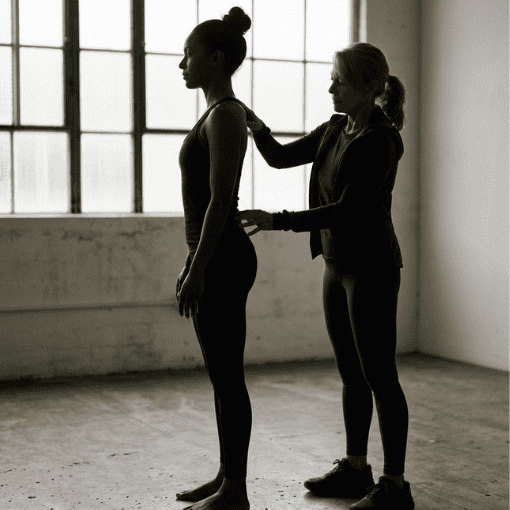
This is exactly why I run a specific test in my studio that requires a second person. You stand straight, close your eyes, lift your toes. I watch for sway — and I don’t correct you back to center. I hold you exactly where your body naturally drifted, using an index finger at T3 and the sternum. I’m not fixing anything. I’m documenting where you actually went.

Then: open your eyes, feet down. I ask — did you move? Which direction?

If you know you swayed, and you know which way, your gravity line might be off, but your awareness is intact. That’s the more fixable problem. But if you genuinely didn’t feel it — or you’re confident you went one way when you actually went the other — that’s not one problem, it’s two. You can’t self-correct something you can’t feel happening.

Where to Start

If you’ve never had this tested, you don’t actually know which category you’re in — and per the research, guessing isn’t reliable. If you want to think through what this might mean for your specific situation before booking anything, ask my AI clone — it’s trained on my actual approach and available anytime, no cost.

Don’t make me come check your form.

Follow the Thread — Where Movement, Fascia, and Freedom Align

Find more insight, reflection, and fascia-informed care:

Facebook

Bluesky

Pinterest

Instagram

YouTube

LinkedIn

The Hidden Cost of Bad Balance

The real, measurable energy cost of standing off-balance

There’s a hidden cost of bad balance most people never think to check: if your ear, shoulder, hip, and ankle don’t actually line up, your body’s been quietly spending energy just to keep you from tipping over. Not from moving. From standing there.

That’s not a feeling. Researchers actually measured this directly — they tracked real energy expenditure at different standing positions and found that being out of alignment increased energy cost by up to 31 percent. Leaning backward cost almost twice as much as leaning forward the same amount. That’s not an estimate. That’s people hooked up to equipment measuring exactly how much energy your body burns just holding itself up.

Coach’s Corner

I’ve already gone deep on why balance and coordination have to come first, and what actually happens when you skip them — if you haven’t seen that breakdown, it’s worth your time. This piece is about something narrower: the actual, quantified cost of getting it wrong.

What Actually Drives the Hidden Cost of Bad Balance

Most people think of bad posture or bad balance as a comfort problem — you feel a little off, maybe your back aches by the end of the day. But what the data shows is more specific than that. Being outside your optimal alignment isn’t neutral. It’s an ongoing energy drain, all day, every day, whether you notice it or not.

Three structures drive this: your feet — specifically the calcaneus, feeding your brain constant information about where you are relative to the ground. Your spine — which needs four natural curves, not flattened, not exaggerated, to distribute load the way a spring does instead of a rigid rod. And your head’s position relative to your shoulder girdle, which determines whether your eyes, ears, and TMJ can actually do their job feeding your brain accurate information.

When any of those three are off, your body doesn’t just feel unstable — it spends real energy compensating, continuously, without you asking it to.

Why This Matters More Than You Think

This is the part people miss: that energy cost doesn’t stay contained to “standing.” It’s a tax on everything else. Less energy available for your workout. Less recovery capacity. That tired-for-no-reason feeling at the end of a day where you didn’t do anything especially hard.

And here’s the part that matters even if it turns out you need actual manual therapy or a specific corrective protocol: working on your structural alignment still helps regardless. You’re not wasting effort — you’re giving your body a better foundation to work from, whether you handle the rest yourself or someone else’s hands are involved.

Where to Start

If you’ve never had this tested, you don’t actually know which category you’re in — and per the research, guessing isn’t reliable. If you want to think through what this might mean for your specific situation before booking anything, ask my AI clone — it’s trained on my actual approach and available anytime, no cost.

Don’t make me come check your form.

Follow the Thread — Where Movement, Fascia, and Freedom Align

Find more insight, reflection, and fascia-informed care:
Facebook

Bluesky

Pinterest

Instagram

YouTube

LinkedIn

Why Quick Fixes Fail (And What Real Progression Looks Like)

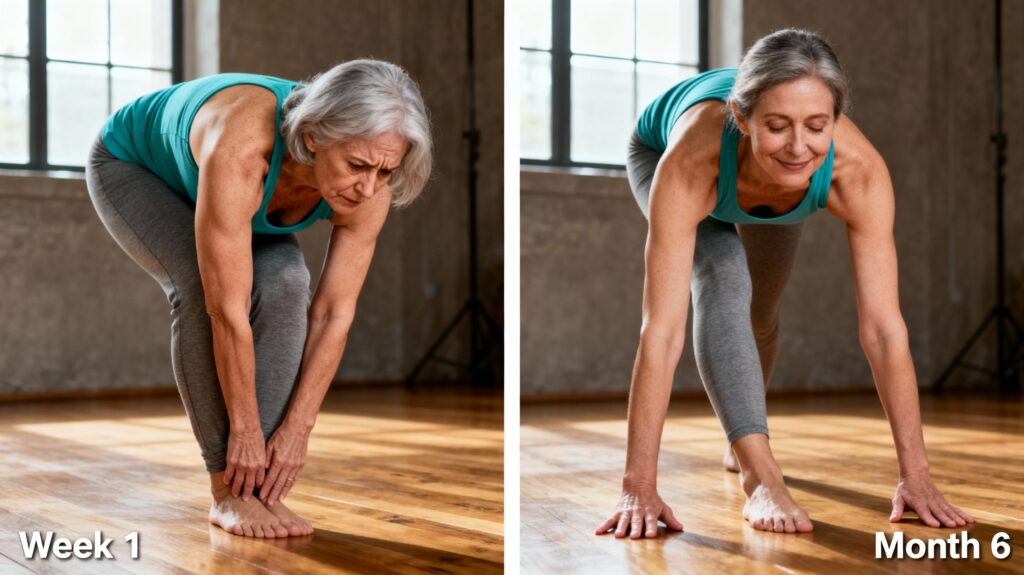
Why quick fixes fail. Image of woman in her 60's showing how it takes time with progression fascia training.

Quick fixes fail. Every single time.

Quick fixes will only lead to frustration or hurt quickly.

“Six weeks to a pain-free back.”

“Transform your body in 30 days.”

“Three exercises to fix your shoulder.”

These promises are everywhere. And they’re physiologically impossible.

If only your fascia could read marketing copy, it might actually remodel that fast.

Coach’s Corner

Marja came to me after breaking three vertebrae. Doctors said she’d never garden again—her favorite activity.

She didn’t accept that.

But she also didn’t expect miracles. She understood that rebuilding a body after that kind of trauma takes time.

Years later? She’s pain-free, gardening regularly, and moving better than she did before the injury.

Watch her full video interview to see what real progression looks like.

The Quick-Fix Culture Problem

We live in a culture that sells speed. Six-week programs. 30-day challenges. Weekend workshops that promise to “reset” your body.

And I get it. You’re in pain. You want relief. You want it now.

But here’s the truth most practitioners won’t tell you: your body doesn’t work on a marketing timeline.

Tissue adaptation is a biological process. It has a pace. You can’t hack it, shortcut it, or Instagram it into happening faster.

You can only respect it or ignore it.

And when you ignore it by chasing quick fixes, you get temporary relief followed by the same problem—or a new one.

Why Tissue Takes Time

Let’s talk about what actually happens when your body adapts.

Acute pain relief: Can happen quickly (days to weeks) with the right intervention. This is inflammation decreasing, nervous system calming, immediate restrictions releasing.

Movement pattern changes: 4-8 weeks of consistent practice. This is your brain learning new motor patterns, your nervous system rewiring compensation habits.

Tissue remodeling: 3-6 months of progressive loading. This is fascia reorganizing its collagen structure, muscles adapting to new demands, joints stabilizing differently. Research shows that skeletal muscle ECM turns over approximately 0.5-2% of its collagen per day—meaning complete remodeling takes months, not weeks.

Structural integration: 6-12+ months of sustained work. This is your entire system learning to function differently—not just one area, but how everything connects. This is what holistic exercise and fitness programs are designed to address—the whole system, not just isolated parts.

Quick fixes might give you the first one. Temporary relief.

But they skip the rest. And that’s why the problem returns.

The Difference Between Relief and Change

Relief is what you feel when inflammation goes down or a muscle releases.

Change is what happens when your body learns a new pattern and maintains it.

Most programs sell relief and call it change.

You feel better for a few weeks. The pain comes back. You need another program. The cycle repeats.

This isn’t healing. It’s symptom management.

And there’s nothing wrong with symptom management—sometimes you need relief to function. But if you stop there, you’re not building anything that lasts.

Real change requires progression. And progression takes time.

What Progression Actually Looks Like

Ashley came in limping with plantar fasciitis. Within weeks, she was pain-free.

That sounds like a quick fix. But here’s what actually happened:

Week 1: Myofascial release and manual therapy addressed the immediate restriction. Pain dropped significantly. This was relief.

Weeks 2-4: Exercises that progressively loaded her foot, ankle, and lower leg. Her nervous system learned it was safe to move again. This was pattern change.

Weeks 4-8: Continued loading and integration work. Her fascia began remodeling. The change started becoming structural.

Months 2-3: Maintenance and refinement. The new pattern became default. This was lasting change.

If she’d stopped at week 1 when the pain went away, it would have come back. The relief was real, but the change wasn’t complete yet.

That’s the difference between a quick fix and progression.

The Compound Effect

Small, consistent improvements stack.

A 1% gain repeated over months becomes transformational.

This is how you:

  • Eliminate pain that’s been around for years
  • Restore mobility you thought was gone
  • Build strength that transfers to real life
  • Create resilience that prevents future injury

Not in 6 weeks. In 6 months. 12 months. A lifetime of practice.

And here’s what’s interesting: the people who understand this get better results faster than the people chasing speed.

Because they show up consistently. They trust the process. They don’t bail when week 3 isn’t Instagram-worthy.

Why Quick Fixes Always Fail

Quick fixes fail because they don’t address the system. They target symptoms.

Your shoulder hurts. They give you three shoulder exercises.

But your shoulder doesn’t hurt because it’s weak. It hurts because your thoracic spine is restricted, your scapula isn’t moving properly, and your fascia has been compensating for years.

Three shoulder exercises might make it feel better temporarily. But they don’t address why it started hurting in the first place.

So six weeks later, it’s back. Or your neck starts hurting. Or your elbow acts up.

This is how you end up chasing symptoms for years.

The system is still broken. You’re just moving the problem around.

The “Just Tell Me What to Do” Problem

Most people want a prescription. “Just tell me what exercises to do.”

I understand. You’re busy. You want efficiency.

But here’s the issue: your body isn’t static. What you need today might not be what you need next week.

If you’re only following instructions without understanding why, you can’t adapt when things change.

This is why so many people do PT, feel better, then stop—and six months later, they’re back where they started.

They got exercises. They didn’t get education.

They got relief. They didn’t get ownership.

What Real Progression Requires

1. Time

There’s no way around this. Tissue remodels at its own pace. You can optimize it, but you can’t force it.

2. Consistency

Showing up matters more than intensity. Three focused sessions a week beats one heroic effort followed by two weeks off.

3. Progression

You can’t do the same thing forever and expect different results. Load has to increase. Complexity has to advance. Your body has to be asked to adapt.

4. Awareness

You need to learn what your body is telling you. What’s protective pain vs. adaptive discomfort. When to push and when to back off.

5. Patience

Not the passive kind. Active patience. Trusting the process while staying engaged with it.

This isn’t sexy. It doesn’t fit on an Instagram post. But it works.

And it lasts.


The Three-Month Reality Check

I tell new clients: give me three months of consistent work before you decide if this is working.

Not because nothing happens before that. Often, relief comes quickly.

But real change—the kind that lasts—takes about three months to start showing up structurally.

After three months of consistent fascia-focused training:

  • Movement patterns have started to shift
  • Compensation habits are beginning to release
  • Tissue is remodeling
  • Your nervous system trusts the new patterns

This is when people say: “I move differently now. I feel different in my body.”

Not after six weeks. After three months.

And if you want that change to be permanent? Keep going for another three. And another three after that.

It’s easier to sell quick fixes than real progression.

It’s easier to promise “pain-free in 6 weeks” than to say “this will take months, and it won’t always feel good.”

It’s easier to give people three exercises than to teach them to understand their own bodies.

But easy doesn’t work.

If rest and quick fixes solved chronic pain, you wouldn’t still be dealing with it.

If six-week programs created lasting change, you wouldn’t need a new program every few months.

The way forward is slower. But it’s also the only way that actually gets you there.

What Changes When You Embrace Progression

When you shift from chasing quick fixes to trusting progression:

You stop panicking when pain shows up. You understand it’s information, not an emergency.

You stop bouncing between programs. You commit to one approach long enough to see if it works.

You stop chasing symptoms. You address the system creating them.

You build something that lasts. Not just relief, but real change.

This is what holistic training actually means. Not quick. Not easy. But effective.

And permanent.

Ready to Build Real, Lasting Change?

If you’re tired of quick fixes that don’t last, this is why.

Your body needs time, consistency, and intelligent progression.

Want to go deeper? Download The Fascia Fix Framework—a free 20-page guide covering all 5 principles missing from most fitness and therapy programs.

Local to Santa Fe? Book a free consultation to discuss whether SolCore’s progression-based approach is right for you.

See what real progression looks like: Read Ashley’s case study—how she went from not being able to walk, back to her active self.

Questions? Contact us at info@solcorefitness.com or call (505) 577-2171.

Follow the Thread—Where Movement, Fascia, and Freedom Align

Find more insight, reflection, and fascia-informed care:
Facebook

Bluesky

Pinterest

Instagram

YouTube

LinkedIn

Train for the You 10 Years from Now: Preventive Movement for Lasting Health

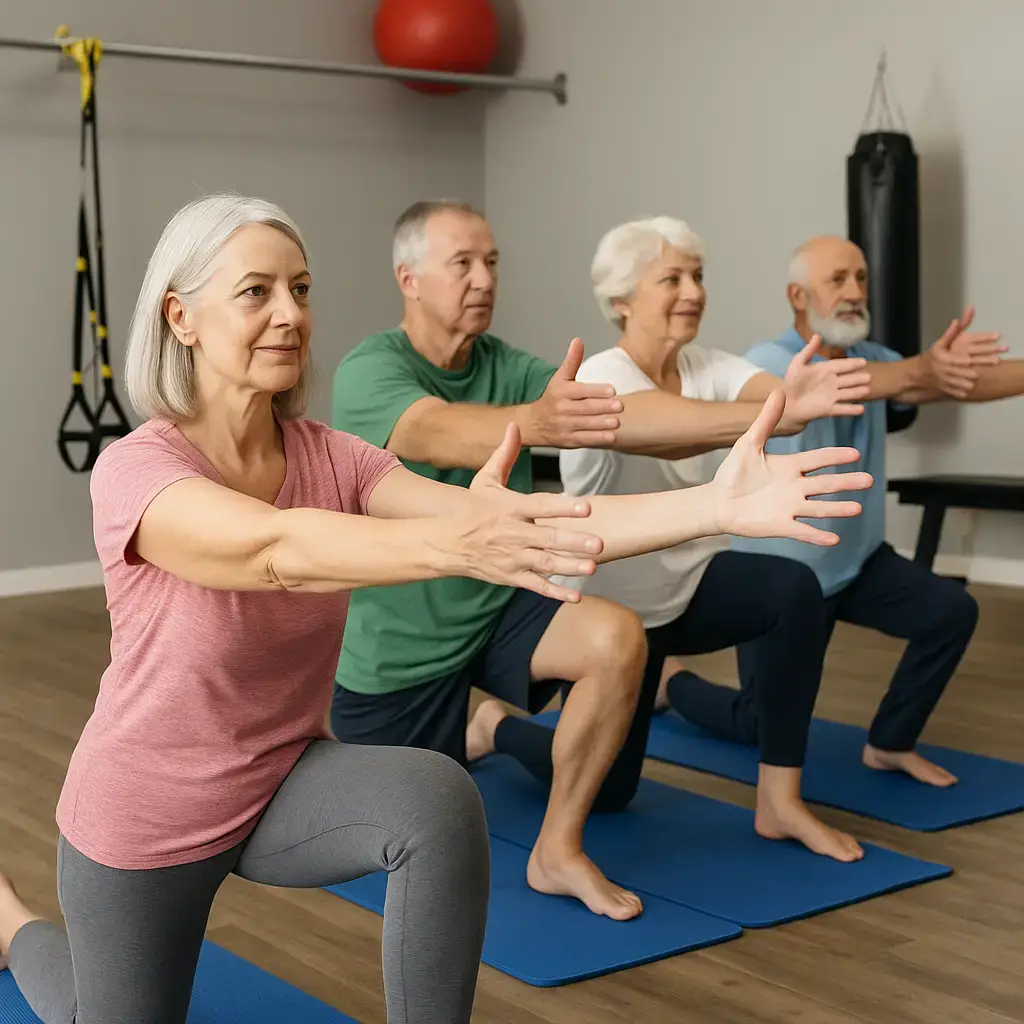
60 year olds doing iliopsoas Myofascial Stretch for preventive training for long-term health

When it comes to your health, the smartest thing you can do is stop thinking short-term. Preventive training for long-term health means investing in how your body functions years from now—before injuries or limitations take hold.

This is the essence of preventive training for long-term health. It’s not reactive. It’s proactive. And it’s one of the most powerful ways you can take control of your aging process—starting today.

You Are Your Future

Here’s the truth: the body you’ll live in 10 years from now is the one you’re building right now—through your habits, your movement, your training, and even your rest.

Fascia doesn’t just react to injury. It adapts to how you move and load it every day. This means today’s imbalances become tomorrow’s dysfunction—unless you interrupt the pattern.

That’s why at SolCore Fitness & Therapy, we don’t just train you to feel better now. We teach your body how to age better—intelligently, holistically, and with a deep respect for structure and complexity.

A Holistic Approach = A Long-Term Win

Preventive training isn’t about going harder. It’s about going wiser.

That’s where our fascia-based system shines. Instead of isolated muscles, we work with your full structure. Instead of chasing symptoms, we build resilience from the inside out.

Want to see how it works? Read our Ultimate Guide for a Holistic Fitness Program to get a feel for the principles we use every day.

And here’s a great overview from the National Institute on Aging about the role of physical activity in preventing age-related decline.

Future You Will Thank You

So the real question isn’t whether you should train.

It’s this: What kind of body do you want to live in 10 years from now?

Let’s build that—together.

👉 Book a Complimentary Consultation Today and start moving toward the future you deserve

Follow the Thread—Where Movement, Fascia, and Freedom Align

Find more insight, reflection, and fascia-informed care across the platforms where we stay connected:

Facebook

Blue Sky

Pinterest

Instagram

Youtube

Strength and Proprioception: You Can’t Strengthen What You Can’t Feel

Strength and proprioception are more connected than most people realize.
You’ve been told to get stronger. And maybe you’ve tried…
But here’s the thing no one tells you:
You can’t strengthen what you can’t feel.

If your body’s sensory map is fuzzy — if the nervous system can’t accurately locate joints, muscles, or tension — then you’re not building strength. You’re reinforcing confusion.

When the Signal’s Off, So Is the Output

That means:

  • The wrong muscles doing the work
  • Extra tension where you don’t need it
  • And a body that gets tighter, not stronger

This is why traditional strength training often fails people with chronic pain or poor posture. It piles output on top of dysfunction.

The nervous system is always prioritizing safety. And it won’t let you generate real force from an unsafe map.

Real Strength Starts with Signal Clarity

That’s where proprioception comes in — your body’s sense of position and movement. And it’s not just in the muscles… it’s in the fascia.

Fascia is one of the body’s most proprioceptive organs — a network of sensory receptors, both introceptive and extroceptive, woven throughout your entire structure.

To train it, we don’t start with load. We start with input.

That’s why methods like:

  • Segmental strengthening (precise isometric loading to re-educate joint control)
  • ELDOA (decompression to create space and normalize tension)
  • Myofascial Stretching (length + tension reset through fascial chains)
  • Proprioception exercises (low-load, high-precision training to refine joint feedback)

…form the foundation of intelligent strength development.

They wake up the system. They create clarity. And that’s what allows true strength to build.

From Signal to Strength — The Science Behind the Shift

Real strength doesn’t start with muscle. It starts with mapping.

According to Hill’s Muscle Model, force output depends on more than just fiber length and tension — it also relies on neural coordination and proprioceptive input. If the body can’t feel itself accurately, it can’t produce efficient force.

Your introceptors (internal signals: breath, organ tone, intra-abdominal pressure) and extroceptors (external cues: joint angles, balance, spatial orientation) work together to create a somatic map in the brain.

When that map is distorted, strength gets sloppy and injury risk climbs.
But when the map is clear?

  • Your system becomes more efficient
  • Force transfer improves
  • Strength becomes sustainable — not just performative

Fascia doesn’t just surround muscles — it interweaves with them.
It wraps around every muscle fiber, including actin and myosin, and envelopes the proprioceptors themselves — like muscle spindles and Golgi tendon organs.

So when you train fascially — through decompression, tension normalization, segmental loading, and lengthened isometrics — you’re not just building strength…

You’re upgrading the entire system that strength depends on.

Related Resources:

📎 Internal Link: What Makes Holistic Fitness Actually Work
📖 External Source: FASCIA AS A SENSORY ORGAN: Clinical Applications (Schleip)

Ready to train from the inside out?
👉 Book your free 30–45 min strategy call and learn how to build sustainable strength from your structure up.

Follow the Thread—Where Movement, Fascia, and Freedom Align

Find more insight, reflection, and fascia-informed care across the platforms where we stay connected:

Facebook

Blue Sky

Pinterest

Instagram

Youtube

Your Body Is Not a Tool: It’s a Tensegrity System

Mens Health. Your Body is not a tool - tensegrity system body

Your Body Is Not a Tool—It’s a Tensegrity System

Most men treat their body like a tool.
Use it. Push it. Sharpen it. And when it breaks—tape it up and keep going.

But what if that’s the wrong model?

What if your body is less like a hammer… and more like a suspension bridge?

🧬 What Is a Tensegrity Structure?

Tensegrity is a principle of architecture and biology that describes how a system holds its shape through tension and compression in balance.

In your body, that means:

  • Fascia suspends bones, not just muscles.
  • Muscles work in continuous loops—not linear pairs.
  • Stability comes from distributed force, not just strong joints.

This concept is well explored in tensegrity structures in the body, where bones float in a sea of soft tissue and movement is the result of dynamic relationships—not rigid levers.

When one area tightens or collapses, everything else has to adjust—sometimes with pain, sometimes with compensation.

🧠 The “Tool Mindset” Is Costly

Most men were taught to push through discomfort, to train harder, and to earn results through effort alone.

But this approach overlooks the systemic balance that your body depends on:

  • Strength in one plane + stiffness in another = injury
  • Big lifts without joint hydration = compression, not growth
  • No fascia prep = poor rebound and reduced circulation

Fascia doesn’t just wrap muscles—it governs how force travels through the body. Fascia’s role in structural balance is central to preventing overload and sustaining performance.

A tensegrity system doesn’t respond well to brute force. It needs strategy.

🔧 The Shift: From Hammer to Suspension Bridge

What if instead of forcing your body, you prepared it?

  • What if warm-ups focused on joint mobility and fascial hydration, not just heat?
  • What if your training helped restore balance before pushing capacity?
  • What if you saw self-care as performance insurance, not a luxury?

🛠️ ELDOA: Biotensegral Fitness in Action

This is where tools like ELDOA, myofascial stretching, and segmental reinforcement come in.

They create:

✅ Precise decompression
✅ Vector-aligned tension
✅ Functional hydration of discs and joints
✅ Endurance without compensation

It’s not flashy. But it works. And it lasts.

In fact, fascia-related dysfunction is often a root cause of training breakdown. Learn more about overuse injuries and movement compensation and how smarter prep can make the difference.

📣 Final Thought: Pride in Structure

During Men’s Health Month and Pride Month, the message is simple:

➡️ Pride in yourself starts with knowing yourself.
➡️ You can’t give what you don’t have.
➡️ A resilient body supports a fulfilling life.

The goal isn’t to push harder—it’s to train smarter.
Your body isn’t a tool. It’s a system. Treat it that way—and it will carry you far.

Want to experience what real body architecture feels like?

Follow the Thread—Where Movement, Fascia, and Freedom Align

Find more insight, reflection, and fascia-informed care across the platforms where we stay connected:

Facebook

Blue Sky

Pinterest

Instagram

Youtube

Balance and Coordination. Why its important to do this FIRST!

Balance and coordination are more than just “nice-to-haves.” They are the foundation of a strong, mobile, and pain-free body.

Yet most people either skip them entirely or throw them in as an afterthought. Even worse, many believe, “I’ve just never had good balance — that’s how I am.”

That’s simply not true. You can absolutely train your balance and coordination — and if you want strength, mobility, or long-term physical freedom, you need to.

Click on the image to watch the full video

Balance and coordination

What Happens When You Skip Balance and Coordination?

Here’s the reality: if your body feels unstable, your nervous system will prioritize not falling over getting stronger or more mobile.

That means:

  • Strength exercises become less effective
  • Stretching gets compromised
  • Progress stalls
  • Injuries creep in

Even slight instability sends signals to your brain to play it safe — sabotaging the very adaptations you’re working toward.


Why Most People Ignore This (and What to Do Instead)

Walk into any gym and you’ll see people jumping into workouts, machines, or classes without ever addressing balance and coordination.

Why?

  • Most people don’t know how to train them
  • Trainers often only use basic drills like standing on one foot or a BOSU ball
  • Online content repeats the same watered-down advice

Real balance and coordination training requires more than circus tricks. It demands a structured, segmental approach that builds your foundation from the inside out.


What True Balance Looks Like

To train balance and coordination effectively, we need to go beyond standing on unstable surfaces. You need to consider:

✅ Your Posture (Plumb Line)

  • Ear, shoulder, hip, ankle aligned
  • Look at yourself from the side and front for asymmetries
  • Use a straight reference like a wall, pole, or line

✅ Your Gravity Line (4° Cone)

  • Think of a cone extending from your feet up
  • You should be able to move and stabilize within that zone
  • Outside the cone? Your body burns energy just trying not to fall

✅ Your Internal Balance

  • Fascia, joints, and proprioceptors (tiny sensory receptors) must all do their job
  • The more balanced your system is, the more energy goes to performance — not survival

What Coordination Really Means

Coordination is how well your brain and body communicate. It happens through:

  • Afferent & efferent signals (to and from the brain)
  • Proprioceptors (those “little computers” that detect joint position and movement)
  • Neuromuscular patterns (engrams) that form from repetition

When trained well, coordination turns conscious effort into automatic flow. Think of how skiing, dancing, or driving became easier with repetition — that’s coordination in action.


How to Train It (Without Hurting Yourself)

You don’t start by balancing on one leg with your eyes closed on an unstable surface. You start simple:

✅ Two feet, flat surface
✅ Stable foundation
✅ Good posture
✅ Small, controlled movements that build from the inside out

Then you layer complexity after the foundation is solid.


A Cautionary Tale (The BOSU Ball Fail)

I once watched a trainer put an elderly client — already shuffling when walking — on a BOSU ball. The man fell hard. Why? Because he hadn’t earned the right to be there yet.

We glorify flashy, unstable exercises and ignore the basics. But what the body really needs is to start with the fundamentals — and master them.


There’s no “3 best balance exercises” for everyone. Your body is unique. You need a holistic fitness program that trains your entire system — from small stabilizers to global movement chains.

That’s why balance and coordination must come first. They make every other movement:

  • Safer
  • More effective
  • More sustainable

Want to Build Real Balance and Coordination?

Here are your next steps:

✅ Download my free guide: Four Steps to a Strong, Mobile Life
✅ Book a free consultation: We’ll talk about your goals, challenges, and create a strategy
✅ Stick around: This blog and my YouTube channel are packed with holistic movement insight — no gimmicks, just truth

Let me know in the comments — are you training your balance and coordination? If not, what’s held you back?

See you next week.

it’s not just working out, it’s building a foundation for a better life.

Find out more @

Facebook

BlueSky

Pinterest

Instagram

Youtube

The Pelvic Floor: A Holistic Approach to Strength and Mobility

Whether you’re a man or a woman, your pelvic floor is essential for a strong, mobile body — yet it’s one of the most overlooked systems in human movement. Your pelvic floor isn’t just “down there” — it’s the foundation for your spine, hips, and core.

But here’s the truth: Most people don’t know how to train it. They rely on outdated approaches or ignore it completely… until something goes wrong.

So let’s take a look at what your pelvic floor really does — and how to support it through a truly holistic approach.

Click on the image to watch the full video

Your Pelvic Floor: A Dynamic Foundation

Think of your pelvic floor like the foundation of a house. It needs to be solid to support everything above — and adaptable to handle pressure from above and below.

Every day, your pelvic floor supports both:

  • Descending forces — gravity, body weight, internal organ pressure
  • Ascending forces — from walking, standing, lifting, and movement

If your pelvic floor isn’t strong and balanced, your whole body compensates.


Why Most Pelvic Floor Training Fails

Most people only hear about Kegels — and usually just for women. But men need pelvic floor training too. And even then, Kegels alone won’t fix dysfunction.

A true pelvic floor program:

  • Goes beyond isolated contraction
  • Addresses the muscles, fascia, and ligaments
  • Respects the nervous system and joint balance (especially the SI joint)

What Muscles Make Up the Pelvic Floor?

It’s more than just one muscle. Your pelvic floor includes:

  • Levator Ani group (puborectalis, pubococcygeus, iliococcygeus)
  • Coccygeus
  • Piriformis & Obturator Internus (side/posterior pelvic walls)
  • Glute max (deep fibers)
  • Iliopsoas (passing through the pelvis to your spine)

These all work together. But they don’t function in isolation. You must also consider the fascia and ligaments that interconnect everything.


Ligaments: The “Smart Tissue” That Guides Your Body

Ligaments do more than hold bones together. They’re the intelligent sensors that tell your body how to move — or how not to.

Key ligaments affecting your pelvic floor:

  • Cooper’s ligament (connects pelvic fascia to hip stabilizers)
  • Pubofemoral ligament
  • The sacro-recto-genital-vesicle-pubic ligament (yes, that’s one ligament!)
  • Anterior sacroiliac ligaments
  • Iliolumbar & pubic ligaments

These aren’t just structural — they’re sensory. If your ligaments aren’t healthy, your body loses its ability to move smartly.


Fascia: The Connective Highway

Fascia connects your pelvic floor to:

  • Your diaphragm
  • Your spine
  • Your abdominal wall
  • Your hips, legs, and shoulders

That’s why holistic pelvic floor care can’t stop at squeezing muscles. You must address how fascia tensions pull and support the whole structure.


Start Here: How to Rebuild Pelvic Floor Health

1. Begin With the Ligaments

Healthy ligaments guide healthy movement. In my osteopathic practice, I use manual therapy techniques like pumping and double TLS to:

  • Improve fluid flow
  • Activate proprioceptors
  • Reset the tissue’s baseline tone

This sets the stage for real, sustainable strength.


2. Use ELDOA to Reinforce & Integrate

ELDOA (a unique form of fascial tension exercise) is one of the best ways to train the joints, ligaments, and fascia together.

It helps:

  • Open restricted spaces
  • Activate deep stabilizers
  • Improve spinal and pelvic floor communication

3. Strengthen and Stretch the Muscles (Holistically)

Once the ligaments are awake, you can start training the key muscles:

  • Piriformis
  • Obturator internus
  • Glute max (medial fibers)
  • Iliopsoas

Use Hill’s Muscle Model: work the fibers, the fascia, and the ligament to train effectively.


4. Now Add Kegels — the Right Way

Only once you’ve built a strong base should you begin isolated Kegel contractions. And even then, you must avoid compensation patterns.

When doing Kegels:

  • Do not squeeze your glutes, abs, or adductors
  • Train your brain to activate just the pelvic floor
  • Separate contractions from surrounding muscle groups
  • Progress to coordination patterns using glutes, adductors, and diaphragm separately

This is crucial — especially for women during childbirth or anyone recovering from dysfunction.


Final Thoughts: The Pelvic Floor Is a Whole-Body System

Most people treat the pelvic floor like a switch — either it’s “on” or it’s “off.” But the truth is, your pelvic floor reflects your entire body’s condition.

If your SI joint is off, if your glutes are weak, if your diaphragm is tight — your pelvic floor will suffer. And if you ignore it? You’ll feel the effects in your strength, mobility, and long-term health.


Ready to Train Smarter?

If you’re ready to go deeper — not just with your pelvic floor, but your whole-body health and longevity — I’ve got 3 free ways to help:

Let’s stop isolating and start integrating.

See you next week.

it’s not just working out, it’s building a foundation for a better life.

Find out more @

Facebook

Twitter

Pinterest

Instagram

Youtube