Posture

Katy G – When All Else Failed, She Tried Again And Succeeded

The big smile that Katy comes in with is always a joy to see. But situations with her body were trying to take that smile away. You see, 10 years ago, she was injured at work. The pain and limited activity were constant companions. 

She tried PT, Cranial Sacral, and all types of bodywork massage, including Rolfing, Feldenkreis, acupuncture, chiropractic, ergonomic office assessments, and yoga classes, and bought various DVDs specific to back issues. In 2023, I had spine surgery for sciatica and stenosis. She suspected her back would have been worse sooner without these efforts, but they didn’t fix matters.

Activities like gardening, bending, walking, and sitting were severely limited and painful. She had sciatica every day and neuropathy in her shin and foot. The walking distance was short, and her speed was slow. Sitting down really locked up her back and glutes. Standing was more comfortable. Lying prone with ice offered some relief.

Medicare cut off her PT five months after surgery, but she was still not okay. To make matters worse, and her frustration, PT had not helped much anyway. She was praying for direction when she saw an ad for a free SolCore Fitness trial class on Facebook (this is our Monthly Free ELDOA class).

She signed up online and attended the free Saturday group class, and since she found it so beneficial, she signed up for the 2-week trial to give SolCore Fitness a fair test. Ekemba Sooh did an assessment of my issues so he knows what is safe to do. Ekemba is active in class, hands-on, adjusting student postures, and he is very aware of our abilities and injuries. She also signed up for some individual sessions to include the manual therapy techniques because “I was desperate to get better.”

After six months of classes, she continues to improve. She walks better, moves easier, can sit longer, has reduced duration, is less frequent, and travels more efficiently. Since she continues to make progress, she is motivated to keep going and continue to improve her body, health, and life. So, She is sticking with the program that got her there.

Find out more @

Facebook

Blue Sky

Pinterest

Instagram

Youtube

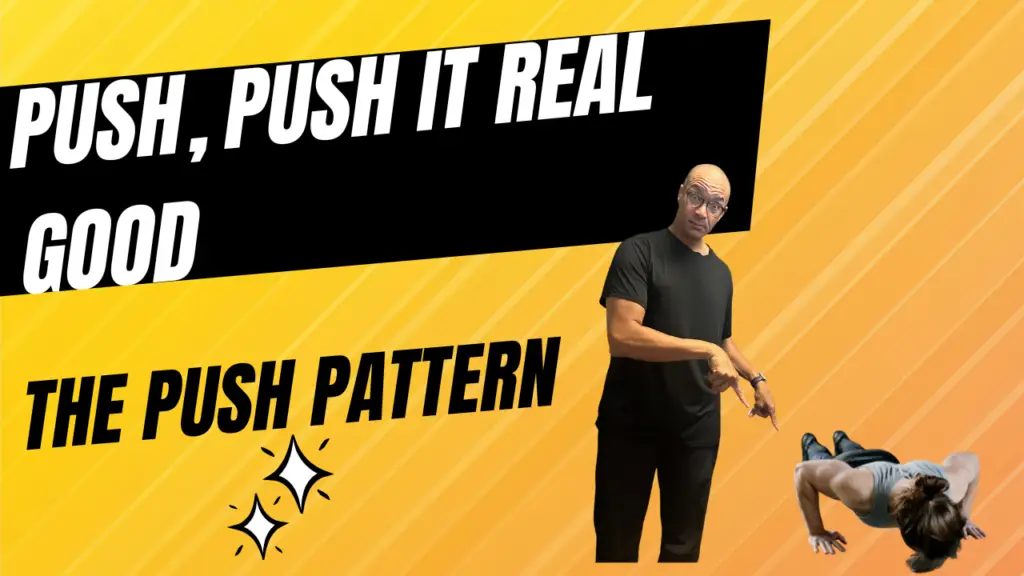
Mastering the Push Pattern: It’s Not Just For Your Pecs

Mastering the push-pattern. The bench press. The chest press. The push-up.

Whatever you call it, this push pattern is one of the seven primal movementsโ€”and itโ€™s about a lot more than just building your pecs.

In this post (and video), weโ€™ll explore how mastering the push pattern isnโ€™t just a matter of technique, but of understanding the full-body biomechanics behind it. When you treat it as a holistic movement, you unlock strength, mobility, and injury resilience across your entire body.

Check out the full video by clicking on the image below.

The Push Pattern Is a Full-Body, Compound Movement

Yes, the push pattern trains your pecsโ€”but it also demands the coordination of your:

  • Lats
  • Deltoids
  • Biceps & triceps
  • Forearms, wrists, and hands
  • Elbows, shoulders, and spine
  • Rib cage, sternum, and even your pelvis

When you perform a push correctly, these systems integrate through your fascia to create a strong, stable, and safe motion.

But when you lack strength or coordination in any of these areas, your body compensates. Thatโ€™s where problems start.


Compensation = Cheating Your Body

Letโ€™s say your pecs are underdeveloped. You can still bench pressโ€”but your body cheats by overusing the lats, delts, or even your spine.

Over time, this imbalance leads to:

  • Shoulder pain
  • Poor posture
  • Limited progress
  • Injury

To avoid this, you must train the push pattern segmentally firstโ€”then globally.


Segmental Training Before Full Patterns

Instead of jumping straight into compound movements, train the individual components:

  • Pec flies at diagonal angles to match muscle fiber lines
  • Serratus anterior strength (fan-shaped movement)
  • Rhomboid work in glenohumeral-friendly positions
  • Posterior chain and thoracic posture development
  • Psoriatic joint mobilization and therapy (behind shoulder blades)

This builds neuromuscular coordination, muscle mass, blood flow, and fascial integrationโ€”giving your body the tools to execute the push without compensation.


Choosing the Right Push Pattern Progression

Once youโ€™ve built the foundation, you can progress the push pattern intelligently:

  • Open chain (free end movement): barbell bench press, dumbbell press
  • Closed chain (fixed end): push-ups from wall, bench, knees, or toes
  • Unilateral (one side): single-arm press
  • With rotation or combination: functional push + twist variations

Start with the basics. Donโ€™t jump into complexity without preparationโ€”your body will guess, and guessing equals injury.


Posture and Scapular Mechanics: Two Common Mistakes

Two things I see people get wrong constantly:

  1. Posture
    • Arching the back during a press
    • Leading with the head during push-ups
    • Lifting the head off the bench
    • Dropping the pelvis or changing spinal curves
    ๐Ÿ‘‰ Your posture is your training. What you teach your body under load is how it will behave.
  2. Scapular Mechanics (Shoulder Blade Movement)
    • On the way down (eccentric), scapulae must retract
    • On the way up (concentric), they must protract

If your scapulae canโ€™t glide properly, your shoulders take the hit.


The Serratus Anterior: The Unsung Hero of Push Movements

The serratus anterior is critical for scapular protraction and stabilization. It fans out from the ribs to the shoulder blade and works alongside:

  • Rhomboids (between the scapulae)
  • Psoriatic joint (behind the scapula)

You must train it in multiple planesโ€”not just with โ€œpush-ups plus,โ€ but in diagonal and rotational movements to build full range and resilience.

We have a great guide to understanding holistic exercise and fitness


Why Mastering the Push Pattern Matters

This isnโ€™t just about looking better in a t-shirt. The push pattern shows up in:

  • Daily movements (pushing open a door)
  • Sports performance
  • Fall prevention
  • Structural balance
  • Joint health

When you rush into it without preparing the body segmentally, youโ€™re skipping stepsโ€”and your body will force you to pay attention later through pain or dysfunction.


Final Thoughts (and Your Next Steps)

Mastering the push pattern means respecting the complexity of your body.

โœ… Train weak links first
โœ… Stretch and mobilize where needed
โœ… Build strength from the ground up
โœ… Respect posture, control, and sequencing


๐Ÿ“ฅ Free Resource + Call Option

๐ŸŽ Want to train smarter, not harder?
Get my free guide: 4 Steps to a Strong, Pain-Free Body to Live the Life You Choose โ€” instant access.

Building a foundation for a better life.

Find out more @

Facebook

BlueSky

Pinterest

Instagram

Youtube

The Critical Link Between Therapy and Exercise for Peak Performance

Are you frustrated with not being able to perform at your best? Feel like you’re slowing downโ€”even though you’re staying active and getting treatment?

Age might not be the issue.

In fact, one of the most overlooked reasons for stagnation or recurring pain is the lack of specific exercises following therapy. Itโ€™s the critical link between feeling better for a momentโ€ฆ and functioning better long term.

Letโ€™s break it down.

Click on the image to watch the full video

Most Treatment Programs Miss This One Thing

Iโ€™m Ekemba Sooh, owner of SolCore Fitness and a Soma therapist and Soma trainer with over 30 years of experience. Iโ€™ve seen this pattern time and time again.

People receive treatmentโ€”massage, chiropractic, acupuncture, or even physical therapyโ€”and then one of two things happens:

  1. Theyโ€™re sent on their way with no follow-up.
  2. Theyโ€™re handed a generic exercise sheet thatโ€™s not specific to them.

Sound familiar?

These routines might offer temporary relief, but theyโ€™re built on a symptom-based system. And thatโ€™s the problem. Youโ€™re more than your symptom. Youโ€™re a whole body.


Symptom-Free โ‰  Problem Solved

When pain fades, most people assume the issue is gone. But unless the root cause is addressed, itโ€™s still thereโ€”just quiet. And it will come back. It always does.

Worse, each recurrence makes the issue harder to treat. Your body adapts to dysfunction just like it does to training. Without correction, poor structure becomes your new baseline.

Thatโ€™s why therapy and exercise for peak performance must go hand-in-handโ€”and both must be specific to you.


Why General Programs Fail (and Make You Worse)

Life brings wear and tearโ€”whether youโ€™re working at a desk, raising kids, or playing sports. That wear accumulates. If you donโ€™t balance your body along the way, the result is:

  • Tight hips
  • Back pain
  • Forward head posture
  • Decreased mobility
  • Chronic injuries

And if you keep exercising on top of this dysfunctionโ€”without addressing the imbalanceโ€”youโ€™re reinforcing bad patterns.


Example: My Own Injury and the Flawed System

In my 30s, I developed sciatic pain and disc compression at L4/L5, despite doing โ€œeverything right.โ€ I was eating well, staying hydrated, and working out. But I wasnโ€™t doing what my body needed.

I was given cookie-cutter solutions: press-ups, clamshells, stretches everyone gets. They didnโ€™t help. In fact, they made it worse.

Only when I found Soma therapy and trainingโ€”and began addressing my specific structureโ€”did my body begin to change.

I wish I had this great page on OMT to help me see more on what therapy should be like. Check it out


Real Case: IT Band Pain and the Specific Fix

A client came in with IT band pain. The usual answer? Foam roll it. Maybe do clamshells. But that misses the point.

The IT band is part of a fascial network involving the glute med, glute max, TFL, and fascia lata. Each has different fibers and insertion pointsโ€”and each needs to be treated differently depending on the cause.

Instead of loading an already inflamed area, we focused on:

  • Releasing tension with specific myofascial stretches
  • Avoiding overstimulation
  • Training fiber angles based on posture and tension patterns

Thatโ€™s the level of specificity you need to actually heal.


A Preventive Approach That Works Long-Term

Imagine youโ€™re 25, starting a desk job, and staying active. If you paired that lifestyle with monthly manual therapy and a 15-minute, personalized movement program 3x per week, youโ€™d stay mostly balanced for years.

Compare that to the common story:

You work hard, never pause to rebalance, train through dysfunction, and wake up at 45 with chronic pain and poor posture. Now, reversing decades of adaptation is a long, frustrating road.

It didnโ€™t have to be that way.


The Takeaway

You canโ€™t train your body like a machine and expect peak performance without maintenance. Your body needs love, balance, and the right kind of input.

โœ… Therapy without exercise is incomplete.
โœ… Exercise without specificity is damaging.
โœ… Togetherโ€”and done rightโ€”they unlock your potential.


๐Ÿ’ฌ What You Can Do Next

If you want a smarter, sustainable path forward, here are your options:

Letโ€™s stop reacting and start building a body that works for the long haul.

itโ€™s not just working out, itโ€™s building a foundation for a better life.

Find out more @

Facebook

BlueSky

Pinterest

Instagram

Youtube

LinkedIn

๐ŸŒŸ Unlock Your Full Potential: The Secret Link Between Stretching and Strength! ๐ŸŒŸ

Stretching is often seen as a warmup, cooldown, or just something you do when your muscles feel tight. But what if stretching and strength werenโ€™t oppositesโ€”but partners?

When done correctly, stretching not only improves mobilityโ€”it builds strength by enhancing posture, neuromuscular control, and the structural integrity of your body.

Letโ€™s dive into how this works and why most people are doing it wrong.

Click on the image to watch the full video

Stretching Isnโ€™t Just Passive Relaxation

The kind of stretching you see in most gymsโ€”grabbing your foot, throwing a leg on a bench, or flinging your arm across your chestโ€”is outdated and ineffective.

At best, it temporarily increases range of motion. At worst, it disrupts how your body generates strength.

But with the right approach, stretching can actually improve strength by working with the bodyโ€™s connective tissue systemโ€”specifically, your fascia.


Stretching vs. Warming Up: Know the Difference

Letโ€™s clear this up:

  • Warm-up: Prepares your body for activity
  • Stretching: Helps normalize tissues after activity
  • Foam rolling: Neither warming up nor stretchingโ€”and often harmful to fascia

Warm-ups increase your current potential. Stretching expands whatโ€™s possible over time. Thatโ€™s why you should never stretch before intense activityโ€”only after.


Why Fascia Matters for Strength

Fascia is the bodyโ€™s connective tissue matrix. It wraps every muscle, nerve, and organโ€”creating structure, transmitting force, and supporting movement.

If your fascia is:

  • Dehydrated
  • Stressed
  • Tangled from poor posture or injury

โ€ฆit will limit how your muscles function. Stretching properly hydrates, aligns, and restores fasciaโ€”giving your muscles a better โ€œcontainerโ€ to generate force from.


The Science Behind It: Tensegrity + Hillโ€™s Muscle Model

Your body works through tensegrityโ€”a balance of tension and compression. When fascia is out of balance, your strength output suffers.

According to Hillโ€™s Muscle Model, true strength depends on:

  1. Muscle fibers
  2. Tendons
  3. Fascia

Most programs only train the first two. The third componentโ€”fasciaโ€”is what holistic stretching trains directly.


Myofascial Stretching: What It Actually Does

Done correctly, myofascial stretching:

โœ… Aligns fascial chains across the body
โœ… Improves posture and neuromuscular communication
โœ… Boosts coordination within strength movements
โœ… Reduces injury risk by improving structural integrity

Think of it as strengthening from the inside out.


Why Most People Miss This

Stretching that leads to strength isnโ€™t generic. You canโ€™t Google a โ€œhip flexor stretchโ€ and expect it to improve your squat.

You need to:

  • Know which chain the muscle belongs to
  • Line up posture and joints correctly
  • Understand how it connects to your fascia and nervous system

Thatโ€™s why working with someone who understands fascia is so important. I help clients do just that.


Take Care of Your Fascia Like This:

  1. Hydrate โ€“ Plain water, ยฝ your body weight in ounces daily, away from meals
  2. Manage stress โ€“ Nature, meditation, journaling, breathing
  3. Stretch with fascia in mind โ€“ Post-activity, aligned to your bodyโ€™s specific needs

Want to Learn How to Do This Right?

If youโ€™re just going through the motions or skipping stretching altogether, youโ€™re missing a huge piece of the strength puzzle.

โœ… Download my free guide: 4 Steps to a Strong, Pain-Free Body
โœ… Book a free consult: Letโ€™s assess your body, your routine, and see whatโ€™s really holding you back
โœ… Keep learning: Explore my channel and blogโ€”everything here is built around a holistic, fascia-first approach

Let me know in the comments: Are you using stretching to support your strength? Do you train with myofascial chains in mind?

See you next week.

itโ€™s not just working out, itโ€™s building a foundation for a better life.

Find out more @

Facebook

BlueSky

Pinterest

Instagram

Youtube

Gardening. The Unwanted Effects On Your Body.

๐ŸŒฑ Gardening Hurts? How to Protect Your Body While Doing What You Love

Gardening brings joy to so many people โ€” the satisfaction of growing your own food or flowers, the quiet peace of working in the soil. But for many, it also brings back pain, neck stiffness, sore knees, or overall fatigue. It doesnโ€™t have to be that way.

Iโ€™m Ekemba Sooh, owner of SolCore Fitness. Iโ€™ve been in the health and fitness field for over 30 years, working under the osteopathic model. And hereโ€™s what I want you to know:

Gardening is a sport. Itโ€™s physically demanding. And like any sport, if you donโ€™t prepare your body for it, youโ€™ll pay for it.

In this blog, Iโ€™ll break down:

Simple things you can do to avoid injury and feel better

Why gardening leads to pain

Whatโ€™s really happening to your knees, back, and spine

Click on the image to watch the video

๐ŸŒป Gardening is More Demanding Than You Think

Hereโ€™s what most people miss: gardening places a huge load on the body.

Youโ€™re squatting, bending, twisting, lifting, and often holding these positions for long periods. Thatโ€™s a combination of:

  • External load (heavy pots, rocks, plants)
  • Postural load (static crouching, awkward angles)
  • Repetitive strain (hours of weeding, digging)

One of my clients โ€” an art teacher โ€” came to me years ago with chronic pain. After months of work, she felt great and was living her life againโ€ฆ until one weekend she gardened for five hours straight. No warm-up. No cool-down. She undid months of progress in one afternoon.

This isnโ€™t about fear โ€” itโ€™s about awareness.


๐Ÿฆต Your Knees: Why Squatting Hurts Later

Gardening involves constant squatting, both dynamic and static. The knee joint is most stable at 90 degrees โ€” but once you drop lower, things start to rub.

A law in biomechanics called Delpechโ€™s Law tells us that high pressure on a surface leads to the body producing more tissue. In the knees, this can lead to roughened cartilage, causing pain, grinding, and inflammation โ€” especially if you do it over and over without support.


๐Ÿงโ€โ™‚๏ธ Your Lower Back: Lever Arms & Fascia Fatigue

Ever notice how heavy things feel when you’re bent forward? Thatโ€™s the lever arm principle. The further out the weight (or your torso), the more strain on your lower back.

From your belly button to your pelvis, you donโ€™t have bones to hold things together. Your fascia โ€” soft tissue layers โ€” does the job. But fascia needs to be hydrated, supple, and trained to support load.

If your fascia isn’t prepped, long hours in bent-over positions can overwhelm it. That leads to tightness, spasms, or worse.


๐ŸŒ€ Your Spine: Why Flexing and Twisting Are Dangerous

Most gardening tasks involve two risky combinations:

  • Flexion + Rotation (scooping dirt, weeding)
  • Extension + Rotation (reaching up and twisting)

Both compress the spineโ€™s joints and increase the risk of disc issues like bulges, herniations, or pinched nerves โ€” especially if your spine isnโ€™t stabilized by surrounding muscles and fascia.

This isnโ€™t about avoiding movement. Itโ€™s about training your body to handle those movements safely.


๐Ÿ‹๏ธโ€โ™€๏ธ What You Can Do to Prevent Gardening Injuries

Here are the three keys to keeping your body pain-free while gardening:

1. Train Like Itโ€™s a Sport

You wouldnโ€™t try to deadlift 500 pounds without a program, right? Gardening is no different. Your body needs a holistic strength and mobility plan based on what youโ€™re asking it to do โ€” not just general workouts, but targeted prep for your spine, knees, pelvis, and fascia.

2. Warm Up Before Gardening

Your body is like an old car โ€” it needs a few minutes to โ€œrev the engine.โ€ A proper warm-up turns on your muscular and neurological systems, thins out the fluids in your joints and fascia, and helps prevent injury.

Hereโ€™s a short warm-up that targets the most stressed areas:

๐Ÿ‘ฃ Knees

  • Knee Circles (clockwise and counterclockwise)
  • Figure 8s (vertical and horizontal)
    These gentle movements lubricate the joint and prep ligaments for squatting.

๐Ÿง˜ Pelvis

  • Pelvic Rocks in a wide-stance position with knees bent and torso upright. Helps activate the hips and lumbar spine.

๐ŸŒ€ Spine

  • Torso Translations & Tilts with arms in external rotation. Warms the ribcage and mid-back while protecting from over-compression.

Just 5โ€“7 minutes of this can drastically improve how your body handles the demands of gardening.

3. Recover After Gardening

Youโ€™ve loaded the system โ€” now you have to unload it. Stretch the areas you used. Use fascia-specific movements or myofascial stretches to rebalance the body. Donโ€™t just sit down and let it tighten up.

Using Osteopathic manual therapy techniques like TTLS, work with the body and speed up healing to regain function.


๐ŸŒฟ Want to Keep Gardening for Life?

If gardening brings you joy, itโ€™s worth protecting. And if you want help, Iโ€™ve got 3 easy ways to start:

Let me help you garden smarter, not harder โ€” and keep doing what you love for years to come.

Building a foundation for a better life.

Find out more @

Facebook

BlueSky

Pinterest

Instagram

Youtube

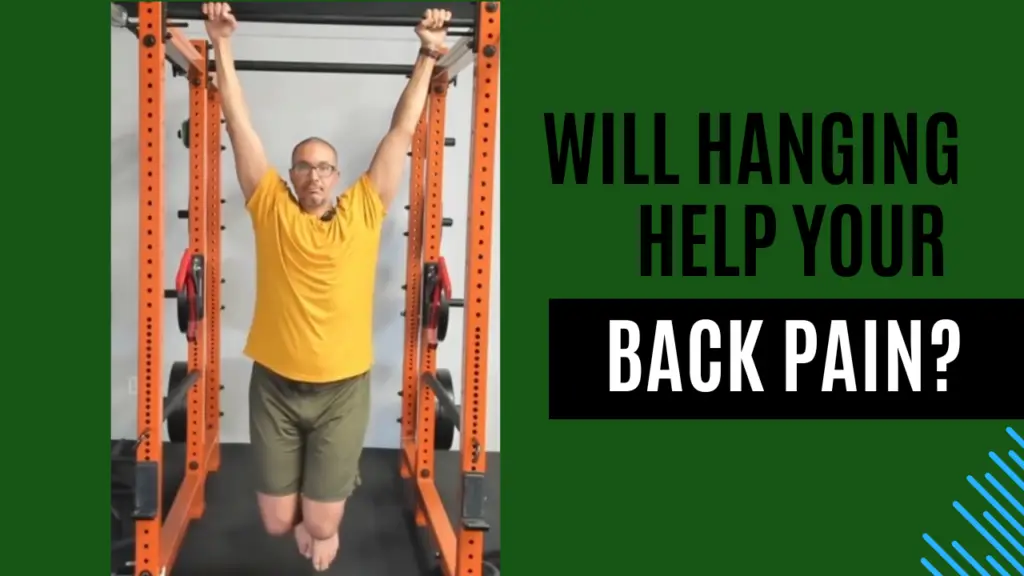
Is Hanging For Back Pain A Real And Safe Solution? ๐Ÿง

Back pain affects over 550 million people worldwide, and with that kind of number, itโ€™s no surprise people are searching for reliefโ€”fast. One of the more popular trends? Hanging from a pull-up bar to decompress the spine. But is this method really helping, or could it be doing more harm than good?

Letโ€™s break it down through a holistic, fascia-informed lens, so you can understand whatโ€™s really happening when you hangโ€”and whether itโ€™s a smart choice for your back.

Click on the image to watch the full video

๐Ÿ” Why People Hang for Back Pain

The theory is simple: when you hang, your body weight creates a gentle pull on the spine, which seems to decompress the vertebrae. Itโ€™s popular among physical therapists and fitness influencers who promote spinal decompression as a fix for bulging discs, tight backs, or just general discomfort.

But like most things in health and fitness, simple doesnโ€™t mean effectiveโ€”and it certainly doesnโ€™t mean safe for everyone.


๐Ÿšซ When Hanging Might Do More Harm Than Good

Letโ€™s start by understanding what kind of back pain youโ€™re dealing with. Here’s a simple breakdown:

  1. No pain โ€“ Fine for general feel-good movement
  2. Semi-chronic โ€“ Occasional flare-ups
  3. Chronic โ€“ Consistent daily discomfort
  4. Acute โ€“ Sharp, intense pain or injury

๐Ÿ”ด Acute or chronic pain? Avoid hanging. Your body is already inflamed and dysregulated. Hanging adds unpredictable force to an unstable systemโ€”itโ€™s not specific, and it can worsen the problem.

๐ŸŸก Semi-chronic? Maybeโ€”but only for brief relief, not correction.

๐ŸŸข No pain? Youโ€™re free to experiment, but donโ€™t expect it to fix much.


๐ŸŒ€ What Really Happens When You Hang?

When you lift your feet and hang from a bar, your body wobbles. That instability triggers your core and spinal muscles to contract constantly in small ways just to keep you from falling.

That means instead of fully relaxing and lengthening your spine, your body is busy protecting itself. And contraction โ‰  decompression.


๐Ÿ“Œ The Specificity Problem

Even if hanging did decompress the spine, it doesnโ€™t target where you need it most.

Back pain often shows up in specific areasโ€”like L4-L5, T12-L1, or T8-T9. But when you hang, your body moves where itโ€™s already free and openโ€”not where itโ€™s stuck.

โžก๏ธ Correction requires specificity. If you canโ€™t direct the force to the exact spinal segment in need, youโ€™re just stretching the wrong places.


๐Ÿชข No Fixed Point = No Progress

To correct posture or decompress a joint, your body needs fixed points above and below the target area. Hanging removes that control. Itโ€™s like trying to stretch a rubber band without holding the ends.

You canโ€™t direct the force. You canโ€™t stabilize. You canโ€™t be specific. And without that, no real change happens.


๐Ÿ”„ Twisting While Hanging? Please Donโ€™t.

Some videos promote twisting your body while hanging. Thatโ€™s biomechanically dangerous.

When you twist your spine under load (yes, hanging counts), you create compression, not decompression. The spinal discs and surrounding ligaments are not built to rotate freely under tensionโ€”especially not in a compromised state.


๐Ÿ—๏ธ Hanging Is a Closed Kinetic Chain

If you’re trying to create space in your spine, you need open kinetic chain movementโ€”freedom at the end joint. But hanging is closed-chain. Your arms are fixed; your spine becomes the weak link under tension.

Thatโ€™s the opposite of what you want if your goal is spinal decompression.


๐Ÿ”ง So What Should You Do Instead?

Back pain isnโ€™t always caused by your back. Common culprits include:

  • Herniated or bulging discs
  • Pinched nerves or blood vessels
  • Structural imbalance
  • Weakness or asymmetry in trunk muscles
  • Poor fascial tension distribution

You need to balance strength and mobility across your entire structure. That includes your spine, diaphragm, abs, ribs, back muscles, and everything connected via fascia.

๐Ÿง  And most importantlyโ€”you must re-educate your body. Passive hanging doesnโ€™t do that. You need specific exercises and postures that restore function, reduce compression, and create stability through proper alignment.


โœ… Hereโ€™s What Works Better

  • ELDOA โ€“ Targeted spinal decompression with fascial tension
  • Myofascial Stretching โ€“ Postural rebalancing to relieve tension
  • Holistic Training โ€“ Programs designed to move you from dysfunction to function
  • Structural Assessment โ€“ To identify where to start and how to build safely

๐Ÿ’ฌ Final Word: Hanging Feels Easyโ€”But That Doesnโ€™t Make It Effective

Itโ€™s tempting to think hanging can fix your back pain. Itโ€™s quick. Itโ€™s simple. But the body isnโ€™t simpleโ€”itโ€™s complex, interconnected, and intelligent.

If you want sustainable relief and a stronger, more mobile spine, donโ€™t rely on hacks. Invest in your bodyโ€™s full system.


๐ŸŽ Want Help?

Get started for free:

  • โœ… [Download the Free Ebook] โ€“ 4 Steps to Live the Life of Your Choosing
  • โœ… [Book a Call] โ€“ Get clear on whatโ€™s really going on and see if my program fits you

Letโ€™s move beyond hacksโ€”and help your body become something greater.

itโ€™s not just working out, itโ€™s building a foundation for a better life.

Find out more @

Facebook

Twitter

Pinterest

Instagram

Youtube

Lower back Pain: 3 BIG Reasons Why!

Are you searching for lower back pain relief? Googling lower back pain exercises, stretches, or massages? You’re not aloneโ€”lower back pain affects over 619 million people worldwide and is one of the leading causes of disability.

I know the frustration personally. About 16 years ago, I fell into that statistic. I tried doctors, PTs, chiropractors, acupuncture, yoga, Pilatesโ€”you name it. Some helped temporarily. Others made things worse. None gave me long-term resultsโ€ฆ until I took a holistic approach to my body.

Iโ€™m Ekemba Sooh, owner of SolCore Fitness in Santa Fe. Iโ€™m a SomaTrainer and SomaTherapist trained in a unique, osteopathic method of working with the body. After 30+ years in this field, I’ve helped countless people who were failed by symptom-focused care finally find reliefโ€”and get their lives back.

If youโ€™re tired of lower back pain running your life, here are 3 major reasons youโ€™re stuckโ€”and what to do about it.

1. Poor Posture: Structure Dictates Function

Bad posture does more than look sloppyโ€”it breaks down your entire system. Structure dictates function. That means your body only works as well as it’s aligned.

Having poor posture compresses joints, disturbs your fascia, restricts movement, and stresses your nervous system. And itโ€™s not just about โ€œstanding up straightโ€โ€”you need to stack your ear, shoulder, hip, and ankle vertically (plumb line), and be able to maintain that inside a 40ยฐ gravity cone.

If your postureโ€™s off, everything elseโ€”training, therapy, dietโ€”can only take you so far.

2. Bad Training: What Are You Actually Teaching Your Body?

Your body adapts to what you doโ€”constantly. Whether youโ€™re standing, sitting, or lifting weights, youโ€™re always “training” it. The problem? Most people unknowingly teach their body to break down.

Take sitting, for example. It shortens and weakens your hip flexors and rotators, rounds your spine, and shuts off your glutes. This creates a chain reaction that leads straight to lower back pain. Most training programs donโ€™t undo this damageโ€”they reinforce it.

Effective training must be holistic and specific. You need to work not just the muscles that hurt, but the fascia and chains that surround them. That means targeted stretching, segmental strengthening, and spinal decompression like ELDOAโ€”not generic โ€œcoreโ€ exercises or trendy workouts.


3. Bad Treatment Models: Are You Chasing Symptoms or Solving Causes?

Most conventional treatments focus on symptoms. Youโ€™re in pain, so you get pain meds, ice, or maybe some stretches on a sheet. That might help for a few daysโ€”but it doesnโ€™t fix the cause.

Symptom-based care creates a cycle: Pain โ†’ Treatment โ†’ Temporary Relief โ†’ Pain Returns.

Cause-based therapy works differently. It asks:

  • Why did this pain start in the first place?
  • What movement patterns, lifestyle habits, or dysfunctions are at play?
  • What does your body specifically need to correct the problem?

In a cause-based model like mine, we assess how you move, how your spine functions, what your fascia is doing, and what your nervous system is compensating for. The goal isnโ€™t just โ€œfeeling betterโ€โ€”itโ€™s functioning better for life.


Bonus: Food, Hydration & Your Disc Health

Your lower back is only as healthy as what you feed it. Junk food, dehydration, and inflammation weaken your tissuesโ€”especially your discs. These shock-absorbing structures are 70% water. If theyโ€™re dehydrated, they shrink and lose strength.

Good food and proper hydration are not extrasโ€”theyโ€™re part of the solution.


So What Now?

Ask yourself:
Do you want to just feel less painโ€”or do you want to function better?

If itโ€™s the latter, you need a program that:

  • Works holistically (not just locally)
  • Targets the cause, not just the symptoms
  • Evolves with your body over time

Thatโ€™s the work I do. And if youโ€™re ready, Iโ€™ve got a few options:

Lower back pain isnโ€™t just about your back. Itโ€™s your posture, your habits, your beliefs, your biology. You can heal itโ€”but only if you take a complete approach..

itโ€™s not just working out, itโ€™s building a foundation for a better life.

Find out more @

Facebook

BlueSky

Pinterest

Instagram

Youtube

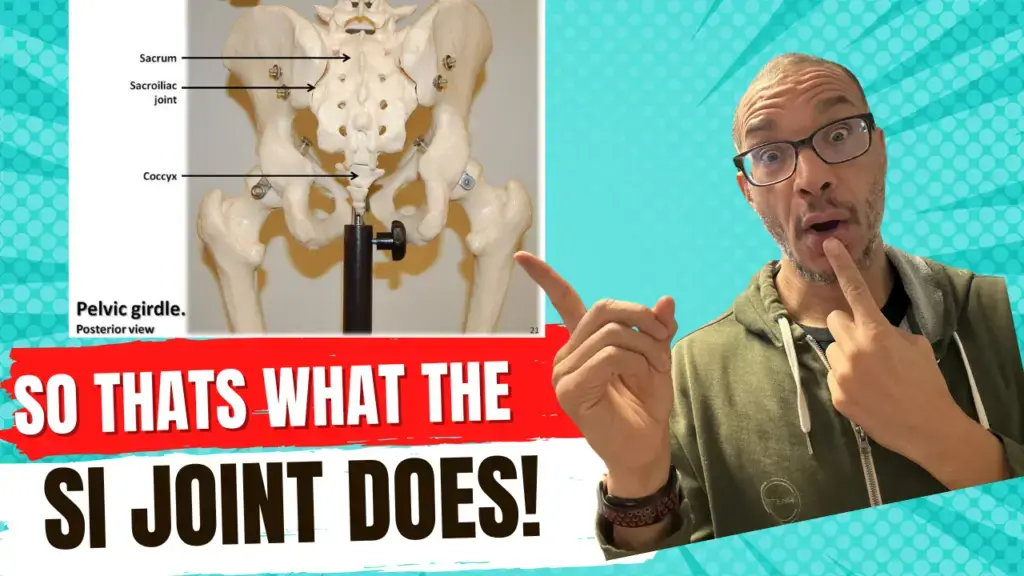
The Untold Truth About the SI Joint (And Why Most Fixes Fail)

The sacroiliac jointโ€”or SI jointโ€”is one of the most misunderstood areas in the body. And yet, it plays a massive role in your ability to move, feel good, and stay injury-free.

If youโ€™ve ever looked for SI joint exercises or ways to relieve SI joint pain, chances are the info you found was generic, over-simplified, or just wrong. And thatโ€™s a problem.

A dysfunctional SI joint can prevent you from gaining strength, limit your mobility, and leave you stuck in a loop of recurring pain or injury.

Letโ€™s fix that.

What Is the SI Joint (And Why Should You Care)?

The SI joint connects your sacrum (the base of your spine) to your ilium (your pelvic bones). You have two of themโ€”left and rightโ€”and together they form the foundation of your pelvis.

Think of your pelvis as the floor of your body. If the floor is off, everything built on topโ€”your spine, shoulders, legsโ€”becomes misaligned.

Hereโ€™s the kicker: SI joint issues are often asymptomatic. You might be struggling with shoulder pain, knee discomfort, or tight hip flexorsโ€”and never realize the source is pelvic instability rooted in the SI joint.


Why Standard Fixes Donโ€™t Work

Most practitioners don’t fully understand the SI joint. Some even claim itโ€™s not a real joint or that it doesnโ€™t move. Thatโ€™s not just wrongโ€”itโ€™s dangerous.

The SI joint is a total joint:

  • It has a capsule
  • It contains synovial fluid
  • It has proprioceptors (tiny sensory “computers”)
  • Itโ€™s stabilized by key muscles and ligaments

When this area is off, you donโ€™t just lose movementโ€”you lose the ability to communicate with your body.


A Deeper Look: Movement and Dysfunction

Physiologically, the SI joint has one primary movement axisโ€”called the oblique axis. It helps the sacrum and ilium move together smoothly as you walk or bend.

But when dysfunction sets in, the joint can fall into 20+ different pathological movement patterns, leading to all sorts of compensations, from a false leg length discrepancy to upper-body pain.

If your treatment or exercise doesnโ€™t account for these patterns, youโ€™re just treating symptomsโ€”not the cause.


My Journey With the SI Joint

Iโ€™ve been in the health and fitness field for 30 years. I started out like most trainersโ€”using standard methods like PT and corrective exercises. But when I injured my own back (L4-L5 disc bulge with sciatic pain), those traditional approaches didnโ€™t help.

Thatโ€™s when I found osteopathy. It opened my eyes to how the body truly works: as a holistic, interconnected system.

And the SI joint? It was central to the whole picture.


How I Assess and Work With SI Joint Issues

When someone comes into my studio (or online), one of the first places I assess is the SI jointโ€”no matter what pain they report.

Why? Because if the foundation is off, everything else will be too.

Hereโ€™s my general approach:

  1. Assessment โ€“ Identify which part of the SI joint is involved (lesser arm, greater arm, apex, base, etc.).
  2. Ligament Reboot โ€“ Using manual therapy (like TLS and pumping) to reactivate proprioceptors and restore communication.
  3. Fascial Work โ€“ Addressing deeper fascial chains that are often involved but ignored.
  4. Specific Exercise โ€“ Not just general glute or core work, but targeted movement based on what your body needs.

Muscles involved include:

  • Piriformis
  • Glute Max (deep + superficial)
  • Glute Med
  • Obturatorius
  • Iliopsoas

But again, itโ€™s not just about muscles. Itโ€™s about chains. You have to treat the whole system.


Don’t Google “3 Moves for SI Joint Pain” (Please)

Generic exercises might help a littleโ€”or they might make things worse.

Why? Because SI joint issues are specific. The dysfunction could be from one of many regions within the joint or even a combination of them. Without proper assessment, you’re guessing.

And in the body, guessing is a great way to stay stuck.


Want to Learn More?

I share more like this every weekโ€”so subscribe, share, and join the conversation. If youโ€™re ready to go deeper:

  • ๐Ÿ“˜ Grab my free ebook: โ€œMove Better, Reduce Pain, and Live Life On Your Termsโ€
  • ๐Ÿ—“๏ธ Book a consultation to see if weโ€™re a good fit for private or online work

Donโ€™t let a misunderstood joint hold back your potential. Fix the foundationโ€”so the rest of your body can finally thrive.

itโ€™s not just working out, itโ€™s building a foundation for a better life.

Find out more @

Facebook

BlueSky

Pinterest

Instagram

Youtube

Discover the Hidden Dangers of Anterior Pelvic Tilt

โ€œDuck buttโ€ might sound funny, but anterior pelvic tilt is no joke.

Itโ€™s a common postural issue where your pelvis tilts too far forwardโ€”and itโ€™s one of the main reasons people suffer from chronic lower back pain, disc bulges, SI joint instability, and more.

Iโ€™m Ekemba Sooh, SomaTherapist and SomaTrainer. I had anterior pelvic tilt myselfโ€”and it played a major role in my L4-L5 disc bulge and sciatic pain. No trainer, therapist, or doctor ever told me the tilt was the root cause.

They were treating symptoms. Not the source.

Click on the image to watch

What Is Anterior Pelvic Tilt?

Your pelvis naturally tilts slightly forward to support upright movement. But anterior pelvic tilt happens when this angle becomes exaggerated and stuckโ€”creating a โ€œduck buttโ€ posture.

This tilt disrupts your bodyโ€™s alignment and sets the stage for chronic compensation patterns. Over time, these compensations become permanent dysfunctions.


How It Becomes a Problem

Your body is a biotensegrity structureโ€”meaning itโ€™s designed to distribute force efficiently across the entire system. If one area tightens or weakens, your body adjusts to keep you moving. Thatโ€™s compensation.

Compensation isnโ€™t bad at first. But if left unchecked, it snowballs into bigger problems:

  • Chronic lower back pain
  • Lumbar disc issues (bulges, herniations, stenosis)
  • SI joint dysfunction
  • Pelvic floor and organ dysfunction
  • Reduced performance and poor energy transfer

It all stems from the inability to attenuate force efficientlyโ€”because the structure is compromised.


What Causes Anterior Pelvic Tilt?

Too much sitting is a big culprit. It shortens the hip flexors (especially the psoas) and weakens the posterior chain (glutes, hamstrings, spinal stabilizers).

Over time, your body learns this dysfunctional positionโ€”and your nervous system adopts it as your default.

For some, itโ€™s even genetic. But genetics just mean you have to be more intentionalโ€”not that youโ€™re doomed.


Why Most Approaches Fail

Typical solutions focus on isolated muscles. But your body doesnโ€™t work in isolationโ€”it moves as an integrated system through fascia.

Thatโ€™s why general exercise, yoga, and stretching routines often fail. You feel good temporarily, but your body snaps right back to the same pattern the next day.

Why? Because you didnโ€™t train the fascia to support a new pattern.


The Real Solution: Train Fascia + Function

To fix anterior pelvic tilt, you need to retrain your entire structure:

  • Stretch the shortened hip flexors (especially the psoas)
  • Strengthen the weakened glutes, hamstrings, and back muscles
  • Activate fascia chains, not just muscles, to build intelligent, whole-body control

The best tools Iโ€™ve found for this are osteopathic-based etiology exercisesโ€”like the ELDOA and my full training system. These methods respect how the body actually works: as a connected, intelligent, adaptable structure.


When to Start? Now.

If you’re in your 20s or 30sโ€”start now and prevent future issues.
If you’re in your 40s, 50s, or 60sโ€”and already feeling painโ€”this needs to be your primary focus.

You canโ€™t afford to ignore anterior pelvic tilt. Itโ€™s not just a posture issueโ€”itโ€™s a performance killer, a pain amplifier, and a hidden driver of long-term health problems.


What to Do Next

If this resonates, here are a few ways to go deeper:


Final Thought

Anterior pelvic tilt is a structural dysfunctionโ€”but itโ€™s also an opportunity.

Itโ€™s your bodyโ€™s way of asking for smarter input. When you respond with the right training, youโ€™ll not only relieve painโ€”youโ€™ll become stronger, more mobile, and more connected to your body than ever before.

Donโ€™t wait until things break down. Train holistically. Train intelligently. Train to support the life you want to live..

Building a foundation for a better life.

Find out more @

Facebook

BlueSKy

Pinterest

Instagram

Youtube

The Surprising Truth About Iliopsoas Muscle Pain

If youโ€™re dealing with iliopsoas muscle painโ€”sometimes called psoas painโ€”youโ€™re not alone. The iliopsoas plays a critical role in how your spine, pelvis, and hips moveโ€ฆ and when itโ€™s tight, weak, or dysfunctional, it can cause low back pain, hip pain, bursitis, pelvic issues, and more.

But hereโ€™s the real problem:
Most peopleโ€”and even many professionalsโ€”oversimplify it. They give you generic psoas stretches or strengthening exercises that donโ€™t address the full picture.

Letโ€™s change that.

Click on the image to watch

What Is the Iliopsoas Muscle?

The iliopsoas is a deep muscle made of multiple parts: the psoas major, psoas minor, and iliacus. It doesnโ€™t just run from your spine to your hipโ€”it has multiple attachments at the spine, pelvis, and upper leg, making it a true tensegrity muscle in the osteopathic model.

That means it plays a central role in connecting and coordinating movement between your upper and lower body.
It also means problems with your iliopsoas donโ€™t stay localizedโ€”they can ripple out into your spine, pelvis, or even internal organs through fascial connections.


Why Basic Psoas Stretches Donโ€™t Work

Search the internet and youโ€™ll see the same stretch everywhere: kneeling lunge, arms overhead, arch the back, slide forward.

Sounds familiar?

Hereโ€™s whatโ€™s wrong with it:

  • It ignores the multiple fiber directions and attachment points of the iliopsoas
  • It reinforces poor spinal positioning and can compress the lumbar discs
  • It fails to address fascia, which is key for actual lengthening and balance
  • Itโ€™s based on basic anatomyโ€”not the complex interconnections that actually matter

Worse, these stretches can aggravate spinal conditions and reinforce patterns that caused your pain in the first place.


A Holistic Way to Work With the Iliopsoas

To truly improve iliopsoas muscle function, you need a program that goes beyond muscle alone.

Enter Hillโ€™s Muscle Model:

A true holistic approach includes:

  • The muscle itself
  • The fascia that supports and connects it
  • The ligaments and joints it influences

All three work together. You canโ€™t isolate one and expect long-term results.


What I Do Instead

As a Soma therapist and trainer with 30 years of experienceโ€”18 under the osteopathic modelโ€”I help people move and heal holistically.

Hereโ€™s how I work with the iliopsoas:

  1. Normalize the fascia
    Fascia surrounds and runs through the psoas like a spiderweb. If itโ€™s twisted or adhered, the muscle canโ€™t function correctly. Manual therapy helps unwind these patterns.
  2. Myofascial stretching
    Instead of basic stretches, I use biomechanically precise postures that account for all attachments and fiber directions. These target the whole chain, not just one part.
  3. Postural release
    Sometimes, just hanging in a specific posture allows the psoas to release more deeply than any active stretch. I show clients how to do this safely and effectively.
  4. Strengthen itโ€”correctly
    A tight muscle can also be weak. I use movement patterns that strengthen the iliopsoas in the right directions, based on how it truly functions.
  5. Address the surrounding system
    That includes spinal stabilizers like the transverse spinalis, longissimus, iliocostalis, and lats. Muscles donโ€™t work in isolationโ€”they work in systems.

Want to Try a Simple Postural Release?

Here’s a safe, passive way to begin releasing the iliopsoas:

  • Sit on the edge of your bed or a bench
  • Lie back and hold one knee to your chest
  • Let the other leg hang off the edge
  • Hold for as long as is comfortable
  • Switch sides

This gentle release works with the body rather than forcing it.


Ready for Deeper Change?

Most iliopsoas issues donโ€™t get better with surface-level fixes.
You need to work with the cause, not just the symptoms.

If this resonates with you, I have a few resources:
โœ… Free Resource โ€“ To Get Mobile, Get Out of Pain, and Live the Life of Your Dreams
โœ… Consultation โ€“ Want to work together? Book a time via the Calendly link

Youโ€™re capable of more than you think. Allow the process to change youโ€”and youโ€™ll be amazed at what your body can do.

Building a foundation for a better life.

Find out more @

Facebook

BlueSky

Pinterest

Instagram

Youtube