Posture

Amber SolCore Fitness and Therapy Success

SolCore Therapy and Fitness

Sometimes, what youโ€™re doing just stops working. For Amber, it took years of yoga, chronic pain, and a sudden breakdown to realize her body needed something different. This is her storyโ€”and how SolCore Fitness helped her shift from injury to healing.

When Pain Overrides the Pose

Amber had been practicing yoga since she was 19. It was more than a workoutโ€”it was a lifestyle. She loved the wildness, the philosophy, the breath work, and the physicality.

But over time, yoga shifted. The deeper, spiritual practice faded, replaced by fast-paced, athletic movements. Like many, Amber had flexibilityโ€”but not mobility or strength. She could move into poses, but her body couldnโ€™t support them.

Eventually, her back gave out.

โ€œIt was the day after Thanksgiving. I stepped out of the car and literally couldnโ€™t move. I crawled up the stairs to my momโ€™s house. It was terrifying.โ€

That moment wasnโ€™t random. It was the result of years of compensation, strain, and bypassing the bodyโ€™s needs. Her long-time bodyworker warned her:

โ€œYouโ€™re too stretchy. You need real strength.โ€


Why Yoga Alone Couldnโ€™t Help

Amber loved yoga. But she realized she had been using it to avoidโ€”not addressโ€”her deeper structural issues. Like many, she thought movement alone was enough. But flexibility without strength, and effort without direction, only made things worse.

โ€œI didnโ€™t want to bash yoga. But I had to admitโ€”it wasnโ€™t working. My body needed something more holistic, structured, and biomechanically sound.โ€

Enter SolCore Fitness.


A New Approach: Structured, Subtle, and Demanding

Amber admits it wasnโ€™t easy at first.

SolCoreโ€™s program required consistency and re-learning. The exercises were unfamiliar and subtleโ€”but also deeply challenging.

โ€œIt was counterintuitive. I had to unlearn how Iโ€™d been moving for decades. But the subtlety was powerful. Within six months, I was 75% better.โ€

Through personalized training and a focus on fascia, mobility, strength, and proprioception, Amber rebuilt her foundation. The back pain lessened. Her posture improved. Her nervous system regulated.

And maybe most importantly, she reclaimed her relationship with her body.


Lasting Changes and a New Way Forward

Amber still has a desk job. She still feels occasional pain. But now she knows how to manage it. Sheโ€™s no longer dependent on yoga poses to feel โ€œbetter.โ€

Sheโ€™s walking more, doing breathwork, meditating againโ€”and she can sit in silence without discomfort.

โ€œThis has helped me return to the real yoga: presence, breath, and awareness. I found a better balance.โ€

Her advice?

โ€œDonโ€™t wait until things break down. Be willing to change. What worked in your 20s wonโ€™t work forever. Find a system that evolves with you.โ€


Want to Explore a Better Path for Your Body?

Amberโ€™s story is one of many. At SolCore Fitness & Therapy, we help people get out of pain and into possibility through a method that combines manual therapy, fascia-based training, and deep biomechanical insight.

๐Ÿ’ฌ Curious if itโ€™s right for you? Click here to schedule a free consult.

๐Ÿ“„ Want the case study version? Click here to download.

Building a foundation for a better life.

Find out more @
Facebook

Bluesky

Pinterest

Instagram

Youtube

Why Consistency โ€” Not Just Resolutions โ€” Drives Your Health Goals

Solcore Fitness therapy and training

Everybody puts so much emphasis on January 1, but if you really want to succeed in the new year, itโ€™s better to think about consistency in health goals โ€” and how learning and adapting will shape your lifestyle over time.

Nothing magical happens at midnight on January 1.

The real change comes from within you.

Think of the year as a long story to live โ€” not just a sprint at the start. If you pin all your hopes on the first few days of January, youโ€™ll miss the bigger picture.

Hereโ€™s what will happen over time:

๐Ÿ‘‰๐Ÿฝ Sometimes youโ€™ll do great
๐Ÿ‘‰๐Ÿฝ Sometimes youโ€™ll struggle
๐Ÿ‘‰๐Ÿฝ You might even realize a goal wasnโ€™t what you really wanted
๐Ÿ‘‰๐Ÿฝ But your consistent behavior will determine your results.

And that last one? Itโ€™s the most important.
Consistency in your health goals is what brings real, lasting change.

Start Your Story Strong

A good story needs a good opening. That doesnโ€™t mean intensity โ€” it means clarity, mindset, and small steps. Focus on developing the right mental approach. Tap into your emotions. Set different kinds of goals that can guide you and evolve with you.

Try this:

โœ… Reflect on where you were this time last year. What did you learn? How can you build on that?

โœ… Make your goals SMART โ€” Specific, Measurable, Achievable, Relevant, and Time-bound.

โœ… Prioritize your health and values, not just your weight or aesthetics.

โœ… Think about long-term and short-term goals โ€” and how to reward yourself for progress.

โœ… Focus on behavior, not just results. Do your best daily โ€” the outcomes will follow.

โœ… Keep learning about health, exercise, nutrition, and stress.

โœ… Be aware of your emotions, but donโ€™t let them control your actions.

โœ… Ask for support โ€” even before you think you need it.

Give Yourself the Whole Year

Start strong, but donโ€™t burn out. You donโ€™t have to fix everything in January.

Use your calendar, revisit your goals, track your progress.
Stay curious. Stay consistent. Keep learning.

Thatโ€™s how real change happens.

itโ€™s not just working out, itโ€™s building a foundation for a better life.

Find out more @
Facebook

Bluesky

Pinterest

Instagram

Youtube

Unlocking Vitality: The Power of Zone 2 Cardio for Optimal Health and Fitness

Zone 2 cardio is getting a lot of attention latelyโ€”and for good reason. But this isnโ€™t just another fitness trend. If used properly, Zone 2 cardio can become the foundation of your long-term health, energy, and recovery.

Letโ€™s break it down and show you how to make Zone 2 part of a complete, fascia-informed training approachโ€”not just another checkbox in your routine.

Click the image to watch the video

What Is Zone 2 Cardio?

Zone 2 is the second level in a 5-zone cardiovascular scale, where your body primarily uses fat and oxygen (aerobic metabolism) to fuel movement.
It sits between gentle movement and high-intensity exercise, typically falling between 60โ€“70% of your max heart rate.

Not sure what that means?
Start with a basic estimate: 220 - your age = max heart rate.
Then calculate 60โ€“70% of that number.

More precise formulas exist, but the important thing is to start where you are and listen to your body.

โœ… A heart rate monitor (Apple Watch, Garmin, etc.) can help
โœ… You should still be able to talk comfortably while training (aka the โ€œtalk testโ€)
โœ… You may still breathe mostly through your nose


Why Zone 2 Cardio Works So Well

Zone 2 improves how efficiently your body uses oxygen, delivers nutrients, and clears waste.
Hereโ€™s what you gain:

  • Stronger heart and lungs
  • More mitochondria (cellular energy factories)
  • Better capillary density (circulation)
  • Faster recovery between workouts
  • A solid base for strength or higher-intensity training

If youโ€™ve ever jumped into HIIT, CrossFit, or intense lifting without seeing results, itโ€™s often because your foundation was missing.
Zone 2 is that missing piece.


But hereโ€™s the part most people miss: your structure matters just as much as your heart rate.

If your posture is collapsedโ€”rounded shoulders, forward head, restricted breathingโ€”youโ€™re limiting the ability of your lungs and heart to perform.
And that can reduce the effectiveness of even a perfect Zone 2 session.

Thatโ€™s why we integrate corrective and structural work into all our programming at SolCore Fitness.
When you combine Zone 2 with myofascial stretching, segmental strengthening, and ELDOA techniques, you unlock the full benefit of cardio.

Explore how ELDOA exercises can open space in your spine and thorax to support better breathing and recovery.


How to Build Your Zone 2 Routine

  1. Start with Zone 1
    If youโ€™re new to cardio or unsure of your baseline, begin with lower-intensity Zone 1 work and good posture habits.
    Let your body adapt before pushing harder.
  2. Dial in your structure
    Use corrective exercise and mobility workโ€”like Global Strengthening and postural realignmentโ€”to prepare your body for regular training stress.
  3. Progress gradually
    • Begin with 45-minute sessions
    • Aim to increase duration to 60โ€“90 minutes over time
    • Stay consistent and let your body adapt over weeksโ€”not days

Don’t Skip Corrective Work

Even walking puts thousands of pounds of force through your joints over the course of 10,000 steps.
Without corrective exercise, those forces accumulate and degrade performanceโ€”especially in an unbalanced body.

Every Zone 2 session should be followed by realignment and decompression work, not just foam rolling or massage.

Corrective support ensures that:

  • Muscles recover efficiently
  • Fascia maintains healthy tone and hydration
  • You prevent breakdown while building endurance

Final Thoughts: Periodization Is Key

Zone 2 isnโ€™t meant to be a permanent state. Itโ€™s a phase in a smart, periodized plan.
You cycle between:

  • Structure + Zone 1
  • Structure + Zone 2
  • Corrective + Recovery
  • And eventually, higher intensities with full preparation

This is how you train for vitality, not just fitness.

Want support?
โ€œWant to go deeper? Explore our Circulatory and Respiratory System Exercises designed to strengthen breathing and circulation.โ€

itโ€™s not just working out, itโ€™s building a foundation for a better life.

Find out more @

Facebook

Bluesky

Pinterest

Instagram

Youtube

Osteoporosis-Friendly: How To Strengthen Bones And Balance Your Body Without Weights! [No Routine].

Click on the image to watch

So your doctor just told you: You have osteoporosis.
And now youโ€™ve heard the usual adviceโ€”lift weights, go walking, increase your T-score.
Simple, right?

But hereโ€™s the thing: that advice barely scratches the surface.
You need more than a walking plan and generic strength training to protect your bones.
And you absolutely donโ€™t need to risk injury in a gym to make progress.

Letโ€™s talk about a safe, osteoporosis-friendly exercise approach thatโ€™s deeper, smarter, and based on how the body truly works.


The Missing Piece in Conventional Advice

Doctors mean well. But theyโ€™re trained in medicine, not movement.
When they say โ€œlift weights,โ€ theyโ€™re usually thinking: Add resistance = stronger bones.

But not all movement builds healthy bone.
And not all resistance is safe for osteoporotic bodiesโ€”especially if youโ€™re unbalanced or unaware of how your body compensates.

Even more โ€œadvancedโ€ suggestions like power plate training or Nordic walking can help, but they only address a slice of the picture.

Whatโ€™s missing?
Soft tissue. Fascia. Alignment.
These are the systems that actually govern how your bones respond to load.


Fascia First: Real Strength Starts Here

Your fascia connects everythingโ€”muscles, bones, ligaments, joints.
Itโ€™s alive, intelligent, and crucial for posture, movement, and bone health.

When your fascia is tight, twisted, or dehydrated, it sends the wrong signals through your body.
That misalignment throws off posture, stress distribution, and even your ability to generate new bone in a healthy way.

At SolCore, we use myofascial stretching and GPS (Global Postural Stretching) to reorganize and hydrate fascia.
This is what safely re-aligns the body without weights, and creates natural tensile force on bones to stimulate growth.


Your Bones Need Alignment, Not Just Load

Imagine building a house with crooked rebar. Thatโ€™s what happens when your trabeculaeโ€”the internal scaffolding of your bonesโ€”arenโ€™t aligned.

If you move with poor posture or imbalanced fascia, youโ€™re putting force through joints and bones in a way that actually increases fracture risk or creates poor bone adaptation.

To reverse osteoporosis, you want:

  • A strong plumb line (earโ€“shoulderโ€“hipโ€“kneeโ€“ankle)
  • A stable gravity line (inverse cone through your pelvis)
  • Balanced muscular tone around your joints

These factors help your body distribute force evenly and stimulate healthy bone remodelingโ€”naturally.

Learn more about how we approach this through osteopathic therapy techniques.


Itโ€™s Not About Muscle, Itโ€™s About Muscle Intelligence

You have ~600 muscles. But each one has fibers running in different directionsโ€”and needs to be activated with specificity.

Take your glute medius: it has three distinct sections (anterior, middle, posterior).
To truly engage it, you must work in different postures and directions. That means intentional movementโ€”not generic reps in a gym.

Why does this matter for osteoporosis?

Because muscle engagement creates tensile pull on bones.
But only when itโ€™s done in coordination with fascia and structural alignment.

Otherwise, youโ€™re just training your imbalances to get stronger.


What Real Osteoporosis-Friendly Exercise Looks Like

Hereโ€™s the new model:

โœ… Realign your fascia using targeted stretching techniques
โœ… Train muscular chains, not just individual muscles
โœ… Respect your bodyโ€™s architectureโ€”donโ€™t overload whatโ€™s misaligned
โœ… Use posture to generate safe, full-body force
โœ… Let fascia pull bones into alignment AND stimulate growth

Thatโ€™s how you create sustainable bone healthโ€”without lifting weights.


Ready to Start?

If youโ€™re stuck in the basic routine of walking and machines, but your body is asking for more, you have options.

  1. ๐Ÿ“˜ Download the Free Guide
    Learn the 4-step framework to reduce pain, restore movement, and reclaim your energy.
  2. ๐Ÿ‘ค Book a Consultation
    Talk with me personally. Iโ€™ll help you assess where you are, whatโ€™s holding you back, and whether weโ€™re a good fit to work together.

You donโ€™t need to fear movement.
You just need a smarter way to train your bodyโ€”one that respects how youโ€™re built.

itโ€™s not just working out, itโ€™s building a foundation for a better life.

Find out more @
Facebook

Bluesky

Pinterest

Instagram

Youtube

Discover the Game-Changing Solution for SI Joint Dysfunction

SI joint dysfunction can be miserableโ€”constant pain in different places, no clear answers, and โ€œfixesโ€ that donโ€™t work. Itโ€™s one of the most stubborn and misunderstood issues in the body. But there is a solution.

Understanding Your SI Joint

Letโ€™s start with the basics.
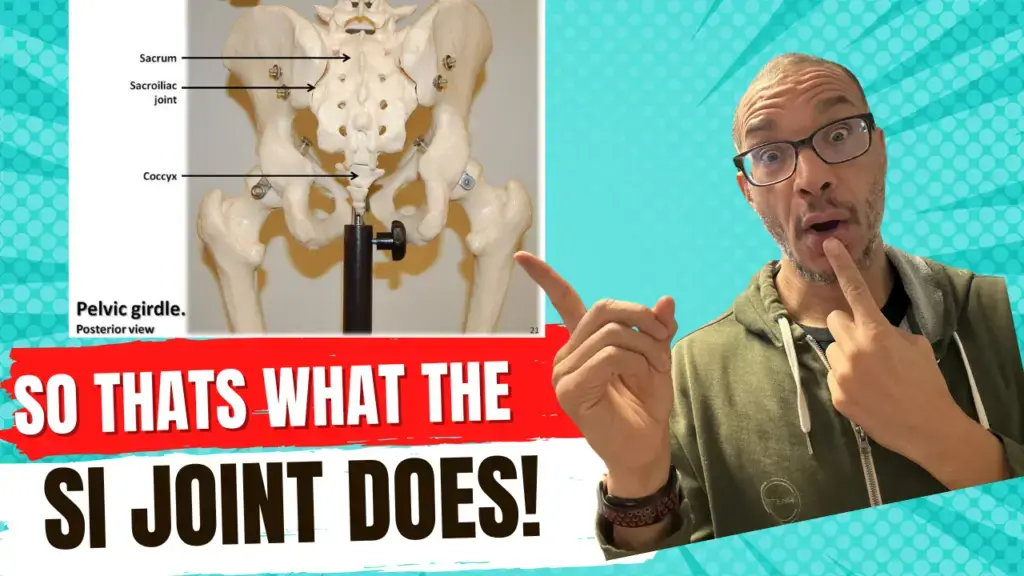
SI stands for sacroiliac. Your sacrum (the triangle bone between your glutes) connects to your ilium (your hip bones) at two SI joints, shaped like boomerangs.

Many people confuse SI joint dysfunction with low back pain. But theyโ€™re not the sameโ€”and mislabeling it can send you down the wrong treatment path.

Your SI joint is a true joint with cartilage, a capsule, ligaments (like the anterior and posterior sacroiliac ligaments), and muscular support from the piriformis, glutes, psoas, obturator internus, and more.

This joint movesโ€”primarily in oblique torsionsโ€”but it can also develop 20+ pathological movements (and infinite combinations of dysfunction).


Why SI Joint Issues Donโ€™t Go Away

Your SI joint takes on ascending and descending forces through your body. Itโ€™s involved when you sit, stand, walk, squatโ€”pretty much everything. So when itโ€™s not functioning well, everything suffers.

In my own case, I had no SI joint pain at first. But a small dysfunction there led to L4-L5 disc compression, sciatic pain, and long-term compensation patterns.

The problem? Most people treat symptoms, not causes. And SI joint dysfunction is often the hidden cause behind hip, knee, foot, and even spinal issues.


What Doesnโ€™t Work (And Why)

  • โŒ Popping it back into place
  • โŒ Rolling on a foam roller
  • โŒ Generic exercise routines
  • โŒ โ€œFusedโ€ joint logic that ignores anatomy
  • โŒ Thinking your SI joint doesnโ€™t move

These approaches either oversimplify the problem or completely miss it.


What Actually Works

  1. Assessment First โ€“ You need someone who understands the full range of SI joint pathologies.
  2. Work With Ligaments โ€“ Smart ligaments become โ€œdumbโ€ when dysfunctional. Treatment and manual therapy must re-educate them.
  3. Use Targeted Exercise and Therapies โ€“ The most powerful SI joint reset tool Iโ€™ve found is the ELDOA method. These postural exercises use fascial tension and soft tissue to normalize the joint and retrain proprioception. Using osteopathic therapies like TTLS along with osteopathic exercises dramatically increases your healing and the regaining of your function.

The SI joint doesnโ€™t exist in isolation. Itโ€™s part of a complex networkโ€”and requires a fascia-based, integrative strategy that honors how the body truly works.


If you were hoping for a one-size-fits-all โ€œSI joint routine,โ€ I wonโ€™t insult your intelligence.

Thatโ€™s not how the body worksโ€”and itโ€™s why so many people stay stuck.


What to Do Instead

If you want to address your SI joint dysfunction at the root, here are three free ways to take the next step:

๐Ÿ“˜ Download the Free Guide:
โ€œHow to Move Better, Get Out of Pain, and Live the Life of Your Choosing.โ€
Instant access. Zero fluff.

๐Ÿ’ฌ Book a Free Consultation:
Tell me where you are, what youโ€™re doing, and where you want to go. Iโ€™ll find the holes in your system and help you chart a real path forward. No obligationsโ€”just clarity.


You donโ€™t have to guess. You donโ€™t have to suffer. And you donโ€™t have to keep trying things that donโ€™t work.

You just need a system that sees the whole pictureโ€”and a guide who understands how to help you work with it.

Letโ€™s get started.

itโ€™s not just working out, itโ€™s building a foundation for a better life.

Find out more @

Facebook

BLuesky

Pinterest

Instagram

Youtube

Posture Corrector Brace: Will It Actually Fix Your Posture?

Posture Corrector Brace: Will It Actually Fix Your Posture? Discussing if it works and holistic exercise alternatives for it.

Click on the image to watch

We love gadgets here in the U.S. โ€” especially ones that promise fast results.

The posture corrector brace is one of them. It straps over your shoulders and pulls them back, claiming to fix forward head posture and kyphosis.

But does it work?
Or is it just another overpromised shortcut?

Letโ€™s break it down โ€” scientifically and holistically.


What Is a Posture Corrector Brace Supposed to Do?

The posture brace is designed to pull your shoulders back, which is meant to correct rounded posture. The idea is simple: if your shoulders are more upright, your head and spine will follow.

But posture isnโ€™t simple.

Forward head posture and kyphosis (over-rounded upper back) are complex conditions with deep structural, muscular, and neurological components. A strap wonโ€™t solve that โ€” not by itself.


The Problem With “Just Pulling Back”

Thereโ€™s a concept called the Law of 22 Degrees. Once your head shifts 22ยฐ forward relative to your shoulders, it changes the mechanics of your cervical spine. You donโ€™t just bend forward โ€” you slide forward โ€” and over time, that becomes permanent.

Thatโ€™s why you see older people stuck in that hunched-forward posture. Theyโ€™ve crossed the threshold. The brace doesnโ€™t reverse that.

And kyphosis?
That doesnโ€™t start at the shoulders. It starts in the spine, involves the ribs, and pushes the shoulder blades outward and forward. That dominoes into tight pecs, weak rhomboids, overloaded lats, dysfunctional breathing, and nervous system strain.


Why Posture Braces Don’t Fix the Real Issue

A brace might remind you to stand up straight โ€” but it doesnโ€™t retrain your body. And thatโ€™s the problem.

Real posture correction requires:

  • Opening and hydrating joints (especially the spine)
  • Strengthening the right muscles in the right biomechanical positions
  • Reprogramming your brainโ€™s โ€œpostural mapโ€ (a.k.a. motor engrams)
  • Restoring space in the rib cage and fascia
  • Training your feet, not just your upper body

None of that happens by pulling two straps.


What You Should Focus on Instead

Want better posture? Hereโ€™s what works โ€” and why.

๐Ÿ’ง Start with Tissue Health

Hydrate your fascia. Sleep well. If your tissue is dry or inflamed, exercise will just create more dysfunction.

๐Ÿง  Retrain Your Brain

You donโ€™t need to โ€œthink about postureโ€ all day. You need to educate your nervous system to hold better posture automatically.

That means:

  • ELDOA exercises for joint-specific spine awareness
  • Strengthening your rhomboids with your arms overhead
  • Training the levator scapulae to pull your head back
  • Stretching the pec minor, lats, and delts to open space
  • Re-aligning your gravity line: ear โ†’ shoulder โ†’ hip โ†’ knee โ†’ ankle

Most people think theyโ€™re standing straightโ€ฆ and theyโ€™re not. Thatโ€™s because the brainโ€™s postural map is distorted. But itโ€™s fixable โ€” if you train it intentionally.

๐Ÿฆถ Donโ€™t Forget the Feet

Your feet send constant feedback to your brain about balance. If you donโ€™t train them, your posture wonโ€™t hold โ€” no matter what you do up top.

๐Ÿซ Free the Ribcage

Tight ribs lock your thoracic spine. That limits shoulder mobility and forces your neck forward. You need mobility in your costovertebral and sternocostal joints to breathe and move correctly.


Soโ€ฆ Is a Posture Corrector Brace Worth It?

Short answer: No.

Even if it helps you remember to pull your shoulders back, it creates a false sense of progress. It bypasses the actual work โ€” which means your dysfunction continues to build underneath.

And the longer you stay in that dysfunction, the harder it is to reverse.

The body adapts. If you keep pushing it into artificial alignment without education or support, youโ€™re not solving anything. In fact, you might make it worse.


Train Your Body the Right Way

I get it. Gadgets are easy. Real training takes effort.

But your body is beautiful, adaptable, and designed to move well โ€” if you give it the right input.

If youโ€™re ready to do that โ€” we can help.


Your Next Steps

Youโ€™ve got options, depending on what works best for you:

โœ… Download the Free eBook:
โ€œGet Out of Pain, Get Mobile & Get to the Life You Wantโ€
Includes 4 core steps you can start right now. Instant download.

โœ… Schedule a Call with Me:
If youโ€™re ready to stop guessing and start training the right way, letโ€™s talk. Weโ€™ll map out where youโ€™re stuck, where you want to go, and Iโ€™ll show you whatโ€™s possible with a real, fascia-based approach.


Thanks for reading โ€” and for caring about your body.
If this helped, share it with someone who needs it.
And if youโ€™re still thinking about that brace… maybe leave it in the drawer. ๐Ÿ˜‰

Building a foundation for a better life.

Find out more @

Facebook

Bluesky

Pinterest

Instagram

Youtube

Is Your Functional Fitness Workout Actually Dangerous?

Youโ€™ve probably seen the term functional fitness workout tossed around everywhere lately.

But hereโ€™s the truth: what you see online or at the gym under that label is often misleading โ€” or worse, harmful.

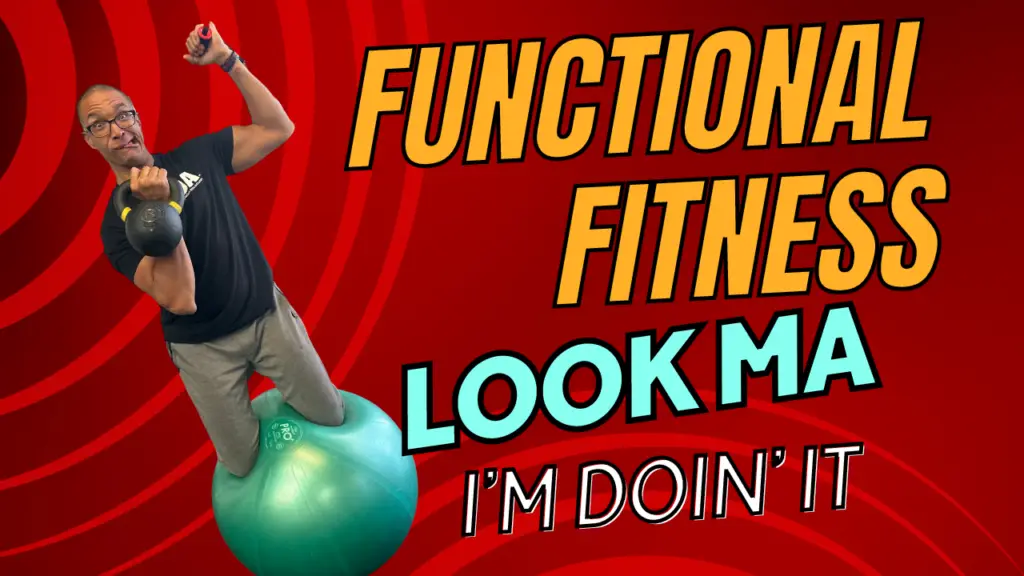
The original idea behind functional fitness was solid: training your body to perform real-life movements with strength, ease, and efficiency. But the fitness industry has warped this into circus acts and extreme trends โ€” things like balancing on balls with weights overhead or twisting mid-air with kettlebells.

Even for seasoned pros, those workouts make no sense. And for most people, theyโ€™re a fast track to injury.

Man doing functional fitness workout that is not safe

Click the image to watch

So What Is Functional Fitness, Really?

Letโ€™s go back to the definition. Something that is functional has a specific purpose or task. So functional fitness should support the way you live, move, and work โ€” helping you feel better and function better in your day-to-day life.

That might include training to:

  • Walk, squat, twist, and bend with ease
  • Paint walls or lift gear in your profession
  • Run a 10K or play with your grandkids pain-free

But functional training isnโ€™t a one-size-fits-all set of exercises. The movements you need depend on your goals.


Three Kinds of Functional Training

  1. Sport-specific โ€” Focused on athletic performance. Runners train different muscle chains and movement patterns than skiers or lifters.
  2. Work-specific โ€” Based on your job. A painter needs mobility and control in the shoulder, wrist, and neck. A nurse may need strong legs and posture.
  3. Life-specific โ€” For general health, longevity, and pain-free movement in daily life. This is where most people should start.

Ironically, the more you focus on sport or work-specific training, the more you risk losing function in everyday life. Why? Because you’re overtraining narrow patterns and neglecting others.


The Foundation of True Function

If your goal is to function better in life, here’s where to start:

โœ… The 7 Primal Movements

These are basic, essential motions you do every day:

  • Squat
  • Bend
  • Push
  • Pull
  • Lunge
  • Twist
  • Gait (walk/run)

Training these movements properly will make daily life easier. But you shouldnโ€™t start here.

โœ… Start with Your Deep Stabilizers

Real functional training begins with the PIT muscles โ€” the deep internal stabilizers that prepare your body to move. These include:

  • Transversospinalis group
  • Deep hip rotators
  • Deep shoulder stabilizers
  • Fascia and visceral supports

These muscles receive the brainโ€™s signals first. If theyโ€™re weak or disconnected, your body will compensate with larger muscles, creating dysfunction and strain.


Structure Dictates Function

This principle โ€” first taught by osteopathic founder Andrew Taylor Still โ€” says your body can only function well if its structure is aligned and balanced.

Your fascia, bones, and muscles donโ€™t just hold you up like a stack of blocks. They create a biotensegrity system, where tension and compression are distributed across your whole body through fascia.

Thatโ€™s why good posture isnโ€™t cosmetic โ€” itโ€™s functional. Without structural balance, even โ€œgoodโ€ exercises cause harm.


Train What You Actually Use

Want to be able to balance on one leg? Then train the glute medius โ€” in all three of its fiber directions. Want to squat pain-free? Work the deep hips and spinal stabilizers first.

If you skip this and go straight to dynamic exercises, youโ€™re training dysfunction on top of imbalance.

And those extreme workouts that promise strength, mobility, endurance, and balance all in one? Total nonsense.

Your body needs focus to adapt. Each quality โ€” like flexibility, strength, or endurance โ€” takes months to build. You canโ€™t rush it by stacking everything into one session.


Real Functional Training Takes Time

Here’s a simple path:

  1. Rebuild structure โ€” Get your posture, alignment, and fascia moving well.
  2. Activate deep stabilizers โ€” Teach your nervous system how to move safely.
  3. Train primal patterns โ€” Squats, twists, lunges โ€” correctly and with intention.
  4. Build specific traits โ€” Endurance, strength, mobility โ€” one at a time.

Each layer may take months. But it sets you up for a lifetime of movement freedom.

Functional fitness is not a shortcut. Itโ€™s a foundation.


Want to Learn How to Train Functionally (the Right Way)?

If youโ€™re tired of confusing workouts, nagging pain, or wasted time, we can help. Our holistic program trains your body from the inside out โ€” respecting fascia, structure, and function at every step.

๐Ÿ‘‰ Click below to schedule a complimentary consultation.
Weโ€™ll talk about your goals, your body, and your best next step.

itโ€™s not just working out, itโ€™s building a foundation for a better life.

Find out more @
Facebook

Bluesky

Pinterest

Instagram

Youtube

Why Rest and Recovery Matter for Your Health

Person getting treatment during active rest day for health recovery

Standard thinking used to tell us that we had to push ourselves relentlessly to be in good shape.

But hereโ€™s the scoop: Weโ€™ve evolved from that, and we know better now. Rest and recovery for health arenโ€™t signs of weakness โ€” theyโ€™re essential to lasting strength, mobility, and energy.

We all need downtime to recharge and come back stronger than ever. But taking a full day off is only one part of the equation.

Rest and recovery should also be incorporated into the actual routines you do.

Have you heard the phrase โ€œactive restโ€ yet?

Now, itโ€™s not as contradictory as it might seem. Active rest simply means incorporating lighter, gentler activities into your routine on โ€œrest days,โ€ between your harder days.

That could mean going for a walk or taking a relaxing swim. These activities keep you moving without too much strain. To maximize these active rest days, do exercises and stretches that rebalance your body from the harder workouts you did before.

  • If you went for a big hike or run the day before, do some exercises and stretches that balance the chains of your body from your legs, pelvis, and spine.
  • If you gardened hard the day before, work the chains of your body in your back muscles and shoulders.

Youโ€™re looking for the right balance โ€” the perfect harmony โ€” to optimize your life. Your body is a wonderful gift that allows you to do amazing things. Give it love by incorporating active rest into your weekly rhythm.

Embrace the power of rest and recovery for health โ€” theyโ€™re not breaks from progress. Theyโ€™re part of it.


Building a foundation for a better life.

Find out more @

Facebook

Bluesky

Pinterest

Instagram

Youtube

Why Stretching Matters: The Real Science Behind Your Bodyโ€™s Balance

A person showing the science behind why stretching matters

This is very unfortunate. ๐Ÿคฆ๐Ÿพ

Beware the information you take in on social media and the interweb (yes, I know the irony here). I recently saw a post from a โ€œtrainerโ€ I know is new to the profession โ€” not certified, and barely trained โ€” claiming boldly that you donโ€™t need to stretch.

Ummmmโ€ฆ no.


Science says yes, and for multiple important reasons. Let’s break this down so it’s not just a rant โ€” but a chance to learn.


1. The Hill Muscle Model

First, there’s the Hill Muscle Model, a foundational concept in muscle physiology. It explains that muscles behave like a system of contractile and elastic components โ€” meaning they can both shorten and stretch.

If you ignore the elastic part of this model (the part that allows muscles to lengthen and absorb force), youโ€™re essentially forcing your body to operate with only half the system functional. Thatโ€™s a recipe for strain and injury.


2. Biotensegrity and Structural Balance

Your body isnโ€™t a stack of bones held together with tape. Itโ€™s a dynamic, balanced system governed by biotensegrity โ€” a term describing how tension and compression work together to create stability and fluid movement.

Think of it like a geodesic dome: itโ€™s not rigid, but itโ€™s strong. Your fascia, ligaments, and muscles maintain that tension network. When one part becomes too tight or too loose, the entire structure compensates โ€” often in inefficient or painful ways. Stretching, when done appropriately, keeps this system balanced.


3. Fascia Health and Soft Tissue Quality

Your fascia โ€” the connective tissue that wraps around muscles, organs, and joints โ€” needs to be pliable and hydrated to function well. Without stretching, the fascia becomes stiff, dehydrated, and restrictive. This limits range of motion and increases the risk of injury.

Stretching nourishes and rehydrates the fascia. It improves sliding surfaces between tissues and reduces unnecessary friction that contributes to chronic pain or dysfunction.


4. Functional Range of Motion (ROM)

Your joints and muscles are meant to move through a full range of motion. But if your body doesnโ€™t experience that range regularly, it adapts by shrinking your capabilities.

Imagine owning a sports car but only ever driving it in first gear. Thatโ€™s what happens when you skip mobility work and stretching โ€” your joints and soft tissues lose their full capacity. Eventually, simple movements like bending, twisting, or reaching become harder, more painful, or even dangerous.


5. The Consequences of Misinformation

Hereโ€™s the real danger: the trainer who said โ€œyou donโ€™t need to stretchโ€ isnโ€™t evil โ€” theyโ€™re just inexperienced and unaware. The bigger issue is that people hear statements like that and believe them. And then they suffer.

Social media has made everyone feel like an expert. But true expertise doesnโ€™t just come from reading a few studies or copying flashy workouts. It comes from years of study, experience, reflection, and humility โ€” especially humility to know how much you donโ€™t know.


6. The Pieced-Together Workout Problem

This is how we end up with Frankenstein โ€œtotal body workoutsโ€ built on partial facts. The logic seems sound on the surface: if I work all my muscles, Iโ€™m doing a total-body workout. But unless that workout respects the bodyโ€™s complex interconnections, neurological readiness, structural imbalances, and fascial tension โ€” itโ€™s not actually holistic. Itโ€™s just random movement with good intentions.

And unfortunately, good intentions donโ€™t protect your joints, restore your balance, or make you move better. Thoughtful, informed planning does.


What You Can Do Instead

Instead of chasing conflicting advice online, study with purpose. Take in complete models that respect the bodyโ€™s design โ€” not just cherry-picked hacks that sound good in a 60-second video.

If you want to start learning what works, I wrote an ebook that distills insights from almost 30 years of work in therapy and training. Itโ€™s a great place to begin if your goals include:

  • Longevity
  • Functional strength
  • Real mobility
  • Relief from back, SI joint, or muscle pain

You can grab the ebook with the link below.

Move better. Reduce pain. Live life on your terms.


Letโ€™s be better than social media noise. Letโ€™s stretch โ€” intelligently, consistently, and with an understanding of why stretching matters.

Building a foundation for a better life.

Find out more @

Facebook

Bluesky

Pinterest

Instagram

Youtube

Disc Herniation Exercises To Avoid: Cobra And McKenzie Press Up

If you’ve been diagnosed with a disc herniation, chances are youโ€™ve Googled exercises to help. Over and over, youโ€™ll see two moves: the cobra stretch (from yoga) and the McKenzie press-up (from physical therapy).

But hereโ€™s the truth: these common disc herniation exercises can actually make things worse for most people. They are often prescribed without understanding your individual spinal mechanics, which means they might not only fail to help โ€” they could aggravate your condition.

Letโ€™s break down why these two moves can be risky, what your spine is actually doing during these postures, and how to approach disc herniation recovery in a more intelligent, holistic way.

Illustration showing man frozen from spinal disc herniation

Click on the image to watch ๐Ÿ‘†๐Ÿฝ

The Problem With One-Size-Fits-All Spine Exercises

Iโ€™ve been there. Years ago, I developed a disc bulge at L4-L5 with sciatic pain shooting down my leg. I did what most people do โ€” tried cobra stretches in yoga and McKenzie press-ups from PTs. Both times, my pain got worse.

At the time, I didnโ€™t know why. Now I do.

Those movements are overgeneralized. They only help in a narrow set of circumstances โ€” and most people donโ€™t fit those criteria.


First, Understand the Types of Disc Damage

Hereโ€™s a quick overview of disc issues (from least to most severe):

  1. Disc Bulge โ€“ Nucleus pulposus (the inner disc material) pushes outward but stays within the disc wall.
  2. Disc Herniation โ€“ That material breaks through the wall and leaks out.
  3. Disc Prolapse โ€“ The nucleus fully escapes into the spinal canal.

Each condition alters the function of the spinal joint and impacts the surrounding nerves and tissues differently. Treating them all the same โ€” with a cobra or press-up โ€” doesnโ€™t make sense.


Your Spine Is Not a Stack of Bricks

Your spine is a dynamic structure made up of:

  • Vertebral bodies (the “front end” weight-bearing portions)
  • Discs (shock-absorbing joints)
  • Facet joints (the “steering wheels”)
  • Spinous processes (like the brakes of a car)

Together, they form an FSU: Functional Spinal Unit. These units rely on proper mechanics: flexion, extension, lateral flexion, rotation, and translation.

Every movement involves multiple forcesโ€”nothing is ever pure. When you rotate, you also compress. When you extend, you also rotate. These blended movements influence disc pressure, often in unpredictable ways.


Why Cobra and McKenzie Press-Up Can Backfire

These two moves assume your disc bulge is posterior-lateral โ€” meaning the disc is pushing out the back and to the side. The idea is that spinal extension will push the disc forward and relieve pressure.

Sounds good, right? Hereโ€™s why it fails:

1. Pascalโ€™s Law

This physics principle explains that pressure applied to a fluid spreads equally in all directions. That means extension doesnโ€™t only push the disc forward โ€” it also forces pressure into weak spots, wherever they exist.

If your disc is compromised in the front, sides, or multiple locations, you might worsen the damage by blindly pushing pressure through the spine.

2. No Joint Specificity

Letโ€™s say your herniation is at L4-L5. When you press your whole spine up in cobra or McKenzie, youโ€™re moving every spinal level, not just that one.

That means:

  • You could compress facet joints elsewhere
  • You could strain the SI joint
  • You could exacerbate other minor bulges

One good movement at one joint could create multiple new problems at others.


So What Should You Do Instead?

A better approach starts with a full-body evaluation โ€” not just an x-ray. Imaging is helpful, but it doesnโ€™t show:

  • Movement compensation
  • SI joint function
  • Muscle imbalance
  • Nerve compression from other structures

A smart rehab program must include:

  • Postural analysis
  • Mobility and stability testing
  • Targeted myofascial stretching
  • Strengthening deep spinal stabilizers
  • SI joint and pelvic balancing

Your spine doesnโ€™t operate in isolation. Treating a disc herniation without addressing your whole functional chain is like patching a leak without checking the plumbing.


Your Goal Isnโ€™t Just Pain Relief โ€” Itโ€™s Full Function

You donโ€™t want to be the person who does one exercise forever just to avoid pain. You want to live fully โ€” to play, hike, lift, and move with confidence. That means correcting your current issue while building the foundation to prevent future breakdown.

Thatโ€™s why I recommend a holistic, osteopathic approach that treats you as a whole, living system โ€” not a stack of parts.


Final Thoughts

If youโ€™re Googling โ€œdisc herniation exercises to avoid,โ€ youโ€™re already thinking smarter than most. The cobra and McKenzie press-up may work for a select few, but theyโ€™re not a cure-all โ€” and in many cases, they make things worse.

You deserve a plan tailored to your structure, not a blanket solution based on guesswork.

๐Ÿ‘‰๐Ÿฝ Want to see how we help clients rebuild from disc issues and beyond?

Schedule a free consultation

Take care of your spine. Itโ€™s the only one youโ€™ve got.

Building a foundation for a better life.

Find out more @
Facebook

Bluesky

Pinterest

Instagram

Youtube