
Posture

Why Stretching Matters: The Real Science Behind Your Body’s Balance

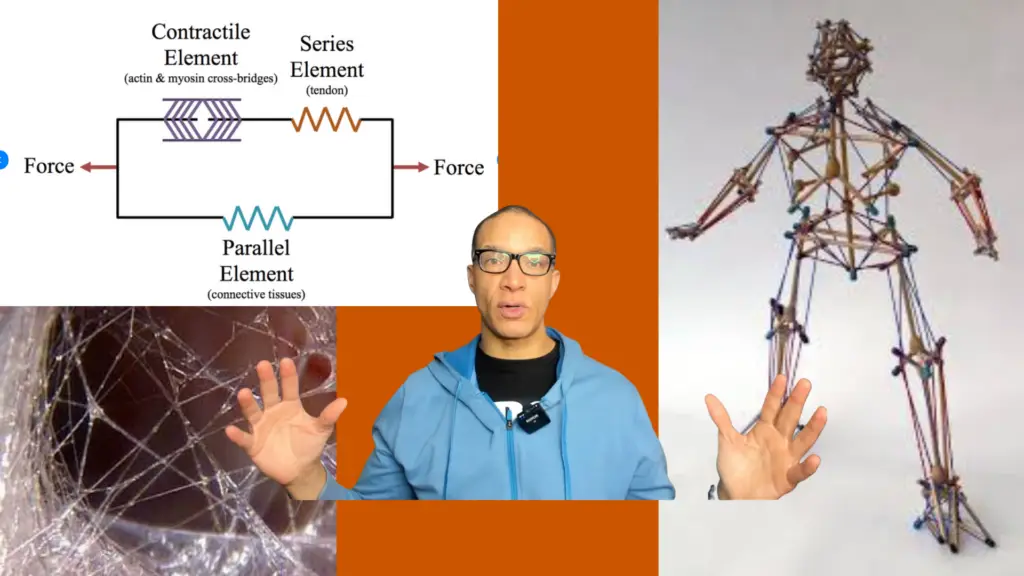
A person showing the science behind why stretching matters

This is very unfortunate. 🤦🏾

Beware the information you take in on social media and the interweb (yes, I know the irony here). I recently saw a post from a “trainer” I know is new to the profession — not certified, and barely trained — claiming boldly that you don’t need to stretch.

Ummmm… no.


Science says yes, and for multiple important reasons. Let’s break this down so it’s not just a rant — but a chance to learn.


1. The Hill Muscle Model

First, there’s the Hill Muscle Model, a foundational concept in muscle physiology. It explains that muscles behave like a system of contractile and elastic components — meaning they can both shorten and stretch.

If you ignore the elastic part of this model (the part that allows muscles to lengthen and absorb force), you’re essentially forcing your body to operate with only half the system functional. That’s a recipe for strain and injury.


2. Biotensegrity and Structural Balance

Your body isn’t a stack of bones held together with tape. It’s a dynamic, balanced system governed by biotensegrity — a term describing how tension and compression work together to create stability and fluid movement.

Think of it like a geodesic dome: it’s not rigid, but it’s strong. Your fascia, ligaments, and muscles maintain that tension network. When one part becomes too tight or too loose, the entire structure compensates — often in inefficient or painful ways. Stretching, when done appropriately, keeps this system balanced.


3. Fascia Health and Soft Tissue Quality

Your fascia — the connective tissue that wraps around muscles, organs, and joints — needs to be pliable and hydrated to function well. Without stretching, the fascia becomes stiff, dehydrated, and restrictive. This limits range of motion and increases the risk of injury.

Stretching nourishes and rehydrates the fascia. It improves sliding surfaces between tissues and reduces unnecessary friction that contributes to chronic pain or dysfunction.


4. Functional Range of Motion (ROM)

Your joints and muscles are meant to move through a full range of motion. But if your body doesn’t experience that range regularly, it adapts by shrinking your capabilities.

Imagine owning a sports car but only ever driving it in first gear. That’s what happens when you skip mobility work and stretching — your joints and soft tissues lose their full capacity. Eventually, simple movements like bending, twisting, or reaching become harder, more painful, or even dangerous.


5. The Consequences of Misinformation

Here’s the real danger: the trainer who said “you don’t need to stretch” isn’t evil — they’re just inexperienced and unaware. The bigger issue is that people hear statements like that and believe them. And then they suffer.

Social media has made everyone feel like an expert. But true expertise doesn’t just come from reading a few studies or copying flashy workouts. It comes from years of study, experience, reflection, and humility — especially humility to know how much you don’t know.


6. The Pieced-Together Workout Problem

This is how we end up with Frankenstein “total body workouts” built on partial facts. The logic seems sound on the surface: if I work all my muscles, I’m doing a total-body workout. But unless that workout respects the body’s complex interconnections, neurological readiness, structural imbalances, and fascial tension — it’s not actually holistic. It’s just random movement with good intentions.

And unfortunately, good intentions don’t protect your joints, restore your balance, or make you move better. Thoughtful, informed planning does.


What You Can Do Instead

Instead of chasing conflicting advice online, study with purpose. Take in complete models that respect the body’s design — not just cherry-picked hacks that sound good in a 60-second video.

If you want to start learning what works, I wrote an ebook that distills insights from almost 30 years of work in therapy and training. It’s a great place to begin if your goals include:

  • Longevity
  • Functional strength
  • Real mobility
  • Relief from back, SI joint, or muscle pain

You can grab the ebook with the link below.

Move better. Reduce pain. Live life on your terms.


Let’s be better than social media noise. Let’s stretch — intelligently, consistently, and with an understanding of why stretching matters.

Building a foundation for a better life.

Find out more @

Facebook

Bluesky

Pinterest

Instagram

Youtube

Disc Herniation Exercises To Avoid: Cobra And McKenzie Press Up

If you’ve been diagnosed with a disc herniation, chances are you’ve Googled exercises to help. Over and over, you’ll see two moves: the cobra stretch (from yoga) and the McKenzie press-up (from physical therapy).

But here’s the truth: these common disc herniation exercises can actually make things worse for most people. They are often prescribed without understanding your individual spinal mechanics, which means they might not only fail to help — they could aggravate your condition.

Let’s break down why these two moves can be risky, what your spine is actually doing during these postures, and how to approach disc herniation recovery in a more intelligent, holistic way.

Illustration showing man frozen from spinal disc herniation

Click on the image to watch 👆🏽

The Problem With One-Size-Fits-All Spine Exercises

I’ve been there. Years ago, I developed a disc bulge at L4-L5 with sciatic pain shooting down my leg. I did what most people do — tried cobra stretches in yoga and McKenzie press-ups from PTs. Both times, my pain got worse.

At the time, I didn’t know why. Now I do.

Those movements are overgeneralized. They only help in a narrow set of circumstances — and most people don’t fit those criteria.


First, Understand the Types of Disc Damage

Here’s a quick overview of disc issues (from least to most severe):

  1. Disc Bulge – Nucleus pulposus (the inner disc material) pushes outward but stays within the disc wall.
  2. Disc Herniation – That material breaks through the wall and leaks out.
  3. Disc Prolapse – The nucleus fully escapes into the spinal canal.

Each condition alters the function of the spinal joint and impacts the surrounding nerves and tissues differently. Treating them all the same — with a cobra or press-up — doesn’t make sense.


Your Spine Is Not a Stack of Bricks

Your spine is a dynamic structure made up of:

  • Vertebral bodies (the “front end” weight-bearing portions)
  • Discs (shock-absorbing joints)
  • Facet joints (the “steering wheels”)
  • Spinous processes (like the brakes of a car)

Together, they form an FSU: Functional Spinal Unit. These units rely on proper mechanics: flexion, extension, lateral flexion, rotation, and translation.

Every movement involves multiple forces—nothing is ever pure. When you rotate, you also compress. When you extend, you also rotate. These blended movements influence disc pressure, often in unpredictable ways.


Why Cobra and McKenzie Press-Up Can Backfire

These two moves assume your disc bulge is posterior-lateral — meaning the disc is pushing out the back and to the side. The idea is that spinal extension will push the disc forward and relieve pressure.

Sounds good, right? Here’s why it fails:

1. Pascal’s Law

This physics principle explains that pressure applied to a fluid spreads equally in all directions. That means extension doesn’t only push the disc forward — it also forces pressure into weak spots, wherever they exist.

If your disc is compromised in the front, sides, or multiple locations, you might worsen the damage by blindly pushing pressure through the spine.

2. No Joint Specificity

Let’s say your herniation is at L4-L5. When you press your whole spine up in cobra or McKenzie, you’re moving every spinal level, not just that one.

That means:

  • You could compress facet joints elsewhere
  • You could strain the SI joint
  • You could exacerbate other minor bulges

One good movement at one joint could create multiple new problems at others.


So What Should You Do Instead?

A better approach starts with a full-body evaluation — not just an x-ray. Imaging is helpful, but it doesn’t show:

  • Movement compensation
  • SI joint function
  • Muscle imbalance
  • Nerve compression from other structures

A smart rehab program must include:

  • Postural analysis
  • Mobility and stability testing
  • Targeted myofascial stretching
  • Strengthening deep spinal stabilizers
  • SI joint and pelvic balancing

Your spine doesn’t operate in isolation. Treating a disc herniation without addressing your whole functional chain is like patching a leak without checking the plumbing.


Your Goal Isn’t Just Pain Relief — It’s Full Function

You don’t want to be the person who does one exercise forever just to avoid pain. You want to live fully — to play, hike, lift, and move with confidence. That means correcting your current issue while building the foundation to prevent future breakdown.

That’s why I recommend a holistic, osteopathic approach that treats you as a whole, living system — not a stack of parts.


Final Thoughts

If you’re Googling “disc herniation exercises to avoid,” you’re already thinking smarter than most. The cobra and McKenzie press-up may work for a select few, but they’re not a cure-all — and in many cases, they make things worse.

You deserve a plan tailored to your structure, not a blanket solution based on guesswork.

👉🏽 Want to see how we help clients rebuild from disc issues and beyond?

Schedule a free consultation

Take care of your spine. It’s the only one you’ve got.

Building a foundation for a better life.

Find out more @
Facebook

Bluesky

Pinterest

Instagram

Youtube

Why Piecemeal Workout Routines Are a Bad Way to Train

SolCore Therapy And Fitness

Piecemealing stretches and exercises from random sources is like picking a single word from different sentences in different books and hoping (shaking head no) that it is legible.

You might go for a walk one day. The next, you hit the bike. Later, you lift weights or follow a YouTube video. It feels productive—but it’s chaotic. And it’s not getting you the result you think it is.

You saw someone online doing planks, so you do them. A magazine swears by yoga, so you try a class. You assume you’re training your body as a whole—but you’re not.

What you’re actually doing is forming a sentence using words from five different books, in five different languages, on five different topics. You’re not creating clarity. You’re just patching together noise.

This is the trap of piecemeal workout routines.

You’re not training your body holistically. You’re not addressing the full system—muscles, tendons, ligaments, fascia, and joints—all working together. And you’re not following a strategy built around your actual body or goals.

True holistic training means having one philosophy that coordinates different activities with a clear purpose. It teaches your body how to move, adapt, and heal in a structured way.

Anything else is like trying to “get fluent” by watching TikTok clips in Spanish, French, and Japanese—without ever learning the alphabet.

So don’t confuse motion with progress.

If you want to feel strong, pain-free, and capable over time, follow a real program that treats your body like the intelligent system it is.

Building a foundation for a better life.

Find out more @

Facebook

Bluesky

Pinterest

Instagram

Youtube

Health and Fitness for Your Family

Imagine two sisters raised with the same values, similar genetics, and many shared experiences. One prioritizes health, modeling fitness from day one for her children; the other lets fitness fall away as “life gets busy.” What unfolds isn’t just a difference in appearance; it’s a difference in legacy.

The Ripple Effect of Your Choices

Every action you take sets a precedent for those around you. Children, partners, friends, and coworkers absorb more from your habits than your words. When one sister laces up for a triathlon, wakes with energy for her family, and showcases joy in her active life, she demonstrates priorities. The other, stuck in cycles of diet fads, missed self-care, and endless scrolling, unwittingly models avoidance.

Families Thrive When Wellness is Normalized

Client testimonials at SolCore reinforce this. “I started prioritizing family hikes on weekends,” says client Thomas. “My daughter now asks to join after-school walks, and my wife is trying group fitness. It’s changing the whole atmosphere at home.”

Making Fitness Real and Sustainable

True family wellness isn’t about perfect routines or rigid discipline. It’s about integrating natural, enjoyable movement, and embracing flexible approaches amid busy schedules.

  • Park farther and walk together to errands
  • Celebrate “family stretch hour” before dinner
  • Share healthy recipe nights

Excuses Are Inherited So Are Successes

If you find yourself saying, “I’m too busy,” or “I’ll focus on health after the kids’ soccer season,” notice—your children hear and internalize those scripts. But swap the script—“I make time for exercise so I can keep up with you”—and you gift resilience.

What Happens When Adults Prioritize Health?

  • Less burnout and better focus at work and home
  • More energy for play, not just chores
  • Lower risk of injury or illness (for everyone)
  • A culture shift—wellness isn’t “mom’s thing;” it’s everyone’s responsibility

The Cost of Neglect

Ignoring health for years may seem harmless, but the cost compounds:

  • Parent too tired for activities
  • Children modeling sedentary habits (which can persist into adulthood)
  • Higher healthcare costs (medical bills, missed workdays, anxiety, and relationship strain)

How to Begin A Family Health Plan

  • Set a Lead Example: Pick one daily healthy routine—walk, prep healthy snacks, turn screens off during meals.
  • Invite Participation: Involve kids in fitness challenges, meal planning, or cooking adventures.
  • Use Clear, Positive Language: Focus on abilities gained, not punishments or “bans.”

Tools to Help

Ready to elevate your commitment? Download our [Free report on “Moving better, reducing pain and living life on your terms”]—it walks you through actionable steps that benefit you and your family. Consider it your soft launch for a new family chapter!

Final Thoughts

Longevity, joy, and connection all rise when health is prioritized at home. Families thrive when wellness is normal—not exceptional. Your example is the cornerstone. Start today; inspire the legacy you want for those you love.

It’s not just working out, it’s building a foundation for a better life.

Find out more @

Facebook

LinkedIn

Pinterest

Instagram

Youtube

Bluesky

Exercises That May Be Hurting You More Than Helping

Avoid exercises that harm your health

Most people hit the gym or roll out the yoga mat with good intentions. You want to get stronger, feel better, prevent pain, or look a little more like your best self in the mirror. But what you do in the name of “health” doesn’t always lead to health!

I’ve seen it firsthand, time and again. A client comes in, confused—”I’m following the routines I see in magazines, but my knees are getting worse,” or, “My back hurts after yoga, even though everyone tells me it’s supposed to help.” Every time, the problem isn’t willpower or effort. It’s that not all exercises serve all bodies—and real harm can happen when the wrong movements are forced.

Let’s look at two stories. Months back, I worked with a runner—we’ll call him Mike—who started coming to me for knee pain. Mike powered through marathons, even as a swelling lump formed on the inside of his knee. Instead of seeking an expert, he popped painkillers, got a cortisone shot, and ran harder. Finally, when the swelling forced him to limp, he had to stop. What was the core issue? Mike’s running form was repetitively compressing and twisting the knee joint, causing inflammation in the small plica folds. Even a “harmless” strength move he’d copied from a YouTuber—heavy leg extensions—compounded the irritation.

Similarly, another client (a retired teacher, let’s call her Anna) suffered from cervical instability and a family history of heart disease. Yet every morning, driven by her online instructor’s example, she did deep neck stretches, holding headstand-like inversions. For Anna, those movements meant excessive pressure on already weakened joints and arteries, risking severe complications beyond simple soreness.

Why This Happens More Than You Think

Much of our exercise culture is based on “what’s trendy,” passed-down gym routines, or social media demonstration—rarely on what’s safe (or necessary) for each unique body. What’s considered “universal” for mobility or strength can be the wrong fit: knees that collapse on squats when the hips are weak, necks twisted when posture and strength aren’t there, or overly aggressive stretching on hypermobile bodies.

Even experienced practitioners can overlook the subtle signals—mild aches, swelling, post-exercise tension—mistaking them for harmless “burn.” But these warning lights, if not addressed, evolve into bigger problems: torn ligaments, chronic pain, headaches, or even heart issues.

How to Tell What’s Good for You

Rule #1: Pain or persistent discomfort is never just “normal.” It’s your body’s alarm system. The deeper lesson: what’s safe is deeply individual.

A movement pattern that helps one person might wear down someone else. For example:

  • Forward bends can compress discs if you have lumbar instability.
  • Ballistic stretching can provoke nerve irritation or muscle tears, especially in tight, repetitive movers.
  • Holding inversions like shoulder-stands for “neuro health” can cut off nerve or blood supply in folks with vascular conditions.

This is where assessment and biomechanical knowledge come in. A movement has to be good for your body—not just popular.

What You Can Do Right Now

  • Get a simple movement screen (with a professional) before radically changing your exercise routine.
  • Pay attention: Is pain local, referred, sharp, or persistent? Don’t “tough it out.”
  • Adjust—there’s always a modification or alternative.
  • Track swelling, redness, or loss of mobility (in the knees, neck, spine, shoulders) as early warnings.
  • Never ignore contraindications—e.g., family heart disease, joint instability, history of injury—or push them under the rug.

Why Osteopathic Manual Therapy Makes a Difference

What sets apart a specialist in Osteopathic Manual Therapy? This practice combines precise movement assessments and hands-on techniques to restore healthy function, not just build muscle. An osteopathically trained expert will look at joint integrity, soft-tissue balance, posture, and how everything connects—from ankles to neck. They target root causes: subtle imbalances that, if left unchecked, turn into the big injuries nobody wants.

When you work with a pro, you learn the “why” behind each adjustment, which exercises really promote health, and—most importantly—what you personally should avoid. It’s about proactive support, not reactive “fixes” post-injury.

Remember:

  • Don’t get stuck following what works for someone else.
  • Know your structure. Modify based on your body’s signals.
  • Prevention is always less painful—and cheaper—than correction.

Ready to ensure your fitness actually supports your health? Start by exploring the difference with genuine osteopathic manual therapy, and get a tailored map for your body, not a generic chart.

It’s not just working out, it’s building a foundation for a better life.

Find out more @

Facebook

Pinterest

Instagram

Youtube

LinkedIn

Bluesky

The Real Price of Freedom

The real price of freedom

Every July, we celebrate freedom—fireworks, flags, and reminders of our country’s origins. But personal freedom, the kind that defines how you live and move every day, comes with a deeper price tag—a cost most people don’t anticipate.

Think about your own experience. Maybe you remember being a rebellious teenager, convinced that adulthood would mean no rules, no curfew, total autonomy. When you finally got there? The “freedom” to stay up all night, skip workouts, eat anything, or do nothing… usually led to exhaustion, regrets, and feeling stuck—not independence.

Personal freedom isn’t about the license to do whatever you want; it’s about the power to choose wisely.
That freedom comes from mastery—over your actions, your health, your boundaries—and that mastery is built on focus, planning, sacrifice, and discipline.

The Paradox of True Freedom

If you want to live life truly on your own terms, you must first accept that “freedom” is earned. It’s the paradox of life:

  • The more discipline you have, the more freedom you gain.
  • The more you plan and focus, the more options appear.

Do you want to feel empowered—able to choose your response to life’s setbacks? Start by looking at these pillars:

Vision

Freedom starts with a destination. Can you clearly see what you want? Not just a vague desire for “health,” but a vision: “I wake up energized every morning; I play with my grandkids without pain; I travel without worries.” Vision is your target—without it, you’re just reacting, not choosing.

Planning

Once the vision is set, map the path. Identify what it’ll take—training, nutrition, time, savings, learning new skills. Anticipate obstacles: will you need an early wake-up to fit in daily exercise? Would you need to prep meals to support your body instead of grabbing fast food when overwhelmed? Freedom is built by stacking the deck in your favor.

Discipline

The “easy path,” moment to moment, is usually the most costly in the long term. It leads to declining health, strained relationships, lost confidence. Discipline is the opposite: the habit of following through on what you said you’d do, especially when it’s hard.
Every time you skip the “quick fix” for the real solution, you pay a small, upfront price—but you earn back decades of strength and independence.

Community & Sharing

True freedom is not selfish. Supporting others, helping friends or family chase their dreams, builds trust, resilience, and options. Show up for others and yourself; both are part of the equation.

The Cost If You Ignore This

If you never set a vision, you’ll drift from habit to habit—never free, just repeating cycles. Neglecting planning means living at the mercy of everyone else’s demands. Avoiding discipline keeps you in a cage built of “somedays,” excuses, and health challenges.
The ultimate price? Regret, exhaustion, dependency.

Applied Example

Take fitness. You could do whatever your friends are doing, skip mobility work, or follow social media trends, but your body may demand smarter movement, posture correction, or deeper healing. Freedom in movement comes from understanding and practicing the right disciplines for your unique body.

Freedom isn’t free—but it’s worth the price.

What’s one area in your life where you could add discipline, vision, and planning? One client realized she was spending hours “relaxing” after work, but felt stressed and lethargic. By swapping just two evenings a week for walks and meal prep, her energy soared, her mood lifted, and she felt more “free” on weekends—ready for adventure, not just survival.

Want a head start?

Start with our free resource—Move better, reduce pain and live life on your terms. The 4-Step Guide to break the cycle and keep it. It’ll teach you to set a real vision, create a scaffold of action, and keep your freedom for good.

It’s not just working out, it’s building a foundation for a better life.

Find out more @

Facebook

LinkedIn

Pinterest

Instagram

Youtube

Bluesky

The Real Cost of Not Investing in Your Health

The cost of not investing in your health

When people say, “Health is wealth,” it’s more than a cliché. Think about the years you’ve spent wanting a stronger body, better fitness, or less pain, only to get discouraged by the price tag—healthy groceries, a gym pass, personal training, even a visit with a physical therapist. It’s easy to be swept up in worry about expenses and end up doing nothing or settling for fads and free content online. But what’s the real cost—long-term?

The True Price of “Cheap” Health

Many have tried to save money by piecing together advice from YouTube influencers, hopping between random workout apps, or grabbing trial diets. Early results might come, but more often than not those “savings” turn into:

  • Persistent aches and injuries (like knee tendinitis that lingers for years)
  • Plateaus (weeks of sweat with no noticeable change)
  • A revolving door of motivation—up, down, and right back to square one

Just last year, I worked with a client named Lisa who had scoured the internet for budget fitness solutions. She’d spent $20/mo on cheap programs and skipped regular recovery support. By the time she reached me, she was frustrated, stuck, and struggling with a nagging hip injury—three months into “saving money.” Her health costs? Missed workdays, medical bills, months lost to pain.

Why Genuine Investment Pays Off

Research and real-world experience show investing in quality health habits pays dividends:

  • Energy: People who prioritize fitness and body care consistently report better focus, productivity, and vitality.
  • Mobility: Strong movement foundations reduce injury risk and unlock active living for decades.
  • Longevity: Most chronic diseases—heart, diabetes, arthritis—are delayed or avoided through regular training and smart nutrition.
  • Medical savings: Fewer doctor visits, surgeries, prescriptions, and missed life experiences.

And the best investment is in yourself. A personalized plan assesses your unique needs (posture, movement patterns, flexibility), adapts to your life’s realities (schedule, pain points), and uses progressive steps for lasting improvement.

The “Coffee Shop” Comparison

Consider what many people spend without batting an eye:

  • $50/week for lattes, snacks, or entertainment (over $2,500/year)
    But the same people hesitate to upgrade from “free content” when it comes to holistic health or exercise coaching, which actually moves the needle.

Stop Wasting Time—and Prevent Setbacks

Those most successful at long-term change don’t just spend money; they invest time and attention in:

  • Intentional movement
  • Recovery and rest
  • Support from credentialed coaches

This keeps injury, burnout, and frustration at bay. Skip that foundation, and you can count on higher future costs—doctor visits, lost opportunity, and diminished motivation.

How a Personalized Online Program Pays Off

A robust online program—rooted in holistic science, adapted for your specific structure—can change the game:

  • Weekly accountability and adjustments
  • Real-time support for proper technique
  • Integrated nutrition and mobility routines
  • Structured progress checkpoints so you see and feel results

That’s why we recommend our Personalized online program—it’s not a “spend and forget,” but an ongoing investment in your body’s best future.

It’s not just working out, it’s building a foundation for a better life.

Find out more @

Facebook

LinkedIn

Pinterest

Instagram

Youtube

Bluesky

Breaking Free from Old Thinking Patterns

Breaking free from old thinking patterns

Have you ever noticed yourself reaching for goals—better posture, deeper sleep, stronger muscles—but getting tangled in the same habits, doubts, and inner resistance, week after week? If so, you’re not alone. We’re creatures of habit, shaped by beliefs—many of which were inherited or simply never questioned.

The Trap of Familiar Stories

Take “Steve,” a client who had struggled for years with motivation. Every morning, he’d wake up promising to work out, eat well, and conquer his chronic back stiffness. By 10am, work emails, stress, and “just one treat” derailed his plan. What held him back wasn’t lack of knowledge; it was an old story—“This always happens, I never follow through.”

Many of us live with these scripts:

  • “I’m just not flexible.”
  • “I’ll always be heavier than I want.”
  • “I’m too busy for regular exercise.”

Einstein’s insight applies: “We cannot solve our problems with the same thinking we used when we created them.”

How Patterns Are Built (and Broken)

Our thoughts shape our actions, and repeated actions become ingrained patterns. If your self-talk and daily routines follow old scripts, even new workouts and diets won’t stick.

Step 1: Notice the Narrative

What phrases keep appearing? “I can’t do this,” “This is torture,” “No way I’ll ever…” Our brains try to shield us from effort—the voice of caution grows loud when change approaches.

Step 2: Challenge and Replace

Ask, “Is this true? What else could be true?”

Steve, after weeks of reminders, replaced “I always quit” with “I restart—I get up one more time than I fall.” This subtle shift changed his actions—he missed fewer workouts and stopped using slip-ups as evidence of failure.

Step 3: Take Action in Small Steps

Growth often starts as discomfort. Choose just one change—add a 10-minute morning stretch, swap negative banter for a positive reminder, reach out for help. New patterns take hold with repeated, conscious action.

Why Personalized Support Matters

No matter how strong our willpower, breaking entrenched patterns is tough—especially alone. Structured coaching via a [Personalized online program] adds accountability, feedback, and encouragement. It turns vague motivation into actionable steps, with real-time adjustments and deeper support.

Clients who embrace guided change consistently report:

  • More confidence in handling setbacks
  • Decreased anxiety and “stuck” feelings
  • Sustainable routines and visible progress

Stories of Transformation

A client named Maria, stuck in repetitive negative self-talk and overwhelmed by stress, joined our online program out of desperation. Small initial wins—daily hydration, early-morning breathing—gained momentum. Over months, she reported better sleep, lighter mood, and the surprising realization that her outlook was no longer her “enemy,” but an ally in change.

The Takeaway

If you want new results, start by examining your story. Ask, “What habit or line of thought am I ready to rewrite?” Support is there to help—whether it’s a friend, a coach, or a structured program.

Ready to transform from the inside out? Start a Personalized online program, break old patterns, and design a life that moves forward with you.

It’s not just working out, it’s building a foundation for a better life.

Find out more @
Facebook

LinkedIn

Pinterest

Instagram

Youtube

Bluesky

Shape Your Identity for Lasting Success

Shape your identity for lasting success

We all carry around a sense of who we are—an identity built from childhood, family, culture, personal achievements, and sometimes failures. Our identities are shaped consciously and unconsciously, acquired from parents or society or just the habits we fall into. But here’s the truth: the identities we hold most deeply are not just assigned to us—they’re chosen, and they’re changeable.

Take a moment today to think: What parts of your identity are fixed, and which are flexible? Maybe you’ve always considered yourself “not athletic,” “not a morning person,” or “the kind of person who finishes what they start.” How are these beliefs shaping your day-to-day actions? If you set a goal to become more fit, but your self-talk says “I’m lazy” or “I hate exercise,” what chance does that goal have?

One client, Jennifer, once told me, “I always quit things halfway. I’d love to stay consistent with fitness, but that’s just not who I am.” We challenged that together. Instead of focusing on the outcome—lose weight, run a 10K—Jennifer started shifting her language to, “I’m the kind of person who moves every day, cares for her body, and learns as she goes.” The difference wasn’t just semantic: over months, each small decision reinforced the new identity. When she missed a workout, she didn’t spiral—she noticed, forgave herself, and moved on, just like the “person who stays in the game.”

Why Identity Trumps Motivation or Goals

Scientific research in behavioral psychology shows that when actions are tied to identity, not just willpower, they become much more consistent—even under stress or setbacks. When you identify as a “healthy person,” you’re more likely to choose water over soda, take the stairs, and protect your commitment to movement.

The reverse is also true. If you only chase external goals (“I want to lose 20 pounds,” “I want six-pack abs”), the moment obstacles arise—illness, holiday meals, a few tough weeks at work—the goal is the first thing to go.

But what if you identify as someone who values health—not just for results, but for its own sake? Someone who trains because it supports a fulfilling life, not just to change a number? Suddenly, showing up is automatic, not forced.

Steps to Shift Your Identity and See Lasting Change

  1. Decide Who You Want to Be
    What single phrase or habit captures your ideal future self? Write it down. Make it present tense. E.g., “I’m the kind of person who prioritizes recovery as much as training.”
  2. Reverse Engineer Daily Actions
    Ask, “What does a person like that do every day?” Do they take lunch walks? Log their workouts? Prep vegetables ahead of time? Every small act reinforces the identity, until it feels natural.
  3. Tie Your New Identity to What You Want Most
    Shift “I want to visit Paris someday” to “I’m the kind of person who saves for travel.” The action—saving—becomes effortless when it’s tied to who you are.
  4. Track Progress and Celebrate Wins
    Keep a journal: note every time you act like your ideal self. Acknowledge setbacks as temporary, not defining. This builds self-trust.
  5. Reframe Setbacks
    When you slip—miss training, eat junk, lose sleep—don’t label yourself a failure. Use identity to bounce back: “I’m a person who gets back on track.”

Stories from Practice

I see this transformation often. A fitness client, Mark, wanted to be “more flexible.” We reframed: “I am the kind of person who stretches mindfully after every run, listens to his body, tries new techniques.” Within weeks, the chore became a habit; within months, he noticed better movement and lower injury risk—and his friends started copying his disciplined routine.

Ready to Start?

If you’re struggling with motivation or want to break frustrating patterns, claim our free guide: Move Better, Reduce Pain, and Live Life On Your Terms. The 4 Steps To Break The Cycle, Fix It And Keep it! It reframes goals into habits and habits into identity, so lasting success comes naturally, not by force.

It’s not just working out, it’s building a foundation for a better life.

Find out more @
Facebook

LinkedIn

Pinterest

Instagram

Youtube

Bluesky

Change Your Values to Change Your Actions

Change your values to change your actions

Ever found yourself declaring “health is a top priority” yet spending nights on the couch snacking and skipping workouts? Most of us live with cognitive dissonance—the clash between our stated values and our actual choices. The trick to real change is bringing alignment.

Take “Karen,” a client who swore her values were family and longevity. Her actions? Working until midnight, eating out, avoiding movement routines. In coaching, we dug deeper. Did she really value health, or was she just expressing what she thought she “should” say?

Step 1: Identify Real vs. Imagined Values

Ask yourself:

  • Do your actions reflect what matters, or what’s supposed to matter?
  • What habits fill your calendar—work, relaxation, connection, play?
  • Who do you admire, and what would they actually do?

Karen realized her value was actually “providing for her family,” but she saw how neglecting her own health would cost her time, money, and energy in the long run. Gradually, she realigned her routines—coordinating meal prep with family time, integrating walks into her workday, sharing fitness goals with her kids.

Step 2: Concrete Habits Build Aligned Action

Values become powerful only when expressed daily. If you value independence, you’ll invest in mobility and strength. If you value learning, you’ll pursue new skills. If you value presence, screen time and multitasking will decrease.

Step 3: Bridge Theory and Practice

Knowing what matters is only half the battle; integrating it requires support. At SolCore Fitness, every [Holistic exercise program] starts with a clarification of values. Clients state not just “I want to be fit” but “I value energy for my grandkids,” “I value time hiking with friends,” “I value a pain-free morning.” We build actionable steps—daily mobility, mindful food, recovery rituals—rooted in these values.

Step 4: Commit Even When It’s Uncomfortable

The path to lasting change includes discomfort. You might need to say no to a second helping, yes to a 6am stretch, or ok to missing a favorite show for sleep. These sacrifices, rooted in values, build self-respect and visible progress.

Step 5: Seek Guidance and Structure

Laypeople often struggle to turn value statements into lasting routines. That’s why collaborating with experts, scheduling accountability, and structuring feedback loops works so well. Whether it’s a group class, a coaching program, or a guided habit tracker, accountability accelerates transformation.

Stories from Real Life

Karen reported fewer days of overwhelm, with her family eating better and moving together. Her energy, productivity, and mood improved. She noticed that aligning values and habits had ripple effects: stronger relationships, less stress, and more positive modeling for her kids.

Ready for Change?

Aligning actions with values isn’t quick—but embracing discomfort for the sake of what matters is the key to success. Discover how a true Holistic exercise program can help you identify, commit, and live your deepest values.

It’s not just working out, it’s building a foundation for a better life.

Find out more @

Facebook

LinkedIn

Pinterest

Instagram

Youtube

Bluesky