

Posture

Mature Into a Smarter Way of Working Out

Mature Into a Smarter Way of Working Out

Youth is forgiving. In your teens, 20s, and maybe early 30s, nearly any routine “works.” Missed warm-ups? No problem. Heavy squats, endless HIIT, little sleep, junk food, and somehow you still bounce back for another day. But rounding the corner into your 40s, 50s, and beyond, everything changes. The old “more is better, push through pain, go harder” is no longer a sustainable badge of honor. Working smarter—not just harder—becomes the key to lifelong strength and wellness.

Why Your Workout Needs to Evolve

Aging isn’t just about candles on a cake. Recovery systems slow, inflammation accumulates, joints lose some elasticity, and old injuries “speak up” more quickly. If you keep training like you did at 25, here’s what happens:

  • Small imbalances compound, leading to chronic pain/injury.
  • Progress stalls—even regresses—as fatigue trumps results.
  • Motivation dips, as soreness and frustration replace joy.

Instead, those who thrive in their 40s, 50s, 60s and beyond adapt—preserving energy, mastering technique, and making recovery as important as work.

Client Story: From Burnout to Brilliance

Consider “Kevin.” At 47, he was still training like a competitive athlete: max-effort bootcamps, skipping rest, using the same “push-through” tactics as college. By 50, not only were his knees angry but his old back injury was shutting him down. When he sought help at SolCore, we didn’t just scale back his sessions—we rebuilt his plan:

  • Prioritize mobility and posture every session.
  • Swap pure muscle-building for myofascial chain work.
  • Layer in active recovery and structural exercises.
    Suddenly, his energy soared, his chronic aches faded, and (bonus) his work performance improved. “I train less, but I’m stronger and more capable than I was a decade ago.”

The Science: How Aging Bodies Change

  • Muscles: Lose mass and power if unchallenged, but respond well to smart, consistent resistance work—especially compound, functional movements.
  • Connective tissue (fascia): Stiffens and shortens with age or inactivity, needing stretching and hydration.
  • Joints: Cartilage thins, requiring joint-specific movement and less repetitive high-impact stress.
  • Hormones/Recovery: Recovery takes longer; sleep, hydration, and nutrition are now non-negotiable.

The New Playbook for Mature Training

1. Prioritize Joint Health and Mobility
Start every session with integrated movement prep (dynamic stretching, ELDOA, joint rotations, foam rolling). Focus on hips, shoulders, spine—where most compensations arise.

2. Quality Over Quantity

  • Use slower, controlled reps.
  • Master technique before adding weight.
  • Emphasize full range-of-motion—not just “how much can I lift?”

3. Mix Modalities

  • Blend strength, mobility, fascia training, and low-impact aerobic work.
  • Sample: Squat-to-overhead reach, push-pull combos, plank variations.

4. Build Structured Recovery In

  • Schedule rest days proactively (not as afterthoughts).
  • Use active recovery: walking, gentle swimming, yoga, or Personal Training guided stretching.
  • Truly rest—quality sleep, good food, thoughtful breathwork.

5. Incorporate Fascia and “Small Muscle” Training

  • Train stabilizers, not just big movers. Clamshells, balance work, banded holds, and manual therapy support.
  • Address connective tissue with specific myofascial release and stretching.

6. Respect Your History
Got an old injury? Give it extra love—modify to protect, not ignore.
Listen for “yellow lights:” fatigue, minor aches, sleep disruption—adjust before they become roadblocks.

Real World Results: Client Examples

  • “Samantha,” a competitive tennis player, refocused on core mobility and fascial health after 40. Result? Extended her playing years, reduced shoulder and hip pain, and even improved on-court speed.
  • “Linda,” who wanted to garden into her 70s, mastered hip stability, learning simple daily movements and stretches that kept her backyard her playground, not her nemesis.

The Power of Personal Training Over “One-Size-Fits-All”

A mature system means you don’t just copy the workouts of celebrities or pro athletes—you build from the ground up, with your body, goals, and realities front and center. That’s where SolCore’s [Personal Training] comes in:

  • Assessment: Where are your unique strengths, and what needs support?
  • Customized plans: Adjust for history, daily energy, and specific ambitions.
  • Progression: Every few weeks, gently ramp up challenge—never rush.
  • Education: Learn why you’re moving a certain way.

Benefits Beyond Injury Avoidance

  • Consistency: When joints feel good, you don’t skip.
  • Confidence: Each win builds belief in your body’s future.
  • Energy spillover: Improved focus at work, calmer relationships, higher mood.
  • Longevity: Decades of active, independent living—less time on the sidelines.

Mature Doesn’t Mean “Slower” It Means Smarter

A smarter approach often leads to (surprising!) leaps in strength and performance. You might lose “ego lifts,” but you’ll gain progress you can feel and measure for years.

Final Words: Play the Long Game

Stop battling your younger self or chasing internet trends. Shift your mindset:

  • You’re “building decades of adventure,” not counting reps for tomorrow.
  • You train so life outside the gym is richer—hikes, travel, play, community.
  • Invest in what matters: posture, mobility, strength, and joy of movement.

Ready to break the “old way” and build for the future? Explore our Personal Training options for science-backed, personalized programs designed for every phase of your life.

It’s not just working out, it’s building a foundation for a better life.

Find out more @
Facebook

LinkedIn

Pinterest

Instagram

Youtube

Bluesky

Building a Foundation for a Better Life

Building a foundation for a better life

Imagine your body as a house. The foundation determines if the whole structure will be strong, resilient, and able to weather any storm. When the ground is solid, everything you build on top fitness, mental clarity, emotional well-being stands the test of time.

But what does it really mean to build a “foundation for a better life”? Let’s dig deep into what it takes, why most people miss it, and how you can apply this wisdom to create a sustainable, thriving future—no matter your starting point.

Laying the Groundwork: It’s Not Just Muscles

Most people approach fitness like they’d approach a new kitchen: add shiny appliances, throw on some paint, and hope for the best. But if the foundation is cracked—poor posture, inflexible fascia, weak stabilizers—the house will always be at risk.

At SolCore, we start with the roots:

  • Structural Alignment: Are your joints stacked properly? Is your spine in a healthy curve?
  • Breath Mechanics: Are you using your diaphragm? Do you know how breath drives posture and stability?
  • Myofascial Balance: Are your muscles and connective tissues able to move, lengthen, and stabilize dynamically?

Real-World Client: “Lydia’s Foundation Shift”

Lydia, late 50s, wanted to “get fitter for a hiking trip.” She had tried group HIIT, jogging, and random stretching—always hitting a wall with pain and fatigue. On assessment, her posture revealed a forward head, collapsed arches, and shallow breathing. Instead of just adding squats or cardio, we rebuilt:

  • Diaphragmatic breathing and rib mobility
  • Myofascial stretching routines
  • Simple posture drills and slow, controlled stabilization

Within 3 months, Lydia had better energy, reduced aches, and—surprise—a new love for movement. By the time her trip arrived, she hiked longer, happier, and with zero injury setbacks.

The Pillars You Need for a Lifelong Foundation

  1. Posture Is Functional, Not Cosmetic
    Good posture isn’t about military rigidity; it’s about stacked joints and relaxed readiness. We fix alignment with:
  • Cueing neutral spine in every exercise
    • Balancing left-right movement
    • Training in positions you use (standing, walking, climbing stairs)
  • Breath Drives Movement
    Breath is your secret weapon:
  • Expands ribcage for better spinal movement
    • Engages stabilizing muscles without conscious “bracing”
    • Calms the nervous system (good-bye stress-induced tension)
  • Mobility Before Strength
    You cannot strengthen what does not move. Many adults, especially over 40, “lose range” yearly. Restoration through precise stretching, controlled joint rotation, and fascia release is required before strength gains are truly possible.
  • Strength That Transfers
    Isolation lifts matter, but resilience comes from multi-joint, integrated moves:
  • Deadlifts, lunges, reaches, loaded carries
    • Movements incorporating balance, rotation, and control
  • Daily Habits Hold the Gains
    What you do daily matters more than what you do rarely. 2-5 minutes every morning and night, small movement snacks throughout the day—these build the neural and structural “footings” of your foundation.

Avoid These Common Mistakes

  • “More is better”: Building without rest or skipping the mobility “boring stuff” is like piling bricks on unstable ground.
  • “Only strength matters”: Neglecting mobility guarantees you’ll eventually stall or injure yourself—especially as you age.
  • “Once I’m pain-free, the work is over”: Maintenance is forever. Your body needs regular tune-ups.

The Role of a True Holistic Exercise Program

At SolCore, building a foundation isn’t a slogan—it’s a science and an art:

  • Comprehensive assessment: posture, movement, breath, habit analysis
  • Programming that builds, not breaks down
  • Stepwise progression: structural drills, then mobility, then gentle strength, then power as appropriate
  • Integration of stretching, recovery, and education

Client story: “Daniel always skipped stretching. When he finally committed to fascia work and daily breath drills, he noticed both his deadlift and his shoulder aches improved. He called it his ‘five minute foundation fix’—and it kept him in the gym, injury-free, into his sixties.”

Your Foundation For Life

When you build from the ground up, everything changes:

  • Fewer aches and setbacks even as you push for bigger goals
  • Better balance and confidence in daily life
  • Improved mental resilience: a solid physical foundation quiets the mind
  • More adventure travel, sports, play without fear or fatigue

Ready to put first things first and finally experience the difference? Check out our Holistic exercise program the cornerstone to the better life you want.

It’s not just working out, it’s building a foundation for a better life.

Find out more @
Facebook

LinkedIn

Pinterest

Instagram

Youtube

Bluesky

Fear Disguised as Practicality: How to Recognize It

fear disguised as practicality

“Once I do X, then I’ll…”
“Things are chaotic—when it calms down, I’ll start.”
“This works for my schedule better than that…”

We’ve all justified inaction with logic. How often is “practicality” just fear whispering in a business suit?

Understanding Fear’s Tricky Disguise

Our brains crave safety—and often seek it through rationalizations:

  • Not booking that health screening because “it can wait until after this stressful month.”
  • Delaying a new fitness routine until “work slows down.”
  • Settling for an old, ineffective stretch routine because “switching now might throw everything off.”

But comfort (and its twin, “practicality”) can quietly block your growth, health, and happiness.

Why the Smartest People Get Tricked

“Mary,” a high-powered attorney, was a pro at planning. She never missed a deadline—with work. But her back pain program? “Not a good quarter to start.” Every season, the excuse shifted: a trial, a trip, a new training, the holidays. Behind her logic was fear—fear of failure, fear of discomfort, even fear of success (“What if I actually get better?”).

How to Spot Fear’s Favorite Phrases

  • “Now’s just not the right time.”
  • “Let me just fix X and I’ll start Y.”
  • “I just need more information/training/support before beginning.”
  • “What I’m already doing is fine—for now.”

These keep you in the comfort zone, repackaged as wisdom.

What’s Underneath Three Core Fears

  1. Fear of Judgment: “What if I try and fail?” So you never start, and no one can criticize your efforts.
  2. Fear of Discomfort: Change is work, and routines are cozy—even when unfulfilling.
  3. Fear of Losing Identity: Many folks make being “busy,” “always struggling,” or “injured” part of who they are; growth threatens that narrative.

How to Break Free Action Steps

1. Notice the Script
Any “practical but perpetual” reason should trigger a red flag.
Jot down what you tell yourself, and note how often these “valid” reasons push your real health, fitness, or growth to the back burner.

2. Name the Real Fear
Ask bluntly: “If there were no obstacles, what would I feel if I started today?” Surfacing the fear robs it of power.

3. Write a Tiny, Immediate Plan
Commit to one simple, uncomfortable first step—book a consult, attend a single class, spend 10 minutes on a new routine.

4. Expect Resistance and Walk Through It
Every meaningful change brings anxiety. It feels like danger, but it’s just stretching the edge of your comfort zone.

Client Story: “Michael’s Leap”

Michael wanted to correct long-standing shoulder pain. Every month, a new reason popped up to stall. Together, we spotted the deeper pattern (fear masked as “scheduling conflicts”), set a single appointment, and started small. A year later, he’s pain-free, stronger, and now tells others: “Action—especially when uncomfortable—is always the right time.”

Why Osteopathic Manual Therapy Breaks the Pattern

[Osteopathic manual therapy] isn’t just about hands-on healing; it’s about assessment, facing your starting point, and accepting change at a safe, expert-driven pace.

  • You’ll get support reframing fears (“Is this pain, or just the sensation of new movement?”)
  • Adjustments are gradual, not overwhelming.
  • Small victories build genuine confidence, making action easier the next time.

Final Thought: Practicality Is Only Practical…If It Moves You Forward

Real practicality is growth-oriented—it’s about choosing the safest steps to move toward your goals. If your plans never risk, never stretch, never make you sweat (a little), you’re not being “practical”—you’re being cautious, and likely letting fear hold you still.

If habitual stress, tension, or “one day” thinking still has you stuck, take the next practical step schedule Osteopathic manual therapy.
You’ll build resilience, confidence, and movement one real, meaningful action at a time.

It’s not just working out, it’s building a foundation for a better life.

Find out more @

Facebook

LinkedIn

Pinterest

Instagram

Youtube

Bluesky

Don’t Let a Therapist “Fix” You

Don’t let a therapist fix you

There’s a myth in modern wellness: the “broken/fix” story. You tweak a knee, strain your back, or lose range in your neck. The impulse is immediate—go to a “fixer.” You hope, “If I can just find the right therapist or doctor, they’ll repair the problem and I’ll be whole again!” But that mindset, while understandable, is what sabotages real, lasting recovery.

Why Passive Healing Fails (and How to Take Back Control)

The “fix me” mindset reduces you to a passive recipient. It’s the medical model writ large: the doctor fixes, the patient waits. In reality, health is participatory. You are not a machine—where a mechanic swaps a part and sends you on your way. Instead, each pain, weakness, or restriction is built over years of choices, movement patterns, posture and habits.

Story: Rachel’s Journey
Rachel, 62, came to SolCore after multiple rounds of therapy, massage, even surgery for shoulder and neck pain. She’d try a new expert, feel a little better, but relapse again and again. It wasn’t until she shifted from “who can fix me?” to “how can I participate in my solution?” that she made permanent progress. Small, daily actions—her home exercises, posture reminders, intentional breathing—compounded over months into a real turnaround.

The Problem with Expecting a Quick Fix

  1. Loss of Ownership: The outcome is always at the therapist’s mercy, not yours.
  2. Repeat Failures: If “fixed,” you often slide into the habits or patterns that caused the problem, and the pain returns.
  3. Emotional Letdown: When cracks remain, it’s easy to blame the therapist, not reevaluate your own role.

What DOES Work: Collaboration and Self-Responsibility

The right therapist doesn’t “fix you”—they guide, teach, and support. They provide a plan, but the work is yours. It’s the daily practice—movements, choices, consistency—that flips the script from victim to advocate.

  • Set a Clear Goal: Not just “get rid of pain,” but “return to hiking with stability,” “lift my grandchild safely,” or “sleep through the night with zero back stiffness.”
  • Do the Work: Learn each exercise or stretch, do them between sessions. Log wins, note discomfort or setbacks for adjustment.
  • Ask Questions: Understand the WHY behind every assignment—not for compliance, but ownership.
  • Monitor Habits: Are you sitting, sleeping, and moving in ways that support or sabotage progress? Journaling and self-reflection are vital.

What Makes Osteopathic Manual Therapy Powerful?

[Osteopathic manual therapy] is about more than hands-on corrections. It features:

  • Precise Assessment: Identifying the root cause, not just chasing symptoms.
  • Gentle, Dynamic Adjustments: Helping your body remember proper motion, but NEVER promising miracles overnight.
  • Education Side-by-Side: You’ll be taught why and how to move, stretch, and recover—making you the expert in your own body.

Clients who thrive come in ready to learn, not simply be worked on.

Avoiding Dependence and the “Healing Trap”

Too many people bounce from practitioner to practitioner, always searching for the “magic combo.” Resist the urge. Dangerous patterns include:

  • Only showing up for therapy, never following the home plan.
  • Blaming prior practitioners but not examining your effort.
  • Seeking each new gadget or trend in hopes of skipping the basics.

Client Example: “Sam’s Self-Turnaround”

Sam came in after a major sports injury. For months, he hoped each appointment would “do the trick.” When his therapist told him, “This work is 20% me, 80% you between sessions,” Sam bristled—but listened. He poured effort into daily stretching, obsessively corrected his posture at his desk, and tracked progress. Result? Full return to sport (and a lifelong sense of agency over his body).

The Real “Fix”: Consistency and Education

Healing happens with repetition, adaptation, and mindful progression—not emergencies or one-off interventions. If life throws you new problems, you’ll have tools—not just hope for a fix.

Checklist for Lasting Recovery

  • Leave each session with homework, not just relief.
  • Embrace small setbacks—they’re feedback, not failure.
  • Support sessions with quality sleep, nutrition, hydration, and stress management.
  • Celebrate your results—you earned them.

Next Steps

Ready to graduate from “patient mode” to “participant?” Book a session for [osteopathic manual therapy] partner with your provider, put skin in the game, and watch your body pay you back with years of freedom.

It’s not just working out, it’s building a foundation for a better life.

Find out more @

Facebook

LinkedIn

Pinterest

Instagram

Youtube

Bluesky

Bloom This Spring: Personal Growth, Fitness & Renewal Tips

bloom this spring for personal growth and holistic fitness

Spring is a season of renewal. After the quiet, reflective months of winter—and in my case, many days of skiing in Santa Fe’s mountains—it’s bittersweet to watch snow melt… but thrilling to feel the trails open up, the days lengthen, and the air warm.

It’s also a metaphor-rich time of year. Everything in nature seems to stretch, reach, and grow. If you want your health and well-being to follow that same upward path, spring offers the perfect teacher.

Like a well-tended garden, personal growth and lasting fitness aren’t luck—they’re the result of deliberate preparation, planting, and care. Here’s how to use this season’s cues to renew your body, mind, and energy.

1. Dig in the Dirt — Clear Space for Growth

No garden blooms without first clearing space. In your life, that means intentionally removing what’s draining you so your body and mind can thrive.

This is especially important for your fascia and joint health—the foundation for all movement. If your body has been in “winter mode,” you may have tightness and restrictions that subtly block progress.

Ways to dig in the dirt:

  • Address achy areas through osteopathic manual therapy or fascia-focused stretching.
  • Audit your daily habits—eliminate the “weeds” (unproductive time, draining commitments).
  • Hydrate consistently to begin restoring fascia’s elasticity.

Spring growth needs nourishing soil; your body needs an adaptable, prepared base.

2. Plant New Seeds — Try, Test, and Explore

Once you’ve cleared old patterns, you have space to plant something new. The key? Approach it with curiosity, not perfectionism.

Some ideas:

  • Experiment with new movement methods, such as global strengthening or myofascial stretches.
  • Start a morning hydration ritual to prime your fascia health.
  • Explore mindfulness habits—short breathing sessions, gratitude logs, or reflective walks.

You don’t know which seeds will sprout without planting them. Every attempt—successful or otherwise—teaches you something useful about your body and mindset.

3. Tend Your Garden — Commit to Daily Care

Seeds don’t grow without consistent attention, and health works the same way.

Fascia stays supple, joints mobile, and energy high when you nourish your body daily:

  • Hydration: Aim for half your body weight in ounces of water, prioritizing mornings.
  • Movement: Regular, gentle posture work or ELDOA before intense activity.
  • Sunlight & Nature: Boost mood, hormones, and circulation by spending time outdoors.

Consistency beats intensity. Ten mindful minutes each day will outlast sporadic, all-out sessions.

4. Blossom with Generosity and Gratitude

Nature isn’t stingy—when conditions are right, everything blooms at once. When you’ve done your part, let go and enjoy the results.

That means celebrating wins, however small, and extending them outward:

  • Acknowledge physical improvements and share gratitude after each session.
  • Invite a friend to join a [HOLISTIC EXERCISE AND FITNESS PROGRAM] so they can grow alongside you.
  • Remember: abundant mindsets are sustainable mindsets.

Generosity and gratitude reduce stress, boost recovery, and make your health journey more fulfilling.

A Personal Note

Full disclosure: I don’t garden. If I get an extra afternoon, you’ll find me on a mountain trail rather than pruning roses. But the metaphor fits perfectly. Nature teaches us:

  1. Prepare your environment.
  2. Plant with curiosity.
  3. Tend daily.
  4. Share the results.

Spring’s essence is emergence—just as fascia responds to consistent, structured input, your body emerges stronger when given the right environment.

Now is the best time to create a personal renewal plan. Whether you want to restore mobility, increase functional strength, or realign physically and mentally, this season is your opportunity.

Start fresh today with a consultation or class at SolCore Fitness. The HOLISTIC EXERCISE AND FITNESS PROGRAM will help you put down strong roots for sustainable growth.

It’s not just working out, it’s building a foundation for a better life.

Find out more @

Facebook

LinkedIn

Pinterest

Instagram

Youtube

Bluesky

Harness the Energy of Spring to Reach Your Health and Fitness Goals

bloom this spring for personal growth and holistic fitness

Spring is a special season. Days grow longer, sunlight grows steadier, and temperatures invite us to step outside more often. In the natural world, growth accelerates because there’s an abundance of energy—plants soak in sunlight, animals become more active, and the whole environment feels like it’s humming.

That same natural rhythm is available to you, right now, no matter your age, background, or health history. At SolCore Fitness & Therapy, we know that momentum in your fitness journey comes from two key factors—energy and direction. In spring, nature hands you the energy. Your job is to decide where to send it.

Below, you’ll learn how to build your own “spring growth cycle” for your body, health, and mindset—rooted in fascia-focused, osteopathic principles, and backed by decades of coaching and client results.

Step 1: Identify Your Sources of Energy

In nature, plants get their main fuel from the sun. You do, too—but your full “energy ecosystem” includes both physical and mental recharge sources.

Think about what consistently restores you. For many people, these include:

  • Natural sunlight for vitamin D and mood support
  • Rest and relaxation (quality sleep, quiet reflection, balanced recovery days)
  • Eating fresh, nutrient-dense foods that truly fuel your body
  • Spending time with loved ones who uplift your energy
  • Engaging in practices that nourish your spirit, like meditation, art, or shared community activities
  • Exercises that balance and restore your body, not just push it harder

From an osteopathic and fascia health standpoint, these inputs are not optional. Fascia thrives when the body is hydrated, well-nourished, and regularly moved in diverse ways. Energy is both what you put into your body (food, movement, mindset) and what you remove from it (stress, toxins, unhelpful habits).

If you’re not sure where your “energy leaks” are, try this:
Track a week of your habits—bedtime, wake time, meals, time in nature, exercise, downtime. Then note how you feel each day. Patterns will appear quickly.

Step 2: Define Where You Want to Grow

Energy without direction just scatters. Spring is about channeling energy into areas that matter most.

Ask yourself: “If I had a surge of motivation and physical vitality this season, where would I want it to take me?” Your answer might involve:

  • A specific fitness milestone (run a 5K, master pull-ups, improve hiking endurance)
  • Postural correction to reduce discomfort, improve breathing, or align your body for better function
  • A new movement discipline such as ELDOA, myofascial stretching, or proprioceptive training
  • Integrating strength and mobility so your workouts build capacity without injury

Remember that fascia adapts best when inputs are specific and progressive. A vague goal (“get in shape”) dissipates energy. A clear, measurable goal (“walk briskly 30 minutes a day, improve hip mobility by 20% in three months”) focuses it.

Step 3: Reduce Distractions and Competing Demands

Every living system makes choices about where to allocate resources. In plants, energy can go into leaves, flowers, or reproduction—but not all at once at maximum output. The human body is no different.

If you want growth in fitness, you need to:

  • Cut down lesser priorities that drain time and energy without moving you toward your health goals
  • Limit distractions such as excessive screen time or activities that leave you feeling depleted
  • Protect recovery by scheduling it as intentionally as your workouts

Energy conservation is a form of resource management. From a coaching standpoint, many clients make the fastest progress not by adding more training, but by subtracting the things that compete with their body’s adaptation process.

Step 4: Create and Follow Your Plan of Action

Nature follows cycles: seeds sprout, stems grow upward, roots deepen. You need a training and lifestyle plan that does something similar—supports growth while reinforcing your foundation.

That could include:

  • Booking consistent workout sessions (personal training, semi-private classes, or at-home follow-alongs)
  • Structuring meals so you’re fueled for movement but not weighed down by low-quality energy sources
  • Pairing strength work with fascia mobility sessions so tissues adapt healthily

If you’re not sure where to start, the [HOLISTIC EXERCISE AND FITNESS PROGRAM] gives you a framework for progression that integrates osteopathic principles with functional strength and flexibility.

Step 5: Feed Energy Back into the System

Here’s the beautiful symmetry—when you start applying energy toward clear goals, those goals start returning energy in the form of progress, confidence, and momentum.

Example: Improving posture through targeted fascia stretching doesn’t just fix alignment—it makes breathing easier, workouts more efficient, and daily life less fatiguing. That returned energy can now be redirected into new challenges.

This is the core of the “circle of growth”:

  • Identify what fuels you
  • Direct it toward a clear, meaningful goal
  • Reap the benefits
  • Use those benefits to fuel further growth

Real Client Example

One SolCore client, Ben, started his spring with erratic energy—long workdays, little sunlight, and sporadic workouts. We focused first on his inputs: more sunlight walks, hydration, and weekly mobility sessions. His energy skyrocketed within weeks.

With that foundation, we shifted into targeted posture work and strength training. Not only did Ben reach his fitness milestone (a pain-free 10K), but his renewed energy spilled over into better focus at work and more time outdoors with his family. His “spring cycle” hasn’t stopped—he’s still growing, season after season.

Why Spring Works

From a science perspective, longer daylight hours affect your circadian rhythm—boosting serotonin, improving mood, and often making activity more appealing. Warmer temperatures loosen fascia and muscles faster, prepping you for safe, deeper movement.

But the deeper reason? Spring invites intention. Nature shows you exactly what happens when energy is combined with direction: growth you can see and feel.

If you’re ready to step into that growth cycle with a plan tailored to your fascia, posture, and movement needs, we can help.

Get started today with a consultation. We’ll help you harness spring’s energy, focus it on what matters most, and create changes that last beyond the season.

Check out the HOLISTIC EXERCISE AND FITNESS PROGRAM to start building your own cycle of sustained health and fitness growth.

It’s not just working out, it’s building a foundation for a better life.

Find out more @
Facebook

LinkedIn

Pinterest

Instagram

Youtube

Bluesky:

How Your Body Is Like a Piece of String And Why You Must Keep It Balanced

how fascia affects body balance and movement

Let’s start with a simple image

Imagine holding a brand-new piece of string between your hands. It’s straight, supple, and strong. You can bend it, twist it, or return it to its line without much effort.

That’s your body when it’s young, or when it’s well-maintained a coordinated, elastic system where every part knows its role and communicates smoothly with the rest.

Your string is more than muscle and bone. It’s your fascia — the continuous web of connective tissue that envelopes and links everything in your body from head to toe. When fascia is healthy, it’s hydrated, organized, and able to transmit force efficiently; when it’s not, it can develop adhesions, thickening, and misalignments, which alter both movement and posture.

Fascia: The Science Behind the String

  • Structure: Fascia is made of collagen fibers arranged in specific directions for strength and flexibility.
  • Function: It provides tension integrity (tensegrity) — meaning it stabilizes by balancing tension across the entire body, like a suspension bridge.
  • Connection: It’s loaded with mechanoreceptors and proprioceptors, making it a key player in balance and body awareness.
  • Continuity: Lines of fascia run head-to-toe (Thomas Myers calls them “Anatomy Trains”), so restrictions in one spot cause compensations elsewhere — just like a kink pulled into a string.

What Happens as the String Ages and Kinks

When you’re young, movements are varied and often self‑correcting. Play, running, climbing, and falling all challenge the fascial system in dynamic ways. Your string may collect tiny kinks, but they’re smoothed out by the sheer variety of movement.

But as sports become more specialized — or life becomes more sedentary — those kinks start to persist.

Stage 1: The First Kinks

  • You might notice a tight hamstring after soccer or stiffness in your upper back from studying.
  • Fascia begins to remodel in response to repeated load patterns — sometimes helpful, sometimes harmful.
  • At this stage, you might not feel pain, but function is already slightly reduced.

Stage 2: Layering the Knots

  • Early adulthood often comes with desk work, repetitive sports, or both.
  • Fascia responds to repetitive strain or underuse by laying down collagen in a denser, less elastic pattern (adhesions).
  • You feel “tight” in certain positions and start losing full range of motion.
  • Because fascia’s connected, a restriction in the hip might subtly twist your spine or pull on your shoulder girdle.

Biomechanical note:
When a fascial line is shortened on one side, the opposing tissues must lengthen beyond their optimal resting length, leading to instability and increased injury risk.

Stage 3: Compensations and Pain

  • You notice knee pain when running, shoulder discomfort when lifting, or low back ache after sitting.
  • Cortisone injections, foam rolling, or generic stretching may bring temporary relief — but here’s the key:
    They don’t correct the cause because they don’t specifically address the precise fascial imbalances.
  • Compensation patterns become “normalized” in your nervous system — your brain begins to think this twisted alignment is neutral.

Stage 4: Restrictive Pattern Lock

  • Over months and years, adhesions form stronger structural holds in the fascial web.
  • Movement variety is reduced; your string has hardened into a loop of knots.
  • The cost? Increased joint compression, inhibited muscle activation, inefficient energy transfer — and often chronic pain.

Research tie-in: Studies show that fascial stiffness can alter proprioception, leading to worse movement patterns, which further perpetuate dysfunction (Stecco et al., 2014).

Why Corrective Exercise Is the “Reset” for Your String

Here’s the truth from both anecdotal experience and fascia science:
Once these changes set in, they won’t resolve just by “moving more” or doing random workouts. In fact, continuing high repetition of the same activities (running, skiing, cycling) without offsetting the imbalance often accelerates fascial distortion.

Corrective exercises are specifically designed to:

  • Identify areas of tension and adhesion in the fascial lines.
  • Use precise myofascial stretching to restore glide between tissue layers.
  • Retrain postural chains so the kinks are released gradually and permanently.
  • Create muscular balance so joints are properly aligned before loading.

This isn’t guesswork it’s based on osteopathic principles, biomechanics, and fascia research.

A Practical Example: Skiing and Running

Both skiing and running load specific fascial meridians heavily think quadriceps, calves, iliotibial band, and deep lumbar lines.

Without counterbalancing these loads:

  • Fascia shortens in the loaded lines.
  • Opposite or stabilizing lines weaken.
  • The pelvis and spine compensate by twisting or tilting — producing chain‑reaction issues.

Reverse it:
If I ski or run, I immediately follow with targeted stretches for the exact chains most taxed by those activities. This intentional reset returns my posture as close to “straight string” as possible before the next session.

Timing Is Everything

Your window for easiest correction is during or shortly after periods of frequent use or activity — before adhesions fully set.

Wait until discomfort is chronic, and you enter the harder phases of unwinding years of fascial remodeling.

The String Analogy in Science Terms

  • A cord with evenly distributed tension = balanced fascial tension and joint alignment.
  • A kink = localized fascial tightening restricting range of motion and altering force vectors.
  • Multiple knots = combined fascial densification across chains, limiting movement and increasing joint wear.
  • Straightening the string = restoring fascial glide, balanced tension, and proper proprioceptive input so muscles fire in correct sequence.

Being Proactive vs Reactive

Most people wait until pain appears to act reactive care. But fascial dysfunction begins long before pain signals breach your awareness threshold.

Proactive care:

  • Keeps small kinks from becoming knots.
  • Maintains full range in all fascial lines, preventing joint degeneration.
  • Optimizes neuromuscular pathways for better performance and less injury risk.

Final Thought

Your body is always adapting. The question is whether it’s adapting into a better, straighter, more functional “string,” or into a knotted, stiff, dysfunctional one.

The time to correct is not after you’ve stopped moving. It’s while you’re still active, so you can keep doing what you love without sacrificing long-term mobility and health.

If you want to ski longer without knee pain, run without chronic hip tightness, or simply keep your posture and flexibility for daily life, that starts with a plan built on corrective exercise and fascia care.

That’s exactly what we do inside the [HOLISTIC EXERCISE AND FITNESS PROGRAM] a system that continuously assesses your “string,” unwinds the kinks, and reinforces balance so it stays straight under load. You bring the activity you love; we keep your body able to do it for decades more.

It’s not just working out, it’s building a foundation for a better life.

Find out more @
Facebook

LinkedIn

Pinterest

Instagram

Youtube

Bluesky

Muscles Are Stupid Pieces of Meat: Why Your Fascia Runs the Show

fascia versus muscle and why muscles are just tissue

Let’s cut right to it: your muscles are, quite literally, stupid pieces of meat. They don’t initiate, plan, stabilize, or coordinate anything on their own. Sure, muscles contract to create movement. But howwhere, and whether that movement is possible all of that depends on the system that actually tells your muscles what to do: fascia.

Fascia (the living web of connective tissue in and around every bone, organ, and muscle) is not just the “wrapping” you see in anatomical diagrams. It’s the system that connects, supports, and organizes every part of your body. As modern science reveals, fascia is the maestro; muscle is just the orchestra.

Understanding the Architecture: How Muscles and Fascia Interact

Visualize it:
Your muscle isn’t a free-floating entity. Each muscle is encased in layers of fascia—endosteum, perimysium inside the muscle belly, and epimysium encasing the entire muscle, all continuous with tendons that anchor to bone. Outside muscle, fascia weaves into ligaments, joint capsules, and the delicate periosteum around bones.

When you move your arm, or squat, or even just stand in line, the muscle’s action is captured and guided by this fascial network. The muscle will only move as well as the fascia allows. If a fascial line is tight, knotted, or calcified, your muscle may contract powerfully—but movement will be limited, inefficient, or even painful.

The Science: Why Fascia Is the Body’s Operating System

1. Force Transmission, Not Isolation

Forget the old “muscle-bone” model. Muscles transmit force through fascia chains, not just across joints. Biomechanical studies show 30% or more of muscle force is directed into fascia rather than just tendons or bone. This is how a restriction in your hip can cause tension or pain in your shoulder—a fascial “pull” that crosses joints and segments.

2. Proprioception: Your True Body GPS

Most people believe muscles are responsible for body awareness. Recent research contradicts this: fascia contains 6x more proprioceptive nerve endings than muscle tissue. Ruffini corpuscles and Pacinian corpuscles embedded in fascia monitor stretch, tension, and the subtle glide of tissues, giving your brain real-time information about where you are in space.

Lose healthy fascia, and your balance and coordination drop fast.

3. Fascia as a Dynamic Regulatory System

Fascia is deeply innervated and vascularized—it houses more sensory neurons than muscle itself, helping regulate not just movement, but cardiovascular response, wound healing, inflammation, and even hormone production.

It’s dynamic: it adapts in real time based on your posture, load, hydration, and stress, and it’s constantly being remodeled according to how you use (or abuse) your body.

Why “Training Muscles” Misses the Point

For decades, fitness culture has obsessed over building and stretching muscle. But as you now know, training muscles in isolation is a losing game if you ignore fascia. Here’s why:

  • Dysfunctional fascia limits movement no matter how strong your muscles are.
  • Overused muscles “pull” disproportionately on fascial chains, leading to chronic knots, postural distortion, and injury.
  • Fascia that’s neglected gets thicker, drier, and builds adhesions, restricting range of motion and feeding pain cycles.

True strength, mobility, and pain-free movement come not just from strong muscles—but from supple, organized fascia.

The Anatomy Behind “Stupid Meat”

Imagine holding a steak: it looks “solid,” but slice it and you see white connective fibers running throughout. In your body, every muscle fiber is surrounded and linked by fascia, which organizes muscle function. If you removed all the fascia, muscle becomes just a shapeless, formless lump of meat.

When your fascial network is healthy, movement is graceful, responsive, and strong. When it’s dysfunctional, even the strongest “meat” can’t save you from movement problems, pain, or plateau.

How to Actually Train Fascia (and Not Just “Work Muscles”)

Myofascial Stretching and Training

You can train fascia—and you must if you want lasting gains:

  • Myofascial release and stretching: These are designed to gently elongate and hydrate the fascial net, releasing adhesions and restoring glide between structures.
  • Segmental strengthening: Coordinated, scaled movements integrate fascia and muscle, strengthening lines of force—not just individual fibers.
  • Proprioception drills: Movements that challenge balance, direction, and cross-plane control (like dynamic lunges, balance work, and rotational exercises) train fascia’s sensory functions.
  • Hydration and recovery: Fascia is over 70% water; dehydration makes it stiff and more prone to injury.

Just training “muscle” with biceps curls and leg presses won’t cut it. You need to load, stretch, and care for the entire system—not isolated parts.

Why Proactive Care Wins Every Time

Passive approaches (wait until you hurt, then treat the muscle with ice, heat, or passive stretching) are band-aids. Most chronic pain and mobility issues begin in the fascia and can only be healed by finally addressing its needs.

By training with a fascia-first approach, you:

  • Improve movement efficiency and athletic performance.
  • Dramatically reduce injuries and recovery time.
  • Create lasting resilience as you age, allowing you to actually move better, not worse, over time.

The Fascial Chain A Real-World Example

Say you sprain your ankle:

  • The trauma causes the local fascia to get thick and bind down (protective adaptation).
  • That tension is “pulled” up the chain, restricting movement in your knee, hip, even into your back or neck.
  • Weeks or months later, pain or stiffness appears far from the original site—not because the muscle is “weak but because the fascial network is dysfunctional.

Unless you unlock the fascial restriction (with targeted therapy and movement), your body will continue to compensate, locking in poor patterns and risking further breakdown elsewhere.

The Science in Practice: What the Research Shows

  • Biomechanical studies prove fascia can transmit and absorb force across joints—even bypassing muscles entirely in some circumstances.
  • Up to 30% of muscle fibers do not insert into tendons, but into fascia, transmitting power via connective tissue to synergists or antagonists across the body.
  • Fascia adapts to mechanical stress—either becoming stronger, more elastic, and organized (with proper training), or thick, stiff, and knotted (with chronic misuse, injury, or sedentary life).
  • Myofascial release/manual therapy is shown to improve flexibility, range of motion, posture, and even neurological feedback—addressing the root of pain and performance, not just the symptoms.

What Most Programs Get Wrong

  • Chasing muscular “burn” and size while neglecting tissue quality and connection.
  • Assuming pain means “weak muscle,” rather than dysfunctional, restricted fascia.
  • Relying on “quick-fix” tools (like foam rollers or gadgets) that may temporarily reduce symptoms but don’t retrain the fascial architecture.
  • Ignoring the neurological/intelligent properties of fascia—thinking it’s “just support” when in truth it’s the most richly innervated tissue in your body.

Fascia Training Takes You Beyond Just “Function”

  • Mobility: Remove fascial restrictions that hold you back from optimal movement.
  • Performance: Transmit force more efficiently, reducing energy leaks across limbs/joints.
  • Resilience: Prevent “mysterious” injuries by caring for all tissue—especially the areas that don’t (yet) hurt.
  • Longevity: Maintain posture, pain-free activity, and athletic capacity into your later years by focusing on tissue health at every level.

So What Should You Actually Do Next?

  1. Get assessed by a fascia-informed professional. Don’t accept “just strengthen your muscles” as the answer—you need a map of how your body’s connected system works.
  2. Integrate myofascial techniques and segmental strengthening into every workout. This isn’t an “add-on”—it should be core to your training.
  3. Challenge your proprioception and movement in new ways. Seek unfamiliar planes and patterns in warm-ups, cooldowns, and mobility work.
  4. Hydrate, recover, and nourish your soft tissue. Fascia can only remodel in the presence of water, rest, and intelligent loading.

If you’re tired of feeling stuck, sore, or limited—no matter how much you “work your muscles” it’s time for a new approach. Our [OSTEOPATHIC EXERCISE AND THERAPY TECHNIQUES] are built precisely to teach you how fascia actually runs the show, and how correcting, stabilizing, and empowering your connective tissue can unlock levels of movement, energy, and results you never thought possible.
Don’t let your body be just a bundle of “stupid meat.” Make your system smarter train your fascia, not just your muscles.

It’s not just working out, it’s building a foundation for a better life.

Find out more @

Facebook

LinkedIn

Pinterest

Instagram

Youtube

Bluesky

I Wish I Had Met You Sooner” Why a True Holistic Approach Works

holistic approach to training and therapy

“I wish I had met you sooner.”
It’s a comment I hear often. By the time people find me, they’ve tried just about everything, only to feel like they’re at the last stop on the train for solving their pain, stiffness, or performance issues.

Once they start to feel the difference and understand what we’re doing, how it works, and why it’s different, they realize the osteopathic approach is a game-changer. It’s not magic. I’m simply working with the body how it’s designed to respond.

The problem? Most fitness and corrective exercise programs aren’t specific enough. Your body is like a chain; each link may need its own type of training or treatment. If one link weakens, the entire system suffers. Science tells us the body functions as an interconnected whole, yet too many approaches cherry-pick one or two studies and apply the results to every person forever. That’s not how the body works. It doesn’t live in isolation so your program can’t, either.

With a truly holistic plan, I’m always asking: “Where else could this issue be coming from?” It might mean addressing your feet to solve hip pain, or your thoracic spine to improve shoulder mobility. When every part of the system works together, the results feel almost magical.

You don’t yet know how good your body can feel until you give it the right input to get there. When it’s balanced, strong, and happy, it supports every activity and life goal you have. That’s the power of a truly integrated method like [OSTEOPATHIC EXERCISE AND THERAPY TECHNIQUES].

It’s not just working out, it’s building a foundation for a better life.

Find out more @
Facebook

LinkedIn

Pinterest

Instagram

Youtube

Bluesky

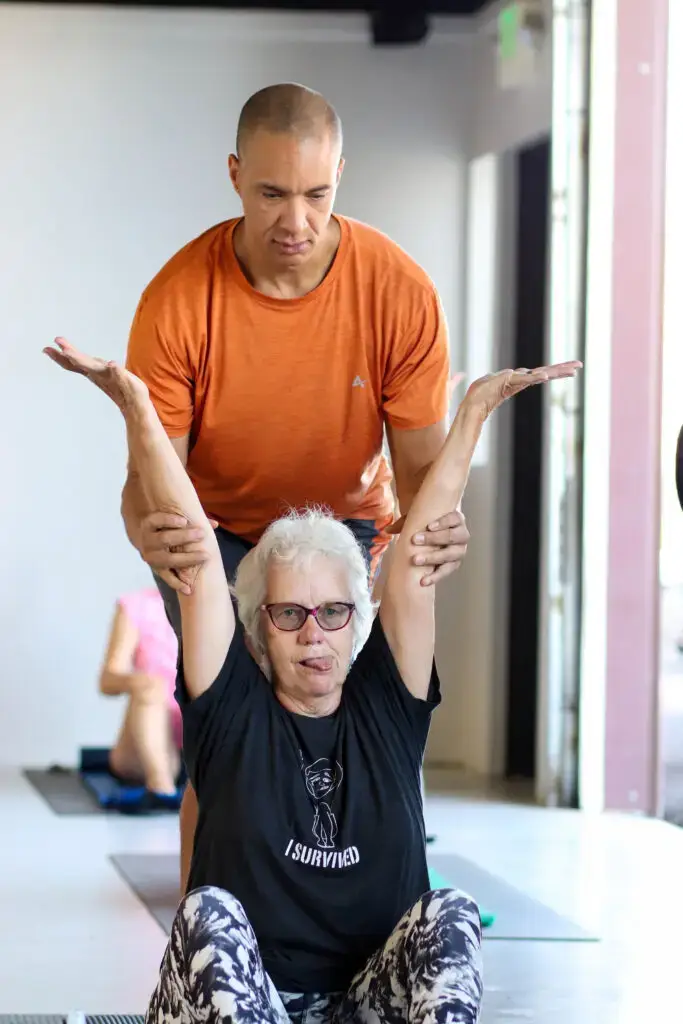
Member of the month: Cindy!

fitness success story of Cindy improving balance and awareness

Most people come to SolCore Fitness when pain, stiffness, or loss of mobility finally forces their hand. That’s not Cindy’s story.

At 67, Cindy wasn’t dealing with major injuries or chronic limitations. Her body had mostly done what she wanted, and she loved an active lifestyle. But she also admitted she’d taken her body for granted. “I’d never had to think too much about it,” she said. Still, she wanted something more than just “going through the motions.”

So when a colleague raved about a free in-house ELDOA class, Cindy gave it a try—and found something different. Something that kept her body from drifting toward stiffness and decline.

From Zumba to Holistic Training

Before discovering SolCore, Cindy enjoyed Zumba and group activities. She even tried weightlifting for a couple of years, but it never clicked. “I didn’t like lifting weights,” she recalled. “No one watched me, and I got sloppy. I just found myself thinking of everything else I’d do after class.”

That turned out to be part of the problem with many conventional gyms: little attention to body awareness, and little guidance beyond the movements themselves.

Cindy craved both community and specificity. She found both through ELDOA and holistic corrective exercise.

Discovering the Breakthrough

Her biggest surprise wasn’t “gains” in traditional fitness terms—it was an entirely new awareness of how she moves through space.

“To be 67 and move like a young person… that to me is worth its weight in gold,” she said. “I’ve seen others lose posture and rigidity take over as they age. I didn’t want that.”

Instead, Cindy reclaimed a sense of fluidity and balance. Whether navigating her uneven yard or climbing tricky terrain, she noticed more control, stability, and even boldness. “I feel like I can do two steps at a time. Like an Amazon woman!”

That sense of confidence, paired with posture and agility, is the real progress she values.

Confidence in the Process

One of Cindy’s favorite aspects is safety. “I never feel like I’m going to hurt myself in your program,” she told me. “I know if I stray, you’ll pull me back. That level of attention means I can focus for the entire 50 minutes—and I don’t do that often!”

That mindset—attentive training, holistic cues, and respect for balance—has kept her progressing steadily.

Why This Works When Others Don’t

Unlike generic programs, Cindy experienced an approach rooted in osteopathic science and fascial system awareness. Instead of hyper-focusing on muscles, which she calls “just stupid pieces of meat,” she understands her body as a fully connected chain. Each link matters. Each one contributes to posture, balance, and movement fluidity.

By focusing on [OSTEOPATHIC EXERCISE AND THERAPY TECHNIQUES], Cindy’s body didn’t just get “stronger.” It became more coordinated, more adaptable—and that’s what keeps her active in her late 60s.

Who Needs This Approach?

Some people label this type of training as “for older adults” only. Cindy laughs at that idea. “To have this awareness when you’re young would be incredible,” she says, reflecting on how her 20s fitness mindset was all about appearance and output. Now she knows body awareness is what preserves function for the long haul.

Her advice? “If you want to keep enjoying your body not just for looks but for everyday life—this is what you need. Whether you’re younger and smart enough to start now, or older and ready for change, this approach will help you move better, feel better, and stay balanced.”

The Secret to Success: Humor

At the end of the day, Cindy has embraced the challenge—and learned to laugh through it. “This program will test your tissues,” I tell all new members. Without humor, the difficulty could feel daunting. Cindy’s sense of humor keeps her light-hearted while doing serious work, and that combination has made all the difference.

Conclusion

Cindy’s story proves that fitness success isn’t about crushing muscles—it’s about listening to your body, working holistically, and training the connective tissue system that truly organizes movement. At 67, she’s walking proof that with the right program, you can move through life with grace, confidence, and vitality.

It’s not just working out, it’s building a foundation for a better life.

Find out more @

Facebook

LinkedIn

Pinterest

Instagram

Youtube

Bluesky