
Injury Prevention

Don’t Let a Therapist “Fix” You

Don’t let a therapist fix you

There’s a myth in modern wellness: the “broken/fix” story. You tweak a knee, strain your back, or lose range in your neck. The impulse is immediate—go to a “fixer.” You hope, “If I can just find the right therapist or doctor, they’ll repair the problem and I’ll be whole again!” But that mindset, while understandable, is what sabotages real, lasting recovery.

Why Passive Healing Fails (and How to Take Back Control)

The “fix me” mindset reduces you to a passive recipient. It’s the medical model writ large: the doctor fixes, the patient waits. In reality, health is participatory. You are not a machine—where a mechanic swaps a part and sends you on your way. Instead, each pain, weakness, or restriction is built over years of choices, movement patterns, posture and habits.

Story: Rachel’s Journey
Rachel, 62, came to SolCore after multiple rounds of therapy, massage, even surgery for shoulder and neck pain. She’d try a new expert, feel a little better, but relapse again and again. It wasn’t until she shifted from “who can fix me?” to “how can I participate in my solution?” that she made permanent progress. Small, daily actions—her home exercises, posture reminders, intentional breathing—compounded over months into a real turnaround.

The Problem with Expecting a Quick Fix

  1. Loss of Ownership: The outcome is always at the therapist’s mercy, not yours.
  2. Repeat Failures: If “fixed,” you often slide into the habits or patterns that caused the problem, and the pain returns.
  3. Emotional Letdown: When cracks remain, it’s easy to blame the therapist, not reevaluate your own role.

What DOES Work: Collaboration and Self-Responsibility

The right therapist doesn’t “fix you”—they guide, teach, and support. They provide a plan, but the work is yours. It’s the daily practice—movements, choices, consistency—that flips the script from victim to advocate.

  • Set a Clear Goal: Not just “get rid of pain,” but “return to hiking with stability,” “lift my grandchild safely,” or “sleep through the night with zero back stiffness.”
  • Do the Work: Learn each exercise or stretch, do them between sessions. Log wins, note discomfort or setbacks for adjustment.
  • Ask Questions: Understand the WHY behind every assignment—not for compliance, but ownership.
  • Monitor Habits: Are you sitting, sleeping, and moving in ways that support or sabotage progress? Journaling and self-reflection are vital.

What Makes Osteopathic Manual Therapy Powerful?

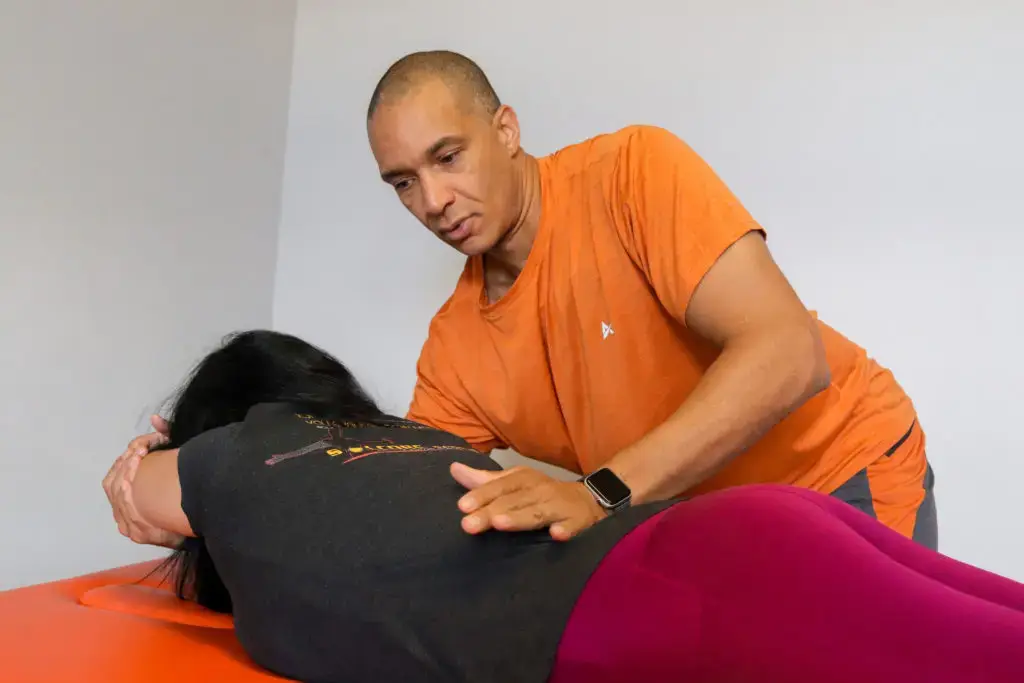
[Osteopathic manual therapy] is about more than hands-on corrections. It features:

  • Precise Assessment: Identifying the root cause, not just chasing symptoms.
  • Gentle, Dynamic Adjustments: Helping your body remember proper motion, but NEVER promising miracles overnight.
  • Education Side-by-Side: You’ll be taught why and how to move, stretch, and recover—making you the expert in your own body.

Clients who thrive come in ready to learn, not simply be worked on.

Avoiding Dependence and the “Healing Trap”

Too many people bounce from practitioner to practitioner, always searching for the “magic combo.” Resist the urge. Dangerous patterns include:

  • Only showing up for therapy, never following the home plan.
  • Blaming prior practitioners but not examining your effort.
  • Seeking each new gadget or trend in hopes of skipping the basics.

Client Example: “Sam’s Self-Turnaround”

Sam came in after a major sports injury. For months, he hoped each appointment would “do the trick.” When his therapist told him, “This work is 20% me, 80% you between sessions,” Sam bristled—but listened. He poured effort into daily stretching, obsessively corrected his posture at his desk, and tracked progress. Result? Full return to sport (and a lifelong sense of agency over his body).

The Real “Fix”: Consistency and Education

Healing happens with repetition, adaptation, and mindful progression—not emergencies or one-off interventions. If life throws you new problems, you’ll have tools—not just hope for a fix.

Checklist for Lasting Recovery

  • Leave each session with homework, not just relief.
  • Embrace small setbacks—they’re feedback, not failure.
  • Support sessions with quality sleep, nutrition, hydration, and stress management.
  • Celebrate your results—you earned them.

Next Steps

Ready to graduate from “patient mode” to “participant?” Book a session for [osteopathic manual therapy] partner with your provider, put skin in the game, and watch your body pay you back with years of freedom.

It’s not just working out, it’s building a foundation for a better life.

Find out more @

Facebook

LinkedIn

Pinterest

Instagram

Youtube

Bluesky

How Your Body Is Like a Piece of String And Why You Must Keep It Balanced

how fascia affects body balance and movement

Let’s start with a simple image

Imagine holding a brand-new piece of string between your hands. It’s straight, supple, and strong. You can bend it, twist it, or return it to its line without much effort.

That’s your body when it’s young, or when it’s well-maintained a coordinated, elastic system where every part knows its role and communicates smoothly with the rest.

Your string is more than muscle and bone. It’s your fascia — the continuous web of connective tissue that envelopes and links everything in your body from head to toe. When fascia is healthy, it’s hydrated, organized, and able to transmit force efficiently; when it’s not, it can develop adhesions, thickening, and misalignments, which alter both movement and posture.

Fascia: The Science Behind the String

  • Structure: Fascia is made of collagen fibers arranged in specific directions for strength and flexibility.
  • Function: It provides tension integrity (tensegrity) — meaning it stabilizes by balancing tension across the entire body, like a suspension bridge.
  • Connection: It’s loaded with mechanoreceptors and proprioceptors, making it a key player in balance and body awareness.
  • Continuity: Lines of fascia run head-to-toe (Thomas Myers calls them “Anatomy Trains”), so restrictions in one spot cause compensations elsewhere — just like a kink pulled into a string.

What Happens as the String Ages and Kinks

When you’re young, movements are varied and often self‑correcting. Play, running, climbing, and falling all challenge the fascial system in dynamic ways. Your string may collect tiny kinks, but they’re smoothed out by the sheer variety of movement.

But as sports become more specialized — or life becomes more sedentary — those kinks start to persist.

Stage 1: The First Kinks

  • You might notice a tight hamstring after soccer or stiffness in your upper back from studying.
  • Fascia begins to remodel in response to repeated load patterns — sometimes helpful, sometimes harmful.
  • At this stage, you might not feel pain, but function is already slightly reduced.

Stage 2: Layering the Knots

  • Early adulthood often comes with desk work, repetitive sports, or both.
  • Fascia responds to repetitive strain or underuse by laying down collagen in a denser, less elastic pattern (adhesions).
  • You feel “tight” in certain positions and start losing full range of motion.
  • Because fascia’s connected, a restriction in the hip might subtly twist your spine or pull on your shoulder girdle.

Biomechanical note:
When a fascial line is shortened on one side, the opposing tissues must lengthen beyond their optimal resting length, leading to instability and increased injury risk.

Stage 3: Compensations and Pain

  • You notice knee pain when running, shoulder discomfort when lifting, or low back ache after sitting.
  • Cortisone injections, foam rolling, or generic stretching may bring temporary relief — but here’s the key:
    They don’t correct the cause because they don’t specifically address the precise fascial imbalances.
  • Compensation patterns become “normalized” in your nervous system — your brain begins to think this twisted alignment is neutral.

Stage 4: Restrictive Pattern Lock

  • Over months and years, adhesions form stronger structural holds in the fascial web.
  • Movement variety is reduced; your string has hardened into a loop of knots.
  • The cost? Increased joint compression, inhibited muscle activation, inefficient energy transfer — and often chronic pain.

Research tie-in: Studies show that fascial stiffness can alter proprioception, leading to worse movement patterns, which further perpetuate dysfunction (Stecco et al., 2014).

Why Corrective Exercise Is the “Reset” for Your String

Here’s the truth from both anecdotal experience and fascia science:
Once these changes set in, they won’t resolve just by “moving more” or doing random workouts. In fact, continuing high repetition of the same activities (running, skiing, cycling) without offsetting the imbalance often accelerates fascial distortion.

Corrective exercises are specifically designed to:

  • Identify areas of tension and adhesion in the fascial lines.
  • Use precise myofascial stretching to restore glide between tissue layers.
  • Retrain postural chains so the kinks are released gradually and permanently.
  • Create muscular balance so joints are properly aligned before loading.

This isn’t guesswork it’s based on osteopathic principles, biomechanics, and fascia research.

A Practical Example: Skiing and Running

Both skiing and running load specific fascial meridians heavily think quadriceps, calves, iliotibial band, and deep lumbar lines.

Without counterbalancing these loads:

  • Fascia shortens in the loaded lines.
  • Opposite or stabilizing lines weaken.
  • The pelvis and spine compensate by twisting or tilting — producing chain‑reaction issues.

Reverse it:
If I ski or run, I immediately follow with targeted stretches for the exact chains most taxed by those activities. This intentional reset returns my posture as close to “straight string” as possible before the next session.

Timing Is Everything

Your window for easiest correction is during or shortly after periods of frequent use or activity — before adhesions fully set.

Wait until discomfort is chronic, and you enter the harder phases of unwinding years of fascial remodeling.

The String Analogy in Science Terms

  • A cord with evenly distributed tension = balanced fascial tension and joint alignment.
  • A kink = localized fascial tightening restricting range of motion and altering force vectors.
  • Multiple knots = combined fascial densification across chains, limiting movement and increasing joint wear.
  • Straightening the string = restoring fascial glide, balanced tension, and proper proprioceptive input so muscles fire in correct sequence.

Being Proactive vs Reactive

Most people wait until pain appears to act reactive care. But fascial dysfunction begins long before pain signals breach your awareness threshold.

Proactive care:

  • Keeps small kinks from becoming knots.
  • Maintains full range in all fascial lines, preventing joint degeneration.
  • Optimizes neuromuscular pathways for better performance and less injury risk.

Final Thought

Your body is always adapting. The question is whether it’s adapting into a better, straighter, more functional “string,” or into a knotted, stiff, dysfunctional one.

The time to correct is not after you’ve stopped moving. It’s while you’re still active, so you can keep doing what you love without sacrificing long-term mobility and health.

If you want to ski longer without knee pain, run without chronic hip tightness, or simply keep your posture and flexibility for daily life, that starts with a plan built on corrective exercise and fascia care.

That’s exactly what we do inside the [HOLISTIC EXERCISE AND FITNESS PROGRAM] a system that continuously assesses your “string,” unwinds the kinks, and reinforces balance so it stays straight under load. You bring the activity you love; we keep your body able to do it for decades more.

It’s not just working out, it’s building a foundation for a better life.

Find out more @
Facebook

LinkedIn

Pinterest

Instagram

Youtube

Bluesky

This Is Not the Way: Why Settling for Stagnation Makes You a Victim

breaking out of bad routines in health and fitness

There’s a saying in the world of psychology and self-development:

“Doing the same thing over and over again and expecting different results is the definition of insanity.”

Strangely, nowhere is this more ignored than in health and fitness.

People double (and triple) down on old routines, convinced the next go-round will be different, even as their results stall, pain lingers, and stiffness becomes their “new normal.” They move through the same cycles, content to merely function never daring to imagine what thriving could look like.

But this is not the way.

Breaking the Cycle: Why Most People Stay Stuck

Why do so many choose the comfort of familiarity, even when it doesn’t serve them?

  • Fear of change. It’s easier to keep doing what you know than admit it isn’t working.
  • Lack of clarity. Most people don’t know what to do differently, so they mimic what worked (or seemed to work) in the past.
  • The illusion of activity. There’s satisfaction in showing up—even if results never truly come.

But here’s the hard truth: Being passive and repeating the same mistakes doesn’t keep you “safe”—it makes you a victim of circumstance. You end up living with limitations, settling for “okay,” and resigning yourself to a future of “just getting by.”

The Vicious Routine: Functioning, Not Flourishing

Maybe you recognize the pattern:

  • You follow the same exercises, routines, or stretches.
  • Your body signals that something’s wrong—nagging aches, recurring stiffness, or injuries that never quite go away.
  • Instead of changing course, you push through or ignore it, hoping “this time it will be fine.”

Weeks, months, years pass. The body adapts—to dysfunction, not to strength or freedom. Suddenly, you’re “that person” whose goals are shrinking instead of expanding.

Why settle for being able to function with ever more frequent pain, reduced movement, and fleeting moments of comfort?
Why accept mediocrity when you started out wanting vitality, energy, and joy in your body?

You deserve better, but it takes honesty to recognize:
This is not the way.

The Body Never Lies Are You Listening?

Your body is remarkably intelligent. It never gives up trying to communicate, whether through mild stiffness after workouts, recurring headaches, compromised posture, or outright pain.

Every twinge, every spasm, every movement that no longer feels free… these are signposts. They’re not punishment—they’re feedback.

And what most people miss is that bodies are never “broken,” only mismanaged. When you keep doing the same thing, ignoring repeated messages, you set yourself up for breakdown, not breakthrough.

The Microscope Approach: Zoom In on the Source

If you want a new outcome, you have to look closer at your approach.

Imagine using a microscope to zoom in on not just the obvious troubled spots, but also the connected regions linked to those issues—this is where real, lasting change happens.

Your body is complex and interconnected.
Every system (muscle, joint, organ, even the nervous system) is literally bound to every other one via the fascia—an unbroken web of connective tissue that transmits tension, load, and information across your body.

Ignoring the “little” areas or assuming they don’t matter is like patching a leak in a boat while another one sprays water a foot away.

Think about it:

  • A stiff ankle throws off your knee and hip.
  • Weak deep core muscles force the low back to compensate.
  • Tight pecs and upper traps “lock in” poor head posture, setting off headaches.

This chain is both the cause and solution—if you’re willing to do the work.

It’s easy to focus on muscles and joints—but fascia is what ties all your movement, posture, and resilience together. Fascia connects, protects, and transmits force and information through every inch of your body.

When you neglect to “train and treat” these connective areas:

  • Microscopic restrictions, adhesions, and thickening begin to accumulate.
  • Range of motion shrinks, even when you “stretch.”
  • Compensation patterns replace optimal movement, making pain or injury more likely.

Corrective exercises and focused bodywork aren’t just “add-ons,” they’re vital.
They help restore the natural slide, glide, and elasticity your fascia needs to keep you not just functional, but thriving.

The Case for Radical Self-Responsibility

Loving your body means more than celebrating what it lets you do. It means caring enough to address the neglected, underappreciated areas that aren’t obvious but hold you back the most.

This might mean:

  • Spending time on ankle or wrist mobility, even if they’re not “painful.”
  • Using targeted myofascial release or specific stretches for areas you rarely train (like the feet, jaw, or diaphragm).
  • Embracing prehab (preventative rehab) and osteopathic techniques—not just rehabbing after injuries, but building resilience before they happen.

Being “proactive” isn’t comfortable at first, but it’s ultimately easier (and more empowering) than being forced into reactivity, endless treatment cycles, or surgery.

Stop the Cycle Take Action

Don’t wait until your body gives you no choice but to finally listen.

Change begins the moment you admit:

  • What you’re doing now isn’t delivering what you want.
  • You’re ready to do something different—even if it means getting uncomfortable.
  • You’re willing to seek out, learn, and apply new principles, informed by fascia science and holistic approaches.

Small Shifts, Big Wins

You don’t have to overhaul everything overnight.

  • Start by identifying one “stuck” body region. Assess how it relates to your main complaint.
  • Incorporate one or two new corrective movements or stretches focused there—be consistent for a few weeks, then reassess.
  • Notice how improved function in that area creates positive ripple effects throughout your movement and well-being.

Conclusion: Make the Choice to Break Free

Don’t let passivity or fear keep you in endless repetition, expecting a breakthrough that will never come from the same old approach.

If you love your body, prove it:

  • Listen to its warning signs.
  • Care for the neglected links as well as the obviously sore spots.
  • Embrace proactive routines grounded in holistic science, not just hoping to “function” but aiming to flourish.

The first step is recognizing:

This is not the way.
The next is choosing to act and keep acting.

If you want to end the circles of frustration, discover how [OSTEOPATHIC EXERCISE AND THERAPY TECHNIQUES] can help you target root causes, restore connection, and teach your body a new way forward. Don’t settle for mere existence choose to participate fully in the life your body can offer. Are you ready?

It’s not just working out, it’s building a foundation for a better life.

Find out more @
Facebook

LinkedIn

Pinterest

Instagram

Youtube

Bluesky

Muscles Are Stupid Pieces of Meat: Why Your Fascia Runs the Show

fascia versus muscle and why muscles are just tissue

Let’s cut right to it: your muscles are, quite literally, stupid pieces of meat. They don’t initiate, plan, stabilize, or coordinate anything on their own. Sure, muscles contract to create movement. But howwhere, and whether that movement is possible all of that depends on the system that actually tells your muscles what to do: fascia.

Fascia (the living web of connective tissue in and around every bone, organ, and muscle) is not just the “wrapping” you see in anatomical diagrams. It’s the system that connects, supports, and organizes every part of your body. As modern science reveals, fascia is the maestro; muscle is just the orchestra.

Understanding the Architecture: How Muscles and Fascia Interact

Visualize it:
Your muscle isn’t a free-floating entity. Each muscle is encased in layers of fascia—endosteum, perimysium inside the muscle belly, and epimysium encasing the entire muscle, all continuous with tendons that anchor to bone. Outside muscle, fascia weaves into ligaments, joint capsules, and the delicate periosteum around bones.

When you move your arm, or squat, or even just stand in line, the muscle’s action is captured and guided by this fascial network. The muscle will only move as well as the fascia allows. If a fascial line is tight, knotted, or calcified, your muscle may contract powerfully—but movement will be limited, inefficient, or even painful.

The Science: Why Fascia Is the Body’s Operating System

1. Force Transmission, Not Isolation

Forget the old “muscle-bone” model. Muscles transmit force through fascia chains, not just across joints. Biomechanical studies show 30% or more of muscle force is directed into fascia rather than just tendons or bone. This is how a restriction in your hip can cause tension or pain in your shoulder—a fascial “pull” that crosses joints and segments.

2. Proprioception: Your True Body GPS

Most people believe muscles are responsible for body awareness. Recent research contradicts this: fascia contains 6x more proprioceptive nerve endings than muscle tissue. Ruffini corpuscles and Pacinian corpuscles embedded in fascia monitor stretch, tension, and the subtle glide of tissues, giving your brain real-time information about where you are in space.

Lose healthy fascia, and your balance and coordination drop fast.

3. Fascia as a Dynamic Regulatory System

Fascia is deeply innervated and vascularized—it houses more sensory neurons than muscle itself, helping regulate not just movement, but cardiovascular response, wound healing, inflammation, and even hormone production.

It’s dynamic: it adapts in real time based on your posture, load, hydration, and stress, and it’s constantly being remodeled according to how you use (or abuse) your body.

Why “Training Muscles” Misses the Point

For decades, fitness culture has obsessed over building and stretching muscle. But as you now know, training muscles in isolation is a losing game if you ignore fascia. Here’s why:

  • Dysfunctional fascia limits movement no matter how strong your muscles are.
  • Overused muscles “pull” disproportionately on fascial chains, leading to chronic knots, postural distortion, and injury.
  • Fascia that’s neglected gets thicker, drier, and builds adhesions, restricting range of motion and feeding pain cycles.

True strength, mobility, and pain-free movement come not just from strong muscles—but from supple, organized fascia.

The Anatomy Behind “Stupid Meat”

Imagine holding a steak: it looks “solid,” but slice it and you see white connective fibers running throughout. In your body, every muscle fiber is surrounded and linked by fascia, which organizes muscle function. If you removed all the fascia, muscle becomes just a shapeless, formless lump of meat.

When your fascial network is healthy, movement is graceful, responsive, and strong. When it’s dysfunctional, even the strongest “meat” can’t save you from movement problems, pain, or plateau.

How to Actually Train Fascia (and Not Just “Work Muscles”)

Myofascial Stretching and Training

You can train fascia—and you must if you want lasting gains:

  • Myofascial release and stretching: These are designed to gently elongate and hydrate the fascial net, releasing adhesions and restoring glide between structures.
  • Segmental strengthening: Coordinated, scaled movements integrate fascia and muscle, strengthening lines of force—not just individual fibers.
  • Proprioception drills: Movements that challenge balance, direction, and cross-plane control (like dynamic lunges, balance work, and rotational exercises) train fascia’s sensory functions.
  • Hydration and recovery: Fascia is over 70% water; dehydration makes it stiff and more prone to injury.

Just training “muscle” with biceps curls and leg presses won’t cut it. You need to load, stretch, and care for the entire system—not isolated parts.

Why Proactive Care Wins Every Time

Passive approaches (wait until you hurt, then treat the muscle with ice, heat, or passive stretching) are band-aids. Most chronic pain and mobility issues begin in the fascia and can only be healed by finally addressing its needs.

By training with a fascia-first approach, you:

  • Improve movement efficiency and athletic performance.
  • Dramatically reduce injuries and recovery time.
  • Create lasting resilience as you age, allowing you to actually move better, not worse, over time.

The Fascial Chain A Real-World Example

Say you sprain your ankle:

  • The trauma causes the local fascia to get thick and bind down (protective adaptation).
  • That tension is “pulled” up the chain, restricting movement in your knee, hip, even into your back or neck.
  • Weeks or months later, pain or stiffness appears far from the original site—not because the muscle is “weak but because the fascial network is dysfunctional.

Unless you unlock the fascial restriction (with targeted therapy and movement), your body will continue to compensate, locking in poor patterns and risking further breakdown elsewhere.

The Science in Practice: What the Research Shows

  • Biomechanical studies prove fascia can transmit and absorb force across joints—even bypassing muscles entirely in some circumstances.
  • Up to 30% of muscle fibers do not insert into tendons, but into fascia, transmitting power via connective tissue to synergists or antagonists across the body.
  • Fascia adapts to mechanical stress—either becoming stronger, more elastic, and organized (with proper training), or thick, stiff, and knotted (with chronic misuse, injury, or sedentary life).
  • Myofascial release/manual therapy is shown to improve flexibility, range of motion, posture, and even neurological feedback—addressing the root of pain and performance, not just the symptoms.

What Most Programs Get Wrong

  • Chasing muscular “burn” and size while neglecting tissue quality and connection.
  • Assuming pain means “weak muscle,” rather than dysfunctional, restricted fascia.
  • Relying on “quick-fix” tools (like foam rollers or gadgets) that may temporarily reduce symptoms but don’t retrain the fascial architecture.
  • Ignoring the neurological/intelligent properties of fascia—thinking it’s “just support” when in truth it’s the most richly innervated tissue in your body.

Fascia Training Takes You Beyond Just “Function”

  • Mobility: Remove fascial restrictions that hold you back from optimal movement.
  • Performance: Transmit force more efficiently, reducing energy leaks across limbs/joints.
  • Resilience: Prevent “mysterious” injuries by caring for all tissue—especially the areas that don’t (yet) hurt.
  • Longevity: Maintain posture, pain-free activity, and athletic capacity into your later years by focusing on tissue health at every level.

So What Should You Actually Do Next?

  1. Get assessed by a fascia-informed professional. Don’t accept “just strengthen your muscles” as the answer—you need a map of how your body’s connected system works.
  2. Integrate myofascial techniques and segmental strengthening into every workout. This isn’t an “add-on”—it should be core to your training.
  3. Challenge your proprioception and movement in new ways. Seek unfamiliar planes and patterns in warm-ups, cooldowns, and mobility work.
  4. Hydrate, recover, and nourish your soft tissue. Fascia can only remodel in the presence of water, rest, and intelligent loading.

If you’re tired of feeling stuck, sore, or limited—no matter how much you “work your muscles” it’s time for a new approach. Our [OSTEOPATHIC EXERCISE AND THERAPY TECHNIQUES] are built precisely to teach you how fascia actually runs the show, and how correcting, stabilizing, and empowering your connective tissue can unlock levels of movement, energy, and results you never thought possible.
Don’t let your body be just a bundle of “stupid meat.” Make your system smarter train your fascia, not just your muscles.

It’s not just working out, it’s building a foundation for a better life.

Find out more @
Facebook

LinkedIn

Pinterest

Instagram

Youtube

Bluesky

I Wish I Had Met You Sooner” Why a True Holistic Approach Works

holistic approach to training and therapy

“I wish I had met you sooner.”
It’s a comment I hear often. By the time people find me, they’ve tried just about everything, only to feel like they’re at the last stop on the train for solving their pain, stiffness, or performance issues.

Once they start to feel the difference and understand what we’re doing, how it works, and why it’s different, they realize the osteopathic approach is a game-changer. It’s not magic. I’m simply working with the body how it’s designed to respond.

The problem? Most fitness and corrective exercise programs aren’t specific enough. Your body is like a chain; each link may need its own type of training or treatment. If one link weakens, the entire system suffers. Science tells us the body functions as an interconnected whole, yet too many approaches cherry-pick one or two studies and apply the results to every person forever. That’s not how the body works. It doesn’t live in isolation so your program can’t, either.

With a truly holistic plan, I’m always asking: “Where else could this issue be coming from?” It might mean addressing your feet to solve hip pain, or your thoracic spine to improve shoulder mobility. When every part of the system works together, the results feel almost magical.

You don’t yet know how good your body can feel until you give it the right input to get there. When it’s balanced, strong, and happy, it supports every activity and life goal you have. That’s the power of a truly integrated method like [OSTEOPATHIC EXERCISE AND THERAPY TECHNIQUES].

It’s not just working out, it’s building a foundation for a better life.

Find out more @
Facebook

LinkedIn

Pinterest

Instagram

Youtube

Bluesky

Your Thoughts Are Not Facts

thoughts versus facts in health and fitness

Remember the old TV detective who used to say, “Just the facts, ma’am”? It’s a helpful reminder not just for solving crimes, but for managing your mindset and motivation.

Feeling down because you “aren’t getting anywhere”? Thinking you’re failing—even wanting to quit? Swap those self-criticisms for simple facts:

  • You’ve lost 10 pounds since you started eating better.
  • You can jog two miles now, when a block used to wipe you out.
  • You made it to every workout last month—even when life got hectic.

That’s why measurable goals and regular tracking are so important. Progress isn’t always a feeling; it’s a set of data points. It’s easy to forget that on hard days, but the numbers never lie.

Next time you think you’re not making progress, ask: What do I know? Not what do I feel, but what does the FACTS sheet show?

When you focus on the truth of your progress not just your feelings you make decisions based on reality. Inside the [HOLISTIC EXERCISE AND FITNESS PROGRAM], we help you track, measure, and celebrate the real wins that move you forward one fact at a time.

It’s not just working out, it’s building a foundation for a better life.

Find out more @
Facebook

LinkedIn

Pinterest

Instagram

Youtube

Bluesky

This is a Losing Formula

Weekend warrior navigating injury and recovery cycles

It’s not your fault you fell into this trap. Many people start their fitness journey with good intentions, playing sports as kids and feeling great. But as adulthood takes over and work weeks fill up with more sitting than moving, activity shifts mainly to weekends.

👉🏽 The aches and pains begin to show up. You seek help for quick fixes—therapy, cortisone shots, or procedures. At first, they provide relief, and you return to your habits, only to have pain reappear each time.
👉🏽 Over time, these solutions stop working. You throw the kitchen sink at the problem, chasing options that worked before, yet the pain persists. Surgery seems to be the final answer, but afterward you find your mobility and energy diminished—and your life scaled back.

You’ve been hoodwinked, bamboozled, run amok—stuck in a reactive cycle. The issue isn’t the solutions themselves, but relying on them as your main strategy without embracing how interconnected and holistic your body truly is.

Your body is more than a collection of parts. It’s a dynamic, interdependent system. Proactive health means learning to move, stretch, and strengthen with purpose, addressing root causes rather than symptoms alone.

Break the cycle. Shift your mindset, learn holistic strategies, and choose actions that support lasting health. Everything has its place shots, therapy, even surgery but sustainable results come from a proactive plan.

Inside [The Ultimate Guide For A Holistic Exercises And Fitness Program], you’ll find actionable advice, restorative routines, and science-backed methods to prevent injury and thrive as you grow stronger all year long.

It’s not just working out, it’s building a foundation for a better life.

Find out more @
Facebook

LinkedIn

Pinterest

Instagram

Youtube

Bluesky

Good Pain and Bad Pain

Athlete discerning between good pain and bad pain during training

“Good pain” and “bad pain” aren’t just fitness jargon they’re essential signposts for progression, recovery, and real growth. This concept is at the center of SolCore Fitness and a guiding principle for every member.

When it comes to body pain, there’s a vital difference. Good pain arises when you’re working on weak or tight areas, stretching into discomfort because it signals improvement and adaptation. It’s proof that your body needs attention, so rather than stopping, it’s a reason to engage fully and move forward with awareness.

Bad pain, on the other hand, appears when you ignore important signals pushing through sharp, persistent pain, exercising for entertainment, or staying in patterns that do more harm than good. This pain is a warning and, if overlooked, can lead to setbacks, injury, or chronic problems.

The same pattern shows up with your mindset. Good pain comes from the discomfort of growth: stepping outside your comfort zone and embracing difficult but necessary change. It’s the pain of effort that cultivates new skills, strength, and resilience. Bad pain strikes when fear, false beliefs, or hesitation hold you back keeping you stuck and unable to realize your potential.

As a human being, you always have a choice. Will you use pain productively, letting it drive you forward, or allow it to limit your progress? Be proactive and choose wisely. Your future success depends on your ability to distinguish between the two and lean into growth.

Ready to put this wisdom into action? Inside [The Ultimate Guide For A Holistic Exercises And Fitness Program], you’ll learn holistic strategies to help you interpret pain, embrace progress, and avoid setbacks so you can thrive for the long haul, fully aligned with your goals.

It’s not just working out, it’s building a foundation for a better life.

Find out more @
Facebook

LinkedIn

Pinterest

Instagram

Youtube

Bluesky

Suffering Has a Cause

Person moving through discomfort on their path to growth

“Suffering has a cause.” Over 2,600 years ago, the historical Buddha shared these words and their wisdom is still relevant for your health and mindset today. The discomfort, aches, or setbacks you experience aren’t just obstacles; they can become the very vehicle for living a better life.

“𝑇ℎ𝑒 𝑊𝑎𝑦 𝐼𝑠 𝑇ℎ𝑟𝑜𝑢𝑔ℎ!” Instead of avoiding what’s difficult, move toward it. Growth isn’t found in comfort or distraction, but in confronting what challenges you. The truth? It’s not easy, and it’s definitely messy. But when you keep going and make small improvements, the rewards are worth the effort.

Avoidance may seem easier, but it quietly halts your growth and pushes you backward. That stuck, anxious feeling is real—it’s your cue that something is left unresolved. Choosing intentional discomfort over avoidance is a superpower.

This principle shows up everywhere in health and fitness. It’s tempting to chase miracle pills, fad routines, or anything that gives short-term satisfaction. But those approaches satisfy ego, not your real progress. When real challenges arise, you’ll find yourself unprepared mentally—a “flinch” response—falling back into habits that don’t serve your future.

Holistic health is more than entertainment or “just getting out and moving.” It’s a philosophy an aspiration to become your best self and bring benefit to everyone around you. A growth mindset and thoughtful discomfort are the keys to transformation and sustainability.

Reflect: How does this sit for you? Are you ready to move through what’s hard and come out stronger?

Inside [The Ultimate Guide For A Holistic Exercises And Fitness Program], discover how to turn suffering into progress, harness the power of discomfort, and grow steadily mind, body, and spirit.

It’s not just working out, it’s building a foundation for a better life.

Find out more @

Facebook

LinkedIn

Pinterest

Instagram

Youtube

Bluesky

When Your Loved Ones Are NOT on Board

Person pursuing fitness while others look on, symbolizing lack of support

Wouldn’t it be nice if everyone in your life supported your healthy living goals?

Imagine your partner, kids, friends, family, and colleagues all cheering you on helping with daily routines and offering words of encouragement. It’s a wonderful fantasy, but the reality is often more complicated.

Sometimes, those closest to us don’t know how to support us, or they’re preoccupied with their own challenges. This lack of understanding or encouragement might feel disappointing, but it’s never a reason to give up or grow resentful.

Here’s how to stay on track, even when support is lacking:

First, remember that your goals are entirely yours. You’re the hero of your own story. Others aren’t required to play supporting roles just because you’re on a new path they have their own motivations and struggles.

Next, be clear and specific about what support you need. Some people want to help but simply don’t know how. Rather than feeling frustrated, try making direct requests like asking your partner to handle school pickup so you can attend your training session.

Don’t forget that relationships are a two-way street. Offer support where your loved ones need it, too building goodwill and understanding as you go. You can also invite friends and family to try new healthy habits with you, making your journey more inclusive and less threatening to your relationships.

Embrace the idea of “attraction rather than promotion.” Let your success and happiness encourage others, instead of telling them what they should do.

If support at home or among friends is hard to find, look for it elsewhere. Connect with like-minded people at the gym or in small group classes they can motivate and keep you accountable.

And finally, turn inward: keep a journal, pray, or meditate. Even if outside support is scarce, you’re constantly learning about your inner strength and resilience.

Ultimately, your journey is yours alone but that’s where some of the deepest growth happens. You got this. Embrace your progress, and the right kind of support will follow.

It’s not just working out, it’s building a foundation for a better life.

Find out more @

Facebook

LinkedIn

Pinterest

Instagram

Youtube

Bluesky