

Corrective exercises

It Is So Easy to Give Up on Goals Why Immediate Results Aren’t Real

Long-term fitness results concept

In today’s fast-paced world, it’s easy to give up on your long-term fitness results and health goals when they don’t deliver immediate results. We start with motivation, follow advice, and put in the work, but if our bodies don’t change quickly, frustration sets in. This can lead to abandoning routines, switching programs, or giving up altogether just to escape the discomfort of slow progress.

The lure of “magic buttons,” crash diets, instant fitness plans, or trendy supplements promises big changes fast. Yet the science of fitness is clear: quick fixes rarely offer lasting results. Most extreme approaches may bring short-term progress, but they’re unsustainable, risky, and can even trigger burnout or regression in the long run.

Clients often ask, “What’s the one thing I can do for a great result?” The truth is: real change comes from habit formation, strategic planning, and patience. Your body thrives when given time to adapt—whether your goal is athletic performance, weight loss, muscle gain, or injury rehab. Jumping from one fad to another only stalls your progress.

When I started working out, my goals were sports performance. Later, I focused on losing weight and gaining muscle.

Injury and imbalance forced me to pursue programs tailored for healing and body correction. Each protocol was designed for a different purpose, and none of them produced overnight transformation.

Industry marketing often blurs the reality, pushing a copycat mentality and promising interchangeable results. But proper fitness requires the right plan for your needs, and it takes time. Sustainable results demand you follow a program built around science, progressive adaptation, and personal context—not just what’s popular or “new.”

This is where having an experienced, well-rounded coach is a must.

It’s easy to get discouraged when your hard work doesn’t pay off instantly. But the key is choosing the correct path, sticking to it, and recognizing that small, steady steps outlast fast, dramatic changes. A good program addresses unique needs and provides real rewards—if you’re patient and persistent.

That’s why I’m developing a comprehensive online program that uses step-by-step routines, evidence-based methods, and expert coaching. It’s built for true, lasting changes in strength, health, and vitality.

If you’d like a free consult to find the best program for your goals, click below to schedule a time. If the listed times don’t work, PM me and we’ll find a solution together.


Find out more @

it’s not just working out, it’s building a foundation for a better life.

Facebook

LinkedIn

Pinterest

Instagram

Youtube

Bluesky

The Conundrum Of “Working Out” Why a Holistic Approach Is the Real Solution

Holistic fitness approach concept

The Conventional “Workout” Approach And Why It Fails

“Working out” is sold as a universal solution to health. The pitch: join gyms, take classes, and do what you’re told—because that’s what responsible adults do. But despite all the fitness marketing around being “strong,” “flexible,” or “balanced,” most people never get the results they hope for. Too often, pain lingers, motivation fades, or injuries become chronic, and the cycle of starting and stopping continues, leaving you frustrated and discouraged.

When Fitness Leaves Us Frustrated

That frustration can feel overwhelming, especially when you do what you’re “supposed” to do and still get hurt or see zero progress. That was my experience when I injured my back. The physical pain was intense, but the deeper issue was confusion—I’d followed the rules, trusted the methods, and still ended up sidelined. When mainstream modalities failed me, I realized that “working out” is not enough if it’s fundamentally misaligned with your body and needs.

ELDOA: The Ultimate Spine And Joint Exercises

Mainstream fitness often fails not because of your lack of effort, but because programs are fragmented, one-size-fits-all, and disconnected from the big picture. Fitness becomes a list of “shoulds” and external outcomes, not an integrated approach to health. High performance or a good appearance can mask underlying dysfunction. It’s only when something really breaks down—mentally or physically—that most people stop to question what’s missing.

Science and Philosophy of Holistic Fitness

The turning point in my journey—and the antidote for many clients—was learning about osteopathy and the holistic fitness approach. Osteopathic philosophy (and modern exercise science) teaches that every part of your system is interconnected: movement, alignment, nutrition, sleep, emotional health, and purposeful recovery all shape how you feel and function. A holistic approach means you stop chasing isolated “fixes” and address your body as a living, adapting whole.

Research confirms that holistic programs outperform rigid, reductionist approaches. Results improve not just physically, but also in stress reduction, injury resilience, energy, and lasting motivation. True fitness builds a body that is balanced, functional, and ready for any goal—whether you want to show up for loved ones, thrive in career or community, or simply feel good in daily life.

Building a Program That Truly Works

To move from frustration to fulfillment, ditch the old paradigm of “just do more reps.” Instead:

  • Focus on functional movement, mobility, core integrity, and postural alignment.
  • Integrate mind-body practices that reduce stress, enhance focus, and foster happiness.
  • Layer smart, progressive programming with nutrition, sleep, connection, and recovery for transformation that lasts.

The result? Not just fewer injuries or more strength—true resilience, improved self-awareness, better moods, and a body (and mind) ready for anything.


Find out more @

it’s not just working out, it’s building a foundation for a better life.

Facebook

LinkedIn

Pinterest

Instagram

Youtube

Bluesky

To Reach Your Goal, You’ll Have to Try New Things Why Change Matters in Your Exercise Program

Changing exercise program for results concept

Why Change is Necessary for Progress

“Change yourself if you want to change your outcome.” Einstein famously said, “Insanity is doing the same thing over and over and expecting different results.” In fitness—and life—this principle is crucial. If you want to reach new goals or break through your current plateau, you need to try new strategies and approaches, especially in your exercise program.

Custom-Built Programs

The Science of Program Variation

The body is designed to adapt. When you repeat the same exercise stimulus for too long, you become efficient, and growth slows—this is called a plateau. Scientific studies show that switching up your routine revives progress, activates dormant muscle groups, and keeps your mind engaged. Small changes in load, rep range, exercise selection, tempo, or even workout order can create new challenges for your body, pushing you closer to your goals.

Adaptation and Plateaus

Adaptive resistance is a double-edged sword: consistency helps build a habit, but lack of variety stalls improvement. Coaches recommend changing some element of your workout every 4–6 weeks to optimize continual progress and avoid stagnation. The discomfort that comes with learning a new exercise or routine is actually the sign that your body (and mind) are growing.

Case Study: Sally’s Stalled Progress

Meet Sally—a typical, well-intentioned exerciser. She goes to the gym, takes classes, hikes, does yoga, and occasionally “gets serious” for bursts of time. Yet her results never seem to stick, and progress feels just out of reach. Sally feels disappointed because she thinks effort alone should guarantee results—but she’s stuck in a cycle of repetition, never addressing weak links or switching up her approach.

Now, instead of blaming herself for not working hard enough, Sally tries something new: she chooses unfamiliar exercises, adapts her mindset, and constructs a program tailored for her unique needs. The first few weeks feel awkward and foreign, but soon she discovers new strength, flexibility, and confidence. Sally breaks her plateau—and her own limiting beliefs.

How to Embrace Change and Succeed

  • Accept the discomfort of trying new exercises—it’s where true progress happens.
  • Stay curious and open-minded, seeking advice from professionals when you’re uncertain.
  • Reframe frustration as a sign your body is being challenged in new, valuable ways.
  • Mix up exercise selection, intensity, and recovery methods every month or two.

Success isn’t about sticking with what’s safe and familiar. It’s about learning, refining, and bravely pushing into new territory step by step.


Find out more @

it’s not just working out, it’s building a foundation for a better life.

Facebook

LinkedIn

Pinterest

Instagram

Youtube

Bluesky

If You Don’t Want to Keep Tripping Over Your Shoelaces, Try Tying Them Another Way How to Break Out of Fitness Plateaus

Breaking fitness plateau metaphor

“If you don’t want to keep tripping over your shoelaces, try tying them another way.” The phrase might seem simple, but it’s a powerful metaphor for breaking out of old habits and approaching fitness plateaus with fresh solutions.

Just like in life, everyone stumbles sometimes and the first instinct is to simply redo what’s familiar, hoping for different results. But science and experience both say that repeating the same actions without change keeps you locked in the same outcome. In fitness, this means plateauing in progress, getting stuck, and feeling frustrated as gains stall and injuries creep in.

It’s normal to feel uncomfortable when you try something new, whether it’s a new workout style, a revised schedule, or a technique you haven’t mastered yet. You may worry that you’re doing it wrong or feel out of your comfort zone. But this discomfort is exactly the space where growth happens—where the body adapts, the brain rewires, and new breakthroughs occur.

If you’re dealing with persistent setbacks, know that variety and new approaches are proven tools for busting plateaus. Solutions include switching up exercise intensity and format, discovering weak links, adding recovery, and seeking expert input. Making conscious adjustments in your plan—rather than repeating what hasn’t worked is how you avoid repeating the same mistakes and finally make progress.

That means being open, embracing discomfort, and accepting that initial changes may not feel “natural.” It’s okay. The willingness to reassess and try again, even when awkward, is what reveals new opportunities and results.

You don’t have to keep tying your shoelaces the same way (literally or figuratively) and you don’t have to keep tripping over the same old problems. In fitness and life, adaptive change is the path to success.


Find out more @

it’s not just working out, it’s building a foundation for a better life.
Facebook

LinkedIn

Pinterest

Instagram

Youtube

Bluesky

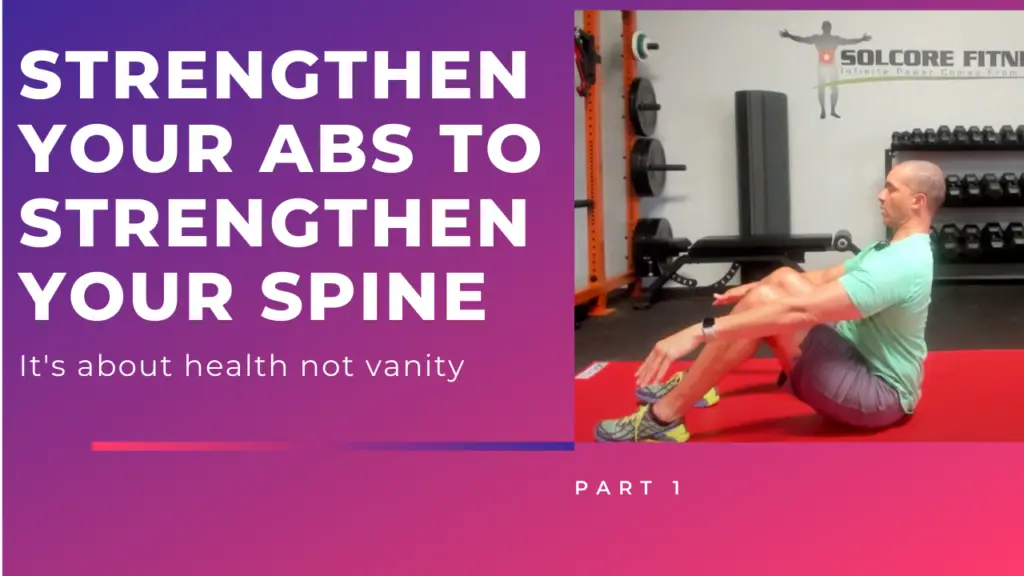
Spinal Strengthening For Your Core It’s About Health, Not Vanity (Part 1)

Spinal strengthening core exercises demonstration

Click the image to watch the video

Why Spinal Strengthening Is About Health, Not Vanity

Building a strong core isn’t just about abs—it’s about long-term health, resilience, and a symptom-free spine. The true core includes everything between the neck and pelvis: deep spinal stabilizers, diaphragm, abdominal wall, latissimus dorsi, pectorals, and the muscles of the shoulder girdle. For sustained wellness, these muscles must work as an integrated system, not in isolated movements.

Rethinking Common Core Exercises

Most people encounter the same generic ab and core exercises, but the science shows that effective spinal strengthening requires a thoughtful, holistic, and progressive approach. Routines focused solely on planks, crunches, or static holds miss the essential function of interdependent muscle chains. For real results in spinal health and posture, all directions and layers of your core muscles must be engaged, both globally and segmentally.

The Importance of Spinal Stabilizers

Your deepest core muscles—closest to the spine—are the real MVPs. The brain recruits these stabilizers first, sending signals down the spine before engaging bigger muscle groups for complex movement. Only with strong, responsive deep stabilizers can the entire core coordinate properly for posture, dynamic strength, and injury prevention.

ELDOA: The Ultimate Spine And Joint Exercises

How to Activate Your Deep Core Muscles

The Transverse Abdominis (TVA) Breathing Drill

Imagine the TVA as an internal girdle wrapping your waist. To train it, perform diaphragmatic breathing to fill the abdominal cavity with pressure, contract your pelvic floor, and cinch the TVA tightly. Breathe deeply, maintain pressure, and resist movement at your shoulders or chest. Aim for up to five reps per set, increasing duration as you master the technique.

The Diaphragm Drill

The diaphragm links directly with the TVA and spine. Practice abdominal breathing—keep shoulders relaxed—and then add light weight on your belly button, lifting with your breath for three sets of twenty reps, progressing the resistance over time. Pascal’s Law proves that internal pressure supports the entire core uniformly.

Articulation and Roll-Ups for Spinal Function

The Roll Down/Roll Up Sequence

Healthy spines need segmental movement. Practice rolling down and up slowly using only your abs and spinal muscles, articulating each vertebra in sequence. If you can’t reach the ground, perform partial reps—aim for three sets of fifty, progressing to one hundred as capacity improves.

[H2] Putting It All Together for Spinal Health

Every element here deep muscle activation, breathing technique, segmental movement, targeted stretching should be programmed and progressed according to your individual needs. Never rely on just one or two exercises for full spine health.

Ready for sustainable spinal strength and true core function? Explore our advanced ELDOA programs and resources for a holistic, progressive path to a resilient spine.


Find out more @

it’s not just working out, it’s building a foundation for a better life.
Facebook

LinkedIn

Pinterest

Instagram

Youtube

Bluesky

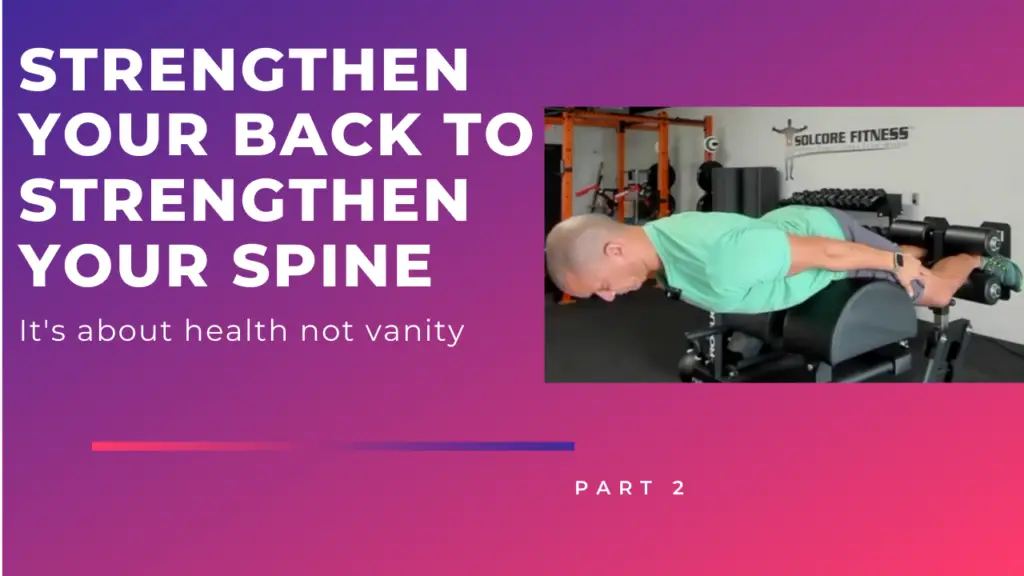
Spinal Strengthening For Your Core It’s About Health, Not Vanity (Part 2)

Spinal strengthening back muscles exercise

Click the image to watch the video

Building Real Spinal Strength: Moving Beyond Abs

If you want a truly strong core, you need more than ab exercises—you must also strengthen the muscles of your back and spine itself. True core stability comes from balanced contraction and coordination of the transversospinalis, longissimus, and iliocostalis muscle groups, which support, rotate, and stabilize your whole trunk.

Key Muscles for Spinal Strengthening

Your primary focus is on three key muscle groups running from the center out:

  • Transversospinalis
  • Longissimus
  • Iliocostalis
    Training these means working both your upper and lower spinal segments, and integrating global (whole-body) and segmental (isolated) movement for stability.

Effective Spinal Strengthening Exercises

Upper Longissimus: Torso Raising

Lie face-down on a firm surface (bench, table, mat), feet securely anchored. Lower your torso with arms by your sides, engage your core by tucking your pelvis, push your chest out, and lift your upper body toward parallel with the floor. Never lose your pelvic tuck—control is key. Repeat, building up to three sets of 50–100 reps for stability and strength.

Lower Longissimus: Leg Raising

Flip your body around so your legs hang off and your upper body is anchored. Keep your torso stable, pelvis tucked, and legs straight, and lift your legs up toward the ceiling, stopping if the back arches. Repeat, focusing on spinal alignment for safe strengthening.

Fine-Tuning for Shoulder Girdle & Upper Back

Prone Butterfly for Rhomboids

To integrate your shoulder girdle, perform the butterfly drill. Lie face down with arms slightly wide and straight. Keeping chest and pelvis down, lift arms up and lower them, progressing to rapid “flaps” at higher reps (3 sets of 100). This targets the rhomboids and postural stabilizers between the shoulder blades.

ELDOA: The Ultimate Spine And Joint Exercises

The Big Picture: Sequencing for Optimal Spinal Health

Proper spinal strengthening isn’t just about muscle activation—it’s about sequencing exercises, starting with foundational movements and progressing to advanced drills. Segmental training, posture control, and consistent repetition safeguard against pain and injury and help you unlock true functional performance.

Ready to break past your roadblocks? Download or sign up for our advanced video series to progress further and optimize strength for lifelong spinal health.

Find out more @

it’s not just working out, it’s building a foundation for a better life.

Facebook

LinkedIn

Pinterest

Instagram

Youtube

Bluesky

Just Moving With an Unbalanced Body Is Bad For Your Health The Science and Solutions

Gluteus medius weakness hip instability

The Danger of Moving With an Unbalanced Body

Staying active is great but movement performed with a body that’s out of balance can actually accelerate dysfunction and increase injury risk. When key stabilizers like the gluteus medius are weak, every step amplifies stress on the joints and tissues least equipped to handle it. The result: instability, compensatory pain, and the slow march toward chronic issues.

The Science of Hip Instability

A weak gluteus medius causes Trendelenburg gait (hip dropping to one side when walking), magnifying the force absorbed by the body—up to thousands of tons over the course of daily steps. Wherever your body’s “weakest link” is, that’s where forces will accumulate, resulting in pain and tissue breakdown.

Why Exercise Alone Is Not Enough

Simply “moving more” doesn’t resolve imbalances—it can compound them. Runners and walkers often end up with knee pain, back pain, or hip degeneration if their stabilizing muscles aren’t specifically strengthened. Solutions require targeted corrective work, not just generic activity.

Segmental Strengthening: A Proven Solution

Segmental strengthening is the evidence-based approach to restoring balanced movement. By training muscles like the gluteus medius in all fiber directions—and addressing the myofascial chain—you promote proper force distribution, stability, and resilience. This maximizes injury prevention and long-term mobility.

Segmental Muscle Strengthening Approach

The Science of Corrective Training

Segmental strengthening incorporates biomechanics, fascial science, and muscle mapping rules to ensure every fiber and chain is recruited for function. Principles like Hill’s Muscle Model, Borelli’s Law, and biotensegrity guide exercise technique for sustainable progress.

Applying Science for Longevity

Strengthening weak links and regularly assessing movement patterns empowers sustainable activity at any age. A healthy mix of enjoyable movement and segmented strengthening yields well-aligned posture, less pain, and greater independence.

Key Takeaways for Lifelong Health

  • Weak gluteus medius and imbalances magnify daily stresses on joints.
  • Generic movement without correction increases pain and risk.
  • Segmental strengthening restores balance, function, and long-term mobility.
  • Use targeted, science-backed programs for life-long health.


Find out more @

it’s not just working out, it’s building a foundation for a better life.

Facebook

LinkedIn

Pinterest

Instagram

Youtube

Bluesky

Working Out But Not Seeing Results? 4 Reasons Why (Video 2 of 2)

scientific reasons workouts are not delivering results

Why Aren’t You Seeing Results? Four Root Reasons

Many people wonder why their workouts are not producing results. Despite working out regularly, they don’t feel stronger, healthier, or more energetic. The science and philosophy of the body reveal four main reasons, each crucial for achieving sustainable results.

1. The Trap of Generic Fitness Promises

Fitness marketing often sells rapid results with minimal effort—ignoring diversity in structure, history, and personal needs. Scientific evidence shows these oversimplified promises lead to disappointment and lack of true progress because every body responds differently to training.

2. Ignoring Structure and Function

Inspired by osteopathic principles, it’s clear that individual structure shapes function, and vice versa. If structural imbalances are left unaddressed, functional capacity falters—leading to plateaus and injury even when effort is high.

Analogy:

Imagine a bridge out of alignment—if the cables aren’t balanced, traffic brings uneven strain and collapse.

3. Neglecting Holistic, Interconnected Systems

Bio-tensegrity teaches us that the body is interdependent—muscle, fascia, and joint positions dynamically affect each other. Ignoring these links means compensation and stagnation, even with consistent exercise. Holistic, full-body engagement is necessary for real strength and progress.

4. Disregarding Foundational Scientific Laws

Scientific rules (such as Hill’s Muscle Model, Bergmark’s Pit and Dam, and Pascal’s Law) remind us that true strength and resilience require attention to the tendons, fascia, contractile fibers, and force distribution throughout the body. Neglecting these laws risks overloads, injury, and lack of progress over time.

Analogy:

Like air in a soccer ball, internal pressure must be distributed evenly—if one area is weak or overloaded, it is more likely to fail.

How to Move Forward and See Results

  • Start from your unique baseline—honest assessment is essential.
  • Build your plan with personalized, holistic training that respects the structure and connectivity of your body.
  • Address imbalances, adapt as you progress, and continually educate weak areas to promote lasting growth.
  • Only sustained, full-body approaches with true progression lead to breakthrough results.

The Ultimate Holistic Exercise and Fitness Guide

Key Takeaways

  • Sustainable exercise results rely on real science, structure, and holistic strategy—never on shortcuts or generic promises.
  • Approved categories and tags strictly applied per workflow block.

Find out more @

it’s not just working out, it’s building a foundation for a better life.

Facebook

LinkedIn

Pinterest

Instagram

Youtube

Bluesky

Working Out But Not Seeing Results? 4 Reasons Why (Video 1 of 2)

one size fits all fitness programs effectiveness

Click on the image to watch the video

Why One-Size-Fits-All Programs Fail to Deliver Results

Jumping into popular exercise routines often promises rapid transformation or pain relief—but oversimplified programs usually ignore your unique foundation and personal history. Treating your own body as the most important investment, not just following trends, is key for success.

1. Impatience and Unrealistic Expectations from Marketing

Fitness ads exaggerate how quickly transformation can happen. True change requires patience, long-term vision, and commitment to progression. Expecting fast fixes usually sets up disappointment and abandonment of routines.

2. Oversimplified Solutions and False Promises

Ads often promote miracle routines that “instantly cure pain” or transform your abs in a few moves. In reality, pain and performance rely on complex muscle, fascia, joint, and movement relationships—simplifying risks missing underlying dysfunction.

3. Lack of Personal Assessment and Education

Without personalized guidance and real understanding of starting points, copying programs can worsen imbalances. Real progress requires honest assessment, tailored routines, and continuous education about your body’s needs.

4. Ignoring Holistic Connections and Balance

The body is an interdependent unit. Generic routines often neglect the need to educate weaker areas, correct imbalances, and foster rhythm across all muscle groups for sustainable improvement.

Analogy:

Just as becoming a doctor requires years of education, real physical health is built through a step-by-step learning process—not shortcuts, ads, or single “miracle” exercises.

Making Your Workouts Work for You: The Full-Body Approach

  • Assess your starting point rather than following popular ads.
  • Build programs based on comprehensive education and holistic progression.
  • Expect that enduring change takes time and honest effort.
  • Avoid quick fixes and commit to stepwise, full-body practices for lasting results.

The Ultimate Holistic Exercise and Fitness Guide

Key Takeaways

it’s not just working out, it’s building a foundation for a better life.

Find out more @

Facebook

LinkedIn

Pinterest

Instagram

Youtube

Bluesky

How Your Body Is Linked Like a Chain

kinetic chain holistic training

Understanding Myofascial Chains: The Science of Body Linkage

Imagine the body as a complex system of moving parts, not just isolated muscles or bones. Decades of research confirm that our bodies are connected by vast, web-like networks of fascia and muscle—creating actual “chains” that transmit force, movement, and information from one area to another.

Direct Linkages, Not Just Segments

Every muscle is surrounded by fascia—a unique connective tissue forming a continuous network throughout your body. When one muscle contracts, the force is transmitted to neighboring muscles and even distant regions through these myofascial chains. For example, the calf muscles link via fascia to the hamstrings, which connect up to the low back and even as far as the scalp. This means movement or tension in one part often influences others—sometimes in surprising ways.

Movement as a “Chain Reaction”

Whether picking up an object, running, or standing upright, your body distributes tension and force along myofascial lines. Anatomical studies highlight at least five major movement chains:

  • Superficial Back Line: connects scalp, spine, hamstrings, calves, and feet
  • Front Functional Line: links chest, abs, and inner thighs
  • Back Functional Line, Spiral & Lateral Lines: stabilize rotation and dynamic posture in every step

This design allows force to flow efficiently, balances posture, and integrates whole-body movement.

Everything Is Linked Together

When you’re moving—playing with your kids, working out, or doing daily activities—all these linked areas need to coordinate and work with each other. If you want to better your body and truly stay balanced holistically, you must ensure each link in the chain is trained appropriately.
Each link—ankles, knees, hips, core, shoulders, neck, and more—has its own unique job, and if any one of them is neglected, it impacts the whole system.

Why It Matters: Real Training, Real Life

When one link of this chain is weak, stiff, or injured, the entire system compensates—often producing pain, movement restriction, or diminished performance in a seemingly unrelated area.

  • Example: Tight calves may contribute to back pain, poor squat form, or headaches due to tension pulling through the Superficial Back Line.

This is why holistic training routines focus not just on muscles in isolation, but on integrating and aligning the whole chain. Training whole chains—via myofascial stretching, segmental strengthening, and whole-body movement—produces pain-free function and resilient health.

Just as a metal chain depends on every link for strength, your body’s fascial and muscle chains must all perform well together. If one link is restricted or weak, the whole chain—and the body as a whole—suffers.

Restore, align, and mobilize all the links for resilient, functional, pain-free movement.

Learn more about supporting every link in your chain:
Custom-Built Programs—Holistic Training for Your Whole Chain

Find out more @

Facebook

Twitter

Pinterest

Instagram

Youtube