
Corrective exercises

How Do You Challenge Yourself to Grow? Balancing Goals with Holistic Wellness

Growth mindset and balance in holistic health

Growth is wired into us. Whether it’s a child’s urge to explore, an adult’s longing for new skills, or an elder’s wisdom in mentoring others, there’s a constant drive: Can I do more? Become better? Expand my world? But in the modern age, “more” often means faster, harder, busier… and too often, burnt out. Balancing growth with wellness body, mind, spirit is the true mark of a healthy journey.

The Double-Edged Sword of Ambition

Motivation sharpens the mind and lights the internal fire. But unchecked, it turns to restlessness—a need to hustle, a fear of stillness. It’s easy to fall into “not good enough,” always chasing the next target, never grounding in now.

At SolCore Fitness, we help clients shape ambition so it enriches every aspect of life not just one.

Tony Robbins’ Universal Need

Robbins identifies “growth” among the six core human needs, the pulse that once satisfied brings excitement and hope. But even he warns: pursue single-minded growth without balance, and you risk:

  • Missing out on present joys
  • Neglecting health or relationships
  • Sliding into chronic stress or even anxiety

Story: Brandon’s Burnout

Brandon, an executive and Sol Core client, loved progress. Five a.m. workouts, overtime at work, night school always “building.” He grew lean… until injury and fatigue forced a pause. Real growth, it turned out, included learning to rest, receive feedback, and enjoy victories without rushing to the next goal.

Stewarding Balanced Growth

1. Set Layered, Integrated Goals
Ask: Does this goal uplift your body, mind, and relationships? Consider a weekly health challenge plus quality time with family plus a new cooking experiment.

2. Pursue Depth, Not Just Breadth
Master one area—not just dabble in ten. If it’s deadlift technique, study it, film it, get coaching. Then, when ready, expand to a new activity.

3. Foster “Down” Cycles
Nature cycles so should you. Honor days for stretching, mindfulness, or even joyful skipping of routines. Growth solidifies in rest.

4. Track Emotional Fitness
Keep a journal: When am I happiest? Most stressed? What routines support or sabotage me? Emotional well-being is as vital as reps and heart rate.

5. Surround Yourself with Growth Minded Community
Join classes or groups with growth built in where mutual encouragement, shared learning, and honest feedback are the norm.

How Holistic Wellness Accelerates Growth

  • Mobility unlocks access to new skills and sports
  • Nutrition sharpens focus, immune strength, energy
  • Stress management allows you to rebound from setbacks, rather than spiral

Story: Janine’s Multi-Faceted Flourish

Janine arrived at SolCore seeking to “improve everything.” We coached her to grow wisely: setting seasonal priorities, learning to say no, and blending high-intensity sessions with restorative ELDOA and breathwork. One year: more muscle, more zen, fewer injuries, and—her words— “more laughter.”

Recognize the Signs: Too Much, Too Little

  • Overstriving: Sleep disruption, injury, mood swings, emotional “flatness”
  • Undergrowing: Boredom, stagnation, self-doubt, decreased energy

Balance is a dance a constant adjustment, not a static position.

The Six Human Needs in Action

  • Certainty: Build stable routines.
  • Uncertainty: Try new skills or classes.
  • Significance: Aim for a new milestone AND help others do the same.
  • Connection: Pursue shared activities.
  • Growth: Learn, challenge, adapt.
  • Contribution: Celebrate and serve.

Practical Tools for Balanced Growth

  • Monthly “mini-retreat”: Pause, review, reset.
  • Habit stacking: Attach new tasks to old routines (stretch after brushing teeth).
  • Meditate on gratitude—find joy in progress, not just outcomes.

Why Group Training and Science-Based Programs Sustain Growth

Unlike “DIY” fads, a [holistic exercise and fitness program] gives you:

  • Weekly fresh challenges that evolve with your gains
  • Feedback and camaraderie so you don’t go it alone
  • Progressions that span strength, mobility, nutrition, and mindset

Clients thrive when their environment supports ambition and rest.

Know When to Dial Back, Shift Gears, or Celebrate

Growth can mean digging in. It can also mean forgiving, pausing, or switching focus. Wisdom is knowing which today.

Get Support, Share Wisdom

If you crave balanced, sustainable, holistic growth body, mind, and spirit start by exploring The Ultimate Guide For A Holistic Exercises And Fitness Program. Ready for a human coach (not just an algorithm)? Reach out. We’ll train, pause, celebrate, and adjust so you not only grow, but flourish.

It’s not just working out, it’s building a foundation for a better life.

Find out more @
Facebook

LinkedIn

Pinterest

Instagram

Youtube

Bluesky

Pursuing Significance, Love, and Connection Through Holistic Health

Balancing significance, love, and connection for holistic health

From the classroom to the workplace, from sports to social gatherings, two of the strongest motivators in human nature are the desire for significance (to matter, to stand out) and the yearning for love and connection (to belong, to be seen and valued by others). When these needs are met in balance, our health, motivation, and happiness flourish. But when one overtakes the other or either goes unfulfilled we suffer, physically and emotionally.

The Six Human Needs Framework

Tony Robbins describes “Significance” and “Love/Connection” as two of the six basic human needs. We crave recognition whether it’s praise, achievement, or status. We also crave connection—loyalty, intimacy, deep friendship, and family bonds.

But significance and connection sometimes pull in opposite directions. The pursuit of significance can lead to achievement, leadership, and personal bests… but in excess can breed isolation or even arrogance. Too much focus on connection can foster compassion and warmth… but unchecked, can mean codependency or diminished self-worth.

What Does This Have to Do With Health and Fitness?

More than you might think! These inner drives shape:

  • Why you walk into a group class or private session
  • Whether you use fitness for self-expression or community
  • When you push for a new personal best—or when you find happiness supporting someone else

Client Story:

Meet “Brian,” a long-time SolCore client, who began training for significance he wanted to lose 30 pounds, impress colleagues, and complete a marathon. Along the journey, he discovered a surprising happiness not from medals, but from the encouragement, friendship, and shared struggles in his group class. “I realized showing up for others and having them show up for me mattered more than my PR.”

Significance: The Light and Shadow

A drive for significance gets you up early, pushes you to try bold feats, to run farther or lift more than before. It’s what pushes people to rise to leadership and authority. But the shadow? Perfectionism, comparison, or fear of vulnerability. It can be hard to let go, to ask for help, or to enjoy a win without wondering, “What’s next?”

Love and Connection: The Essential Glue

Connection is the antidote: the reason many stick with an exercise routine is because of the group, trainer, or accountability buddy—the joy of being seen and cheered on. But taken to the extreme, the need for connection can lead to:

  • People-pleasing (“I do what the group does, even if it’s not right for me”)
  • Burnout from never saying no
  • Loss of personal boundaries (“I’ll skip MY workout for someone else’s needs”)

The Science: Health Outcomes and Human Needs

Harvard studies show that people with strong social ties exercise more, recover faster from illness, and live longer. On the other hand, “driven” types with poor connection are at higher risk for stress-related issues (like high blood pressure, anxiety, and sleep disorders).

Balancing the Equation in Real Life

A healthy, resilient client blends both:

  • Sets their own goals (significance)
  • Seeks and supports community (connection)

Each propels the other. When you feel valued, you achieve more. When you achieve more, you can give and connect at a higher level.

Practical Ways to Balance the Two

1. Set a “Big Goal” and a “Shared Goal”
Big Goal: “Deadlift 200 pounds.”
Shared Goal: “Attend every Saturday group class and encourage a newcomer.”

2. Check-In With Yourself Weekly
Are you neglecting your needs for recognition? Schedule a milestone assessment or try a new skill. Are you burning out from carrying others? Delegate, ask for help, or focus on your core priorities one week.

3. Use Exercise as a Relationship Builder
Invite a friend to walk or stretch with you. Swap recipes, share playlists, or take turns leading a session.

4. Communicate Openly
Share victories and struggles with trusted others. Honest feedback deepens connection AND reveals blind spots around personal motivation.

How SolCore Blends Both in Practice

  • Group classes limited to 15 for real attention and authentic connection—not just numbers.
  • Semi-private sessions that combine personalized achievement and mutual support.
  • Ongoing assessments to mark milestones but centered on collaboration and shared wins.

Trainer Insight:
“I always tell new clients: Whether you want to stand out or blend in, both are human. We’ll help you do both—celebrate your strengths, but also help you build a ‘team’ that shows up for you.”

If You Feel “Off-Balance”

Maybe you:

  • Always compete, never celebrate with others
  • Avoid group work or shy away from new faces
  • Focus only on relationships, never personal mastery

Reflect: What’s missing? How can you step into a program that provides both helping you become “the best version of yourself” AND “someone who helps others shine”?

Your Next Step

If you want to get clarity on your personal motivation, or just want a model for thriving in both personal achievement and deep connection, dive into The Ultimate Guide For A Holistic Exercises And Fitness Program. It’s our blueprint for building health that supports your ambitions, relationships, and life.

It’s not just working out, it’s building a foundation for a better life.

Find out more @

Facebook

LinkedIn

Pinterest

Instagram

Youtube

Bluesky

Are You Driven by Certainty or Uncertainty? How to Find the Right Balance for Holistic Health

Certainty and Uncertainty in Holistic Health

Our Two Fundamental Needs: Stability & Adventure

Every person carries a push-pull between wanting the comfort of routine and the thrill of something new. In wellness, as in life, both needs matter. Robbins’ model names them “Certainty” (the need for predictability and safety) and “Uncertainty” (the hunger for variety, challenge, novelty).

How Certainty Shows Up in Health

Certainty is:

  • Knowing you’ll do the same stretches before each class
  • Having a precise post-injury rehab plan
  • Planning meals by the week for predictable results
  • Returning to a favorite dance class for years

Too much certainty? You risk stagnation, boredom, and a resistance to change (even when your body asks for it).

How Uncertainty Sparks Growth

Uncertainty is:

  • Trying a new routine just for fun
  • Traveling and exploring new physical activities
  • Pushing outside your comfort zone (higher weights, unfamiliar moves)
  • Swapping classes, trainers, or even timetables

Taken too far, uncertainty becomes chaos random training, poor adherence, and burnout.

Why Balance Matters

Optimal wellness thrives where structure meets freedom. Imagine Sarah, always on the same elliptical, plateaued both mentally and physically. Or Alex, who never sticks to anything longer than two weeks, constantly switching goals, never seeing results.

Client Example:

Maria, a SolCore member, always joined the same group class, at the same time, for years. She was dependable but bored. With gentle nudging, she tried fascia stretching and nutrition coaching her results took off, and her joy in training reignited.
Conversely, Ben loved “newness,” hopping trends until he had no baseline to measure progress. Once Ben established a foundation (repeatable plan, trusted support), then mixed in variety, his confidence soared, and fitness became sustainable.

Action Steps: Create the Certainty–Uncertainty Blend

1. Chart Your Tendencies
Jot down: “In my fitness, do I crave security or newness?” Where is that helping—or holding you back?

2. Layer in “Fresh” the Smart Way

  • New routines or classes every 3–6 months
  • Novel environments: hike a new trail, try a new sport
  • Personal records: set small “firsts” to spark non-scale wins

3. Anchor Novelty in Structure
Do uncertainty “within reason.” Try a new warmup, not a new everything. Or rotate your “fun” day amid a steady base plan.

4. Reflect & Adapt
Monthly (or seasonally), audit:

  • Am I seeing progress (certainty)?
  • Am I smiling, excited, and avoiding burnout (uncertainty)?

What a Holistic Program Looks Like

The best systems (including The Ultimate Guide For A Holistic Exercises And Fitness Program) offer:

  • Core structure: a plan you trust
  • Strategic variety: progressions, skill days, guest coaches, etc.
  • Built-in tracking: celebrate consistency and adaptation

The Science: Brains Love Predictability But Grow from Challenge

Our brains crave routine. But learning, memory, and nervous system resilience come from “interleaving:” mixing familiar with new. In fitness, this means build on what works, but stretch beyond it just enough to keep things vibrant.

Pitfalls and How to Avoid Them

  • Too Much Certainty: You lose intensity, ignore signs you need change, and confidence dips.
  • Too Much Uncertainty: You never build a strong foundation, overtrain, or risk injury.

Tips for Sustainable Success

  • Build your week with “anchor days” (familiar routines) and “adventure days” (novelty, challenge).
  • Substitute approaches gently—not all at once.
  • Seek feedback from coaches and community—others can spot boredom or burnout before you do.

Ready to Balance Your Approach?

If you want growth, sustainability, joy, and results, find your “center.” For expert help blending routine and variety, check out The Ultimate Guide For A Holistic Exercises And Fitness Program it’s designed to make you strong, adaptable, and fulfilled for life.

It’s not just working out, it’s building a foundation for a better life.

Find out more @
Facebook

LinkedIn

Pinterest

Instagram

Youtube

Bluesky

Set the Bar High: How Managing Expectations Fuels Holistic Health Success

Managing expectations for holistic health goals

Why Expectations Matter as Much as Your Goals

If you ask anyone what they want for their health, most will answer with big ambition. “I want to fix my back pain for good.” “I want to be able to dance at my child’s wedding… in ten years.” “I want to feel young and strong at every age.” These are inspiring, vital dreams the kinds of goals that drive you to show up even when motivation dips.

But here’s the hidden challenge: Your goals are only as powerful as the expectations you set for the process. It’s the silent killer of progress: setting unreasonable timelines, expecting perfection, or believing that simply “wanting it” is enough. In holistic health, more than anywhere else, managing your expectations is what turns dreams into lasting results or disappointment and frustration.

Story: Why Janet “Failed” Even With All the Right Goals

Janet came to SolCore with a clear vision: she wanted her posture corrected after years at a desk and her chronic knee pain gone before her 50th birthday. She dove in with total commitment, attending classes, following nutrition advice, even stressing about her sleep routine. Yet, just six weeks in, her energy plummeted and her old knee pain returned.

What went wrong? Her goal was solid but her expectations were off.

  • She believed, subconsciously, that defaulting to just 30 days of “going all-in” would fix years of neglect.
  • She missed celebrating small gains, focusing instead on what hadn’t yet changed.
  • She compared her slower progress to social media “transformations” and felt broken by normal plateaus.

The result: disappointment, blame, and a temptation to quit none of which reflected her true progress or capacity.

The Science: Why Big Goals Without Realistic Timelines Backfire

  • The body’s connective tissues (fascia, ligaments, deep muscles) adapt slowly weeks to even a year for lasting “remodeling.”
  • Changes in posture or chronic pain require habit rewiring neural pathways formed over decades, only rewritten with months of consistent input.
  • Fat loss, strength gains, or flexibility improvements happen in spurts, often with discouraging plateaus.

If you expect visible transformation every week, every measurement, every weigh-in, you’ll feel “behind” even when you’re on a perfect track.

Specificity, Integration, and the Power of Process

At SolCore, we teach:

  1. Set the bar high: Never give up on your biggest ambitions health, pain-free movement, deep flexibility, a body that supports a brilliant life.
  2. Map the right course: Specificity is key. What routines, stretches, or lifestyle changes match your goal? How does nutrition fit in? Where does your rest plan live?
  3. Integrate, don’t isolate: Lasting change is about layering group classes blend with individualized homework, nutrition with recovery, mindset with technique.
  4. Progressive coaching: Trust a system that adapts monthly, not randomly. Plateaus are addressed, not ignored. Communication is two-way your feedback shapes the plan.

How Managing Expectations Propels Long-Term Success

  1. Reduces Burnout: Realistic timelines let you pace effort, avoid “all-or-nothing,” and weather setbacks.
  2. Celebrates Small Wins: When you know a healthy knee or a straight spine takes months, every pain-free walk or improved metric is meaningful.
  3. Builds Resilience: Plateaus are signals to tweak, not give up. You gain the skills of problem-solving, not just compliance.
  4. Supports Real Life: Family vacation? Work crisis? A managed-expectation plan flexes with you, never against.

Client Story: “Tom’s Slow Breakthrough”

Tom was a retired firefighter—tough, competitive, used to heroics. His first hope was to deadlift “like the old days.” We mapped out a 12-month plan, structuring every six weeks for new milestones, with honest talks about corrective exercise, rest, and setbacks. At month four, his lift was unchanged. Frustrated, Tom was ready to quit. We reviewed his progress log—pain-free mornings, better sleep, stronger walks, zero re-injury. On that foundation, strength came back—first slowly, then suddenly. By month ten, Tom not only hit his old numbers, but did so without the pain he used to accept as “normal.”

Three Pillars of Healthy Expectations

  1. Vision: Set your sights high. List every result you crave energy, range of motion, pain-free steps, strong posture, independence.
  2. Process: Ask, “What’s reasonable, based on my starting point and the science?” Get your timeline and benchmarks from a pro, not Instagram.
  3. Flexibility: Accept that progress is jagged, not linear. Expect setbacks. Expect surprises. Know the plan will shift.

Red Flags for Unhealthy Expectation

  • Wanting “six weeks to a new you” with ten years of old patterns
  • Comparing your results to others (especially filtered online posts)
  • Panic when change plateaus instead of using it as feedback

What You Should Celebrate Along the Way

  • Achieving new habits (daily stretches, meal routines, better sleep)
  • Fewer pain flares not total, instant relief
  • New strength, endurance, flexibility, even if small
  • Connection and support in your community or class
  • Every time you get back on track after a missed workout or slip

Why Holistic, Coached Programs Set You Up for Victory

DIY “transformation” programs rarely account for your individual rhythms, history, or needs. But a holistic, progressive system (like The Ultimate Guide For A Holistic Exercises And Fitness Program) includes:

  • Coaching checkpoints for honest expectation resets
  • Personalized tweaks when life throws curveballs
  • Progressions rooted in the real science of change
  • Encouragement and occasional “slow down” advice when your mind gets ahead of your biology

Advice for Achievers, Perfectionists, and Dreamers

  • Dare greatly but pace wisely.
  • Notice the journey more than the destination.
  • Share your timeline and fears with a pro let them help recalibrate.
  • Celebrate being “in the arena,” not just crossing the finish line.

Final Thought: Managing Expectations Is the Real Superpower

Big goals spark the fire. Honest, flexible, science-rooted expectations keep it burning for the long haul. Set your bar high for the you you want to become but build your staircase with care, structure, and lots of grace.

Ready to move from hope to results? Check out The Ultimate Guide For A Holistic Exercises And Fitness Program for coaching, structure, and the sustainable results you deserve.

It’s not just working out, it’s building a foundation for a better life.

Find out more @

Facebook

LinkedIn

Pinterest

Instagram

Youtube

Bluesky

Small Daily Habits Over Time Yield Big Results In Health And Fitness

daily habits health fitness

We talk a lot about the power of daily habits. It’s IMPOSSIBLE to overstate their importance. Every little thing you do every day adds up over time.

This is how you either
a) get where you want to be or 😄
b) don’t.☹️

People today want a magic pill to “fix” them. A fat blocker, an energy booster, a potion to give us mental clarity, a handful of random exercises that they will magically be able to do and their body will feel amazing….🤷🏾

But too many refuse to look inside.

I believe YOU know the truth about all this, and I believe you’re willing and able to focus on your own power to improve your life, rather than some “thing” out there. And I believe you know that we reach our big goals through consistent dedication across a long period of time. After all, only a fool has “winning the lottery” as his retirement plan, right?

Financial freedom comes from making the right choices and then taking the right steps, over and over again, in support of them. Making regular deposits to your savings account, for example – and budgeting for big purchases.

It’s the same way with healthy living. A binge diet doesn’t work. Endless hours of cardio crammed into a weekend won’t get you anything but sweaty. Only relying on your time with a professional to fix what ails you without doing any homework.

But committing to a corrective exercise plan and sticking to it? Yep! That works.

Purposefully making time for a little bit of your exercise homework on a regular basis? That, too.

Sleeping right, loving yourself, and managing your stress? Yes, yes and YES! See?

No magic pill will make you successful. Only YOU can do that, by doing the right thing over and over again, day after day after day… Like a concert pianist practicing the scales or an Olympian warming up before her run… That’s power.

That’s how you win See how a [personalized workout program] can set you up for success.

it’s not just working out, it’s building a foundation for a better life.

Find out more @

Facebook

LinkedIn

Pinterest

Instagram

Youtube

Bluesky

Leg Length Discrepancy DO You Have It? WHY It Matters. WHAT To Do.

leg length discrepancy

Ever feel like your body is off-balance one hip higher, your shoes wear unevenly, or odd aches pop up in your knees, hips, or back? If so, you might have a leg length discrepancy and yes, it matters more than you think. This issue can have a direct impact on movement, posture, and discomfort throughout your body.

[The Ultimate Guide For A Holistic Exercises And Fitness Program]

Why Does Leg Length Discrepancy Matter?

When one leg is longer or shorter than the other—even by a small margin—it can throw your whole body out of balance. This can create issues wherever your body is weakest: hips, knees, feet, spine, or even in your digestion or thinking (thanks to nervous system compensation). Research estimates that 90% of people have some difference, but most are mild. About 20% of adults have a difference above 9mm (about 3/4 inch), which is significant enough to need support.

True vs. Functional Leg Length Discrepancy

  • True Discrepancy: One leg bone is physically shorter or longer, due to genetics, injuries, or surgeries (congenital, trauma, or after hip replacements).
  • Functional (Apparent) Discrepancy: The legs are structurally equal, but soft tissue, joint misalignments (like in your SI joint), or muscle imbalances make one leg “act” shorter. This is far more common, and easily misdiagnosed.

How Do You Know Which Kind You Have?

  • True: Only confirmed by measurements between bony landmarks (greater trochanter to lateral knee, or by X-ray).
  • Functional: May appear shorter/longer with some measurements, but really reflect pelvis, SI joint, or muscle tightness.

What Causes Leg Length Discrepancy?

  • Congenital structural differences (from birth)
  • Traumas/fractures or damage to growth plates (especially in childhood)
  • Hip or knee replacements, bone infections, tumors
  • Muscle or ligament tightness (especially hip rotator cuff, SI joint imbalance)

How Much Is Too Much?

Small differences (<10mm or 1/2 inch) rarely cause problems. Above 10mm, you’ll likely feel symptoms—back/hip/knee pain, uneven wear on shoes, or even poor posture and gait changes. Significant differences may require lifts, physical therapy, or, rarely, surgery.

What Should You Do?

1.     Test & Measure
·       Compare both bone length (greater trochanter to ankle; not just ASIS-to-malleolus, due to joint effects).
·       Assess for SI joint or pelvic involvement: Often, a rotated or flared pelvis mimics a true discrepancy. Address this with appropriate therapy, not just a heel lift.
2.     Address Functional Discrepancies First
·       Target soft tissue and muscle imbalances, especially pelvic muscles and deep rotators (obturators, gemelli, piriformis, quadratus femoris).
·       Stretch AND strengthen—each muscle may need a different “counteraction” exercise. Check both sides to keep your pelvis balanced.
·       Avoid using heel lifts for purely functional causes, as they can reinforce imbalance.
3.     Stretching & Mobility Work
·       Find which stretches are hardest for you—those are probably your critical areas.
·       Don’t just focus on the “short” side—balance both.
4.     Know When to Involve a Specialist
   If you truly have a bone length difference >1/2 inch and symptoms persist, a skilled therapist or ortho can guide treatment, which may involve lifts, therapy, or rarely surgery.

Key Takeaway

Don’t assume all leg length differences need a “fix.” Find out whether yours is structural or functional, treat what you can, and always address muscle and joint imbalances alongside any other interventions. Your entire body from head to toe will thank you.

it’s not just working out, it’s building a foundation for a better life.

Find out more @
Facebook

LinkedIn

Pinterest

Instagram

Youtube

Bluesky

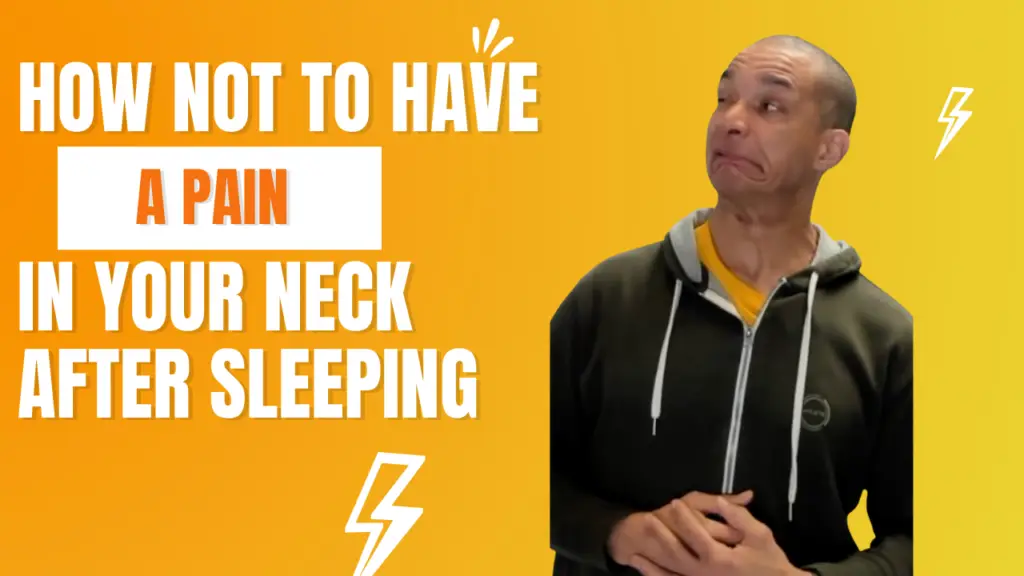
Neck Pain After Sleeping: 4 Reasons Why and What To Do About It

Neck Pain After Sleeping

Click on the image to watch the video

Did you wake up this morning with a stiff neck—the kind where you can’t look over your shoulder or tilt your head comfortably? Neck pain after sleeping is extremely common, with several possible causes and, thankfully, multiple ways to address and prevent it.

  1. Underlying Trauma
    A history of trauma, like whiplash or a sports injury, can leave tissues tight, tender, or misaligned for years. Sometimes, the pain only shows up after sleeping when the body relaxes, cools down, and habitual tension “sets” into bad alignment. Not addressing acute issues right away can make future correction more difficult. Early, targeted mobility training and corrective exercise are key—even if the pain doesn’t seem urgent at first.
  2. Postural or Overuse Strain
    Desk work, smartphone use, and “tech neck” (forward head posture) retrain the body into poor alignment and chronic muscle tension. If you spend 8+ hours daily hunched forward, but only do an hour of corrective work (at best), the imbalance accumulates. This commonly leads to stiffness and pain after sleeping, when tissues contract and “remember” their imbalances. Address this by restoring shoulder, mid-back, and neck alignment; balance technology habits with posture- and flexibility-focused routines.
  3. Pathology
    Conditions like cervical radiculopathy, stenosis, or arthritis can all manifest overnight or in the morning as nerve signaling and disc pressures change with position. Persistent or worsening pain—especially with numbness, tingling, or weakness—deserves prompt professional assessment and a customized plan.
  4. Sleep Position, Pillow, and Recovery
    A poor sleep setup (too many pillows, sleeping on your stomach, or a lumpy mattress) disrupts healthy neck curves and strains muscles. Too little sleep or constant sleep interruption impairs tissue repair and healing, leading to more frequent or severe neck pain. The right pillow, good alignment, and consistent sleep hygiene are foundational for prevention.

What To Do About It

  • Start with gentle mobility: Hot showers, light stretching, and slow, easy neck movements can help “wake up” the tissues.
  • Consider alternating ice and heat to manage acute pain or inflammation.
  • Prioritize a balanced sleep setup: Neutral head/neck alignment, supportive pillows, and sleeping on your back or side (not your stomach).
  • Incorporate posture-focused, corrective, and mobility exercises throughout the day, not just after the pain sets in.
  • Seek professional help for persistent, severe, or radiating pain, especially if it comes with other symptoms.

[ELDOA: The Ultimate Spine And Joint Exercises]

Don’t let neck pain after sleep become your “normal.” Discover and address the true cause, and build sustainable habits to wake up pain-free and ready for life.

it’s not just working out, it’s building a foundation for a better life.

Find out more @
Facebook

LinkedIn

Pinterest

Instagram

Youtube

Bluesky

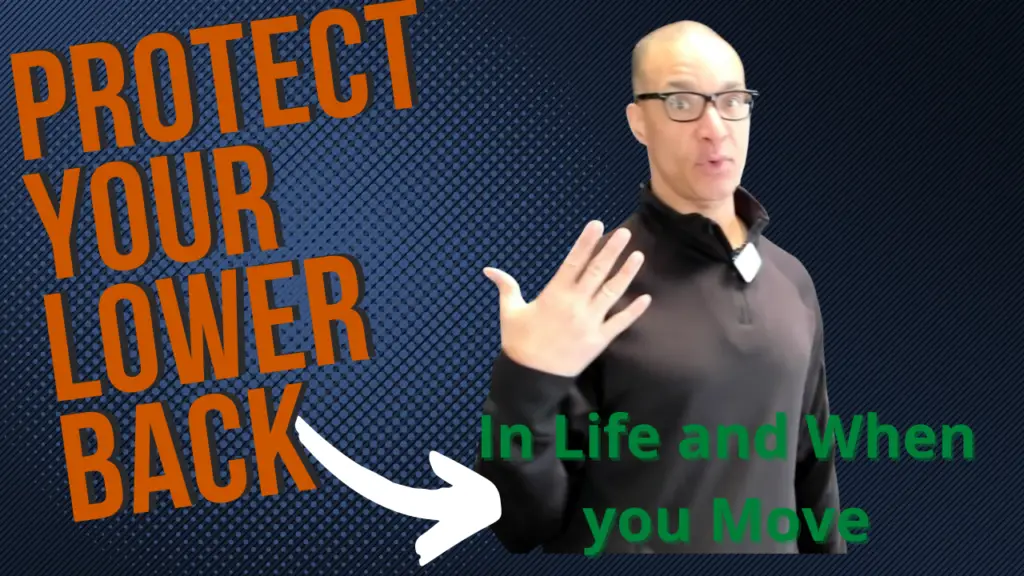
How To Brace Your Core To Protect Your Lower Back!

core bracing for back pain

Click on the image to watch the video

Bracing the core is one of the most effective ways to stabilize and protect the lower back—during heavy lifting, dynamic movement, or simply daily tasks. But “bracing” is more than just squeezing your abs. To truly protect your spine, you need to know which core muscles matter, how to train them, and how to integrate them into all movement—not just during workouts.

What Is Core Bracing (And Why Should You Care)?

Core bracing simply means contracting all the muscles of your trunk front, sides, back, even the pelvic floor to create a “girdle” of stability around your spine. Think of how the body naturally tenses before a big exertion or if someone is about to punch you in the stomach—this helps distribute forces evenly and prevents sudden overload on any single spot in the spine.

Which Muscles Are Involved?

True bracing integrates:

  • All four layers of the abdominals (rectus, obliques, transversus, internal/external)
  • Deep spinal stabilizers (multifidi, transversospinalis)
  • The diaphragm (breathing muscle)
  • Pelvic floor
  • Back muscles (erectors, lats, serratus, etc.)

These muscles must function as a coordinated system to evenly “brace” the spine—so no one link becomes the weak point.

The Keys to Smart Bracing and Injury Prevention

  • Start With Deep Muscles: Deep stabilizers (like the TVA and deep back muscles) activate first to prepare the body for movement.
  • Progress to Superficial Muscles: Once deep muscles are awake, train global movers like obliques and erectors in different planes—flexion, extension, rotation, lateral stability.
  • The Beam Phenomenon: During squats and deadlifts, bracing helps the spine act like a strong beam—so force moves through the trunk, instead of collapsing onto the lower back.
  • Don’t Overuse Bracing: You don’t need to brace every second of the day—only before higher-effort movements or when lifting, twisting, or reaching. For daily life, your core should work reflexively after proper training.

How To Learn (And Progress) Core Bracing

  • Awareness: Practice “bracing for a punch” lying on your back, feeling your abs, sides, and lower back tighten in unison.
  • Breathe While Braced: It’s crucial to maintain breathing—a true brace allows for expansion and natural breath, not holding.
  • Segmentally Strengthen: Build up reps of basic holds, then layer in movements (squat, hinge, carry, overhead press).
  • Stretch and Normalize Weak Links: Segmentally train deep stabilizers, then all layers of abs and back, then global movements.
  • Integrate Into Your Life: The real win is a core that reflexively supports you during life—not one that needs constant conscious effort.

With a systematic approach—segmental strength, fascial training, posture work—bracing becomes second nature, and lower back injuries become far less likely—whether you’re working at a desk or lifting heavy in the gym.

If you want a holistic program that’s more than “just another ab workout” and addresses your needs down to the weak links, we can help. Book a [free consult] to get a custom plan for a strong, pain-free back and a core that keeps you resilient for life.

it’s not just working out, it’s building a foundation for a better life.

Find out more @
Facebook

LinkedIn

Pinterest

Instagram

Youtube

Bluesky

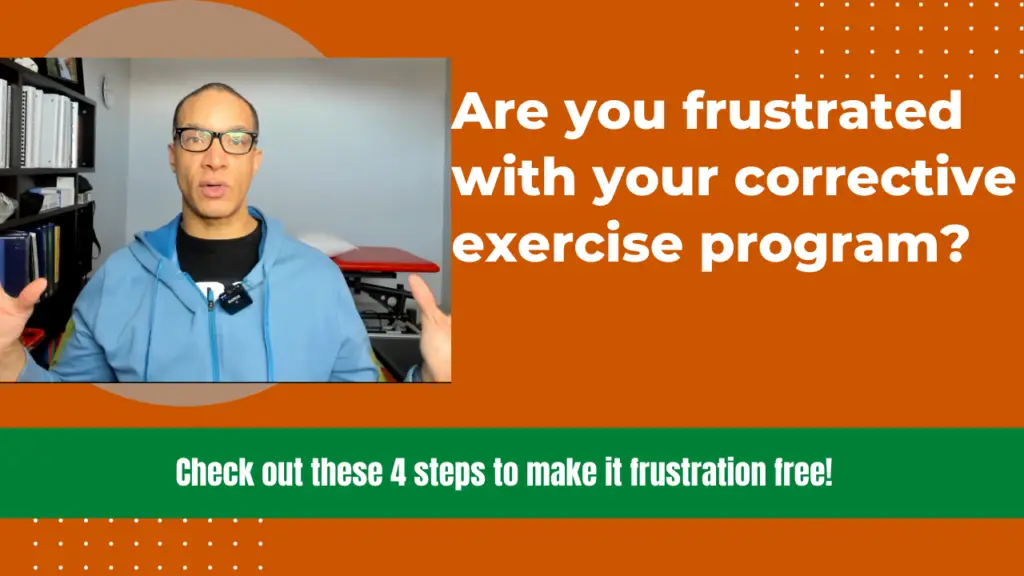
4 Steps On How Not To Get Frustrated With A Corrective Exercise Program

frustration corrective exercise

Click on the image to watch the video

Getting injured isn’t just painful it’s often maddening, especially when a corrective exercise program seems slow, confusing, or never-ending. The good news? There are concrete ways to break the cycle of frustration, so you can move forward in your recovery and come back stronger than ever.

Step 1: Get Specific and Get Curious

Most frustration comes from generic, surface-level advice—“just do X for your knee,” or “try this for your back.” But lasting results require a specific, holistic perspective. Zoom out: assess all the tissues, joints, and habits involved, not just the “squeaky wheel.” Don’t be afraid to ask more questions of your coach, read beyond the basics, or demand an individualized approach that’s tailored to the real cause of your issue—not just the symptoms.

Step 2: Stop the Comparison Game Own Your Pace

Corrective exercise takes time. Symptoms often last because underlying compensations have built up for months or years. Don’t get stuck comparing yourself to “fast healers” or internet testimonials. Accept that the process is nonlinear, and that small, focused wins build the fastest long-term progress. The less negative self-talk, the easier it gets to keep showing up and doing the right things every day.

Step 3: Expect “Productive” Discomfort Not Suffering

It’s totally normal for corrective exercises to feel challenging, awkward, or sometimes uncomfortable—especially if soft tissue is stiff, joints are sticky, or new patterns are required. But true suffering means you’re doing the wrong exercise, too much, too soon, or fighting the process. Learn to distinguish between healthy training discomfort and bad pain. Treat each session as a chance to practice patience, breathe deeply, and learn from experience—not just to “grind through.”

Step 4: Find Acceptance and Focus on What You Control

Frustration around injury often comes from wanting to skip steps or fast-forward the process. Instead, accept your current state, focus on consistent progress, and get curious about deeper aspects of health, movement, or mindset you may have previously overlooked. The more you accept and fully engage, the faster—and more lasting—your results will be. (And if you get stuck, find a trusted guide or support community.)

[Segmental Muscle Strengthening]

Corrective exercise is much more than a fix for a body part it’s a mindset and a toolkit for lifelong mobility, injury-prevention, and lasting change. Embrace the journey, adjust your expectations, and celebrate progress one step at a time.

it’s not just working out, it’s building a foundation for a better life.

Find out more @
Facebook

LinkedIn

Pinterest

Instagram

Youtube

Bluesky

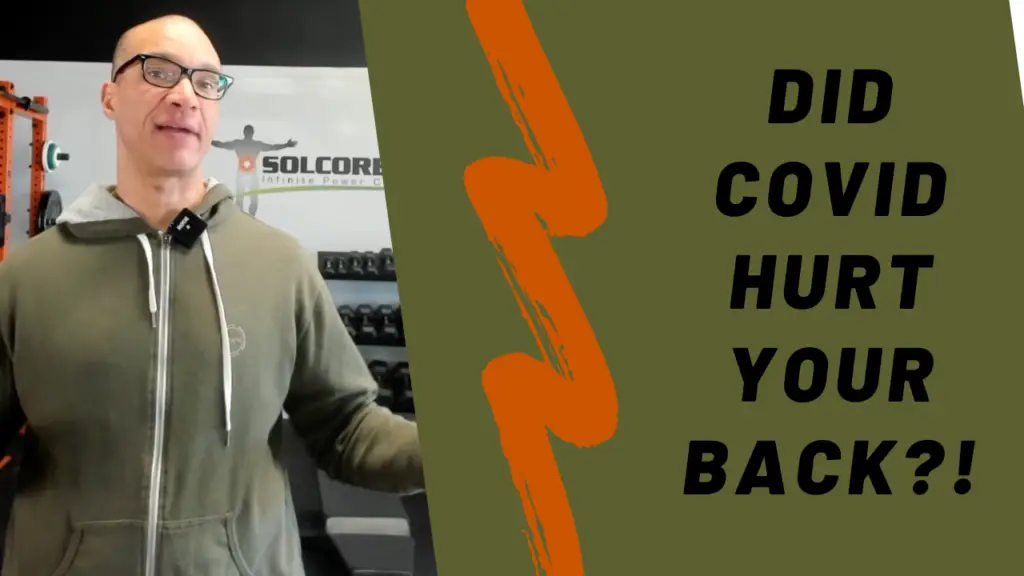
Back Pain After Covid

back pain after covid

Click on the image to watch the video

Are you dealing with back pain after COVID-19? You’re not alone. Back pain is one of the most common lingering symptoms after both infection and recovery a challenge felt by people of all ages and activity levels.

Why Back Pain Happens After Covid

Back pain can be a direct effect of COVID due to myalgia—generalized muscle and soft tissue pain caused by your body’s inflammatory response to fighting off the virus or as a side effect of the vaccine. Inflammation doesn’t always end when you test negative; your body might continue “defending” for weeks or even months, causing ongoing aches and back pain. This is part of what is known as “long COVID”.

Indirect causes are just as important:
Many people become more sedentary after (or during) illness—sitting more, working from home, and losing their regular movement and exercise routines.
Stress and lack of work-life balance increase tension, particularly in the spine, neck, and back.
Dehydration, already a common problem, is made worse as your body uses more water during infection and healing, leaving your discs and fascia less resilient.

Is It “Just” Covid, or Something Else?

If you notice new or worsening back pain after COVID, ask:

  • Was the pain present before, and is it worse now?
  • Are there other aches, joint issues, or general body pain? If so, it could be “long COVID.”
  • If you’re simply sitting more, skipping movement, or under new types of stress—those factors can be just as powerful.

Always follow up with your healthcare team to rule out reinfection or other health issues. For most, the pain is NOT dangerous, but persistent inflammation, dehydration, inactivity, or stress must be addressed for full recovery.

What Should You Do?

  1. Hydrate thoroughly. Start each day with water and keep drinking throughout the day to rehydrate the spine, joints, and fascia.
  2. Rebuild your work/life boundaries. Set opening/closing routines (especially if working from home), get up regularly, and don’t allow “life creep” into all hours.
  3. Move more—gently and consistently. Aim for general daily activity (steps, gentle walks), not just “weekend warrior” blasts. Progress specific corrective exercises for your back, core, and posture as you recover.
  4. Mind your stress. Take time to rest, get outside, meditate, and actively de-stress—your body and back will thank you.
  5. Start or restart a balanced corrective/exercise program. Don’t jump right into intense workouts; first, restore foundational control and flexibility so your body adapts, not just compensates.

[Myofascial Stretching: The Best Total Body Active Stretches]

Persistent back pain after COVID is often multifactorial and almost always holistic in solution hydration, gentle movement, stress management, and a sustainable corrective program are key.

it’s not just working out, it’s building a foundation for a better life.

Find out more @

Facebook

LinkedIn

Pinterest

Instagram

Youtube

Bluesky