Corrective exercises

Katy G – When All Else Failed, She Tried Again And Succeeded

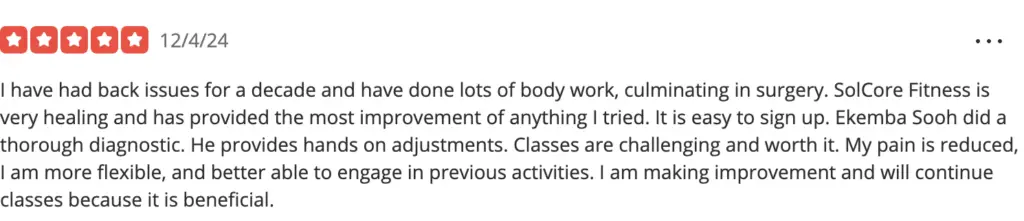
The big smile that Katy comes in with is always a joy to see. But situations with her body were trying to take that smile away. You see, 10 years ago, she was injured at work. The pain and limited activity were constant companions. 

She tried PT, Cranial Sacral, and all types of bodywork massage, including Rolfing, Feldenkreis, acupuncture, chiropractic, ergonomic office assessments, and yoga classes, and bought various DVDs specific to back issues. In 2023, I had spine surgery for sciatica and stenosis. She suspected her back would have been worse sooner without these efforts, but they didn’t fix matters.

Activities like gardening, bending, walking, and sitting were severely limited and painful. She had sciatica every day and neuropathy in her shin and foot. The walking distance was short, and her speed was slow. Sitting down really locked up her back and glutes. Standing was more comfortable. Lying prone with ice offered some relief.

Medicare cut off her PT five months after surgery, but she was still not okay. To make matters worse, and her frustration, PT had not helped much anyway. She was praying for direction when she saw an ad for a free SolCore Fitness trial class on Facebook (this is our Monthly Free ELDOA class).

She signed up online and attended the free Saturday group class, and since she found it so beneficial, she signed up for the 2-week trial to give SolCore Fitness a fair test. Ekemba Sooh did an assessment of my issues so he knows what is safe to do. Ekemba is active in class, hands-on, adjusting student postures, and he is very aware of our abilities and injuries. She also signed up for some individual sessions to include the manual therapy techniques because “I was desperate to get better.”

After six months of classes, she continues to improve. She walks better, moves easier, can sit longer, has reduced duration, is less frequent, and travels more efficiently. Since she continues to make progress, she is motivated to keep going and continue to improve her body, health, and life. So, She is sticking with the program that got her there.

Find out more @

Facebook

Blue Sky

Pinterest

Instagram

Youtube

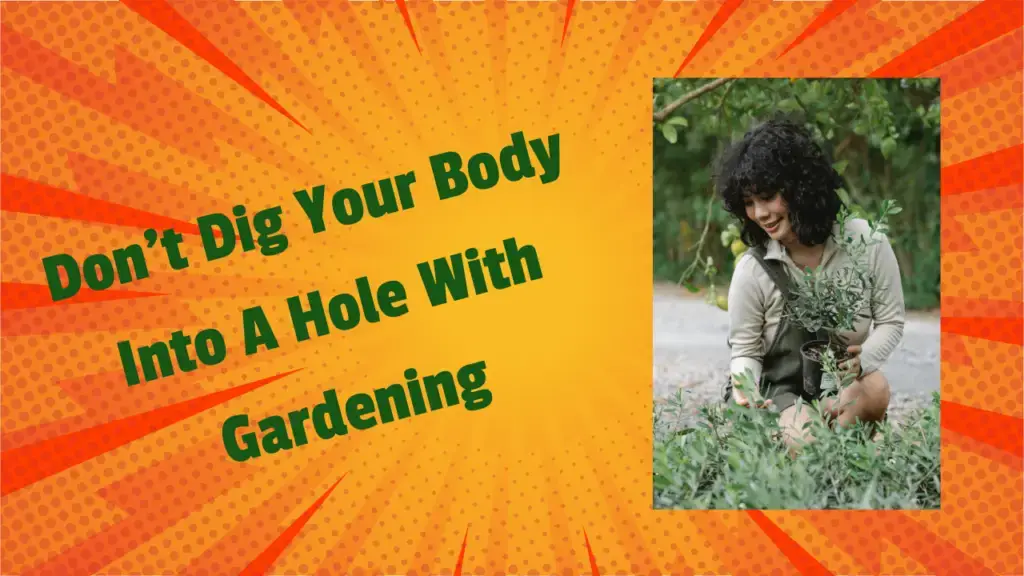
Gardening. The Unwanted Effects On Your Body.

๐ŸŒฑ Gardening Hurts? How to Protect Your Body While Doing What You Love

Gardening brings joy to so many people โ€” the satisfaction of growing your own food or flowers, the quiet peace of working in the soil. But for many, it also brings back pain, neck stiffness, sore knees, or overall fatigue. It doesnโ€™t have to be that way.

Iโ€™m Ekemba Sooh, owner of SolCore Fitness. Iโ€™ve been in the health and fitness field for over 30 years, working under the osteopathic model. And hereโ€™s what I want you to know:

Gardening is a sport. Itโ€™s physically demanding. And like any sport, if you donโ€™t prepare your body for it, youโ€™ll pay for it.

In this blog, Iโ€™ll break down:

Simple things you can do to avoid injury and feel better

Why gardening leads to pain

Whatโ€™s really happening to your knees, back, and spine

Click on the image to watch the video

๐ŸŒป Gardening is More Demanding Than You Think

Hereโ€™s what most people miss: gardening places a huge load on the body.

Youโ€™re squatting, bending, twisting, lifting, and often holding these positions for long periods. Thatโ€™s a combination of:

  • External load (heavy pots, rocks, plants)
  • Postural load (static crouching, awkward angles)
  • Repetitive strain (hours of weeding, digging)

One of my clients โ€” an art teacher โ€” came to me years ago with chronic pain. After months of work, she felt great and was living her life againโ€ฆ until one weekend she gardened for five hours straight. No warm-up. No cool-down. She undid months of progress in one afternoon.

This isnโ€™t about fear โ€” itโ€™s about awareness.


๐Ÿฆต Your Knees: Why Squatting Hurts Later

Gardening involves constant squatting, both dynamic and static. The knee joint is most stable at 90 degrees โ€” but once you drop lower, things start to rub.

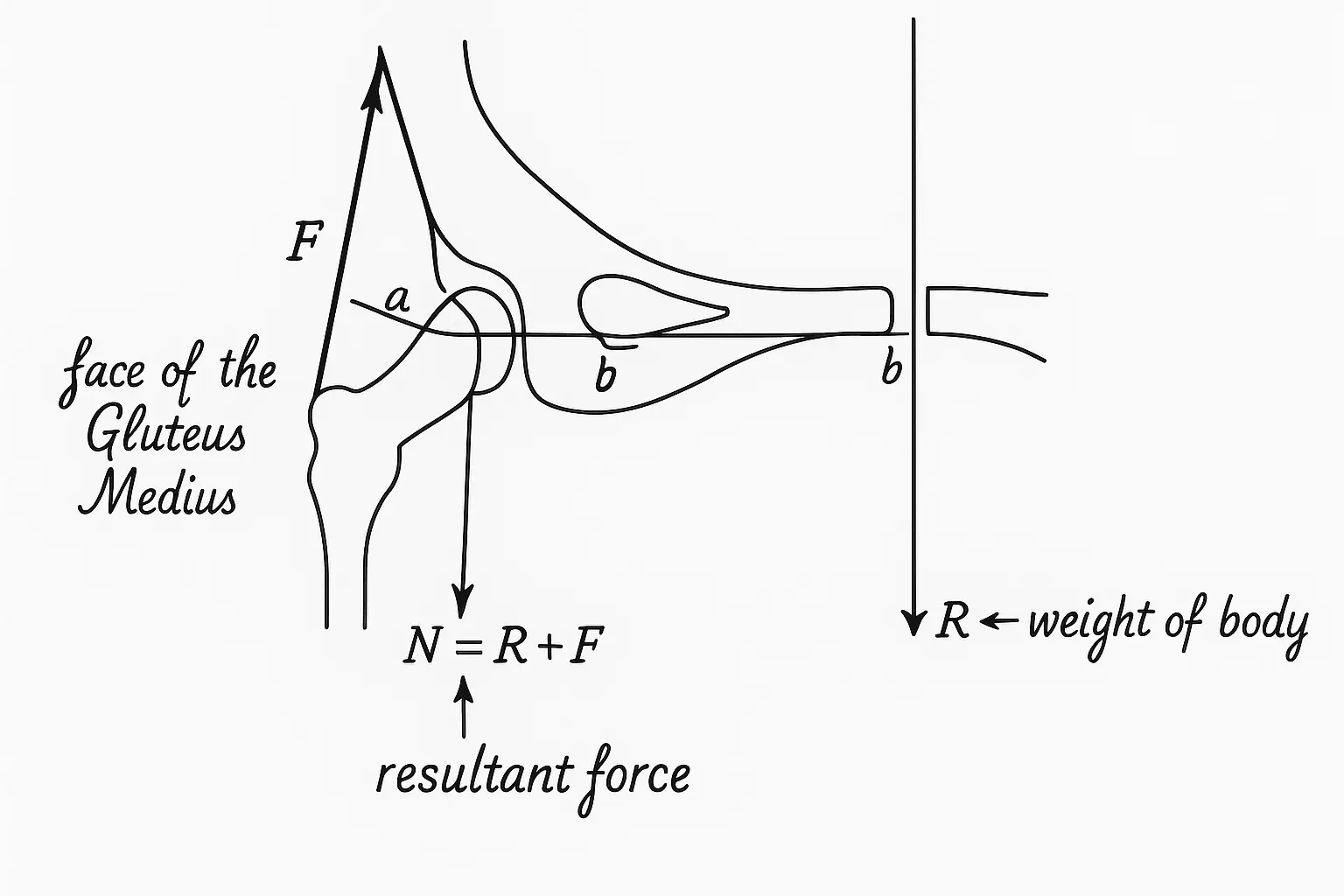
A law in biomechanics called Delpechโ€™s Law tells us that high pressure on a surface leads to the body producing more tissue. In the knees, this can lead to roughened cartilage, causing pain, grinding, and inflammation โ€” especially if you do it over and over without support.


๐Ÿงโ€โ™‚๏ธ Your Lower Back: Lever Arms & Fascia Fatigue

Ever notice how heavy things feel when you’re bent forward? Thatโ€™s the lever arm principle. The further out the weight (or your torso), the more strain on your lower back.

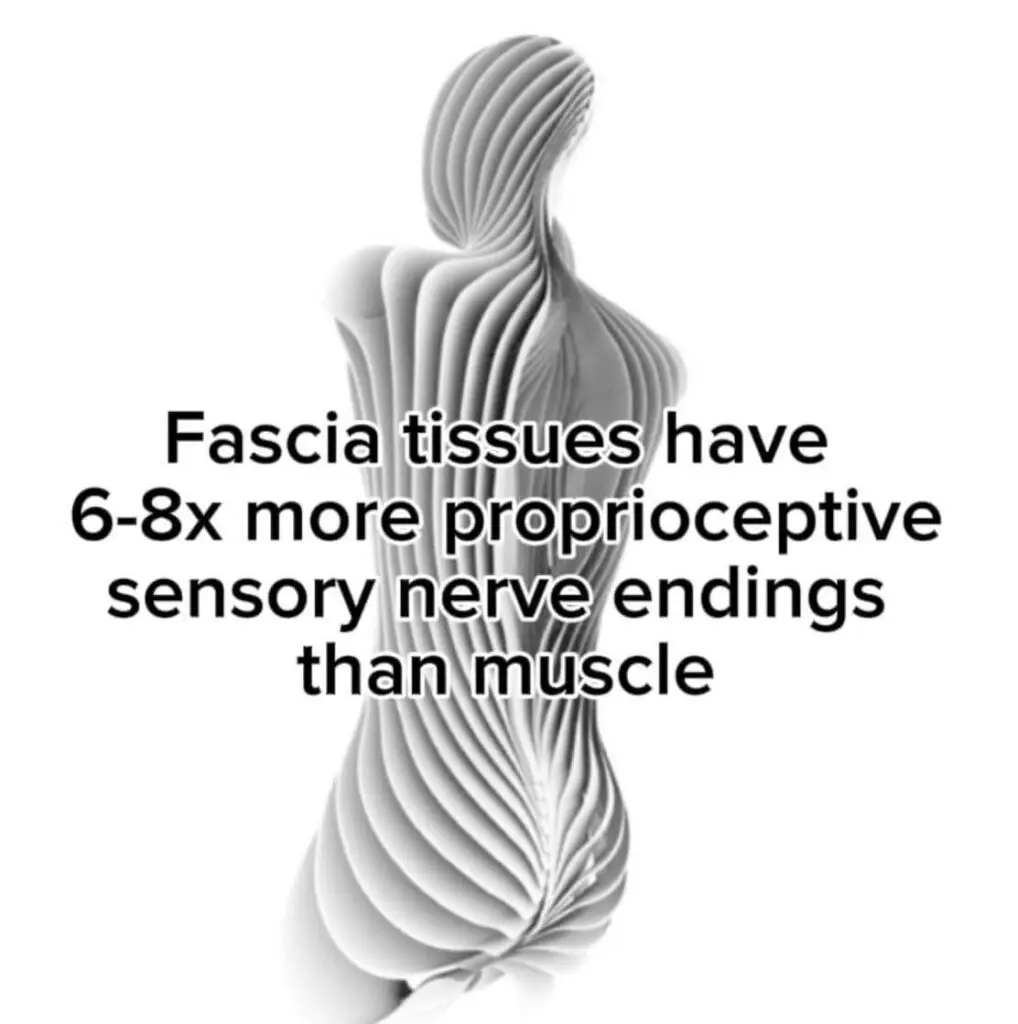
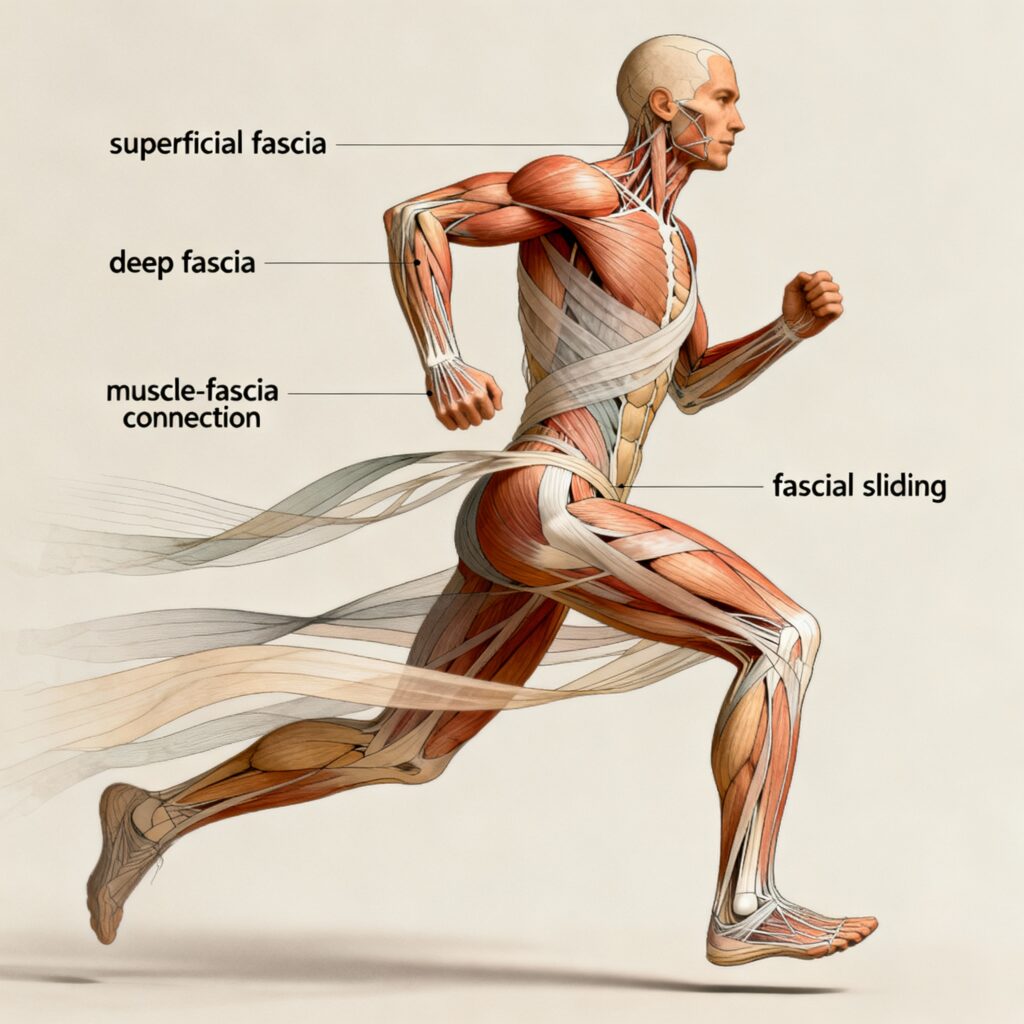
From your belly button to your pelvis, you donโ€™t have bones to hold things together. Your fascia โ€” soft tissue layers โ€” does the job. But fascia needs to be hydrated, supple, and trained to support load.

If your fascia isn’t prepped, long hours in bent-over positions can overwhelm it. That leads to tightness, spasms, or worse.


๐ŸŒ€ Your Spine: Why Flexing and Twisting Are Dangerous

Most gardening tasks involve two risky combinations:

  • Flexion + Rotation (scooping dirt, weeding)
  • Extension + Rotation (reaching up and twisting)

Both compress the spineโ€™s joints and increase the risk of disc issues like bulges, herniations, or pinched nerves โ€” especially if your spine isnโ€™t stabilized by surrounding muscles and fascia.

This isnโ€™t about avoiding movement. Itโ€™s about training your body to handle those movements safely.


๐Ÿ‹๏ธโ€โ™€๏ธ What You Can Do to Prevent Gardening Injuries

Here are the three keys to keeping your body pain-free while gardening:

1. Train Like Itโ€™s a Sport

You wouldnโ€™t try to deadlift 500 pounds without a program, right? Gardening is no different. Your body needs a holistic strength and mobility plan based on what youโ€™re asking it to do โ€” not just general workouts, but targeted prep for your spine, knees, pelvis, and fascia.

2. Warm Up Before Gardening

Your body is like an old car โ€” it needs a few minutes to โ€œrev the engine.โ€ A proper warm-up turns on your muscular and neurological systems, thins out the fluids in your joints and fascia, and helps prevent injury.

Hereโ€™s a short warm-up that targets the most stressed areas:

๐Ÿ‘ฃ Knees

  • Knee Circles (clockwise and counterclockwise)
  • Figure 8s (vertical and horizontal)
    These gentle movements lubricate the joint and prep ligaments for squatting.

๐Ÿง˜ Pelvis

  • Pelvic Rocks in a wide-stance position with knees bent and torso upright. Helps activate the hips and lumbar spine.

๐ŸŒ€ Spine

  • Torso Translations & Tilts with arms in external rotation. Warms the ribcage and mid-back while protecting from over-compression.

Just 5โ€“7 minutes of this can drastically improve how your body handles the demands of gardening.

3. Recover After Gardening

Youโ€™ve loaded the system โ€” now you have to unload it. Stretch the areas you used. Use fascia-specific movements or myofascial stretches to rebalance the body. Donโ€™t just sit down and let it tighten up.

Using Osteopathic manual therapy techniques like TTLS, work with the body and speed up healing to regain function.


๐ŸŒฟ Want to Keep Gardening for Life?

If gardening brings you joy, itโ€™s worth protecting. And if you want help, Iโ€™ve got 3 easy ways to start:

Let me help you garden smarter, not harder โ€” and keep doing what you love for years to come.

Building a foundation for a better life.

Find out more @

Facebook

BlueSky

Pinterest

Instagram

Youtube

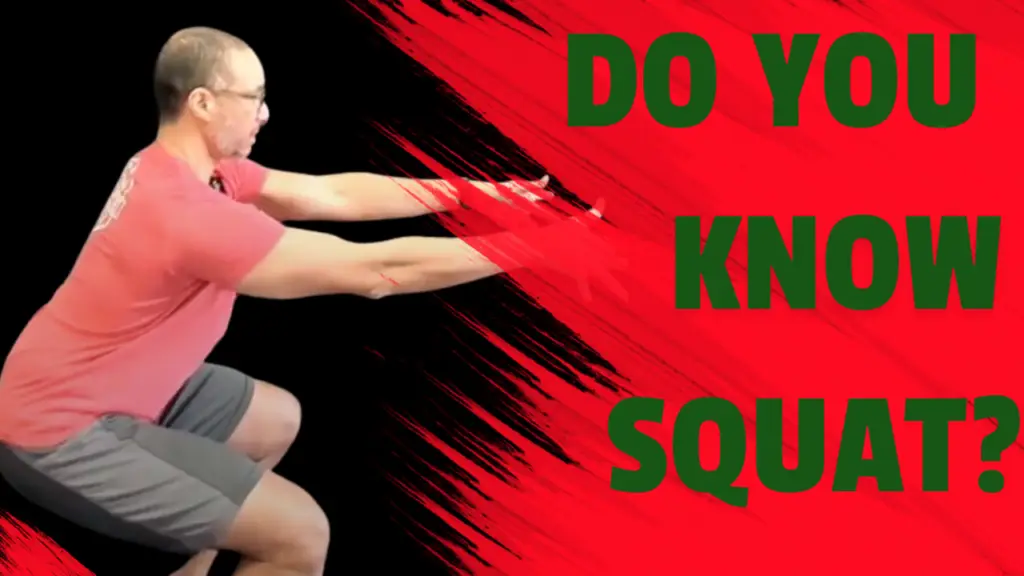
Unlocking the Power of the Squat Exercise

The squat exercise is one of the seven primal movements. But unlike the others, a properly executed squat is the only one that can directly improve your posture.

Most people learn to squat the wrong way. Fitness classes, trainers, and online videos often pass down bad form like it’s tradition. Challenges like โ€œ100 squats a dayโ€ only reinforce poor patterns. They donโ€™t teach you how to moveโ€”they teach your body how to compensate.

Thatโ€™s a problem.

Click the image to watch the full video.

Why the Squat Exercise Matters So Much

A squat isn’t just for building legs or glutes. Itโ€™s a global movement that involves your whole body working together. In fact, it’s made up of multiple smaller systems working in harmonyโ€”from your pelvic floor to your jaw.

Done right, itโ€™s one of the most powerful tools you have for long-term strength, mobility, and posture.

Done wrong, it becomes a slow leakโ€”wearing down your body over years until the damage is finally too loud to ignore.


Most People Are Taught the Squat All Wrong

When I started training back in my teens, I was told to arch my back, stick my butt out, and look up. It felt powerfulโ€”but it placed massive stress on my lower back and neck. I didnโ€™t feel pain for years. But by the time I hit 35, that form had helped cause a spinal issue and sciatic pain.

Thatโ€™s how compensation patterns work. You donโ€™t feel them until theyโ€™ve done damage.

And unfortunately, a lot of fitness systems still teach that exact form today.


The Squat and Posture: A Unique Relationship

Unlike bending, pushing, or pulling, the squat uses and improves your postureโ€”if done correctly.

Your postural system is made up of:

  • The Plumb Line (ear, shoulder, hip, knee, ankle alignment)
  • The Gravity Line (a 4-degree cone rising from your pubic bone)

The squat interacts with both. If your plumb line is off, squatting can make things worse. But if you squat with awareness and alignment, it actually helps reinforce your posture inside that gravity cone.


What It Takes to Do a Proper Squat Exercise

The squat is built from many parts. Each part needs to function independently before it can function together.

Hereโ€™s what that means:

โœ… The Beam Phenomenon

Your torso needs to move like a solid beamโ€”no wobble. That requires training your:

  • Pelvic floor
  • Abs (especially lower abs)
  • Diaphragm
  • Lats
  • Pecs
  • Fascia in the mouth and throat

โœ… Foot and Ankle Mechanics

Your feet are your foundation. A weak or collapsed arch (especially at the navicular bone) throws off everything above. You may need arch support or proper shoes when lifting heavy.

โœ… Pelvic Tuck and Knee Drive

A good squat is knee-dominant. That means knees move firstโ€”not hips.

At the same time, keep your pelvis tucked and chin tucked to stay in the beam. This requires both abdominal strength and fascial flexibility in the back.

If your soleus and calves are tight, your heels will lift and stop your knees from driving forward. So you may need to stretch and strengthen your calves to get full range.


Learning to Squat Means Slowing Down

If you’re constantly focused on performance or fat loss, youโ€™re not giving your body the time it needs to learn proper form. And in a class environment, correcting your form often isnโ€™t the priority.

Thatโ€™s like trying to learn typing by mashing keys as fast as possible without learning the keyboard.

Itโ€™s not a matter of willpowerโ€”itโ€™s just bad input. And bad input = bad output.


Good Squat = Good Life

Learning how to do a proper squat gives you a relationship with your body.

Youโ€™ll learn where youโ€™re tight, where youโ€™re weak, and where youโ€™ve been compensating without even knowing it. And when you address those things, your body responds.

You get stronger. You feel better. You age slower.


Want Help With Your Squat?

Iโ€™ve helped thousands of people reconnect to their bodies through correct, holistic training. Hereโ€™s how you can start:

Youโ€™ve been given a body that can last 90+ years. The squat exercise is one of the best ways to take care of it.

Letโ€™s make sure youโ€™re doing it right.

itโ€™s not just working out, itโ€™s building a foundation for a better life.

Find out more @

Facebook

BlueSky

Pinterest

Instagram

Youtube

The Surprising Truth About Iliopsoas Muscle Pain

If youโ€™re dealing with iliopsoas muscle painโ€”sometimes called psoas painโ€”youโ€™re not alone. The iliopsoas plays a critical role in how your spine, pelvis, and hips moveโ€ฆ and when itโ€™s tight, weak, or dysfunctional, it can cause low back pain, hip pain, bursitis, pelvic issues, and more.

But hereโ€™s the real problem:
Most peopleโ€”and even many professionalsโ€”oversimplify it. They give you generic psoas stretches or strengthening exercises that donโ€™t address the full picture.

Letโ€™s change that.

Click on the image to watch

What Is the Iliopsoas Muscle?

The iliopsoas is a deep muscle made of multiple parts: the psoas major, psoas minor, and iliacus. It doesnโ€™t just run from your spine to your hipโ€”it has multiple attachments at the spine, pelvis, and upper leg, making it a true tensegrity muscle in the osteopathic model.

That means it plays a central role in connecting and coordinating movement between your upper and lower body.
It also means problems with your iliopsoas donโ€™t stay localizedโ€”they can ripple out into your spine, pelvis, or even internal organs through fascial connections.


Why Basic Psoas Stretches Donโ€™t Work

Search the internet and youโ€™ll see the same stretch everywhere: kneeling lunge, arms overhead, arch the back, slide forward.

Sounds familiar?

Hereโ€™s whatโ€™s wrong with it:

  • It ignores the multiple fiber directions and attachment points of the iliopsoas
  • It reinforces poor spinal positioning and can compress the lumbar discs
  • It fails to address fascia, which is key for actual lengthening and balance
  • Itโ€™s based on basic anatomyโ€”not the complex interconnections that actually matter

Worse, these stretches can aggravate spinal conditions and reinforce patterns that caused your pain in the first place.


A Holistic Way to Work With the Iliopsoas

To truly improve iliopsoas muscle function, you need a program that goes beyond muscle alone.

Enter Hillโ€™s Muscle Model:

A true holistic approach includes:

  • The muscle itself
  • The fascia that supports and connects it
  • The ligaments and joints it influences

All three work together. You canโ€™t isolate one and expect long-term results.


What I Do Instead

As a Soma therapist and trainer with 30 years of experienceโ€”18 under the osteopathic modelโ€”I help people move and heal holistically.

Hereโ€™s how I work with the iliopsoas:

  1. Normalize the fascia
    Fascia surrounds and runs through the psoas like a spiderweb. If itโ€™s twisted or adhered, the muscle canโ€™t function correctly. Manual therapy helps unwind these patterns.
  2. Myofascial stretching
    Instead of basic stretches, I use biomechanically precise postures that account for all attachments and fiber directions. These target the whole chain, not just one part.
  3. Postural release
    Sometimes, just hanging in a specific posture allows the psoas to release more deeply than any active stretch. I show clients how to do this safely and effectively.
  4. Strengthen itโ€”correctly
    A tight muscle can also be weak. I use movement patterns that strengthen the iliopsoas in the right directions, based on how it truly functions.
  5. Address the surrounding system
    That includes spinal stabilizers like the transverse spinalis, longissimus, iliocostalis, and lats. Muscles donโ€™t work in isolationโ€”they work in systems.

Want to Try a Simple Postural Release?

Here’s a safe, passive way to begin releasing the iliopsoas:

  • Sit on the edge of your bed or a bench
  • Lie back and hold one knee to your chest
  • Let the other leg hang off the edge
  • Hold for as long as is comfortable
  • Switch sides

This gentle release works with the body rather than forcing it.


Ready for Deeper Change?

Most iliopsoas issues donโ€™t get better with surface-level fixes.
You need to work with the cause, not just the symptoms.

If this resonates with you, I have a few resources:
โœ… Free Resource โ€“ To Get Mobile, Get Out of Pain, and Live the Life of Your Dreams
โœ… Consultation โ€“ Want to work together? Book a time via the Calendly link

Youโ€™re capable of more than you think. Allow the process to change youโ€”and youโ€™ll be amazed at what your body can do.

Building a foundation for a better life.

Find out more @

Facebook

BlueSky

Pinterest

Instagram

Youtube

Amber SolCore Fitness and Therapy Success

SolCore Therapy and Fitness

Sometimes, what youโ€™re doing just stops working. For Amber, it took years of yoga, chronic pain, and a sudden breakdown to realize her body needed something different. This is her storyโ€”and how SolCore Fitness helped her shift from injury to healing.

When Pain Overrides the Pose

Amber had been practicing yoga since she was 19. It was more than a workoutโ€”it was a lifestyle. She loved the wildness, the philosophy, the breath work, and the physicality.

But over time, yoga shifted. The deeper, spiritual practice faded, replaced by fast-paced, athletic movements. Like many, Amber had flexibilityโ€”but not mobility or strength. She could move into poses, but her body couldnโ€™t support them.

Eventually, her back gave out.

โ€œIt was the day after Thanksgiving. I stepped out of the car and literally couldnโ€™t move. I crawled up the stairs to my momโ€™s house. It was terrifying.โ€

That moment wasnโ€™t random. It was the result of years of compensation, strain, and bypassing the bodyโ€™s needs. Her long-time bodyworker warned her:

โ€œYouโ€™re too stretchy. You need real strength.โ€


Why Yoga Alone Couldnโ€™t Help

Amber loved yoga. But she realized she had been using it to avoidโ€”not addressโ€”her deeper structural issues. Like many, she thought movement alone was enough. But flexibility without strength, and effort without direction, only made things worse.

โ€œI didnโ€™t want to bash yoga. But I had to admitโ€”it wasnโ€™t working. My body needed something more holistic, structured, and biomechanically sound.โ€

Enter SolCore Fitness.


A New Approach: Structured, Subtle, and Demanding

Amber admits it wasnโ€™t easy at first.

SolCoreโ€™s program required consistency and re-learning. The exercises were unfamiliar and subtleโ€”but also deeply challenging.

โ€œIt was counterintuitive. I had to unlearn how Iโ€™d been moving for decades. But the subtlety was powerful. Within six months, I was 75% better.โ€

Through personalized training and a focus on fascia, mobility, strength, and proprioception, Amber rebuilt her foundation. The back pain lessened. Her posture improved. Her nervous system regulated.

And maybe most importantly, she reclaimed her relationship with her body.


Lasting Changes and a New Way Forward

Amber still has a desk job. She still feels occasional pain. But now she knows how to manage it. Sheโ€™s no longer dependent on yoga poses to feel โ€œbetter.โ€

Sheโ€™s walking more, doing breathwork, meditating againโ€”and she can sit in silence without discomfort.

โ€œThis has helped me return to the real yoga: presence, breath, and awareness. I found a better balance.โ€

Her advice?

โ€œDonโ€™t wait until things break down. Be willing to change. What worked in your 20s wonโ€™t work forever. Find a system that evolves with you.โ€


Want to Explore a Better Path for Your Body?

Amberโ€™s story is one of many. At SolCore Fitness & Therapy, we help people get out of pain and into possibility through a method that combines manual therapy, fascia-based training, and deep biomechanical insight.

๐Ÿ’ฌ Curious if itโ€™s right for you? Click here to schedule a free consult.

๐Ÿ“„ Want the case study version? Click here to download.

Building a foundation for a better life.

Find out more @

Facebook

Bluesky

Pinterest

Instagram

Youtube

Unlocking Vitality: The Power of Zone 2 Cardio for Optimal Health and Fitness

Zone 2 cardio is getting a lot of attention latelyโ€”and for good reason. But this isnโ€™t just another fitness trend. If used properly, Zone 2 cardio can become the foundation of your long-term health, energy, and recovery.

Letโ€™s break it down and show you how to make Zone 2 part of a complete, fascia-informed training approachโ€”not just another checkbox in your routine.

Click the image to watch the video

What Is Zone 2 Cardio?

Zone 2 is the second level in a 5-zone cardiovascular scale, where your body primarily uses fat and oxygen (aerobic metabolism) to fuel movement.
It sits between gentle movement and high-intensity exercise, typically falling between 60โ€“70% of your max heart rate.

Not sure what that means?
Start with a basic estimate: 220 - your age = max heart rate.
Then calculate 60โ€“70% of that number.

More precise formulas exist, but the important thing is to start where you are and listen to your body.

โœ… A heart rate monitor (Apple Watch, Garmin, etc.) can help
โœ… You should still be able to talk comfortably while training (aka the โ€œtalk testโ€)
โœ… You may still breathe mostly through your nose


Why Zone 2 Cardio Works So Well

Zone 2 improves how efficiently your body uses oxygen, delivers nutrients, and clears waste.
Hereโ€™s what you gain:

  • Stronger heart and lungs
  • More mitochondria (cellular energy factories)
  • Better capillary density (circulation)
  • Faster recovery between workouts
  • A solid base for strength or higher-intensity training

If youโ€™ve ever jumped into HIIT, CrossFit, or intense lifting without seeing results, itโ€™s often because your foundation was missing.
Zone 2 is that missing piece.


But hereโ€™s the part most people miss: your structure matters just as much as your heart rate.

If your posture is collapsedโ€”rounded shoulders, forward head, restricted breathingโ€”youโ€™re limiting the ability of your lungs and heart to perform.
And that can reduce the effectiveness of even a perfect Zone 2 session.

Thatโ€™s why we integrate corrective and structural work into all our programming at SolCore Fitness.
When you combine Zone 2 with myofascial stretching, segmental strengthening, and ELDOA techniques, you unlock the full benefit of cardio.

Explore how ELDOA exercises can open space in your spine and thorax to support better breathing and recovery.


How to Build Your Zone 2 Routine

  1. Start with Zone 1
    If youโ€™re new to cardio or unsure of your baseline, begin with lower-intensity Zone 1 work and good posture habits.
    Let your body adapt before pushing harder.
  2. Dial in your structure
    Use corrective exercise and mobility workโ€”like Global Strengthening and postural realignmentโ€”to prepare your body for regular training stress.
  3. Progress gradually
    • Begin with 45-minute sessions
    • Aim to increase duration to 60โ€“90 minutes over time
    • Stay consistent and let your body adapt over weeksโ€”not days

Don’t Skip Corrective Work

Even walking puts thousands of pounds of force through your joints over the course of 10,000 steps.
Without corrective exercise, those forces accumulate and degrade performanceโ€”especially in an unbalanced body.

Every Zone 2 session should be followed by realignment and decompression work, not just foam rolling or massage.

Corrective support ensures that:

  • Muscles recover efficiently
  • Fascia maintains healthy tone and hydration
  • You prevent breakdown while building endurance

Final Thoughts: Periodization Is Key

Zone 2 isnโ€™t meant to be a permanent state. Itโ€™s a phase in a smart, periodized plan.
You cycle between:

  • Structure + Zone 1
  • Structure + Zone 2
  • Corrective + Recovery
  • And eventually, higher intensities with full preparation

This is how you train for vitality, not just fitness.

Want support?
โ€œWant to go deeper? Explore our Circulatory and Respiratory System Exercises designed to strengthen breathing and circulation.โ€

itโ€™s not just working out, itโ€™s building a foundation for a better life.

Find out more @

Facebook

Bluesky

Pinterest

Instagram

Youtube

Back Mobility: Why Stretching Alone Isnโ€™t the Answer

Click on the image to watch

If your back feels stiff and stuckโ€”and you’re tired of moving like Frankensteinโ€”itโ€™s time to look at back mobility from a deeper perspective.

Most routines you see online might feel good temporarily, but they donโ€™t address the root cause.
And in many cases, they can actually make things worse.

Hereโ€™s why.


What Is Mobility, Really?

Mobility is the ability of your joints and tissues to move freely in all the directions they were designed to move.

Itโ€™s not the same as flexibility.
You can be flexible (like touching your toes) without having true mobility (like moving smoothly under load or rotation).

Mobility is functional.
It helps your body perform well, stay pain-free, and move with strength.

But it requires more than a few stretches.
You need structure. You need muscle. And you need balance.


The Anatomy of Real Back Mobility

Your back isnโ€™t just one unit.
Itโ€™s a coordinated system of:

  • Four spinal curves (sacral, lumbar, thoracic, cervical)
  • Deep and superficial core muscles
  • Fascia, joints, and connective tissues

If you lose the natural curves in your spineโ€”say your lumbar spine flattensโ€”you lose structural integrity.
Your spine becomes weaker, more fragile, and less mobile.

Mobility isnโ€™t about forcing range.
Itโ€™s about having the right alignment and the right strength to support movement.

At SolCore Fitness, we rebuild that foundation with a fascia-first lensโ€”using tools like segmental strengthening and osteopathic training principles.


Why Routines Alone Donโ€™t Work

Most YouTube videos show the same spinal twists and cobra stretches.
They feel goodโ€”for a moment.

But twisting a compressed spine can make things worse.

Thatโ€™s because twisting compresses the discs between vertebrae. If your spine lacks space or alignment, youโ€™re grinding into vulnerable tissue every time you rotate.

Over time, this leads to:

  • Herniated discs
  • Nerve impingement
  • Chronic tension and compensation

Before you stretch or twist, your spine needs:

  1. Proper space and alignment
  2. Muscular balance and activation
  3. Awareness of how your body compensates

The Real Process for Unlocking Back Mobility

If you want lasting mobility, follow this sequence:

1. Rebuild Spinal Curves and Space

Mobility requires decompression. Without space between vertebrae, movement will always be restricted.
We use ELDOA, myofascial techniques, and postural re-education to reintroduce this space.

2. Strengthen in All Directions

Your core isnโ€™t just abs. It includes obliques, transverse abdominis, spinal stabilizers, and many supporting muscles.

You need to strengthen in rotation, side-bend, extension, and flexionโ€”not just planks.
Back and front must work together, not in isolation.

This approach is central to our personalized therapy and training plans.

3. Move with Intention

Only after steps 1 and 2 can you begin applying movement patterns that support your mobility.
Even then, it’s not about routinesโ€”itโ€™s about selecting movements that fit your bodyโ€™s needs and structural state.

Thatโ€™s why we donโ€™t give cookie-cutter programs.
Youโ€™re not a cake. Your body isnโ€™t built from a recipe.


You Need a System, Not a Shortcut

Youโ€™ve probably tried a few of those โ€œ10-minute mobility fixes.โ€
Maybe they felt goodโ€ฆ until they didnโ€™t.

True mobility is sustainable. It works with your bodyโ€”not against it.
And it honors the complexity of your spine, fascia, and nervous system.

Want to learn what a real back mobility program looks like?

Start with our free holistic fitness guide, or book a consult and weโ€™ll walk through whatโ€™s keeping you stuck and what needs to change.


You’re not meant to live in restriction.

With the right strategy, your back can feel strong, mobile, and freeโ€”so you can move the way life intended.

itโ€™s not just working out, itโ€™s building a foundation for a better life.

Find out more @

Facebook

Twitter

Pinterest

Instagram

Youtube

Discover the Game-Changing Solution for SI Joint Dysfunction

SI joint dysfunction can be miserableโ€”constant pain in different places, no clear answers, and โ€œfixesโ€ that donโ€™t work. Itโ€™s one of the most stubborn and misunderstood issues in the body. But there is a solution.

Understanding Your SI Joint

Letโ€™s start with the basics.
SI stands for sacroiliac. Your sacrum (the triangle bone between your glutes) connects to your ilium (your hip bones) at two SI joints, shaped like boomerangs.

Many people confuse SI joint dysfunction with low back pain. But theyโ€™re not the sameโ€”and mislabeling it can send you down the wrong treatment path.

Your SI joint is a true joint with cartilage, a capsule, ligaments (like the anterior and posterior sacroiliac ligaments), and muscular support from the piriformis, glutes, psoas, obturator internus, and more.

This joint movesโ€”primarily in oblique torsionsโ€”but it can also develop 20+ pathological movements (and infinite combinations of dysfunction).


Why SI Joint Issues Donโ€™t Go Away

Your SI joint takes on ascending and descending forces through your body. Itโ€™s involved when you sit, stand, walk, squatโ€”pretty much everything. So when itโ€™s not functioning well, everything suffers.

In my own case, I had no SI joint pain at first. But a small dysfunction there led to L4-L5 disc compression, sciatic pain, and long-term compensation patterns.

The problem? Most people treat symptoms, not causes. And SI joint dysfunction is often the hidden cause behind hip, knee, foot, and even spinal issues.


What Doesnโ€™t Work (And Why)

  • โŒ Popping it back into place
  • โŒ Rolling on a foam roller
  • โŒ Generic exercise routines
  • โŒ โ€œFusedโ€ joint logic that ignores anatomy
  • โŒ Thinking your SI joint doesnโ€™t move

These approaches either oversimplify the problem or completely miss it.


What Actually Works

  1. Assessment First โ€“ You need someone who understands the full range of SI joint pathologies.
  2. Work With Ligaments โ€“ Smart ligaments become โ€œdumbโ€ when dysfunctional. Treatment and manual therapy must re-educate them.
  3. Use Targeted Exercise and Therapies โ€“ The most powerful SI joint reset tool Iโ€™ve found is the ELDOA method. These postural exercises use fascial tension and soft tissue to normalize the joint and retrain proprioception. Using osteopathic therapies like TTLS along with osteopathic exercises dramatically increases your healing and the regaining of your function.

The SI joint doesnโ€™t exist in isolation. Itโ€™s part of a complex networkโ€”and requires a fascia-based, integrative strategy that honors how the body truly works.


If you were hoping for a one-size-fits-all โ€œSI joint routine,โ€ I wonโ€™t insult your intelligence.

Thatโ€™s not how the body worksโ€”and itโ€™s why so many people stay stuck.


What to Do Instead

If you want to address your SI joint dysfunction at the root, here are three free ways to take the next step:

๐Ÿ“˜ Download the Free Guide:
โ€œHow to Move Better, Get Out of Pain, and Live the Life of Your Choosing.โ€
Instant access. Zero fluff.

๐Ÿ’ฌ Book a Free Consultation:
Tell me where you are, what youโ€™re doing, and where you want to go. Iโ€™ll find the holes in your system and help you chart a real path forward. No obligationsโ€”just clarity.


You donโ€™t have to guess. You donโ€™t have to suffer. And you donโ€™t have to keep trying things that donโ€™t work.

You just need a system that sees the whole pictureโ€”and a guide who understands how to help you work with it.

Letโ€™s get started.

itโ€™s not just working out, itโ€™s building a foundation for a better life.

Find out more @

Facebook

BLuesky

Pinterest

Instagram

Youtube

Michele Byrne SolCore testimonial

Michele Byrne SolCore testimonial

Real Progress from Real Commitment: Michele Byrneโ€™s SolCore Story

When Michele Byrne first came to SolCore Fitness & Therapy, she wasnโ€™t sure what to expect. Like many people, she was used to exercising at home โ€” yoga classes on YouTube, quick stretches, and the occasional bike ride. But after her doctor recommended something more targeted to help with her hip tightness and posture challenges, she gave SolCore a try.

And it stuck.

โ€œI just knew right away this would be good for me,โ€ Michele shared.
โ€œItโ€™s not far from my house, and I had no excuse not to come!โ€

Michele is an artist whoโ€™s spent over 30 years working solo. Just getting out of the house and into a structured environment was a shift โ€” but the results spoke for themselves. She noticed the difference not just during classes, but in the way she moved throughout her day.

From struggling to sit upright with her legs outstretched, to now practicing the 90/90 and figure-four stretches every morning, Micheleโ€™s transformation came from consistency, awareness, and dedication.

โ€œSome of the stretches are really difficult,โ€ she said.
โ€œBut I feel so much better after class. Iโ€™m more aware of my posture all day โ€” and I can tell Iโ€™m getting better.โ€

She had tried physical therapy before, but it wasnโ€™t until she combined specific fascia-based training with a supportive class environment that things really started to click.

Now, she comes to class regularly โ€” Monday, Wednesday, Friday, and sometimes Saturday โ€” and even finds herself practicing at home.
Thatโ€™s a big deal.

Micheleโ€™s story is about more than flexibility. Itโ€™s about reconnecting with your body and giving it what it needs to function better โ€” through smart training, community, and expert guidance.


๐Ÿ“Ready to Hear More?

If Micheleโ€™s experience resonates with you and youโ€™re curious about what this kind of training could do for you, check out her full case study:

๐Ÿ‘‰๐Ÿฝ Watch Micheleโ€™s full story here

โœ… Then download her case study here.

Building a foundation for a better life.

Find out more @

Facebook

Bluesky

Pinterest

Instagram

Youtube

Linkedin

Posture Corrector Brace: Will It Actually Fix Your Posture?

Posture Corrector Brace: Will It Actually Fix Your Posture? Discussing if it works and holistic exercise alternatives for it.

Click on the image to watch

We love gadgets here in the U.S. โ€” especially ones that promise fast results.

The posture corrector brace is one of them. It straps over your shoulders and pulls them back, claiming to fix forward head posture and kyphosis.

But does it work?
Or is it just another overpromised shortcut?

Letโ€™s break it down โ€” scientifically and holistically.


What Is a Posture Corrector Brace Supposed to Do?

The posture brace is designed to pull your shoulders back, which is meant to correct rounded posture. The idea is simple: if your shoulders are more upright, your head and spine will follow.

But posture isnโ€™t simple.

Forward head posture and kyphosis (over-rounded upper back) are complex conditions with deep structural, muscular, and neurological components. A strap wonโ€™t solve that โ€” not by itself.


The Problem With “Just Pulling Back”

Thereโ€™s a concept called the Law of 22 Degrees. Once your head shifts 22ยฐ forward relative to your shoulders, it changes the mechanics of your cervical spine. You donโ€™t just bend forward โ€” you slide forward โ€” and over time, that becomes permanent.

Thatโ€™s why you see older people stuck in that hunched-forward posture. Theyโ€™ve crossed the threshold. The brace doesnโ€™t reverse that.

And kyphosis?
That doesnโ€™t start at the shoulders. It starts in the spine, involves the ribs, and pushes the shoulder blades outward and forward. That dominoes into tight pecs, weak rhomboids, overloaded lats, dysfunctional breathing, and nervous system strain.


Why Posture Braces Don’t Fix the Real Issue

A brace might remind you to stand up straight โ€” but it doesnโ€™t retrain your body. And thatโ€™s the problem.

Real posture correction requires:

  • Opening and hydrating joints (especially the spine)
  • Strengthening the right muscles in the right biomechanical positions
  • Reprogramming your brainโ€™s โ€œpostural mapโ€ (a.k.a. motor engrams)
  • Restoring space in the rib cage and fascia
  • Training your feet, not just your upper body

None of that happens by pulling two straps.


What You Should Focus on Instead

Want better posture? Hereโ€™s what works โ€” and why.

๐Ÿ’ง Start with Tissue Health

Hydrate your fascia. Sleep well. If your tissue is dry or inflamed, exercise will just create more dysfunction.

๐Ÿง  Retrain Your Brain

You donโ€™t need to โ€œthink about postureโ€ all day. You need to educate your nervous system to hold better posture automatically.

That means:

  • ELDOA exercises for joint-specific spine awareness
  • Strengthening your rhomboids with your arms overhead
  • Training the levator scapulae to pull your head back
  • Stretching the pec minor, lats, and delts to open space
  • Re-aligning your gravity line: ear โ†’ shoulder โ†’ hip โ†’ knee โ†’ ankle

Most people think theyโ€™re standing straightโ€ฆ and theyโ€™re not. Thatโ€™s because the brainโ€™s postural map is distorted. But itโ€™s fixable โ€” if you train it intentionally.

๐Ÿฆถ Donโ€™t Forget the Feet

Your feet send constant feedback to your brain about balance. If you donโ€™t train them, your posture wonโ€™t hold โ€” no matter what you do up top.

๐Ÿซ Free the Ribcage

Tight ribs lock your thoracic spine. That limits shoulder mobility and forces your neck forward. You need mobility in your costovertebral and sternocostal joints to breathe and move correctly.


Soโ€ฆ Is a Posture Corrector Brace Worth It?

Short answer: No.

Even if it helps you remember to pull your shoulders back, it creates a false sense of progress. It bypasses the actual work โ€” which means your dysfunction continues to build underneath.

And the longer you stay in that dysfunction, the harder it is to reverse.

The body adapts. If you keep pushing it into artificial alignment without education or support, youโ€™re not solving anything. In fact, you might make it worse.


Train Your Body the Right Way

I get it. Gadgets are easy. Real training takes effort.

But your body is beautiful, adaptable, and designed to move well โ€” if you give it the right input.

If youโ€™re ready to do that โ€” we can help.


Your Next Steps

Youโ€™ve got options, depending on what works best for you:

โœ… Download the Free eBook:
โ€œGet Out of Pain, Get Mobile & Get to the Life You Wantโ€
Includes 4 core steps you can start right now. Instant download.

โœ… Schedule a Call with Me:
If youโ€™re ready to stop guessing and start training the right way, letโ€™s talk. Weโ€™ll map out where youโ€™re stuck, where you want to go, and Iโ€™ll show you whatโ€™s possible with a real, fascia-based approach.


Thanks for reading โ€” and for caring about your body.
If this helped, share it with someone who needs it.
And if youโ€™re still thinking about that brace… maybe leave it in the drawer. ๐Ÿ˜‰

Building a foundation for a better life.

Find out more @

Facebook

Bluesky

Pinterest

Instagram

Youtube