Back Pain

How to Bounce Back After Setbacks and Stay Strong

Woman rebuilding confidence and learning how to bounce back after setbacks

Setbacks in life are challenging — no way around it.

You try, you plan, you do your best… and sometimes things still don’t go the way you hoped.

That’s when you need one of the most important traits you can develop: mental resilience. Learning how to bounce back after setbacks gives you the strength to adapt, keep perspective, and move forward with confidence — even when the path gets rocky.

Resilience isn’t just about “toughness.” It’s a mix of mindset, emotional intelligence, and trust in your ability to grow through adversity. Think of it like your mental armor — it doesn’t stop you from getting knocked down, but it helps you get back up stronger.

Here’s what resilience actually looks like in practice:

✅ Positive Mindset

Focusing on solutions instead of obsessing over problems. Optimism without denial.

✅ Adaptability

You adjust your approach when life throws curveballs. You stay flexible and open to learning.

✅ Emotional Awareness

You let yourself feel what you feel, without being overwhelmed or controlled by emotions.

✅ Self-Confidence

You trust yourself — not because you’re perfect, but because you’ve been through challenges before and you know you’ll keep growing.


So what can you actually do when a setback hits?

✔ Practice Self-Compassion

Talk to yourself like you would a close friend. No harsh self-talk — just honesty and support.

✔ Focus on What You Can Control

Break the situation into small, manageable pieces. Tackle the part that’s yours.

✔ Learn from the Setback

Ask: What can I take from this? What will I do differently next time?

✔ Seek Support

Lean on your people — friends, family, professionals. You don’t have to navigate setbacks alone.

✔ Set Realistic Goals

Small wins rebuild momentum. Let your progress (not perfection) lead the way.


Life will always bring some kind of disappointment or detour. But resilience is a skill. And just like strength, it grows when you train it.

You’ve got what it takes to make it through any setback. And if you want guidance that supports your body and mind through challenges, we’re here for that too.

Building a foundation for a better life.

Find out more @

Facebook

Bluesky

Pinterest

Instagram

Youtube

Joint and Muscle Pain in Active People: Real Solutions

You’re active. You want to stay active. But joint and muscle pain in active people is incredibly common — and frustrating. Especially when you’ve already tried everything: chiropractic care, acupuncture, foam rolling, ART, myofascial release…

And the pain keeps coming back.

Before you chalk it up to “getting older” or “this is just my body now,” there’s one more thing you should try: a root-cause approach that looks at your body as a whole — not just the parts that hurt.

In this post, we’ll break down:

  • The real reasons active people get joint and muscle pain (even when doing all the “right” things)
  • Why most treatments don’t stick — and what your body actually needs
  • What a holistic model looks like — and how to assess yourself

Let’s dig in.

joint and muscle pain in active people

Why Most Treatments Don’t Last

Many people take a linear approach to pain relief. They chase the spot that hurts: knee, shoulder, low back. They get short-term fixes like adjustments, massage, or quick workouts. But they never look at the full picture.

Pain is often a symptom, not the actual problem.

Common band-aids include:

  • Manual therapies that release tension temporarily
  • Strengthening programs that ignore imbalance
  • Stretches that feel good but don’t fix anything long-term

Unless you find and correct the primary root cause, your body will keep compensating. And that’s why the pain comes back.

6 Common Causes of Joint and Muscle Pain in Active People

  1. Overuse Without Balance
    Doing more isn’t always better. Repetitive activity like walking, running, or gardening without balancing out your body leads to breakdown. Your body wants homeostasis — but if you don’t restore symmetry, it starts to hurt.
  2. Unresolved Minor Injuries
    That old ankle roll or back tweak you “walked off”? If it wasn’t re-trained, your body adapted around it. This creates dysfunction and strain elsewhere.
  3. Poor Movement Patterns
    Bad form — even in something as simple as squats or sit-ups — leads to chronic tension and pain. More importantly, your deep stabilizing muscles may be shut off or undertrained, which causes poor control and alignment.
  4. Doing Too Much Too Soon
    Jumping from low activity to high-intensity training (CrossFit, extreme yoga, etc.) without proper progression overwhelms the body. It’s not about the activity — it’s about whether your body is ready.
  5. Dehydration and Stress
    Lack of hydration makes fascia stiff like beef jerky, not supple tissue. Chronic stress keeps you in fight-or-flight mode, locking your muscles and nervous system in a painful loop.
  6. Poor Posture and Body Positioning
    Plumb line off? Gravity line disrupted? SI joint unstable? These are red flags. If your base (pelvis and spine) isn’t in balance, no amount of therapy or exercise will stick.

How to Identify the Real Root Cause

If you want relief that lasts, you must address the primary lesion — the root issue that’s throwing everything else off.

Here’s how to start assessing it yourself:

  • Posture Check: Take a photo from the side. Are your ear, shoulder, hip, knee, and ankle aligned?
  • Movement Observation: Have someone watch you squat, walk, or perform other activities. You may feel “normal,” but your brain often normalizes dysfunction.
  • Activity Review: What do you do most often? What areas of your body are doing the most work? Those overused chains are often the source.

Once you identify a likely root cause, focus on normalizing that area — restoring mobility, strength, awareness, and function. If you choose correctly, many secondary issues will resolve more easily.

Why a Holistic Model Works

The most effective way to resolve joint and muscle pain in active people is to use a holistic model that integrates:

  • Movement assessments (not just static posture)
  • Manual therapy to address fascia, joint alignment, and soft tissue
  • Corrective exercise to restore deep stabilization and proper motor control
  • Lifestyle shifts including hydration, mindfulness, and nervous system regulation

This is how we work at SolCore Fitness & Therapy. We don’t separate the body into disconnected pieces — we work with the whole person.

When we understand your history, how you move, how you’ve adapted, and what’s missing, we can finally address the real issue — not just the symptoms.

Next Steps

You deserve to move, live, and train without nagging pain.

Here’s how to take action:

All the links are in the description. Pick what fits — or try all three.

Building a foundation for a better life.

Find out more @

Facebook

Pinterest

Instagram

Youtube

Disc Herniation Exercises To Avoid: Cobra And McKenzie Press Up

If you’ve been diagnosed with a disc herniation, chances are you’ve Googled exercises to help. Over and over, you’ll see two moves: the cobra stretch (from yoga) and the McKenzie press-up (from physical therapy).

But here’s the truth: these common disc herniation exercises can actually make things worse for most people. They are often prescribed without understanding your individual spinal mechanics, which means they might not only fail to help — they could aggravate your condition.

Let’s break down why these two moves can be risky, what your spine is actually doing during these postures, and how to approach disc herniation recovery in a more intelligent, holistic way.

Illustration showing man frozen from spinal disc herniation

Click on the image to watch 👆🏽

The Problem With One-Size-Fits-All Spine Exercises

I’ve been there. Years ago, I developed a disc bulge at L4-L5 with sciatic pain shooting down my leg. I did what most people do — tried cobra stretches in yoga and McKenzie press-ups from PTs. Both times, my pain got worse.

At the time, I didn’t know why. Now I do.

Those movements are overgeneralized. They only help in a narrow set of circumstances — and most people don’t fit those criteria.


First, Understand the Types of Disc Damage

Here’s a quick overview of disc issues (from least to most severe):

  1. Disc Bulge – Nucleus pulposus (the inner disc material) pushes outward but stays within the disc wall.
  2. Disc Herniation – That material breaks through the wall and leaks out.
  3. Disc Prolapse – The nucleus fully escapes into the spinal canal.

Each condition alters the function of the spinal joint and impacts the surrounding nerves and tissues differently. Treating them all the same — with a cobra or press-up — doesn’t make sense.


Your Spine Is Not a Stack of Bricks

Your spine is a dynamic structure made up of:

  • Vertebral bodies (the “front end” weight-bearing portions)
  • Discs (shock-absorbing joints)
  • Facet joints (the “steering wheels”)
  • Spinous processes (like the brakes of a car)

Together, they form an FSU: Functional Spinal Unit. These units rely on proper mechanics: flexion, extension, lateral flexion, rotation, and translation.

Every movement involves multiple forces—nothing is ever pure. When you rotate, you also compress. When you extend, you also rotate. These blended movements influence disc pressure, often in unpredictable ways.


Why Cobra and McKenzie Press-Up Can Backfire

These two moves assume your disc bulge is posterior-lateral — meaning the disc is pushing out the back and to the side. The idea is that spinal extension will push the disc forward and relieve pressure.

Sounds good, right? Here’s why it fails:

1. Pascal’s Law

This physics principle explains that pressure applied to a fluid spreads equally in all directions. That means extension doesn’t only push the disc forward — it also forces pressure into weak spots, wherever they exist.

If your disc is compromised in the front, sides, or multiple locations, you might worsen the damage by blindly pushing pressure through the spine.

2. No Joint Specificity

Let’s say your herniation is at L4-L5. When you press your whole spine up in cobra or McKenzie, you’re moving every spinal level, not just that one.

That means:

  • You could compress facet joints elsewhere
  • You could strain the SI joint
  • You could exacerbate other minor bulges

One good movement at one joint could create multiple new problems at others.


So What Should You Do Instead?

A better approach starts with a full-body evaluation — not just an x-ray. Imaging is helpful, but it doesn’t show:

  • Movement compensation
  • SI joint function
  • Muscle imbalance
  • Nerve compression from other structures

A smart rehab program must include:

  • Postural analysis
  • Mobility and stability testing
  • Targeted myofascial stretching
  • Strengthening deep spinal stabilizers
  • SI joint and pelvic balancing

Your spine doesn’t operate in isolation. Treating a disc herniation without addressing your whole functional chain is like patching a leak without checking the plumbing.


Your Goal Isn’t Just Pain Relief — It’s Full Function

You don’t want to be the person who does one exercise forever just to avoid pain. You want to live fully — to play, hike, lift, and move with confidence. That means correcting your current issue while building the foundation to prevent future breakdown.

That’s why I recommend a holistic, osteopathic approach that treats you as a whole, living system — not a stack of parts.


Final Thoughts

If you’re Googling “disc herniation exercises to avoid,” you’re already thinking smarter than most. The cobra and McKenzie press-up may work for a select few, but they’re not a cure-all — and in many cases, they make things worse.

You deserve a plan tailored to your structure, not a blanket solution based on guesswork.

👉🏽 Want to see how we help clients rebuild from disc issues and beyond?

Schedule a free consultation

Take care of your spine. It’s the only one you’ve got.

Building a foundation for a better life.

Find out more @
Facebook

Bluesky

Pinterest

Instagram

Youtube

The Irony of Wanting to Get Out of Pain

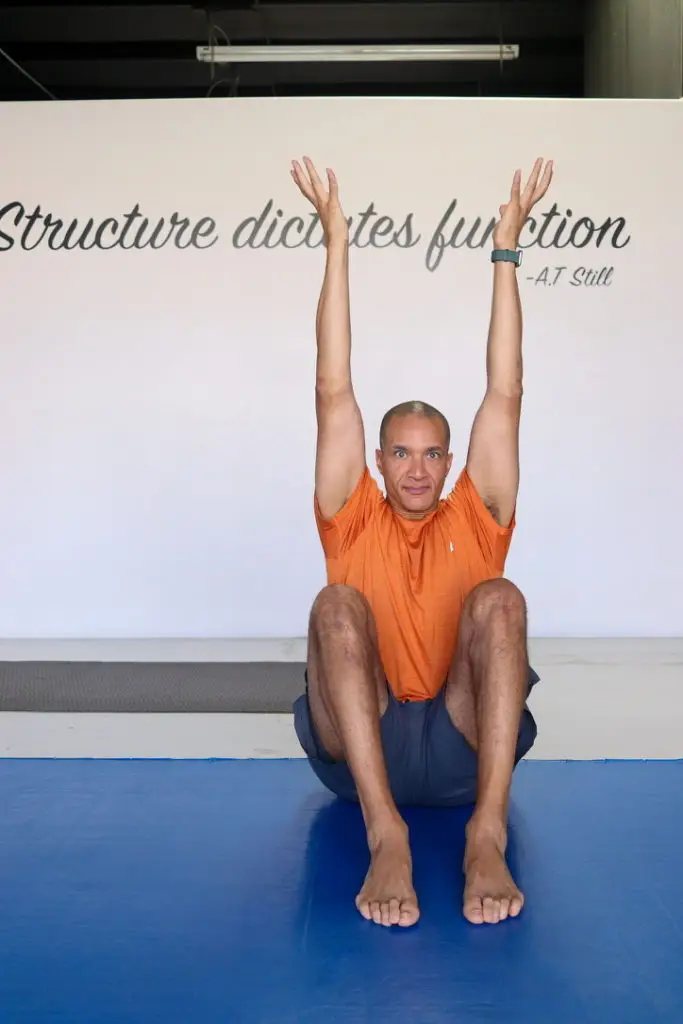
man doing seated ELDOA stretch with arms raised overhead for pain relief

I just want to be out of pain.” It’s a wish nearly everyone has uttered whether after a bad night’s sleep, a gardening mishap, or years of nagging aches. But the paradox is this: truly escaping pain long-term doesn’t involve avoiding it at all costs. It almost always means moving through discomfort, addressing the root cause, and correcting imbalances even when it’s challenging.

Pain: Not the Enemy, but a Messenger

Pain is your body’s dashboard light an alert that something is amiss. At first, it’s a whisper: a twinge while walking, dullness after a workout. Ignore it, and the volume rises: throbbing, stabs, or loss of mobility. Eventually, untreated pain will disrupt sleep, mood, relationships, and even your vision for the life you want.

Client story “Paul’s Pattern

Paul loved hiking but developed recurring knee pain that started as occasional stiffness and morphed over months into chronic swelling. He tried band-aid fixes NSAIDs, ice packs, even a cortisone injection. Pain diminished… briefly. But the problem wasn’t gone it simply went silent until the next adventure.

Two Roads: Mask or Correct

There are really only two options:

  1. Mask the pain: Medications, passive modalities (ice/heat), or quick treatments offer momentary relief but rarely address why the pain existed in the first place.
  2. Correct the root: This path is more challenging. It requires assessment, addressing movement patterns, building resilience, and yes—sometimes working through discomfort to restore function.

Why the Quick Fix Usually Fails

Covering up pain or chasing only comfort leads to…

  • Reliance on escalating meds or procedures (Tylenol > opioids > cortisone > surgery)
  • Greater tissue breakdown behind the scenes
  • Loss of confidence in your body, fear of movement, and in time… more pain

It’s like duct-taping over a check engine light.

The Courage to Correct

Story “Terri’s Turnaround

Terri, a runner, had low back pain off and on for years. Every time it flared, she’d skip core work and double down on “rest.” She never got lasting relief because she never addressed why her back hurt: weak glutes, stiff thoracic spine, and poor pelvic stability. With support at Sol Core, Terri committed to a program focused on mobility, core strengthening, and gradual progress sometimes through discomfort. Did it hurt at first? Sure. But within three months, her pain was gone, running was easier, and her confidence soared.

True Recovery Means Facing the Source

Long-term change relies on:

  • Assessment: Find WHY pain is present (movement dysfunction, imbalance, weakness, compensation).
  • Precision: Use corrective exercise and manual therapy to restore optimal patterns—don’t guess or self-treat randomly.
  • Consistent, Targeted Effort: Improvements take time. Your nervous system, joints, and fascia adapt only with persistent, quality input.
  • Learning Your Signals: Pain is rarely “fixed” overnight. Honor signals—differentiate productive discomfort from warning pain.

Why Even “No Pain” Isn’t Always Good News

Some clients say, “But I don’t hurt now—do I need to change?” Yes. The body is good at compensating (masking imbalances by overusing other tissues). Pain is sometimes the last sign. Like thirst, once it hits you, you’re already dehydrated.

Client Example: Maya’s “Hidden” Knee Risk

Maya, a hiker, had great energy no pain yet but her squat form and stair gait were off. Early intervention with a holistic exercise and fitness program corrected these patterns, preventing the injuries many of her friends later faced.

The Mindset Shift: See Discomfort as Positive

  • Productive Discomfort: Good pain is what you feel when a tight muscle finally stretches, or weak tissue begins to fire correctly.
  • Destructive Discomfort: Bad pain is sharp, stabbing, or worsening with good alignment—signal to stop and reboot.
  • Growth Mindset: Understand that challenge yields resilience. The short-term test leads to robust, pain-free living.

Blending Therapy and Training

At SolCore, our [holistic exercise and fitness program] uses a blend:

  • Assessment: Functional screens, posture checks, history review
  • Osteopathic manual therapy: To restore joint and fascial mobility
  • Corrective exercise: To teach your brain and body new, pain-free movement patterns (ELDOA, myofascial stretching, core stability)
  • Progressive overload: Safe intensity increases to develop strength and function for real life

When Rest Becomes Harmful

Rest is crucial in acute injury, but rest without re-training fosters stiffness, weakness, and recurrence. The right movement is medicine.

Facing Fear: Why We Procrastinate

Many fear discomfort—“What if I make it worse?” The right guide helps you differentiate helpful pain from harmful, and supports you one step at a time.

Results That Last

  • Pain relief that doesn’t return
  • More confidence and strength for life’s demands
  • Skills to manage future setbacks, instead of cycling back to square one

Ready for REAL Progress?

Don’t settle for fleeting relief. Take the courageous route: address the root, learn the signs, and embrace the wisdom of discomfort. If you’re ready to truly break the pain cycle, start with our holistic exercise and fitness program you’ll gain more than just comfort; you’ll unlock lifelong energy and freedom.

It’s not just working out, it’s building a foundation for a better life.

Find out more @
Facebook

LinkedIn

Pinterest

Instagram

Youtube

Bluesky

This is a Losing Formula

Weekend warrior navigating injury and recovery cycles

It’s not your fault you fell into this trap. Many people start their fitness journey with good intentions, playing sports as kids and feeling great. But as adulthood takes over and work weeks fill up with more sitting than moving, activity shifts mainly to weekends.

👉🏽 The aches and pains begin to show up. You seek help for quick fixes—therapy, cortisone shots, or procedures. At first, they provide relief, and you return to your habits, only to have pain reappear each time.
👉🏽 Over time, these solutions stop working. You throw the kitchen sink at the problem, chasing options that worked before, yet the pain persists. Surgery seems to be the final answer, but afterward you find your mobility and energy diminished—and your life scaled back.

You’ve been hoodwinked, bamboozled, run amok—stuck in a reactive cycle. The issue isn’t the solutions themselves, but relying on them as your main strategy without embracing how interconnected and holistic your body truly is.

Your body is more than a collection of parts. It’s a dynamic, interdependent system. Proactive health means learning to move, stretch, and strengthen with purpose, addressing root causes rather than symptoms alone.

Break the cycle. Shift your mindset, learn holistic strategies, and choose actions that support lasting health. Everything has its place shots, therapy, even surgery but sustainable results come from a proactive plan.

Inside [The Ultimate Guide For A Holistic Exercises And Fitness Program], you’ll find actionable advice, restorative routines, and science-backed methods to prevent injury and thrive as you grow stronger all year long.

It’s not just working out, it’s building a foundation for a better life.

Find out more @

Facebook

LinkedIn

Pinterest

Instagram

Youtube

Bluesky

Osteoporosis AND Bending Over: What’s Safe, What’s Not, and How to Move Better

osteoporosis bending over safety

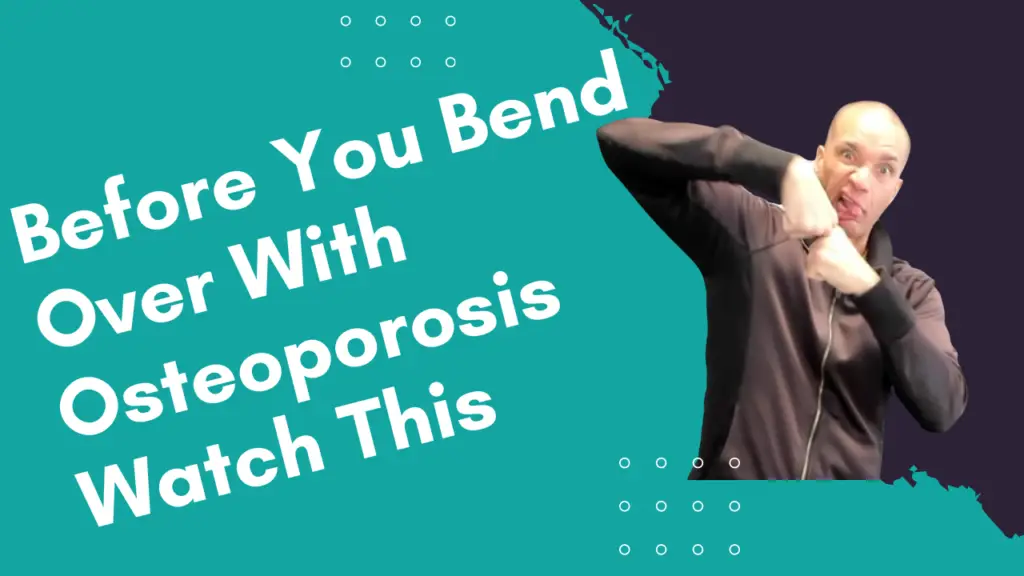
If you’ve been diagnosed with osteoporosis, chances are you’ve heard some version of this warning: “Don’t bend over you might break your back!” But is it really that simple? What if you drop something, need to garden or vacuum, or want to play with your grandkids? Does having osteoporosis mean you’re forever doomed to a life of restricted movement or is there a more balanced, empowering approach?

[The Ultimate Guide For A Holistic Exercises And Fitness Program]

The Standard Warning and Why It Exists

Osteoporosis thins your bones and makes them more fragile, especially at the spine. Standard advice is to avoid:

  • Forward flexion (bending at the waist with a rounded back)
  • Twisting (especially while flexed)
  • Lifting heavy items with poor body mechanics

The reason is simple: These moves sharply increase compressive forces on your spine, particularly the front part of your vertebral bodies, and this is exactly where bone is most fragile with osteoporosis. In fact, statistics show the majority of osteoporosis-related spinal fractures happen with simple, daily movements—not from falls or accidents. Even something as simple as bending to tie your shoes or pick up a pet can trigger a vertebral fracture if your posture is poor and your bones are weak.

Why This Advice Isn’t the Whole Story

But real life isn’t lived in a bubble. You WILL need to bend, reach, and twist from time to time. And here’s the truth: No two people with osteoporosis are exactly alike. Your risk of fracture is determined by far more than just your diagnosis. It’s about your overall bone density (as measured by your T-score), your history of fractures (or lack thereof), your balance and strength levels, your soft tissue health, your nutrition, and even your hydration and stress levels.

Did you know…?

  • A T-score from −1 to −2.5 is considered osteopenia (lower than average bone mass but not yet true osteoporosis).
  • Osteoporosis is diagnosed at −2.5 or below, and deeper negatives signal greater risk.
  • If you have had a previous spinal fracture, your risk of another is much higher.

What About Everyday Life?

Imagine you have beginning osteoporosis or osteopenia. You still want to hike, garden, travel, and play with your grandkids. Should you be terrified to bend? No! But should you move with greater awareness and make smart modifications? Absolutely.

Let’s break down the top considerations:

  1. Your Bone Density and History
    If your osteoporosis is advanced (lower T-score and/or history of spinal fractures), you must be extra cautious—especially with high-risk, forceful, or repetitive bends. If you’re earlier in the process and otherwise active, movement is critical for maintaining bone and muscle!
  2. Your Current Fitness and Mobility
    How balanced and strong is your body right now? If you have good posture, strong legs and hips, and flexible fascia, you’re already more resilient. If you’re already a little frail, dehydrated, or consistently out of alignment, your risk is higher—and so your plan needs to start with foundations.
  3. Your Technique: Bending Smart
    The key for everyone—regardless of bone density—is learning and practicing safe movement patterns:
  4. Hip hinge, not spine curl: Bend at the hips and knees, sticking your chest out, so your back stays straight and the force is safely absorbed in your larger stabilizer muscles.
  5. Keep movement slow and controlled: No quick, abrupt bends. Avoid bouncing or twisting motions.
  6. Keep weight close to your body: Don’t reach, stretch, and twist while holding something heavy or awkward.
  7. The Power of Whole-Body Training
    Here’s what’s often missing from most online advice: Total body balance, hydration, fascia health, and postural training are all crucial. Balance helps prevent falls. Hydration and soft tissue health support bone health, nutrient delivery, and safe movement.
  8. Training for balance and stability protects you from both falls and spinal stress.
  9. Maintaining your four spinal curves and strengthening your deep core (abs, back, and trunk muscles) disperses forces more safely.
  10. Hydration supports disc “fluffiness” and joint health—reducing spinal compression and painful movements.
  11. You CAN Build (or Re-Build) Bone Strength Safely!
    Safe weight-bearing, resistance, and low-impact exercises (like walking, light resistance, Nordic walking, and gentle yoga—avoiding loaded flexion and twisting) stimulate new bone growth, help you maintain muscle, and boost confidence.
  12. Every Program Must Be Personal
    Your daily routine, goals (hiking, playing, gardening, or just remaining independent), nutrition, supplement needs, and even sleep and stress must be considered together—not just one-size-fits-all rules. If you’re deeper into osteoporosis, all activity should be customized, and for some people, only micro-movements and balance work are appropriate.

Practical “Yes/No” for Bending Over With Osteoporosis

  • Beginning osteopenia, active & balanced: Yes—with good technique, body awareness, and gradual progression.
  • Moderate osteoporosis, no previous fractures, working on fitness & nutrition: Cautious yes, with modifications and under expert supervision.
  • Advanced osteoporosis with previous fractures or other serious risk factors: Very limited—avoid flexion, get expert advice, focus on postural and functional strength, microstimulation, and sustainable movement patterns.

Never try to “push through” pain, round your back under load, or perform high-impact, jerky, or twisting exercises without guidance.

The Bottom Line

Bending over with osteoporosis is NOT an all-or-nothing rule. It’s a nuanced, highly individual decision, and it’s about good technique, foundational strength, and building your resilience over time. Most importantly, it’s about creating balance—throughout your day, your body, and your routine. With the right plan, support, and progression, you can stay strong, independent, and active for life.

it’s not just working out, it’s building a foundation for a better life.

Find out more @
Facebook

LinkedIn

Pinterest

Instagram

Youtube

Bluesky

How to Tell if It’s Low Back, SI Joint, or Hip Pain

back pain diagnosis

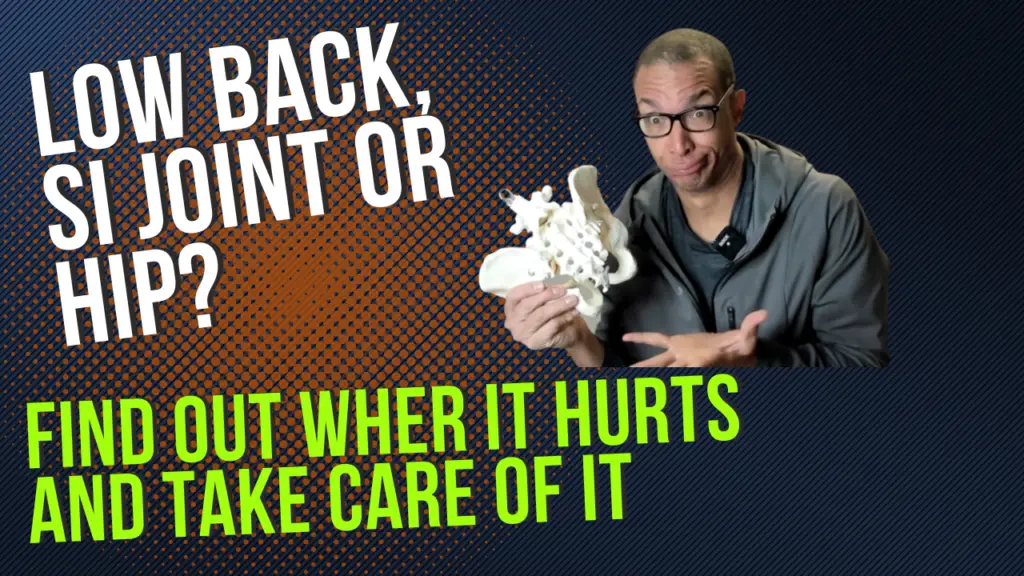
Click on the image to watch the full video

Ever feel a nagging ache, sharp jolt, or deep stiffness somewhere around your lower back, hip, or pelvis—but can’t tell exactly where it’s coming from? You’re not alone. These areas are interconnected and can easily “refer” pain to each other. Pinpointing the true source is key—since the wrong approach may not only fail to solve your pain, but actually make it worse.

Why Accurate Diagnosis Matters

Each area low back, SI joint, hip has its own causes, pain patterns, and best next steps. Back pain can show up from disc/herniation, strained ligaments, facet joints, or nerve compression, often signaled by pain with bending, twisting, or sitting. SI joint issues cause sharp or aching pain at the dimples above your buttocks, sometimes radiating to the hip or thigh, usually worse with transitions like standing, stairs, or getting up from a chair. Hip pain tends to show deep, achy, or sharp pain in the groin, outer hip, or buttock, and is aggravated by walking, weight bearing, or rotating the leg.

[OMT: Osteopathic Manual Therapy]

Where Does Your Pain Fit?

  • Low Back: Pain between lower ribs and pelvis, worse with bending/lifting, may radiate down into the buttocks or leg (sciatica).
  • SI Joint: Achy, stabbing pain at the upper buttock “dimples,” worse with sitting, stairs, standing from a chair, or rolling in bed.
  • Hip: Deep, aching or sharp pain in front of the groin, outer hip, or buttock, worse walking or rotating the leg, or standing up.

Because these tissues share nerves and muscle attachments, problems frequently overlap. SI joint instability can create tension and pain in both the low back and hip, and vice versa.

What to Do Next

  • Get Assessed Holistically: A great intake includes physical tests, history, movement screening, posture, past injuries, and lifestyle.
  • Prioritize Mobility and Balance: Include corrective exercises for the suspected culprit, but address every link in the chain—muscles, joints, connective tissue, and posture.
  • Integrate Injury Prevention: Pain in these regions can lead to compensation injuries, so proactive balance, core work, and muscle activation are essential.
  • Choose the Right Help: If your symptoms persist, get help from a pro who specializes in holistic, functional movement (not just isolated fixes).

Takeaway:

The right approach starts with locating your pain and understanding your personal pattern. With clear information and targeted training, you can restore efficient movement without setbacks or guesswork.

it’s not just working out, it’s building a foundation for a better life.

Find out more @
Facebook

LinkedIn

Pinterest

Instagram

Youtube

Bluesky

Back Pain After Covid

back pain after covid

Click on the image to watch the video

Are you dealing with back pain after COVID-19? You’re not alone. Back pain is one of the most common lingering symptoms after both infection and recovery a challenge felt by people of all ages and activity levels.

Why Back Pain Happens After Covid

Back pain can be a direct effect of COVID due to myalgia—generalized muscle and soft tissue pain caused by your body’s inflammatory response to fighting off the virus or as a side effect of the vaccine. Inflammation doesn’t always end when you test negative; your body might continue “defending” for weeks or even months, causing ongoing aches and back pain. This is part of what is known as “long COVID”.

Indirect causes are just as important:
Many people become more sedentary after (or during) illness—sitting more, working from home, and losing their regular movement and exercise routines.
Stress and lack of work-life balance increase tension, particularly in the spine, neck, and back.
Dehydration, already a common problem, is made worse as your body uses more water during infection and healing, leaving your discs and fascia less resilient.

Is It “Just” Covid, or Something Else?

If you notice new or worsening back pain after COVID, ask:

  • Was the pain present before, and is it worse now?
  • Are there other aches, joint issues, or general body pain? If so, it could be “long COVID.”
  • If you’re simply sitting more, skipping movement, or under new types of stress—those factors can be just as powerful.

Always follow up with your healthcare team to rule out reinfection or other health issues. For most, the pain is NOT dangerous, but persistent inflammation, dehydration, inactivity, or stress must be addressed for full recovery.

What Should You Do?

  1. Hydrate thoroughly. Start each day with water and keep drinking throughout the day to rehydrate the spine, joints, and fascia.
  2. Rebuild your work/life boundaries. Set opening/closing routines (especially if working from home), get up regularly, and don’t allow “life creep” into all hours.
  3. Move more—gently and consistently. Aim for general daily activity (steps, gentle walks), not just “weekend warrior” blasts. Progress specific corrective exercises for your back, core, and posture as you recover.
  4. Mind your stress. Take time to rest, get outside, meditate, and actively de-stress—your body and back will thank you.
  5. Start or restart a balanced corrective/exercise program. Don’t jump right into intense workouts; first, restore foundational control and flexibility so your body adapts, not just compensates.

[Myofascial Stretching: The Best Total Body Active Stretches]

Persistent back pain after COVID is often multifactorial and almost always holistic in solution hydration, gentle movement, stress management, and a sustainable corrective program are key.

it’s not just working out, it’s building a foundation for a better life.

Find out more @
Facebook

LinkedIn

Pinterest

Instagram

Youtube

Bluesky

BACK PAIN, HERNIATIONS, VISCERAL PROBLEMS, FATIGUE: Signs Your Core Muscles Are Weak

weak core signs

Weakness in your core is about much more than just missing “six-pack” abs. It’s the foundation of how your body functions daily impacting pain, injury risk, posture, digestion, and energy. Here’s how a truly weak core reveals itself, how these problems are connected, and what to do about it.

What Actually Is the Core And Why Does It Matter?

Your true core is a wide, complex system: four layers of abdominals, three layers of spinal erectors, the diaphragm, pelvic floor, intercostals, lats, pecs, and even parts of your glutes and hip flexors. These muscles are surrounded and integrated by robust fascia, forming your body’s “corset” for stability, movement, and organ support.

A strong core anchors your upper and lower body—power ripples out through it whether you’re running, lifting, cleaning, or simply standing and turning. When your core is weak, force doesn’t distribute through your system and ends up causing strain, injury, or dysfunction elsewhere.

1. Back Pain and Why You Can’t Fix It from the Outside

Back pain is the most classic sign of a weak or deconditioned core. Your abdominal muscles (especially the deep TVA) and the layers of back extensors are responsible for keeping the natural spinal curves and providing “active stability” to every vertebra. When the core can’t do this job, small muscles and ligaments are overloaded, discs degenerate, and pain is inevitable.

Chronic sitting, stress, and dehydration make this even worse: the discs between the vertebrae need water and dynamic core support to stay “fluffy” and absorb shock. If your core coordination is off, those discs flatten, allow unnatural movement, and eventually trigger pain—no matter how often you stretch or see a chiropractor.

2. Herniations Spinal and Visceral

Core weakness doesn’t just set you up for spinal disc herniations. If there’s a literal or functional “hole” (from weak, stretched, or deconditioned tissues), your thoracic and abdominal organs can shift and even herniate out of their natural compartments. Classic examples include weak points in the abdominal wall (inguinal or umbilical hernias) and “internal” herniations, where organs slip through diaphragmatic or pelvic floor defects.

Pascal’s Law—the principle that pressure applied to a fluid spreads equally in every direction—applies here. When your core can’t “hold pressure,” force escapes through the path of least resistance, causing pain, tissue strain, or an actual bulge. Keeping the abdominal wall strong, coordinated, and flexible gives you a true “wall,” not a revolving door.

3. Visceral and Digestive Problems

The core is also your body’s anchor for digestive health and internal motility. Weakness or loss of tension in the deeper tissues—especially the diaphragm and abdominal wall—reduces both the stability and movement of your organs, affecting drainage, blood flow, and bowel motility. That can mean sluggish digestion, bloating, or a feeling of heaviness that no medication seems to fix.

If your core is “loose,” your organs aren’t supported and can’t do their job. When you retrain the diaphragm, address core strength and posture, and restore balance, digestion and energy improve.

4. Fatigue, Poor Balance, and Posture Problems

Your core is at the center of every movement supporting your skeleton and acting as the communication hub for balance, agility, and force transfer. If it’s weak, bigger, less efficient muscle groups work overtime just to maintain basic positions (like standing, sitting, or picking something up), resulting in rapid fatigue and muscle aches.

Poor core strength also contributes directly to slouching, “tech neck,” and postural collapse. Good alignment spreads workloads efficiently, while slouched or tilted posture focuses them in harmful areas—creating a vicious cycle of pain and tiredness.

Building Your Core The Right Way

Start from the deepest muscles—train your TVA, diaphragm, and multifidi for internal control before progressing to external movers like obliques and erectors. Exercises that integrate breathing, maintain alignment, and combine both strength and flexibility give you durable protection and performance. Segmental strength work, myofascial stretching, and consistent attention to hydration and posture are cornerstones for rebuilding a core that lasts.

[Segmental Muscle Strengthening]

If chronic pain, fatigue, or internal issues are holding you back, don’t just “work out” address your foundation. For a completely customized approach, book a diagnostic consult or download our expert core-strength guide below.

it’s not just working out, it’s building a foundation for a better life.

Find out more @
Facebook

LinkedIn

Pinterest

Instagram

Youtube

Bluesky

Santa Fe Are Your Shoes to Blame for Lower Back Pain?

Shoes and lower back pain infographic

Could Your Footwear Be the Hidden Reason for Your Back Pain?

When imagining the sources of back pain, most people think about sports injuries or heavy lifting. Yet, the shoes worn every day might be just as much to blame. The feet are quite literally the foundation for all movement. Any breakdown in that foundation—poor arch support, worn out soles, unstable high heels—can add up to excessive stress on the spine and supporting muscles.

Those whose jobs require standing for hours or carrying weight regularly are especially at risk. The wrong shoe can trigger not only back pain, but knee, hip, and even neck discomfort by destabilizing the body from the ground up.

How Shoes Impact Gait and Spinal Health

Shoes that lack proper support or alter natural gait—like flats, flip-flops, and toe shoes—may cause under-pronation or over-pronation. These changes increase impact through the spine, muscles, and ligaments, leading to chronic fatigue and pain. Even popular but unsupportive choices, like ballet flats or flip-flops, can make things worse for both the feet and the back, while high heels are notorious for shifting stress into the lower back, hips, and even causing disc degeneration.

A healthy stride means the heel strikes first, the arch rolls in, and the toe pushes off. Shoes that disrupt this sequence can lead to repetitive strain, and footwear that’s old or worn out only compounds the problem—over time, it reduces shock absorption, flattens arches, and alters natural motion.

Make Smart Choices—For Everyday and for Fitness

Not all shoes are bad news. Athletic shoes with high-quality cushioning and shock absorption are a much better choice for back health. And when in doubt? At SolCore Fitness, workouts are done barefoot whenever possible, giving feet and foundation a chance to move and function naturally.

Next time your lower back is aching after a long day, take a look at what’s on your feet. You may just find a simple solution to persistent pain!

For a full visual summary, see the infographic below:

Infographic: How Shoe Choice Impacts Spinal Health and Lower Back Pain Risk

Want more sustainable solutions for back pain and functional strength? Learn about our approach and get a free consultation:
https://www.solcorefitness.com/personal-training-and-manual-therapy/

Find out more @

Facebook

LinkedIn

Pinterest

Instagram

Youtube

Bluesky