
Spinal Strengthening Exercises

Mature Into a Smarter Way of Working Out

Mature Into a Smarter Way of Working Out

Youth is forgiving. In your teens, 20s, and maybe early 30s, nearly any routine “works.” Missed warm-ups? No problem. Heavy squats, endless HIIT, little sleep, junk food, and somehow you still bounce back for another day. But rounding the corner into your 40s, 50s, and beyond, everything changes. The old “more is better, push through pain, go harder” is no longer a sustainable badge of honor. Working smarter—not just harder—becomes the key to lifelong strength and wellness.

Why Your Workout Needs to Evolve

Aging isn’t just about candles on a cake. Recovery systems slow, inflammation accumulates, joints lose some elasticity, and old injuries “speak up” more quickly. If you keep training like you did at 25, here’s what happens:

  • Small imbalances compound, leading to chronic pain/injury.
  • Progress stalls—even regresses—as fatigue trumps results.
  • Motivation dips, as soreness and frustration replace joy.

Instead, those who thrive in their 40s, 50s, 60s and beyond adapt—preserving energy, mastering technique, and making recovery as important as work.

Client Story: From Burnout to Brilliance

Consider “Kevin.” At 47, he was still training like a competitive athlete: max-effort bootcamps, skipping rest, using the same “push-through” tactics as college. By 50, not only were his knees angry but his old back injury was shutting him down. When he sought help at SolCore, we didn’t just scale back his sessions—we rebuilt his plan:

  • Prioritize mobility and posture every session.
  • Swap pure muscle-building for myofascial chain work.
  • Layer in active recovery and structural exercises.
    Suddenly, his energy soared, his chronic aches faded, and (bonus) his work performance improved. “I train less, but I’m stronger and more capable than I was a decade ago.”

The Science: How Aging Bodies Change

  • Muscles: Lose mass and power if unchallenged, but respond well to smart, consistent resistance work—especially compound, functional movements.
  • Connective tissue (fascia): Stiffens and shortens with age or inactivity, needing stretching and hydration.
  • Joints: Cartilage thins, requiring joint-specific movement and less repetitive high-impact stress.
  • Hormones/Recovery: Recovery takes longer; sleep, hydration, and nutrition are now non-negotiable.

The New Playbook for Mature Training

1. Prioritize Joint Health and Mobility
Start every session with integrated movement prep (dynamic stretching, ELDOA, joint rotations, foam rolling). Focus on hips, shoulders, spine—where most compensations arise.

2. Quality Over Quantity

  • Use slower, controlled reps.
  • Master technique before adding weight.
  • Emphasize full range-of-motion—not just “how much can I lift?”

3. Mix Modalities

  • Blend strength, mobility, fascia training, and low-impact aerobic work.
  • Sample: Squat-to-overhead reach, push-pull combos, plank variations.

4. Build Structured Recovery In

  • Schedule rest days proactively (not as afterthoughts).
  • Use active recovery: walking, gentle swimming, yoga, or Personal Training guided stretching.
  • Truly rest—quality sleep, good food, thoughtful breathwork.

5. Incorporate Fascia and “Small Muscle” Training

  • Train stabilizers, not just big movers. Clamshells, balance work, banded holds, and manual therapy support.
  • Address connective tissue with specific myofascial release and stretching.

6. Respect Your History
Got an old injury? Give it extra love—modify to protect, not ignore.
Listen for “yellow lights:” fatigue, minor aches, sleep disruption—adjust before they become roadblocks.

Real World Results: Client Examples

  • “Samantha,” a competitive tennis player, refocused on core mobility and fascial health after 40. Result? Extended her playing years, reduced shoulder and hip pain, and even improved on-court speed.
  • “Linda,” who wanted to garden into her 70s, mastered hip stability, learning simple daily movements and stretches that kept her backyard her playground, not her nemesis.

The Power of Personal Training Over “One-Size-Fits-All”

A mature system means you don’t just copy the workouts of celebrities or pro athletes—you build from the ground up, with your body, goals, and realities front and center. That’s where SolCore’s [Personal Training] comes in:

  • Assessment: Where are your unique strengths, and what needs support?
  • Customized plans: Adjust for history, daily energy, and specific ambitions.
  • Progression: Every few weeks, gently ramp up challenge—never rush.
  • Education: Learn why you’re moving a certain way.

Benefits Beyond Injury Avoidance

  • Consistency: When joints feel good, you don’t skip.
  • Confidence: Each win builds belief in your body’s future.
  • Energy spillover: Improved focus at work, calmer relationships, higher mood.
  • Longevity: Decades of active, independent living—less time on the sidelines.

Mature Doesn’t Mean “Slower” It Means Smarter

A smarter approach often leads to (surprising!) leaps in strength and performance. You might lose “ego lifts,” but you’ll gain progress you can feel and measure for years.

Final Words: Play the Long Game

Stop battling your younger self or chasing internet trends. Shift your mindset:

  • You’re “building decades of adventure,” not counting reps for tomorrow.
  • You train so life outside the gym is richer—hikes, travel, play, community.
  • Invest in what matters: posture, mobility, strength, and joy of movement.

Ready to break the “old way” and build for the future? Explore our Personal Training options for science-backed, personalized programs designed for every phase of your life.

It’s not just working out, it’s building a foundation for a better life.

Find out more @

Facebook

LinkedIn

Pinterest

Instagram

Youtube

Bluesky

Why I Don’t Care What You Feel in Training

mind-body connection training

Yes, you read that right. It might sound harsh of course, I care about my clients. But I don’t trust your “feeling” as the best feedback when we’re retraining movement or building new mobility and strength. Why? Because the way you feel muscular or emotional can easily fool you.

The “Feelings Aren’t Reality” Principle

Let’s break it down:

  • Feelings are fleeting: Soreness is not the same as progress; ease is not always a sign of good form.
  • Old patterns “feel right” until you rewrite them: Most adults, especially those over 40, have ingrained compensations (chronic tightness, weak links) that “feel normal” but are anything but functional.

Example: Ava’s Shoulder Surprise

Ava had practiced yoga for 15 years. She swore she “didn’t feel” her left scapula in certain movements. When cued to use new muscle patterns, it felt wrong even though video showed improved alignment. Three months later, she reported, “That weird feeling is my new normal, and I’m stronger than ever.”

Why the Mind-Body “Signal” Gets Smudged

Neuromuscular pathways what science calls “neuro-engrams” get built by repetition, good or bad. If you spend years overusing quads and underusing glutes, “activating glutes” will feel awkward… until you do it long enough for your brain to remap.

The Wrong Question: “What Should I Feel?”

Instead, ask:

  • Is my form correct by external measurement (mirror, coach feedback, video)?
  • Am I consistent, able to repeat the movement cleanly under fatigue or stress?
  • Am I building range, not just “burn”?

The SolCore Holistic Approach

We cue the whole system, not just one muscle. A myofascial release may not “feel” as intense as a quad set, but works the network. Myofascial stretching resets connective tissue, releases stuck points, and encourages your brain to “map” movement differently.

Myofascial stretching is designed to help you rediscover correct sensation safe, sustainable, functional by breaking old compensations.

The “Proprioceptive Gap” and Why It Matters

Research confirms that adults often lose proprioceptive awareness (sense of internal movement/location) in injured or underutilized zones. Feel nothing? It’s not failure it’s the reason to keep going!

Analogy: Learning to throw with your off hand feels weird, awkward, “wrong” until the brain “remembers” the pattern.

Progress Comes With Patience

  • Trust the process: the feedback “I don’t feel it” is a normal start.
  • Work with structured, science-based cues. Trust video, mirrors, coaches.
  • Allow time for awkward to become organized, then efficient, then easy.

Story: Mark’s Squat Transformation

Mark always felt his “quads burn” in squats ever glutes or hamstrings. Video analysis revealed knee collapse and instability. Four weeks of mind-muscle connection coaching later, he “felt nothing…just the work.” But his squats became smoother, pain gone, jumps improved, and his “difficulty feeling” was actually his nervous system building new precision.

Don’t Get Fooled by Good or Bad Days

Sometimes you’ll feel “on top of the world.” Other days, you’ll wonder if you’ve made progress at all. This is noise in the system. Long-term results improved posture, increased load, reduced pain—matter far more.

How to Rewire Your Response

  • Practice repeatedly. The brain needs many reps to overwrite an old motor engram.
  • Embrace feedback. Seek external observation not just sensation.
  • Shift focus: “What can I control alignment, cadence, effort?” not “How intense is the burn?”

When Feeling is the Goal

Some modalities breathwork, relaxation do hinge on internal sensation. In performance and corrective exercise? The map is built by doing the work, feedback, and patience.

Ready to Break Out of “Feeling-Based” Ruts?

If you’re tired of chasing sensation (“am I doing this right?”) and want expert eyes and science-based progress, book a Myofascial stretching consult/session with us. Let’s remap your movement for long-term gains, not just fleeting feels.

It’s not just working out, it’s building a foundation for a better life.

Find out more @
Facebook

LinkedIn

Pinterest

Instagram

Youtube

Bluesky

The Irony of Wanting to Get Out of Pain

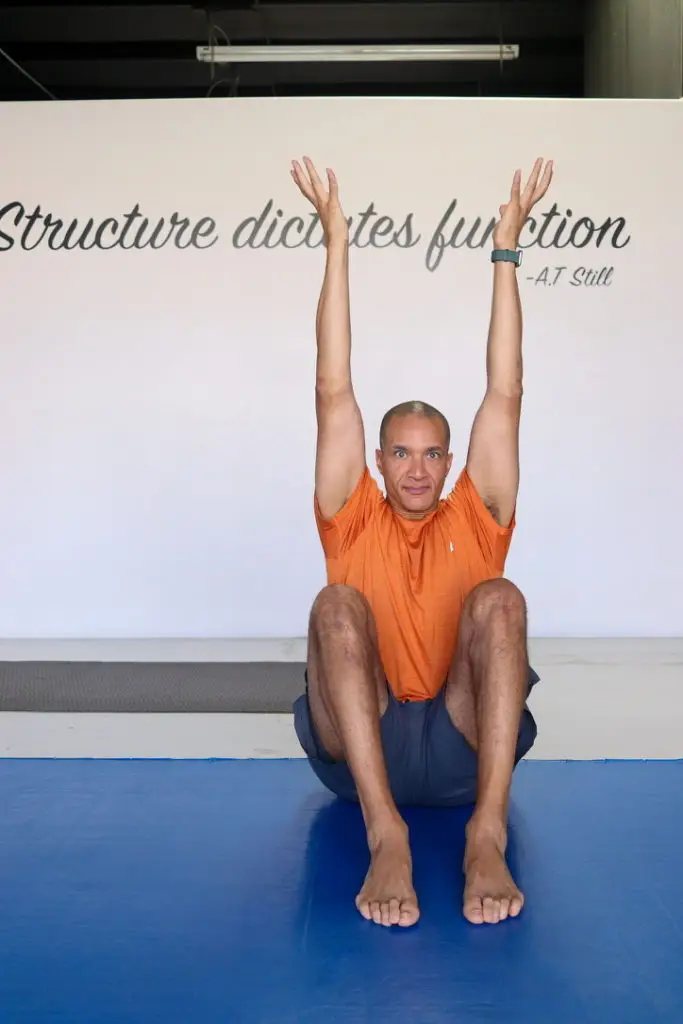
man doing seated ELDOA stretch with arms raised overhead for pain relief

I just want to be out of pain.” It’s a wish nearly everyone has uttered whether after a bad night’s sleep, a gardening mishap, or years of nagging aches. But the paradox is this: truly escaping pain long-term doesn’t involve avoiding it at all costs. It almost always means moving through discomfort, addressing the root cause, and correcting imbalances even when it’s challenging.

Pain: Not the Enemy, but a Messenger

Pain is your body’s dashboard light an alert that something is amiss. At first, it’s a whisper: a twinge while walking, dullness after a workout. Ignore it, and the volume rises: throbbing, stabs, or loss of mobility. Eventually, untreated pain will disrupt sleep, mood, relationships, and even your vision for the life you want.

Client story “Paul’s Pattern

Paul loved hiking but developed recurring knee pain that started as occasional stiffness and morphed over months into chronic swelling. He tried band-aid fixes NSAIDs, ice packs, even a cortisone injection. Pain diminished… briefly. But the problem wasn’t gone it simply went silent until the next adventure.

Two Roads: Mask or Correct

There are really only two options:

  1. Mask the pain: Medications, passive modalities (ice/heat), or quick treatments offer momentary relief but rarely address why the pain existed in the first place.
  2. Correct the root: This path is more challenging. It requires assessment, addressing movement patterns, building resilience, and yes—sometimes working through discomfort to restore function.

Why the Quick Fix Usually Fails

Covering up pain or chasing only comfort leads to…

  • Reliance on escalating meds or procedures (Tylenol > opioids > cortisone > surgery)
  • Greater tissue breakdown behind the scenes
  • Loss of confidence in your body, fear of movement, and in time… more pain

It’s like duct-taping over a check engine light.

The Courage to Correct

Story “Terri’s Turnaround

Terri, a runner, had low back pain off and on for years. Every time it flared, she’d skip core work and double down on “rest.” She never got lasting relief because she never addressed why her back hurt: weak glutes, stiff thoracic spine, and poor pelvic stability. With support at Sol Core, Terri committed to a program focused on mobility, core strengthening, and gradual progress sometimes through discomfort. Did it hurt at first? Sure. But within three months, her pain was gone, running was easier, and her confidence soared.

True Recovery Means Facing the Source

Long-term change relies on:

  • Assessment: Find WHY pain is present (movement dysfunction, imbalance, weakness, compensation).
  • Precision: Use corrective exercise and manual therapy to restore optimal patterns—don’t guess or self-treat randomly.
  • Consistent, Targeted Effort: Improvements take time. Your nervous system, joints, and fascia adapt only with persistent, quality input.
  • Learning Your Signals: Pain is rarely “fixed” overnight. Honor signals—differentiate productive discomfort from warning pain.

Why Even “No Pain” Isn’t Always Good News

Some clients say, “But I don’t hurt now—do I need to change?” Yes. The body is good at compensating (masking imbalances by overusing other tissues). Pain is sometimes the last sign. Like thirst, once it hits you, you’re already dehydrated.

Client Example: Maya’s “Hidden” Knee Risk

Maya, a hiker, had great energy no pain yet but her squat form and stair gait were off. Early intervention with a holistic exercise and fitness program corrected these patterns, preventing the injuries many of her friends later faced.

The Mindset Shift: See Discomfort as Positive

  • Productive Discomfort: Good pain is what you feel when a tight muscle finally stretches, or weak tissue begins to fire correctly.
  • Destructive Discomfort: Bad pain is sharp, stabbing, or worsening with good alignment—signal to stop and reboot.
  • Growth Mindset: Understand that challenge yields resilience. The short-term test leads to robust, pain-free living.

Blending Therapy and Training

At SolCore, our [holistic exercise and fitness program] uses a blend:

  • Assessment: Functional screens, posture checks, history review
  • Osteopathic manual therapy: To restore joint and fascial mobility
  • Corrective exercise: To teach your brain and body new, pain-free movement patterns (ELDOA, myofascial stretching, core stability)
  • Progressive overload: Safe intensity increases to develop strength and function for real life

When Rest Becomes Harmful

Rest is crucial in acute injury, but rest without re-training fosters stiffness, weakness, and recurrence. The right movement is medicine.

Facing Fear: Why We Procrastinate

Many fear discomfort—“What if I make it worse?” The right guide helps you differentiate helpful pain from harmful, and supports you one step at a time.

Results That Last

  • Pain relief that doesn’t return
  • More confidence and strength for life’s demands
  • Skills to manage future setbacks, instead of cycling back to square one

Ready for REAL Progress?

Don’t settle for fleeting relief. Take the courageous route: address the root, learn the signs, and embrace the wisdom of discomfort. If you’re ready to truly break the pain cycle, start with our holistic exercise and fitness program you’ll gain more than just comfort; you’ll unlock lifelong energy and freedom.

It’s not just working out, it’s building a foundation for a better life.

Find out more @
Facebook

LinkedIn

Pinterest

Instagram

Youtube

Bluesky

Trust the Process to Achieve Real Change

Trust the process to achieve real change

Trust the process. Coaches, mentors, therapists all say it at some point. But what does it actually mean for your health, your progress, and your long-term results? Most people get excited to start a new journey be it a fitness plan, recovery routine, or life overhaul but lose steam when results don’t come instantly. The truth is, any meaningful change comes from steady engagement with the process, not from chasing overnight breakthroughs.

Why Trusting the Process Is So Hard

Let’s be honest: we live in an instant-results culture. Order today, it’s shipped tomorrow. Click “like,” get a dopamine hit. Even in wellness, we’re bombarded with “30-day transformation” promises. But in the real world, true change looks more like a slow sunrise a gradual lightening, not a dramatic flash.

Client Story: “Travis and the Patience Game”
Travis was a cross fitter who injured his shoulder a mild tear that ended up needing months of work. Used to fast results, he grew frustrated by slow rehab: “Why am I not 100% after 4 weeks?” His turning point came when he realized each week brought small wins better sleep, less inflammation, a pain-free workday. By the 9th week, his “small wins” had added up to big progress but only because he surrendered to steady, thoughtful work and stopped chasing shortcuts.

The Four Stages of Real Change

  1. Uninformed Optimism: At first, you’re excited, hopeful, and ready to work. Easy wins come quickly (weight drops, energy surges, pain decreases a bit).
  2. Informed Pessimism: Progress slows or plateaus. Challenges multiply. Doubt arrives: “Is this working?”
  3. Valley of Despair: You face setbacks, mental fatigue, maybe even crisis (“I blew it—maybe I’ll quit”).
  4. Informed Optimism: Consistency starts paying off. Skills become natural, new strength or mobility returns, confidence soars.

The catch? Only those who trust the process make it to the fourth stage.

“Trust” Means Active, Not Passive

Trusting the process isn’t about blind faith or passivity—it’s about active participation. That means:

  • Showing up, even when you don’t feel motivated
  • Recording data (rest, sleep, mood, pain, wins, setbacks)
  • Communicating honestly with your coach or therapist

The Hidden Magic of Accountability

Self-guided change is possible—but community support, expert guidance, and outside “eyes” make progress easier, faster, and more fun. At SolCore, clients who stick to regular check-ins are far more likely to stay on track, adjust when obstacles arise, and celebrate progress at every stage.

Why Resets Take Time: Physiology and Mindset

  • Tissues need to adapt: Fascia, muscle, and joints repair slowly—three months for new collagen, six for tendon strength.
  • Nervous system rewiring: Habits are entrenchments in your nervous system; remapping takes countless reps and positive exposures.
  • Mindset maturity: Only by repeating the process through multiple setbacks do you really internalize resilience.

Story: “Naomi’s Year of Change”
Naomi came for osteopathic therapy after years of back pain and “failed” programs. We set realistic goals, focused on gradual posture changes, and celebrated every micro-victory. Six months in, her pain was 50% better but—more importantly—she was empowered to coach herself out of setbacks. By the one-year mark, she was not only pain-free, but confident, consistent, and self-motivated.

How to Enjoy (or At Least Honor) the Process

  • Set micro-goals: Track minutes walked, water drunk, or stretches performed—not just big milestones.
  • Document how you feel: Notice energy, sleep, focus. Progress is about wholeness, not just metrics.
  • Forgive yourself for dips: Setbacks are normal—not a sign of failure, but of growth.
  • Ask for reminders: Let your coach or teammates cheer you on through hard phases.

When to Adjust (Not Quit) the Process

If you’re consistent but not seeing any change after several months, it’s time for honest feedback and perhaps expert reassessment. Sometimes the path requires adjustment, not abandonment.

Role of Osteopathic Manual Therapy

Osteopathic manual therapy supports the process by:

  • Diagnosing small blockages and imbalances that sabotage progress
  • Resetting tissue and alignment so new habits can “stick” faster
  • Encouraging patients to be participants, not just patients

Clients often say: “The hands-on session lit a spark for faster breakthroughs—because it built on months of honest work at home.”

Final Words: Embrace the Long Game

Great change is never “done”; it’s a lived, evolving process. There’s joy, strength, and pride in mastery not just results. Whether you’re starting today or starting over for the tenth time, the key is to trust the process, show up, and welcome the learning journey itself.

Ready for guidance and support? Book a session with us for osteopathic manual therapy or a consult on your next training phase. Let’s build something that lasts together.

It’s not just working out, it’s building a foundation for a better life.

Find out more @
Facebook

LinkedIn

Pinterest

Instagram

Youtube

Bluesky

This is a Losing Formula

Weekend warrior navigating injury and recovery cycles

It’s not your fault you fell into this trap. Many people start their fitness journey with good intentions, playing sports as kids and feeling great. But as adulthood takes over and work weeks fill up with more sitting than moving, activity shifts mainly to weekends.

👉🏽 The aches and pains begin to show up. You seek help for quick fixes—therapy, cortisone shots, or procedures. At first, they provide relief, and you return to your habits, only to have pain reappear each time.
👉🏽 Over time, these solutions stop working. You throw the kitchen sink at the problem, chasing options that worked before, yet the pain persists. Surgery seems to be the final answer, but afterward you find your mobility and energy diminished—and your life scaled back.

You’ve been hoodwinked, bamboozled, run amok—stuck in a reactive cycle. The issue isn’t the solutions themselves, but relying on them as your main strategy without embracing how interconnected and holistic your body truly is.

Your body is more than a collection of parts. It’s a dynamic, interdependent system. Proactive health means learning to move, stretch, and strengthen with purpose, addressing root causes rather than symptoms alone.

Break the cycle. Shift your mindset, learn holistic strategies, and choose actions that support lasting health. Everything has its place shots, therapy, even surgery but sustainable results come from a proactive plan.

Inside [The Ultimate Guide For A Holistic Exercises And Fitness Program], you’ll find actionable advice, restorative routines, and science-backed methods to prevent injury and thrive as you grow stronger all year long.

It’s not just working out, it’s building a foundation for a better life.

Find out more @
Facebook

LinkedIn

Pinterest

Instagram

Youtube

Bluesky

Spinal Strengthening For Your Core It’s About Health, Not Vanity (Part 1)

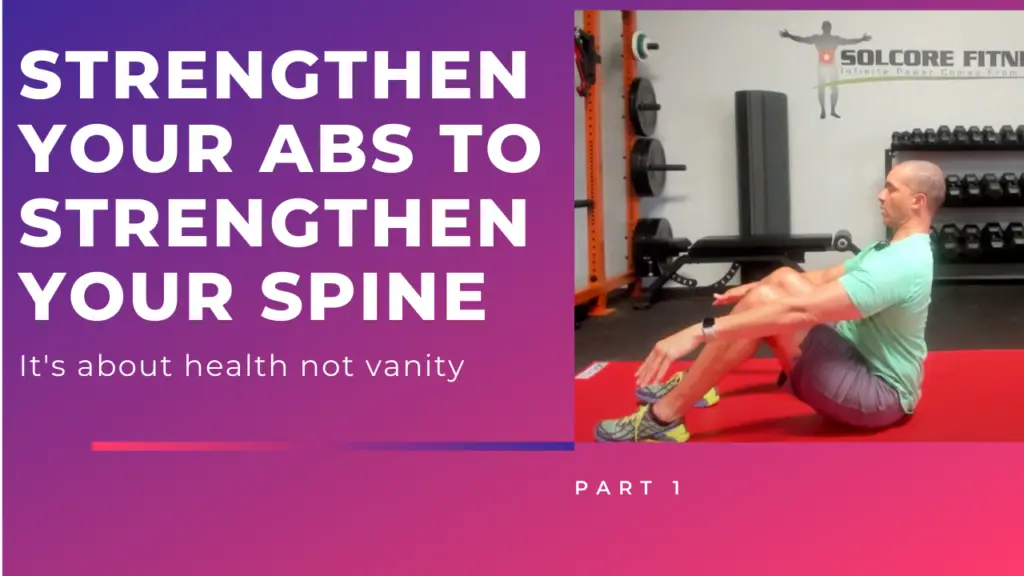
Spinal strengthening core exercises demonstration

Click the image to watch the video

Why Spinal Strengthening Is About Health, Not Vanity

Building a strong core isn’t just about abs—it’s about long-term health, resilience, and a symptom-free spine. The true core includes everything between the neck and pelvis: deep spinal stabilizers, diaphragm, abdominal wall, latissimus dorsi, pectorals, and the muscles of the shoulder girdle. For sustained wellness, these muscles must work as an integrated system, not in isolated movements.

Rethinking Common Core Exercises

Most people encounter the same generic ab and core exercises, but the science shows that effective spinal strengthening requires a thoughtful, holistic, and progressive approach. Routines focused solely on planks, crunches, or static holds miss the essential function of interdependent muscle chains. For real results in spinal health and posture, all directions and layers of your core muscles must be engaged, both globally and segmentally.

The Importance of Spinal Stabilizers

Your deepest core muscles—closest to the spine—are the real MVPs. The brain recruits these stabilizers first, sending signals down the spine before engaging bigger muscle groups for complex movement. Only with strong, responsive deep stabilizers can the entire core coordinate properly for posture, dynamic strength, and injury prevention.

ELDOA: The Ultimate Spine And Joint Exercises

How to Activate Your Deep Core Muscles

The Transverse Abdominis (TVA) Breathing Drill

Imagine the TVA as an internal girdle wrapping your waist. To train it, perform diaphragmatic breathing to fill the abdominal cavity with pressure, contract your pelvic floor, and cinch the TVA tightly. Breathe deeply, maintain pressure, and resist movement at your shoulders or chest. Aim for up to five reps per set, increasing duration as you master the technique.

The Diaphragm Drill

The diaphragm links directly with the TVA and spine. Practice abdominal breathing—keep shoulders relaxed—and then add light weight on your belly button, lifting with your breath for three sets of twenty reps, progressing the resistance over time. Pascal’s Law proves that internal pressure supports the entire core uniformly.

Articulation and Roll-Ups for Spinal Function

The Roll Down/Roll Up Sequence

Healthy spines need segmental movement. Practice rolling down and up slowly using only your abs and spinal muscles, articulating each vertebra in sequence. If you can’t reach the ground, perform partial reps—aim for three sets of fifty, progressing to one hundred as capacity improves.

[H2] Putting It All Together for Spinal Health

Every element here deep muscle activation, breathing technique, segmental movement, targeted stretching should be programmed and progressed according to your individual needs. Never rely on just one or two exercises for full spine health.

Ready for sustainable spinal strength and true core function? Explore our advanced ELDOA programs and resources for a holistic, progressive path to a resilient spine.


Find out more @

it’s not just working out, it’s building a foundation for a better life.

Facebook

LinkedIn

Pinterest

Instagram

Youtube

Bluesky

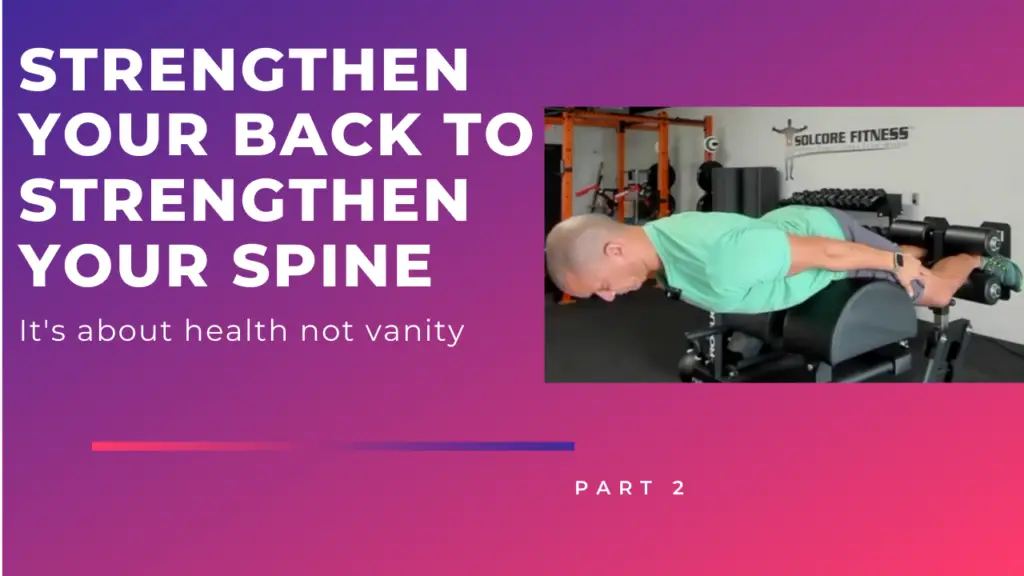
Spinal Strengthening For Your Core It’s About Health, Not Vanity (Part 2)

Spinal strengthening back muscles exercise

Click the image to watch the video

Building Real Spinal Strength: Moving Beyond Abs

If you want a truly strong core, you need more than ab exercises—you must also strengthen the muscles of your back and spine itself. True core stability comes from balanced contraction and coordination of the transversospinalis, longissimus, and iliocostalis muscle groups, which support, rotate, and stabilize your whole trunk.

Key Muscles for Spinal Strengthening

Your primary focus is on three key muscle groups running from the center out:

  • Transversospinalis
  • Longissimus
  • Iliocostalis
    Training these means working both your upper and lower spinal segments, and integrating global (whole-body) and segmental (isolated) movement for stability.

Effective Spinal Strengthening Exercises

Upper Longissimus: Torso Raising

Lie face-down on a firm surface (bench, table, mat), feet securely anchored. Lower your torso with arms by your sides, engage your core by tucking your pelvis, push your chest out, and lift your upper body toward parallel with the floor. Never lose your pelvic tuck—control is key. Repeat, building up to three sets of 50–100 reps for stability and strength.

Lower Longissimus: Leg Raising

Flip your body around so your legs hang off and your upper body is anchored. Keep your torso stable, pelvis tucked, and legs straight, and lift your legs up toward the ceiling, stopping if the back arches. Repeat, focusing on spinal alignment for safe strengthening.

Fine-Tuning for Shoulder Girdle & Upper Back

Prone Butterfly for Rhomboids

To integrate your shoulder girdle, perform the butterfly drill. Lie face down with arms slightly wide and straight. Keeping chest and pelvis down, lift arms up and lower them, progressing to rapid “flaps” at higher reps (3 sets of 100). This targets the rhomboids and postural stabilizers between the shoulder blades.

ELDOA: The Ultimate Spine And Joint Exercises

The Big Picture: Sequencing for Optimal Spinal Health

Proper spinal strengthening isn’t just about muscle activation—it’s about sequencing exercises, starting with foundational movements and progressing to advanced drills. Segmental training, posture control, and consistent repetition safeguard against pain and injury and help you unlock true functional performance.

Ready to break past your roadblocks? Download or sign up for our advanced video series to progress further and optimize strength for lifelong spinal health.

Find out more @

it’s not just working out, it’s building a foundation for a better life.

Facebook

LinkedIn

Pinterest

Instagram

Youtube

Bluesky

Spinal Health And Wellness The Best Way To Strengthen It Properly

Spinal health and wellness biomechanics

Click on the image to watch the video

Why True Spinal Health Starts on the Inside

When most people search for spinal wellness, they see advice for planks or one-size-fits-all core exercises. But your spine is a complex system, not a simple column—it relies on layers of small stabilizer muscles, ligaments, fascia, and the interplay between the diaphragm and abdominal wall to manage forces and protect structure.

Thinking of your spine as a “dynamic bridge,” every segment needs to distribute forces—much like support beams sending weight through a bridge’s arch. If you only train surface-level muscles, the bridge weakens, but if you start deep—activating small motors at each segment—you send signals to your brain that enable better movement control and stability at every step.

The Biomechanics of Spinal Progression

Why Starting Deep Matters

Biomechanics explains that compressive forces from gravity, body weight, and movement are magnified through the spine, especially if stabilizing muscles have a tiny moment arm (distance from the joint). Small deep muscles substantially increase compressive load-resistance and prevent buckling, instability, and pain even with everyday activities the spine withstands hundreds of pounds of pressure.

Imagine trying to stand tall on a flexible tower: without tightly coordinated “cables” inside, it would collapse under even mild stress. Your spine’s deep muscle system acts as internal cables, holding shape and resisting collapse under daily life loads.

Muscle Activation and Intelligent Strength

Research shows the brain recruits small, deep stabilizers first, before letting larger muscles move your torso or limbs. When deep stabilizers are “intelligent” (well-activated and aware), you get stronger feedback about posture, coordination, and load-sharing. This prevents overuse at one spot and helps every joint, disc, and ligament function optimally throughout each movement.

Segmental Strengthening and ELDOA: A Targeted Starting Point

Protocols like ELDOA (Elongation Longitudinal avec Decoaptation Osteo-Articulaire) focus on segmental strengthening by opening specific spinal levels, enhancing proprioception, and distributing loads in the most natural way. Every segment becomes a “mini shock absorber,” spreading out the forces that, without attention, could degrade tissues or increase nerve pressure.

ELDOA: The Ultimate Spine And Joint Exercises

How to Progress Safely for Sustainable Spinal Health

  • Begin where you are: strengthening inside-out, not just on the surface.
  • Progress from deep activation (e.g. segmental/ELDOA) to broader core and postural training when ready.
  • Focus on alignment, breath control, and listening to body feedback for the safest path forward.

Making the Science Relatable

Spinal biomechanics may sound technical, but the takeaway is simple: build your program like you’d reinforce a bridge, starting with hidden supports, then adding broader beams as the structure allows. Educate your body so it can “feel” and adapt to force, rather than simply powering through on autopilot.

Key Takeaways

Respect the science and let your body grow from the inside out for optimal spine wellness.

Spinal health is about layered progression and intelligent muscle activation, not just surface moves.

Segmental and ELDOA-type training gives your spine the hidden strength and feedback needed for longevity and pain-free living.


Find out more @

it’s not just working out, it’s building a foundation for a better life.

Facebook

LinkedIn

Pinterest

Instagram

Youtube

Bluesky

Spinal Health And Wellness For Sustainability And Pain Relief

spinal health and wellness pain relief science

The Science of Spinal Health: More Than Just a Column

Most people are taught to think of the spine as a rigid column, but in reality, it’s a flexible, dynamic structure. Spinal health depends on preserving three key curves (cervical, thoracic, lumbar). When any curve flattens or over-accentuates, the spine’s strength drops—as shown by the Delmas Index—and forces concentrate in weak spots, amplifying pain and degenerative risk.

Analogy: The Bridge Supported By Arches

Imagine your spine like a bridge supported by multiple arches. If one arch (spine curve) weakens or collapses, the bridge loses half its strength and starts to buckle under loads—just like your own spine when a curve is lost from poor posture, injury, or muscular imbalance.

Why Spinal Muscle Teams Matter for Pain Relief

Everyday actions require a coordinated team: back muscles, abs, girdle stabilizers, and connective tissues. When muscles don’t support the spine’s curves, compensatory motion leads to excess wear, poor movement, and pain. This is why pain-relief protocols focus on restoring balanced stability and functional alignment rather than just masking symptoms.

Sustainable Health: Progressive, Holistic Support

Sustainability means working with your body’s current state and improving bit-by-bit—a progressive, individualized process instead of quick fixes or one-size approaches. Holistic programs incorporate not only strength and movement, but also posture, lifestyle adjustments, sleep, and anti-inflammatory nutrition.

Assessment and Awareness: The Cornerstones

True pain relief and lasting spinal health begin with regular assessment: Are your curves in healthy ranges? Can you maintain neutral posture against a wall? Becoming aware of these metrics allows for informed changes—like adjusting ergonomics, seeking expert help, or starting tailored mobility routines.

The Why Behind Curves, Alignment & Load

Research in biomechanics reveals the importance of good spinal curves for evenly distributing stress throughout each movement. Loss of even one curve transmits much greater force to the discs and nerves like a bridge collapsing at the point of a missing support. Over time, unchecked misalignment leads to chronic pain, joint degeneration, and higher surgery risk.

Understanding Pain Relief With Science

Motor control stabilization exercises and posture restoration have been shown in systematic reviews to bring sustainable improvement in pain and disability for chronic low back pain sufferers. The body adapts both acutely (via endorphins and nerve changes) and chronically (via increased function and motor pattern correction through proper guidance and support).

Key Takeaways

  • Maintaining spinal curves and balanced muscle support is essential to prevent pain and sustain wellness.
  • Think of your spine like a bridge—follow structure and science to keep the arches strong.
  • Pain relief and long-term function require regular assessment and gradual, individualized improvement.

ELDOA: The Ultimate Spine And Joint Exercises

Find out more @

it’s not just working out, it’s building a foundation for a better life.

Facebook

LinkedIn

Pinterest

Instagram

Youtube

Bluesky

ELDOA Stretching? Why ELDOA Is NOT a Stretch, But an Exercise

ELDOA stretching vs strengthening science

Click on the image to watch the video

ELDOA: Strengthening, Not Stretching Here’s the Science

Many associate ELDOA with flexibility or yoga-like stretching, but ELDOA is fundamentally different. Instead of creating passive length, it uses an extreme end-range muscular contraction—an intense, sustained effort to separate joint surfaces and strengthen the tissues surrounding them.

Biomechanics: Borelli’s Law and Extreme Range

ELDOA is based on a biomechanical rule described by Borelli: every muscle operates through five ranges (total, middle, internal, external, extreme). ELDOA targets the “extreme range,” where maximum tension pulls actin and myosin fibers far apart and all motor units are recruited. This builds endurance, resilience, and deep stability rather than relaxation or pampering.

Why ELDOA Is Different From Yoga or Passive Stretching

Yoga, stretching, and ELDOA may appear similar visually, but the neuromyofascial, biomechanical, and effort profiles are worlds apart. In yoga or typical stretches, relaxation and temporary lengthening occur. ELDOA demands deliberate, total muscular engagement—building global tension throughout the body and targeting specific joints for decompression and alignment.

Analogy: Building Space Under Pressure

Imagine trying to “build space” at a joint by push-pulling from opposite ends—abs, chest, neck pushing up; hips and legs pressing down. This feels like effort, not ease, similar to pulling a stuck drawer apart. With ELDOA, you consciously recruit every fiber, hold tension, and “educate” the tissues to handle force and maintain spacing even under stress.

The Anatomy of ELDOA for Spinal Health

In practice, ELDOA is most famous for its application to spinal segments. Through precise body positioning, joint decoaptation, and maximal tension, it decompresses vertebrae, hydrates discs, and aligns posture. The benefit comes not just from “lengthening” but from teaching the spine to organize, bear load, and resist compression in daily life.

ELDOA: The Ultimate Spine And Joint Exercise

Key Takeaways: Why ELDOA Changes Movement, Pain, and Posture

  • ELDOA is strength-focused, not relaxation-focused; it teaches the body to sustain effort in end-range.
  • The intense tension recruits all muscle fibers, remodels fascia, and creates space in the joints.
  • Benefits include pain relief, improved posture, hydration, and lifelong spinal resilience when used with a holistic program and proper mindset.


Find out more @

it’s not just working out, it’s building a foundation for a better life.

Facebook

LinkedIn

Pinterest

Instagram

Youtube

Bluesky