
Injury Prevention

Is Hanging For Back Pain A Real And Safe Solution? ๐Ÿง

Back pain affects over 550 million people worldwide, and with that kind of number, itโ€™s no surprise people are searching for reliefโ€”fast. One of the more popular trends? Hanging from a pull-up bar to decompress the spine. But is this method really helping, or could it be doing more harm than good?

Letโ€™s break it down through a holistic, fascia-informed lens, so you can understand whatโ€™s really happening when you hangโ€”and whether itโ€™s a smart choice for your back.

Click on the image to watch the full video
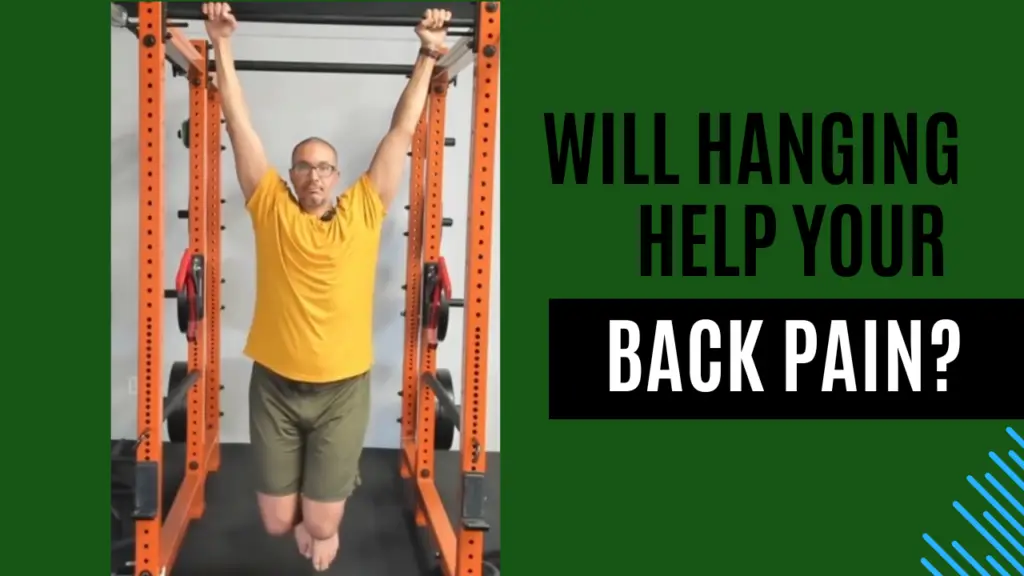
๐Ÿ” Why People Hang for Back Pain

The theory is simple: when you hang, your body weight creates a gentle pull on the spine, which seems to decompress the vertebrae. Itโ€™s popular among physical therapists and fitness influencers who promote spinal decompression as a fix for bulging discs, tight backs, or just general discomfort.

But like most things in health and fitness, simple doesnโ€™t mean effectiveโ€”and it certainly doesnโ€™t mean safe for everyone.


๐Ÿšซ When Hanging Might Do More Harm Than Good

Letโ€™s start by understanding what kind of back pain youโ€™re dealing with. Here’s a simple breakdown:

  1. No pain โ€“ Fine for general feel-good movement
  2. Semi-chronic โ€“ Occasional flare-ups
  3. Chronic โ€“ Consistent daily discomfort
  4. Acute โ€“ Sharp, intense pain or injury

๐Ÿ”ด Acute or chronic pain? Avoid hanging. Your body is already inflamed and dysregulated. Hanging adds unpredictable force to an unstable systemโ€”itโ€™s not specific, and it can worsen the problem.

๐ŸŸก Semi-chronic? Maybeโ€”but only for brief relief, not correction.

๐ŸŸข No pain? Youโ€™re free to experiment, but donโ€™t expect it to fix much.


๐ŸŒ€ What Really Happens When You Hang?

When you lift your feet and hang from a bar, your body wobbles. That instability triggers your core and spinal muscles to contract constantly in small ways just to keep you from falling.

That means instead of fully relaxing and lengthening your spine, your body is busy protecting itself. And contraction โ‰  decompression.


๐Ÿ“Œ The Specificity Problem

Even if hanging did decompress the spine, it doesnโ€™t target where you need it most.

Back pain often shows up in specific areasโ€”like L4-L5, T12-L1, or T8-T9. But when you hang, your body moves where itโ€™s already free and openโ€”not where itโ€™s stuck.

โžก๏ธ Correction requires specificity. If you canโ€™t direct the force to the exact spinal segment in need, youโ€™re just stretching the wrong places.


๐Ÿชข No Fixed Point = No Progress

To correct posture or decompress a joint, your body needs fixed points above and below the target area. Hanging removes that control. Itโ€™s like trying to stretch a rubber band without holding the ends.

You canโ€™t direct the force. You canโ€™t stabilize. You canโ€™t be specific. And without that, no real change happens.


๐Ÿ”„ Twisting While Hanging? Please Donโ€™t.

Some videos promote twisting your body while hanging. Thatโ€™s biomechanically dangerous.

When you twist your spine under load (yes, hanging counts), you create compression, not decompression. The spinal discs and surrounding ligaments are not built to rotate freely under tensionโ€”especially not in a compromised state.


๐Ÿ—๏ธ Hanging Is a Closed Kinetic Chain

If you’re trying to create space in your spine, you need open kinetic chain movementโ€”freedom at the end joint. But hanging is closed-chain. Your arms are fixed; your spine becomes the weak link under tension.

Thatโ€™s the opposite of what you want if your goal is spinal decompression.


๐Ÿ”ง So What Should You Do Instead?

Back pain isnโ€™t always caused by your back. Common culprits include:

  • Herniated or bulging discs
  • Pinched nerves or blood vessels
  • Structural imbalance
  • Weakness or asymmetry in trunk muscles
  • Poor fascial tension distribution

You need to balance strength and mobility across your entire structure. That includes your spine, diaphragm, abs, ribs, back muscles, and everything connected via fascia.

๐Ÿง  And most importantlyโ€”you must re-educate your body. Passive hanging doesnโ€™t do that. You need specific exercises and postures that restore function, reduce compression, and create stability through proper alignment.


โœ… Hereโ€™s What Works Better

  • ELDOA โ€“ Targeted spinal decompression with fascial tension
  • Myofascial Stretching โ€“ Postural rebalancing to relieve tension
  • Holistic Training โ€“ Programs designed to move you from dysfunction to function
  • Structural Assessment โ€“ To identify where to start and how to build safely

๐Ÿ’ฌ Final Word: Hanging Feels Easyโ€”But That Doesnโ€™t Make It Effective

Itโ€™s tempting to think hanging can fix your back pain. Itโ€™s quick. Itโ€™s simple. But the body isnโ€™t simpleโ€”itโ€™s complex, interconnected, and intelligent.

If you want sustainable relief and a stronger, more mobile spine, donโ€™t rely on hacks. Invest in your bodyโ€™s full system.


๐ŸŽ Want Help?

Get started for free:

  • โœ… [Download the Free Ebook] โ€“ 4 Steps to Live the Life of Your Choosing
  • โœ… [Book a Call] โ€“ Get clear on whatโ€™s really going on and see if my program fits you

Letโ€™s move beyond hacksโ€”and help your body become something greater.

itโ€™s not just working out, itโ€™s building a foundation for a better life.

Find out more @

Facebook

Twitter

Pinterest

Instagram

Youtube

Lower back Pain: 3 BIG Reasons Why!

Are you searching for lower back pain relief? Googling lower back pain exercises, stretches, or massages? You’re not aloneโ€”lower back pain affects over 619 million people worldwide and is one of the leading causes of disability.

I know the frustration personally. About 16 years ago, I fell into that statistic. I tried doctors, PTs, chiropractors, acupuncture, yoga, Pilatesโ€”you name it. Some helped temporarily. Others made things worse. None gave me long-term resultsโ€ฆ until I took a holistic approach to my body.

Iโ€™m Ekemba Sooh, owner of SolCore Fitness in Santa Fe. Iโ€™m a SomaTrainer and SomaTherapist trained in a unique, osteopathic method of working with the body. After 30+ years in this field, I’ve helped countless people who were failed by symptom-focused care finally find reliefโ€”and get their lives back.

If youโ€™re tired of lower back pain running your life, here are 3 major reasons youโ€™re stuckโ€”and what to do about it.

1. Poor Posture: Structure Dictates Function

Bad posture does more than look sloppyโ€”it breaks down your entire system. Structure dictates function. That means your body only works as well as it’s aligned.

Having poor posture compresses joints, disturbs your fascia, restricts movement, and stresses your nervous system. And itโ€™s not just about โ€œstanding up straightโ€โ€”you need to stack your ear, shoulder, hip, and ankle vertically (plumb line), and be able to maintain that inside a 40ยฐ gravity cone.

If your postureโ€™s off, everything elseโ€”training, therapy, dietโ€”can only take you so far.

2. Bad Training: What Are You Actually Teaching Your Body?

Your body adapts to what you doโ€”constantly. Whether youโ€™re standing, sitting, or lifting weights, youโ€™re always “training” it. The problem? Most people unknowingly teach their body to break down.

Take sitting, for example. It shortens and weakens your hip flexors and rotators, rounds your spine, and shuts off your glutes. This creates a chain reaction that leads straight to lower back pain. Most training programs donโ€™t undo this damageโ€”they reinforce it.

Effective training must be holistic and specific. You need to work not just the muscles that hurt, but the fascia and chains that surround them. That means targeted stretching, segmental strengthening, and spinal decompression like ELDOAโ€”not generic โ€œcoreโ€ exercises or trendy workouts.


3. Bad Treatment Models: Are You Chasing Symptoms or Solving Causes?

Most conventional treatments focus on symptoms. Youโ€™re in pain, so you get pain meds, ice, or maybe some stretches on a sheet. That might help for a few daysโ€”but it doesnโ€™t fix the cause.

Symptom-based care creates a cycle: Pain โ†’ Treatment โ†’ Temporary Relief โ†’ Pain Returns.

Cause-based therapy works differently. It asks:

  • Why did this pain start in the first place?
  • What movement patterns, lifestyle habits, or dysfunctions are at play?
  • What does your body specifically need to correct the problem?

In a cause-based model like mine, we assess how you move, how your spine functions, what your fascia is doing, and what your nervous system is compensating for. The goal isnโ€™t just โ€œfeeling betterโ€โ€”itโ€™s functioning better for life.


Bonus: Food, Hydration & Your Disc Health

Your lower back is only as healthy as what you feed it. Junk food, dehydration, and inflammation weaken your tissuesโ€”especially your discs. These shock-absorbing structures are 70% water. If theyโ€™re dehydrated, they shrink and lose strength.

Good food and proper hydration are not extrasโ€”theyโ€™re part of the solution.


So What Now?

Ask yourself:
Do you want to just feel less painโ€”or do you want to function better?

If itโ€™s the latter, you need a program that:

  • Works holistically (not just locally)
  • Targets the cause, not just the symptoms
  • Evolves with your body over time

Thatโ€™s the work I do. And if youโ€™re ready, Iโ€™ve got a few options:

Lower back pain isnโ€™t just about your back. Itโ€™s your posture, your habits, your beliefs, your biology. You can heal itโ€”but only if you take a complete approach..

itโ€™s not just working out, itโ€™s building a foundation for a better life.

Find out more @

Facebook

BlueSky

Pinterest

Instagram

Youtube

AI and exercise. Is it leading you down the wrong path?

Using AI for fitness may seem like a modern-day solution. Brands like Peloton and Tonal promise an at-home personal trainer experience powered by smart technology. But is that program really right for your body? Will it help you progressโ€”or leave you frustrated and stuck?

Hi, Iโ€™m Ekemba Sooh, owner of SolCore Fitness. Iโ€™ve spent 30 years helping people move, heal, and grow through a unique system based on osteopathy. That means I approach the body as a whole, with every part affecting the next. So when I see people relying on AI for their workouts, I canโ€™t help but ask: is this truly helping?

Why AI Alone Falls Short in Fitness

AIโ€”artificial intelligenceโ€”is smart. It can write content, answer questions, and automate tasks. I even use it myself to help outline articles. But when it comes to fitness, things get complicated. Most AI-powered fitness systems use general programming pulled from a shallow pool of traditional exercise science.

Thatโ€™s a problem. Because if traditional fitness programs worked well on their own, we wouldnโ€™t have an obesity epidemic, chronic pain issues, or confusion about how to train properly. You can be motivated and consistent, but if the program itself is misaligned with your bodyโ€™s needs, you wonโ€™t get far.

Fitness companies saw a shortcut. They cut out human trainers and replaced them with tech. And because many people are already familiar with the exercises AI promotesโ€”squats, deadlifts, pushupsโ€”it feels safe and familiar. But familiarity isnโ€™t the same as effectiveness.


What AI Canโ€™t See

AI doesnโ€™t know your fascial restrictions, your structural imbalances, or your injury history. It doesnโ€™t know if your pecs are tight or weak, or if your hip joint is compressed. It gives you a squat whether or not your body can do it safely.

Those โ€œseven primal movementsโ€ (squat, bend, push, pull, lunge, twist, gait) are greatโ€”but only if your body is ready. Most people have compensations and limitations that need to be addressed first. Without that prep work, AI is just automating dysfunction.

For example, say youโ€™re doing pushups. If your pecs are underdeveloped or overly tight, your body will still complete the movementโ€”but it will cheat. And no amount of AI coaching will correct that unless it also includes isolation, fascial work, and joint mobility training.


A Holistic Approach Technology Canโ€™t Replicate

Iโ€™m not anti-tech. I use Zoom to work with clients, spreadsheets to track progress, and video to educate. But I donโ€™t let AI drive the program. I use human insight, years of study, and real-time feedback to shape each clientโ€™s path.

True holistic training means knowing which chains of movement are involved, how fascia influences motion, and how one area can throw off the whole system. Itโ€™s not just about what exercises you do, but how and when you do themโ€”and what comes before.

Osteopathy embraces complexity, not generic templates. And while that makes it harder for big companies to scale, itโ€™s also why it works.


Should You Use AI for Exercise?

If your goal is to move your body a few times a week and youโ€™re not looking for deep transformation, then yesโ€”AI can offer a convenient, affordable option. But if you want long-term results, sustainable change, and to actually understand and work with your body, it falls short.

Fitness isnโ€™t about just โ€œdoing workouts.โ€ Itโ€™s about building a relationship with your bodyโ€”knowing what it needs, how it responds, and how to support it fully.


Want to Learn More?

If youโ€™re ready to explore a smarter, deeper way to train, check out the resources below:

Iโ€™d also love to hear from youโ€”have you tried AI-driven fitness tools? What was your experience like? Drop a comment or reach out and letโ€™s have a real conversation about it.

Until next time,
Ekemba

itโ€™s not just working out, itโ€™s building a foundation for a better life.

Find out more @
Facebook

Twitter

Pinterest

Instagram

Youtube

Discover the Hidden Dangers of Anterior Pelvic Tilt

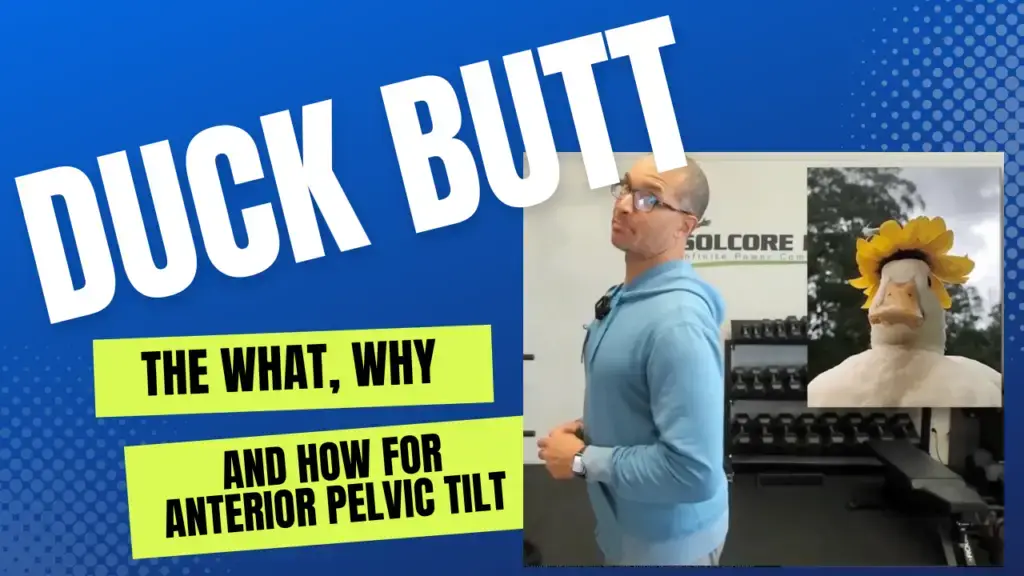
โ€œDuck buttโ€ might sound funny, but anterior pelvic tilt is no joke.

Itโ€™s a common postural issue where your pelvis tilts too far forwardโ€”and itโ€™s one of the main reasons people suffer from chronic lower back pain, disc bulges, SI joint instability, and more.

Iโ€™m Ekemba Sooh, SomaTherapist and SomaTrainer. I had anterior pelvic tilt myselfโ€”and it played a major role in my L4-L5 disc bulge and sciatic pain. No trainer, therapist, or doctor ever told me the tilt was the root cause.

They were treating symptoms. Not the source.

Click on the image to watch

What Is Anterior Pelvic Tilt?

Your pelvis naturally tilts slightly forward to support upright movement. But anterior pelvic tilt happens when this angle becomes exaggerated and stuckโ€”creating a โ€œduck buttโ€ posture.

This tilt disrupts your bodyโ€™s alignment and sets the stage for chronic compensation patterns. Over time, these compensations become permanent dysfunctions.


How It Becomes a Problem

Your body is a biotensegrity structureโ€”meaning itโ€™s designed to distribute force efficiently across the entire system. If one area tightens or weakens, your body adjusts to keep you moving. Thatโ€™s compensation.

Compensation isnโ€™t bad at first. But if left unchecked, it snowballs into bigger problems:

  • Chronic lower back pain
  • Lumbar disc issues (bulges, herniations, stenosis)
  • SI joint dysfunction
  • Pelvic floor and organ dysfunction
  • Reduced performance and poor energy transfer

It all stems from the inability to attenuate force efficientlyโ€”because the structure is compromised.


What Causes Anterior Pelvic Tilt?

Too much sitting is a big culprit. It shortens the hip flexors (especially the psoas) and weakens the posterior chain (glutes, hamstrings, spinal stabilizers).

Over time, your body learns this dysfunctional positionโ€”and your nervous system adopts it as your default.

For some, itโ€™s even genetic. But genetics just mean you have to be more intentionalโ€”not that youโ€™re doomed.


Why Most Approaches Fail

Typical solutions focus on isolated muscles. But your body doesnโ€™t work in isolationโ€”it moves as an integrated system through fascia.

Thatโ€™s why general exercise, yoga, and stretching routines often fail. You feel good temporarily, but your body snaps right back to the same pattern the next day.

Why? Because you didnโ€™t train the fascia to support a new pattern.


The Real Solution: Train Fascia + Function

To fix anterior pelvic tilt, you need to retrain your entire structure:

  • Stretch the shortened hip flexors (especially the psoas)
  • Strengthen the weakened glutes, hamstrings, and back muscles
  • Activate fascia chains, not just muscles, to build intelligent, whole-body control

The best tools Iโ€™ve found for this are osteopathic-based etiology exercisesโ€”like the ELDOA and my full training system. These methods respect how the body actually works: as a connected, intelligent, adaptable structure.


When to Start? Now.

If you’re in your 20s or 30sโ€”start now and prevent future issues.
If you’re in your 40s, 50s, or 60sโ€”and already feeling painโ€”this needs to be your primary focus.

You canโ€™t afford to ignore anterior pelvic tilt. Itโ€™s not just a posture issueโ€”itโ€™s a performance killer, a pain amplifier, and a hidden driver of long-term health problems.


What to Do Next

If this resonates, here are a few ways to go deeper:


Final Thought

Anterior pelvic tilt is a structural dysfunctionโ€”but itโ€™s also an opportunity.

Itโ€™s your bodyโ€™s way of asking for smarter input. When you respond with the right training, youโ€™ll not only relieve painโ€”youโ€™ll become stronger, more mobile, and more connected to your body than ever before.

Donโ€™t wait until things break down. Train holistically. Train intelligently. Train to support the life you want to live..

Building a foundation for a better life.

Find out more @
Facebook

BlueSKy

Pinterest

Instagram

Youtube

Shoulder Strengthening Exercises for Strength, Mobility, and Injury Prevention

Having strong, mobile shoulders is essentialโ€”not just for lifting or sports, but for your entire body’s health.

But most shoulder pain solutions and โ€œbest rotator cuffโ€ workouts you find online are incomplete. They miss critical pieces of the puzzleโ€”especially the joints involved and the two most forgotten muscles you must train for real results.

Letโ€™s break it down.

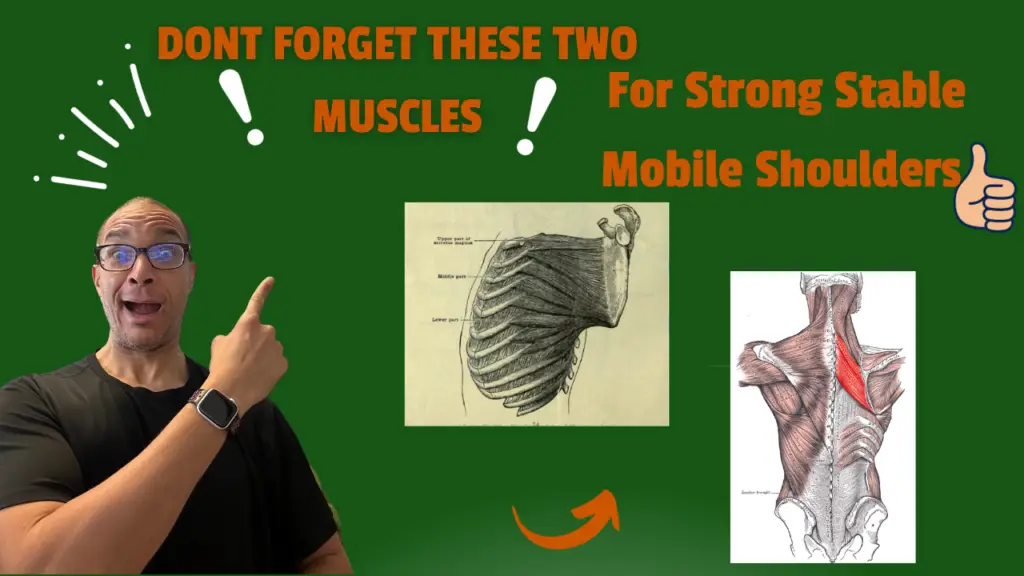
Click on the image to watch the video.

Your Shoulder Is More Than One Joint

Most people think of the shoulder as just the glenohumeral jointโ€”where your arm bone (humerus) meets the socket in your shoulder blade (glenoid). But thatโ€™s only one piece.

There are five distinct joints that make up the shoulder complex:

  • Glenohumeral joint
  • Subdeltoid joint
  • Sterno-chondral-costal-clavicular (SCCC) joint
  • AC (acromioclavicular) joint
  • Serratic joint (under the shoulder blade)

Each joint plays a role in shoulder mobility and strength. If even one is off, your whole shoulder can sufferโ€”often leading to pain or dysfunction on the opposite side of the problem area.


You Need More Than Musclesโ€”But the Right Ones Matter

Your rotator cuff and deltoid muscles are essential, but theyโ€™re just the beginning.

The long head of the bicep and long head of the tricep attach to the glenoid from above and below. When you lose function in either (like after bicep surgery), you sacrifice major stability.

Other important players:

  • Pec major/minor
  • Latissimus dorsi
  • Trapezius
  • Levator scapulae
  • Serratus posterior superior

But two muscles stand out as most neglected and critical:


The Most Important Muscles Youโ€™re Probably Ignoring

1. Serratus Anterior

Fans out from your ribs to your shoulder blade. It helps anchor and stabilize the scapula while allowing fluid movement.

2. Rhomboids (major and minor)

Run from your spine to your scapula and work as antagonists to the serratus anterior. Together, these two maintain the neutral, retracted position of your shoulder bladesโ€”which affects everything from head posture to pelvic balance.

If your shoulder blades are unstable or misaligned, it can trigger a cascade of dysfunction:

  • Forward head posture
  • Decreased mobility
  • Increased injury risk
  • Compensations in your spine and opposite hip

The Joint Must Be โ€œSmartโ€ and โ€œFluidโ€

Itโ€™s not enough to strengthen muscles. Your joints need:

  • Fluidity (healthy fascia)
  • Neurological engagement (a โ€œsmartโ€ joint)

If your serratic joint is stiff and disconnected, your shoulder gets noisyโ€”literally. That cracking/popping you hear? Thatโ€™s congealed fascia, not bones moving.


Smart Shoulder Training: What It Takes

Train with Hillโ€™s muscle model in mind:
Every muscle needs its fibers, fascia, and joint working together for full function.

โœ… Serratus anterior training must include multi-angle work and differentiate between the rib and scapular attachments.
โœ… Rhomboid work must target both the major and minor and be done above the glenohumeral line, where the scapula locks and moves as one with the arm.

Most programs miss this. They focus on the โ€œburn,โ€ not the biomechanics.


Donโ€™t Forget the Spine

A kyphotic (overly rounded) upper spine pushes the head and shoulders forwardโ€”undermining even the best exercises.

You can work your serratus and rhomboids all day, but without spinal mobility and scapular positioning, your results will be limited.


Want Help?

If youโ€™re ready to take a holistic approach to shoulder health:

Iโ€™ve been doing this for 30 years under an osteopathic paradigm. I donโ€™t guessโ€”I assess, and I train with the full body in mind.

Letโ€™s get those shoulders strong, stable, and pain-free.

Building a foundation for a better life.

Find out more @
Facebook

BlueSKy

Pinterest

Instagram

Youtube

Why Consistency โ€” Not Just Resolutions โ€” Drives Your Health Goals

Solcore Fitness therapy and training

Everybody puts so much emphasis on January 1, but if you really want to succeed in the new year, itโ€™s better to think about consistency in health goals โ€” and how learning and adapting will shape your lifestyle over time.

Nothing magical happens at midnight on January 1.

The real change comes from within you.

Think of the year as a long story to live โ€” not just a sprint at the start. If you pin all your hopes on the first few days of January, youโ€™ll miss the bigger picture.

Hereโ€™s what will happen over time:

๐Ÿ‘‰๐Ÿฝ Sometimes youโ€™ll do great
๐Ÿ‘‰๐Ÿฝ Sometimes youโ€™ll struggle
๐Ÿ‘‰๐Ÿฝ You might even realize a goal wasnโ€™t what you really wanted
๐Ÿ‘‰๐Ÿฝ But your consistent behavior will determine your results.

And that last one? Itโ€™s the most important.
Consistency in your health goals is what brings real, lasting change.

Start Your Story Strong

A good story needs a good opening. That doesnโ€™t mean intensity โ€” it means clarity, mindset, and small steps. Focus on developing the right mental approach. Tap into your emotions. Set different kinds of goals that can guide you and evolve with you.

Try this:

โœ… Reflect on where you were this time last year. What did you learn? How can you build on that?

โœ… Make your goals SMART โ€” Specific, Measurable, Achievable, Relevant, and Time-bound.

โœ… Prioritize your health and values, not just your weight or aesthetics.

โœ… Think about long-term and short-term goals โ€” and how to reward yourself for progress.

โœ… Focus on behavior, not just results. Do your best daily โ€” the outcomes will follow.

โœ… Keep learning about health, exercise, nutrition, and stress.

โœ… Be aware of your emotions, but donโ€™t let them control your actions.

โœ… Ask for support โ€” even before you think you need it.

Give Yourself the Whole Year

Start strong, but donโ€™t burn out. You donโ€™t have to fix everything in January.

Use your calendar, revisit your goals, track your progress.
Stay curious. Stay consistent. Keep learning.

Thatโ€™s how real change happens.

itโ€™s not just working out, itโ€™s building a foundation for a better life.

Find out more @

Facebook

Bluesky

Pinterest

Instagram

Youtube

Unlocking Vitality: The Power of Zone 2 Cardio for Optimal Health and Fitness

Zone 2 cardio is getting a lot of attention latelyโ€”and for good reason. But this isnโ€™t just another fitness trend. If used properly, Zone 2 cardio can become the foundation of your long-term health, energy, and recovery.

Letโ€™s break it down and show you how to make Zone 2 part of a complete, fascia-informed training approachโ€”not just another checkbox in your routine.

Click the image to watch the video

What Is Zone 2 Cardio?

Zone 2 is the second level in a 5-zone cardiovascular scale, where your body primarily uses fat and oxygen (aerobic metabolism) to fuel movement.
It sits between gentle movement and high-intensity exercise, typically falling between 60โ€“70% of your max heart rate.

Not sure what that means?
Start with a basic estimate: 220 - your age = max heart rate.
Then calculate 60โ€“70% of that number.

More precise formulas exist, but the important thing is to start where you are and listen to your body.

โœ… A heart rate monitor (Apple Watch, Garmin, etc.) can help
โœ… You should still be able to talk comfortably while training (aka the โ€œtalk testโ€)
โœ… You may still breathe mostly through your nose


Why Zone 2 Cardio Works So Well

Zone 2 improves how efficiently your body uses oxygen, delivers nutrients, and clears waste.
Hereโ€™s what you gain:

  • Stronger heart and lungs
  • More mitochondria (cellular energy factories)
  • Better capillary density (circulation)
  • Faster recovery between workouts
  • A solid base for strength or higher-intensity training

If youโ€™ve ever jumped into HIIT, CrossFit, or intense lifting without seeing results, itโ€™s often because your foundation was missing.
Zone 2 is that missing piece.


But hereโ€™s the part most people miss: your structure matters just as much as your heart rate.

If your posture is collapsedโ€”rounded shoulders, forward head, restricted breathingโ€”youโ€™re limiting the ability of your lungs and heart to perform.
And that can reduce the effectiveness of even a perfect Zone 2 session.

Thatโ€™s why we integrate corrective and structural work into all our programming at SolCore Fitness.
When you combine Zone 2 with myofascial stretching, segmental strengthening, and ELDOA techniques, you unlock the full benefit of cardio.

Explore how ELDOA exercises can open space in your spine and thorax to support better breathing and recovery.


How to Build Your Zone 2 Routine

  1. Start with Zone 1
    If youโ€™re new to cardio or unsure of your baseline, begin with lower-intensity Zone 1 work and good posture habits.
    Let your body adapt before pushing harder.
  2. Dial in your structure
    Use corrective exercise and mobility workโ€”like Global Strengthening and postural realignmentโ€”to prepare your body for regular training stress.
  3. Progress gradually
    • Begin with 45-minute sessions
    • Aim to increase duration to 60โ€“90 minutes over time
    • Stay consistent and let your body adapt over weeksโ€”not days

Don’t Skip Corrective Work

Even walking puts thousands of pounds of force through your joints over the course of 10,000 steps.
Without corrective exercise, those forces accumulate and degrade performanceโ€”especially in an unbalanced body.

Every Zone 2 session should be followed by realignment and decompression work, not just foam rolling or massage.

Corrective support ensures that:

  • Muscles recover efficiently
  • Fascia maintains healthy tone and hydration
  • You prevent breakdown while building endurance

Final Thoughts: Periodization Is Key

Zone 2 isnโ€™t meant to be a permanent state. Itโ€™s a phase in a smart, periodized plan.
You cycle between:

  • Structure + Zone 1
  • Structure + Zone 2
  • Corrective + Recovery
  • And eventually, higher intensities with full preparation

This is how you train for vitality, not just fitness.

Want support?
โ€œWant to go deeper? Explore our Circulatory and Respiratory System Exercises designed to strengthen breathing and circulation.โ€

itโ€™s not just working out, itโ€™s building a foundation for a better life.

Find out more @

Facebook

Bluesky

Pinterest

Instagram

Youtube

Back Mobility: Why Stretching Alone Isnโ€™t the Answer

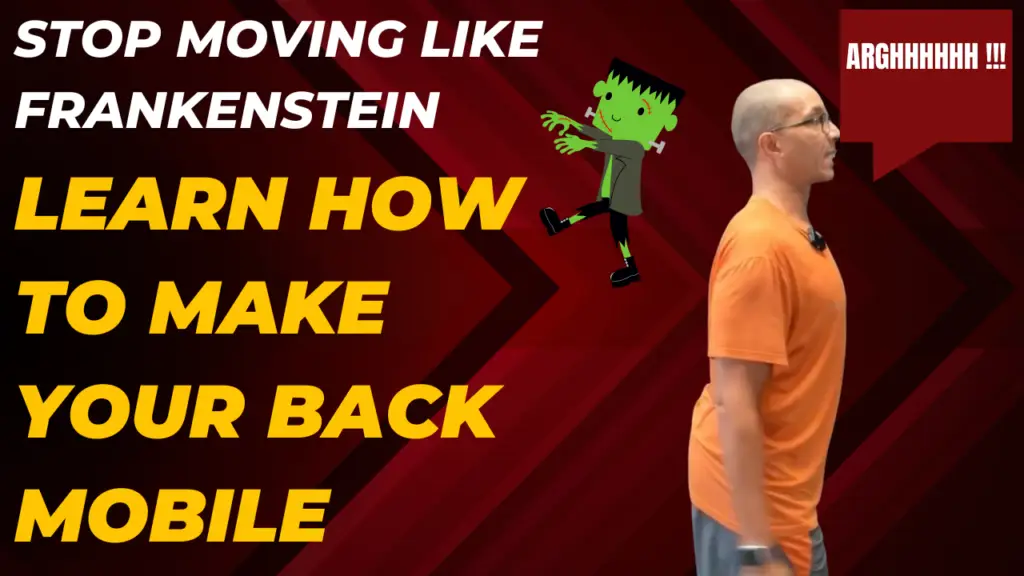
Click on the image to watch

If your back feels stiff and stuckโ€”and you’re tired of moving like Frankensteinโ€”itโ€™s time to look at back mobility from a deeper perspective.

Most routines you see online might feel good temporarily, but they donโ€™t address the root cause.
And in many cases, they can actually make things worse.

Hereโ€™s why.


What Is Mobility, Really?

Mobility is the ability of your joints and tissues to move freely in all the directions they were designed to move.

Itโ€™s not the same as flexibility.
You can be flexible (like touching your toes) without having true mobility (like moving smoothly under load or rotation).

Mobility is functional.
It helps your body perform well, stay pain-free, and move with strength.

But it requires more than a few stretches.
You need structure. You need muscle. And you need balance.


The Anatomy of Real Back Mobility

Your back isnโ€™t just one unit.
Itโ€™s a coordinated system of:

  • Four spinal curves (sacral, lumbar, thoracic, cervical)
  • Deep and superficial core muscles
  • Fascia, joints, and connective tissues

If you lose the natural curves in your spineโ€”say your lumbar spine flattensโ€”you lose structural integrity.
Your spine becomes weaker, more fragile, and less mobile.

Mobility isnโ€™t about forcing range.
Itโ€™s about having the right alignment and the right strength to support movement.

At SolCore Fitness, we rebuild that foundation with a fascia-first lensโ€”using tools like segmental strengthening and osteopathic training principles.


Why Routines Alone Donโ€™t Work

Most YouTube videos show the same spinal twists and cobra stretches.
They feel goodโ€”for a moment.

But twisting a compressed spine can make things worse.

Thatโ€™s because twisting compresses the discs between vertebrae. If your spine lacks space or alignment, youโ€™re grinding into vulnerable tissue every time you rotate.

Over time, this leads to:

  • Herniated discs
  • Nerve impingement
  • Chronic tension and compensation

Before you stretch or twist, your spine needs:

  1. Proper space and alignment
  2. Muscular balance and activation
  3. Awareness of how your body compensates

The Real Process for Unlocking Back Mobility

If you want lasting mobility, follow this sequence:

1. Rebuild Spinal Curves and Space

Mobility requires decompression. Without space between vertebrae, movement will always be restricted.
We use ELDOA, myofascial techniques, and postural re-education to reintroduce this space.

2. Strengthen in All Directions

Your core isnโ€™t just abs. It includes obliques, transverse abdominis, spinal stabilizers, and many supporting muscles.

You need to strengthen in rotation, side-bend, extension, and flexionโ€”not just planks.
Back and front must work together, not in isolation.

This approach is central to our personalized therapy and training plans.

3. Move with Intention

Only after steps 1 and 2 can you begin applying movement patterns that support your mobility.
Even then, it’s not about routinesโ€”itโ€™s about selecting movements that fit your bodyโ€™s needs and structural state.

Thatโ€™s why we donโ€™t give cookie-cutter programs.
Youโ€™re not a cake. Your body isnโ€™t built from a recipe.


You Need a System, Not a Shortcut

Youโ€™ve probably tried a few of those โ€œ10-minute mobility fixes.โ€
Maybe they felt goodโ€ฆ until they didnโ€™t.

True mobility is sustainable. It works with your bodyโ€”not against it.
And it honors the complexity of your spine, fascia, and nervous system.

Want to learn what a real back mobility program looks like?

Start with our free holistic fitness guide, or book a consult and weโ€™ll walk through whatโ€™s keeping you stuck and what needs to change.


You’re not meant to live in restriction.

With the right strategy, your back can feel strong, mobile, and freeโ€”so you can move the way life intended.

itโ€™s not just working out, itโ€™s building a foundation for a better life.

Find out more @
Facebook

Twitter

Pinterest

Instagram

Youtube

Osteoporosis-Friendly: How To Strengthen Bones And Balance Your Body Without Weights! [No Routine].

Click on the image to watch

So your doctor just told you: You have osteoporosis.
And now youโ€™ve heard the usual adviceโ€”lift weights, go walking, increase your T-score.
Simple, right?

But hereโ€™s the thing: that advice barely scratches the surface.
You need more than a walking plan and generic strength training to protect your bones.
And you absolutely donโ€™t need to risk injury in a gym to make progress.

Letโ€™s talk about a safe, osteoporosis-friendly exercise approach thatโ€™s deeper, smarter, and based on how the body truly works.


The Missing Piece in Conventional Advice

Doctors mean well. But theyโ€™re trained in medicine, not movement.
When they say โ€œlift weights,โ€ theyโ€™re usually thinking: Add resistance = stronger bones.

But not all movement builds healthy bone.
And not all resistance is safe for osteoporotic bodiesโ€”especially if youโ€™re unbalanced or unaware of how your body compensates.

Even more โ€œadvancedโ€ suggestions like power plate training or Nordic walking can help, but they only address a slice of the picture.

Whatโ€™s missing?
Soft tissue. Fascia. Alignment.
These are the systems that actually govern how your bones respond to load.


Fascia First: Real Strength Starts Here

Your fascia connects everythingโ€”muscles, bones, ligaments, joints.
Itโ€™s alive, intelligent, and crucial for posture, movement, and bone health.

When your fascia is tight, twisted, or dehydrated, it sends the wrong signals through your body.
That misalignment throws off posture, stress distribution, and even your ability to generate new bone in a healthy way.

At SolCore, we use myofascial stretching and GPS (Global Postural Stretching) to reorganize and hydrate fascia.
This is what safely re-aligns the body without weights, and creates natural tensile force on bones to stimulate growth.


Your Bones Need Alignment, Not Just Load

Imagine building a house with crooked rebar. Thatโ€™s what happens when your trabeculaeโ€”the internal scaffolding of your bonesโ€”arenโ€™t aligned.

If you move with poor posture or imbalanced fascia, youโ€™re putting force through joints and bones in a way that actually increases fracture risk or creates poor bone adaptation.

To reverse osteoporosis, you want:

  • A strong plumb line (earโ€“shoulderโ€“hipโ€“kneeโ€“ankle)
  • A stable gravity line (inverse cone through your pelvis)
  • Balanced muscular tone around your joints

These factors help your body distribute force evenly and stimulate healthy bone remodelingโ€”naturally.

Learn more about how we approach this through osteopathic therapy techniques.


Itโ€™s Not About Muscle, Itโ€™s About Muscle Intelligence

You have ~600 muscles. But each one has fibers running in different directionsโ€”and needs to be activated with specificity.

Take your glute medius: it has three distinct sections (anterior, middle, posterior).
To truly engage it, you must work in different postures and directions. That means intentional movementโ€”not generic reps in a gym.

Why does this matter for osteoporosis?

Because muscle engagement creates tensile pull on bones.
But only when itโ€™s done in coordination with fascia and structural alignment.

Otherwise, youโ€™re just training your imbalances to get stronger.


What Real Osteoporosis-Friendly Exercise Looks Like

Hereโ€™s the new model:

โœ… Realign your fascia using targeted stretching techniques
โœ… Train muscular chains, not just individual muscles
โœ… Respect your bodyโ€™s architectureโ€”donโ€™t overload whatโ€™s misaligned
โœ… Use posture to generate safe, full-body force
โœ… Let fascia pull bones into alignment AND stimulate growth

Thatโ€™s how you create sustainable bone healthโ€”without lifting weights.


Ready to Start?

If youโ€™re stuck in the basic routine of walking and machines, but your body is asking for more, you have options.

  1. ๐Ÿ“˜ Download the Free Guide
    Learn the 4-step framework to reduce pain, restore movement, and reclaim your energy.
  2. ๐Ÿ‘ค Book a Consultation
    Talk with me personally. Iโ€™ll help you assess where you are, whatโ€™s holding you back, and whether weโ€™re a good fit to work together.

You donโ€™t need to fear movement.
You just need a smarter way to train your bodyโ€”one that respects how youโ€™re built.

itโ€™s not just working out, itโ€™s building a foundation for a better life.

Find out more @
Facebook

Bluesky

Pinterest

Instagram

Youtube

Discover the Game-Changing Solution for SI Joint Dysfunction

SI joint dysfunction can be miserableโ€”constant pain in different places, no clear answers, and โ€œfixesโ€ that donโ€™t work. Itโ€™s one of the most stubborn and misunderstood issues in the body. But there is a solution.

Understanding Your SI Joint

Letโ€™s start with the basics.
SI stands for sacroiliac. Your sacrum (the triangle bone between your glutes) connects to your ilium (your hip bones) at two SI joints, shaped like boomerangs.

Many people confuse SI joint dysfunction with low back pain. But theyโ€™re not the sameโ€”and mislabeling it can send you down the wrong treatment path.

Your SI joint is a true joint with cartilage, a capsule, ligaments (like the anterior and posterior sacroiliac ligaments), and muscular support from the piriformis, glutes, psoas, obturator internus, and more.

This joint movesโ€”primarily in oblique torsionsโ€”but it can also develop 20+ pathological movements (and infinite combinations of dysfunction).


Why SI Joint Issues Donโ€™t Go Away

Your SI joint takes on ascending and descending forces through your body. Itโ€™s involved when you sit, stand, walk, squatโ€”pretty much everything. So when itโ€™s not functioning well, everything suffers.

In my own case, I had no SI joint pain at first. But a small dysfunction there led to L4-L5 disc compression, sciatic pain, and long-term compensation patterns.

The problem? Most people treat symptoms, not causes. And SI joint dysfunction is often the hidden cause behind hip, knee, foot, and even spinal issues.


What Doesnโ€™t Work (And Why)

  • โŒ Popping it back into place
  • โŒ Rolling on a foam roller
  • โŒ Generic exercise routines
  • โŒ โ€œFusedโ€ joint logic that ignores anatomy
  • โŒ Thinking your SI joint doesnโ€™t move

These approaches either oversimplify the problem or completely miss it.


What Actually Works

  1. Assessment First โ€“ You need someone who understands the full range of SI joint pathologies.
  2. Work With Ligaments โ€“ Smart ligaments become โ€œdumbโ€ when dysfunctional. Treatment and manual therapy must re-educate them.
  3. Use Targeted Exercise and Therapies โ€“ The most powerful SI joint reset tool Iโ€™ve found is the ELDOA method. These postural exercises use fascial tension and soft tissue to normalize the joint and retrain proprioception. Using osteopathic therapies like TTLS along with osteopathic exercises dramatically increases your healing and the regaining of your function.

The SI joint doesnโ€™t exist in isolation. Itโ€™s part of a complex networkโ€”and requires a fascia-based, integrative strategy that honors how the body truly works.


If you were hoping for a one-size-fits-all โ€œSI joint routine,โ€ I wonโ€™t insult your intelligence.

Thatโ€™s not how the body worksโ€”and itโ€™s why so many people stay stuck.


What to Do Instead

If you want to address your SI joint dysfunction at the root, here are three free ways to take the next step:

๐Ÿ“˜ Download the Free Guide:
โ€œHow to Move Better, Get Out of Pain, and Live the Life of Your Choosing.โ€
Instant access. Zero fluff.

๐Ÿ’ฌ Book a Free Consultation:
Tell me where you are, what youโ€™re doing, and where you want to go. Iโ€™ll find the holes in your system and help you chart a real path forward. No obligationsโ€”just clarity.


You donโ€™t have to guess. You donโ€™t have to suffer. And you donโ€™t have to keep trying things that donโ€™t work.

You just need a system that sees the whole pictureโ€”and a guide who understands how to help you work with it.

Letโ€™s get started.

itโ€™s not just working out, itโ€™s building a foundation for a better life.

Find out more @

Facebook

BLuesky

Pinterest

Instagram

Youtube