Strength Training

You Get Out What You Put In: The Real Path to Your Health and Fitness Goals

you get out what you put in for health and fitness

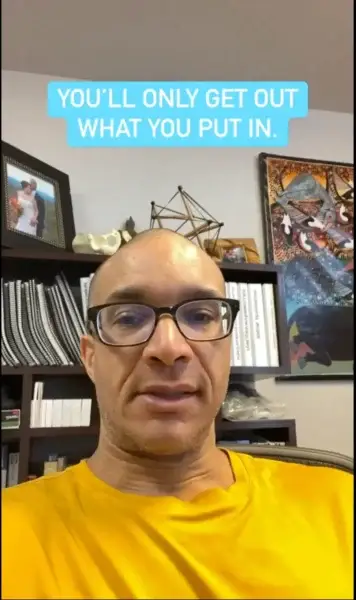
In all my years of coaching, there’s one truth that applies across the board—whether in fitness, career, relationships, or life: you get out what you put in.

It sounds obvious, but it’s where most people get stuck. They have a genuine desire for change—better health, less pain, more strength, more mobility—but they treat that desire like it’s enough on its own. They dabble in random workouts. They jump from fad diet to fad diet. They hope for transformation but never take the steps to make it truly possible.

The result? Frustration, stagnation, and often, regret.

Let’s talk about what it really means to get out what you put in—and how to apply this philosophy so your health and fitness ambitions finally move beyond wishful thinking.

Step 1: Flesh Out Your Desire

The first step is knowing what you really want—not just “I want to be healthier” or “I should work out more.” Those are vague ideas.

Instead, get specific:

  • “I want to hike without knee pain by summer.”
  • “I want my posture to improve so I’m not rounding my shoulders at my desk.”
  • “I want to build enough core strength to support my lower back for daily activity.”

Why? Because without clarity, you can’t create an effective plan—and your brain lacks the focus to stay on course.

In the [HOLISTIC EXERCISE AND FITNESS PROGRAM], we start every client with this kind of goal clarification. It’s the difference between wandering around the gym trying machines and doing targeted fascia-based exercises with a purpose.

Step 2: Choose the Right Actions for Your Goal

Once you know what you want, you need to choose the appropriate steps to get there.

Too many people try to skip this step or fill it with random activity:

  • They want spinal mobility but spend most of their workouts on stationary cardio
  • They want to fix joint pain but ignore the fascia and postural pattern causing it
  • They want strength but focus on high-intensity work their tissues can’t yet support

The truth is, the right actions are rarely random. They are precise, structured, and non-negotiable.

Think of it like gardening. If you want tomatoes, you don’t plant whatever seeds you find in the shed and hope. You plant the right seeds, in the right place, at the right time—and care for them with consistency.

Step 3: Avoid the “Randomness Trap”

Without a plan, you’re leaving your results up to chance—whatever the “universe” throws your way, as I like to say. And in fitness, “random” usually leads to:

  • Lack of progress because inputs don’t match your goals
  • Overuse or injury from applying too much stress in the wrong way
  • Growing frustration from “working hard” with nothing to show for it

This is why hopping between viral TikTok workouts or YouTube routines can be dangerous. They’re not bad in themselves—but they’re not built for you.

Step 4: Understand the Frustration Cycle

Here’s what often happens:

  1. You feel a strong desire to change—maybe stronger than ever before.
  2. You try to act, but without a focused plan.
  3. Progress is slow or nonexistent.
  4. You get frustrated because the desire is still there but you’re no closer to the goal.

This mismatch between wanting and achieving doesn’t just make you impatient—it can sour your whole experience of health and fitness.

In my coaching, I emphasize that this frustration isn’t proof you can’t succeed—it’s a signal you need better direction and consistency.

Step 5: Frame the Work Properly

You should never see your training, nutritional discipline, or mobility work as “torture.” That mindset will kill your commitment and enthusiasm.

Instead, view your plan as:

  • The vehicle to your goal
  • A system that removes guesswork
  • An investment that’s for you, not against you

Even the challenging parts become easier to handle when you connect them directly to your deeper goal. A corrective posture exercise might be uncomfortable, but if you know it’s the key to hiking without back pain, it feels meaningful.

Step 6: Commit to the Program

Once you know what you want and have the right plan, the rest comes down to this: work your program.

Show up. Put in the reps. Keep the promises to yourself even when you’re tired, busy, or not “feeling it.”

This doesn’t mean going to extremes—it means showing consistent respect for the process. Skipping corrective exercises for weeks and then expecting your fascia to remodel is unrealistic; the tissue learns only from repeated, intentional input.

Step 7: Responsibility is Power

In the end, it’s your responsibility. If you invest the time, money, attention, and energy into your health, you’ll see the return. If you don’t, you’ll get whatever default outcome a lack of action delivers—and those are rarely the results you want.

Owning that truth isn’t about guilt—it’s about freedom. Because if you’re in control of what you put in, you’re also in control of what you get out.

Real Client Example: Brian’s Breakthrough

Brian came to SolCore with chronic neck and hip stiffness. He was committed, but his approach before working with us was scattered—some gym machines, the occasional yoga class, whatever sounded good that week.

Once we clarified his goals and gave him a fascia-based corrective sequence, Brian stuck to it for twelve straight weeks. Not once did he skip a session—even when the exercises felt awkward. Within three months, his pain dropped dramatically, his posture improved, and his flexibility returned.

The difference? Clarity, the right actions, and showing up—every time.

Key Takeaways: How to Get Out What You Put In

  1. Be crystal clear on your goals—make them specific and meaningful to you.
  2. Choose appropriate, not random, actions that directly align with those goals.
  3. See frustration as feedback to adjust, not a reason to quit.
  4. Commit long enough for your body—and especially your fascia—to adapt.
  5. Remember: responsibility for your results is yours alone.

Call to Action

Your health and fitness results are never an accident—they’re the compound interest of what you put in every day.

If you want help clarifying your goals, building the right actions, and staying accountable, the [HOLISTIC EXERCISE AND FITNESS PROGRAM] is designed to give you structure, progression, and measurable change.

Start putting in what it takes, and watch what comes back to you.

It’s not just working out, it’s building a foundation for a better life.

Find out more @
Facebook

LinkedIn

Pinterest

Instagram

Youtube

Bluesky

Why Workouts Are Always Hard The Truth About Progressive Resistance

Progressive resistance training session

Why do your workouts never seem to get easier, no matter how long you’ve been training? The answer lies in the science and psychology of progressive resistance training, one of the most essential concepts in fitness.

Progressive resistance means you’re always working against a challenge that matches your current capacity. As you get stronger or more skilled, the stimulus must also increase, so your body can keep adapting, building muscle, and improving fitness. Just as a child’s early reading materials eventually give way to advanced texts, each workout’s “difficulty” is simply a necessary step on a lifelong staircase of growth.

People often feel disheartened when workouts stay hard, expecting them to magically become effortless after a few weeks or months. But if your routine isn’t challenging, it’s not provoking any adaptation. True progress is a gradual process, and the discomfort, effort, and even frustration you feel are positive signals that you’re moving forward—not failing. Biology demands “overload”—putting stress on your muscles, bones, and mind so the body responds by getting stronger.

Segmental Muscle Strengthening

If the struggle feels constant, it means you’re doing what you’re supposed to. Real fitness improvement never comes overnight, and clever marketing promising easy, quick results only fuels disappointment. Instead, embrace the definitions:

  • Progressive: developing step by step, improvement that is incremental but consistent.
  • Resistance: intentional refusal to stay at current capacity; a willingness to meet challenge head-on.

The solution isn’t to “fight” the challenge or get down on yourself. Instead, accept your starting point. Practice mindfulness during workouts, so you notice your progress and accept the natural struggle that comes with growth. This openness allows for better awareness, and better adaptation, and helps you recognize and celebrate every small win.

There is no stasis—each workout is a new opportunity to move forward. Continuous progressive resistance strengthens not just the body but the mind and spirit as well. With acceptance, resilience, and patience, what was once impossible becomes your new baseline.

Ready to Embrace Real Progress?

The time to start taking care of yourself is always now. For individualized guidance in progressive resistance training and the mindset strategies to thrive on the path, Book a free consult. Get the support and smart programming needed to master the journey.


it’s not just working out, it’s building a foundation for a better life.

Find out more @

Facebook

LinkedIn

Pinterest

Instagram

Youtube

Bluesky

Just Running Doesn’t Get Your Legs Strong The Science Behind Well-Rounded Leg Training

Running vs strength training for legs

The Running and Leg Strength Myth

Many people believe that because they run or hike regularly, their leg strength is already up to par. While running is an excellent cardiovascular and endurance activity, it doesn’t cover all the bases when it comes to leg strength, muscle balance, and functional athleticism.

How Running Trains Your Legs (and What It Misses)

Running is a highly repetitive, global movement that primarily works the body in the sagittal (forward-backward) and, to a lesser degree, transverse (rotational) planes. This style of training can build muscular endurance and limited power but does not adequately activate every muscle or use the full range of motion your legs are capable of.

Planes of Motion: What Runners Miss

Runners mostly move forward, rarely side-to-side (frontal plane) or with true rotational power, and typically emphasize only a few types of muscle contractions. The legs have dozens of muscles, each capable of movement in multiple directions. Overuse of certain movement patterns results in uneven development and leaves stabilizers, abductors/adductors, and smaller postural muscles undertrained, which can lead to imbalances and weaknesses.

Why Strength Training Is Essential for Leg Health

Complete leg strength goes beyond what running offers. Strength training targets specific segments, builds muscular coordination across all planes, and helps correct imbalances. Science has shown that adding resistance and plyometric (explosive) training to a running routine improves not only leg strength but also running efficiency, speed, and injury resilience.

Segmental Muscle Strengthen

Injury Prevention and Balanced Muscle Development

When runners neglect certain muscle groups or movements, overuse injuries like IT band syndrome, Achilles problems, and knee pain become common. Segmental training and stretching—targeting specific muscles and fascia—allow the body to move more efficiently, disperse load, and remain balanced even during repetitive activities like running or hiking.

Segmental Training and Stretching: Completing the Picture

To future-proof your legs (and your whole body), your program should include exercises that stretch and strengthen each segment and chain in the legs. This means not just squats and lunges, but also mobility drills, myofascial stretching, proprioception work, and targeted moves for any “weak links” found in your movement assessment.

Key Takeaways for Runners

  • Running is great for endurance and basic strength, but not enough for full-body or leg health.
  • All muscle groups and movement directions need some attention especially if you want to avoid injury and continue progressing as an athlete.
  • Diversifying your routine, adding segmental strength training, and using targeted myofascial stretching are critical steps.

If you want legs that are strong, resilient, and ready for whatever life throws at you, make sure your training goes far beyond the running trail!


Find out more @

it’s not just working out, it’s building a foundation for a better life.

Facebook

LinkedIn

Pinterest

Instagram

Youtube

Bluesky

SolCore Fitness & Therapy – Who We Are

At SolCore Fitness & Therapy, we help people move out of pain, build lasting strength, and improve their quality of life through a unique blend of osteopathic manual therapy and fascia-focused exercise. Our approach combines cutting-edge techniques like ELDOA, Myofascial Stretching, and targeted strengthening with a deep respect for how the body naturally works. Whether in group classes, semi-private training, or one-on-one sessions, we create a supportive environment where clients can heal, grow, and discover what’s possible for their bodies.

We would love to talk to you about your goals & challenges. Reach out for a free consultation today.

Find out more @

Facebook

BlueSky

Pinterest

Instagram

Youtube

Linkedin

Hey Santa Fe, Here Is How Exercise Can Affect Your Sleep

exercise sleep recovery Santa Fe

How Exercise and Sleep Are Connected

Sleep is one of the most critical—but often overlooked—pillars of lasting health. How, when, and how much you move during the day can shape the quality and length of your sleep for better or worse.

The Science Behind Exercise’s Effect On Sleep

Moderate Activity Equals Better Sleep

  • Consistent, moderate-intensity exercise is proven to help people fall asleep faster, enjoy deeper slow-wave sleep, and reduce wakefulness and insomnia symptoms.
  • Even just 30 minutes most days can improve sleep quality and duration, supporting healthy aging, better recovery, immune function, and sharper cognition.
  • Moderate activities (walking, cycling, swimming, resistance training) can balance stress and boost mood, helping regulate melatonin, serotonin, and decrease sleep latency.

When Exercise Hurts Sleep—Overtraining & Timing

  • Studies in athletes and active adults show that high-intensity exercise, especially when done late in the day, can trigger a spike in stress hormones (adrenaline and cortisol) that disrupt sleep.
  • Exercise-induced insomnia may mean spending more time in bed without restful sleep, frequent waking, and difficulty falling or staying asleep, especially after vigorous training.
  • Poor recovery can be linked to endurance supplements with caffeine; caffeine and stress can keep cortisol levels high for hours after training, further impairing the ability to relax and sleep.

How To Optimize Sleep and Recovery in Santa Fe

Balance Exercise and Rest

  • Aim for moderate activity (30–45 minutes) most days, earlier in the day.
  • Avoid intensive evening workouts; late-night high-intensity exercise delays melatonin release and keeps you alert longer.
  • Support recovery with clean, protein-rich nutrition, hydration, and low sugar intake.
  • Use relaxation, mindfulness, or breathwork routines to help transition into sleep, especially on tough training days.
  • Take rest days or reduce intensity if sleep disruptions or increased nighttime waking occur.

Nutrition, Supplements, and Recovery Tools

Diet matters too—choose clean meals focused on protein and iron, avoid caffeine and stimulants late in the day. One cup of coffee can raise cortisol for several hours. Always listen to your body and adapt your program if sleep quality declines.

Bottom Line—Exercise for Better Sleep in Santa Fe

Exercise is vital for good sleep and overall health, but overtraining, late caffeine, and poor recovery routines are common pitfalls. Santa Fe’s active residents can enjoy high energy and restorative sleep by following science-backed habits and listening to their bodies for true wellness.

Explore healthy lifestyle, training, and recovery resources:
Healthy Living and Mind-Body Balance

Find out more @

Facebook

LinkedIn

Pinterest

Instagram

Youtube

Bluesky

Personal Training Success Story Santa Fe Rosanna Dill

kyphosis posture correction success story Santa Fe

Real Results with SolCore Fitness Rosanna Dill’s Story

There’s a running joke in the midday group exercise class at SolCore Fitness: around 12:32, Rosanna comes screeching in with her workout gear and high heels, grins, and says, “Great, let’s do it!”—no matter the activity. But Rosanna’s story is much more than cheerful energy; it’s about commitment to fixing her upper back and overcoming thoracic kyphosis.

Facing Kyphosis Why Rosanna Started

Rosanna has always problem-solved her way through life—whether as her family’s “handyman” or with at-home workouts. Yet, her own program didn’t touch her real issue: increasing rounding in her upper back, a classic thoracic kyphosis that 90% of adults develop.

Rosanna’s Turning Point

Her main goal became not to be the “hunched back little old woman.” After seeing SolCore Fitness on Facebook, she decided to “stop being a cheap bastard,” and join a group class for expert help. She wanted a targeted solution, and she committed fully to every class and piece of homework.

How SolCore’s Program Changed Everything

Results After Dedicated Effort

  • “I have so much more awareness in my body. There’s more freedom in movement, and my tight upper back is slowly going away.”
  • The varied and integrated exercises—especially back extensor routines, targeted wall stretches, and upper back strength circuits—slowly, steadily improved her posture and mobility.
  • Rosanna worked her tail off, doing the assigned drills and extras, learning the value of consistency for long-term improvement.

Favorite Exercises and Challenges

  • “I like all the exercises—how they work together for whole-body progress. The wall stretch even helps me sleep!”
  • Her ongoing challenge: continuing to open up her upper back, addressing old postural imbalances and preventing new ones.

Advice for Members and Newcomers

  • “Take your time. It’s a process to get results—three months is too soon, and six weeks isn’t enough. Stick with it because it’s totally worth it.”
  • For anyone on the fence: “This program is a subtle yet effective practice that realigns your body.”

The Science Behind Kyphosis Correction

Correcting thoracic kyphosis requires a mix of posture training, muscle strengthening (especially back extensors and core), and strategic stretching of the chest and neck. Studies show group classes and personalized routines—like those at SolCore—improve alignment and long-term mobility, decrease rounding, and support healthy aging.

See more client success, posture correction science, and exercise tips:
Success Stories: Real People, Real Results

Find out more @

Facebook

LinkedIn

Pinterest

Instagram

Youtube

Bluesky

Hey Santa Fe! Get Off Your Tush! Sitting is the New Smoking, but is Standing the Answer?

sitting vs standing health Santa Fe

Is Sitting Really the New Smoking?

It’s no secret that modern life means too little movement. Research shows that sitting more than six hours a day leads to an increased risk of heart disease, diabetes, disability, and early death. The American Cancer Society’s 18-year study of 123,000 subjects found higher death rates in those who sat longest. It’s why excess sitting is now compared to smoking for its negative health impact.

Are Standing Desks the Best Solution?

Pros and Cons Backed by Science

Standing desks have surged in popularity. Companies like UpDesk report massive sales growth, and studies confirm that breaking up sitting time can reduce musculoskeletal discomfort, boost energy, and improve posture. Interventions with sit-stand desks show improvements for some markers of cardiometabolic and vascular health—especially when combined with overall movement.

Yet, evidence also points out limits: calorie burn from standing is minimal. Long hours of standing can lead to enlarged veins, compressed spine, and even reduced productivity if done excessively. Dr. Jos Verbeek highlights that the research on standing desks is “fashionable and not proven good for your health,” and studies caution against standing all day.

Risks of Prolonged Standing

Spending too much time on your feet can be as problematic as over-sitting. It raises vein risks, can worsen lower back pain, and doesn’t solve underlying inactivity.

What Can Santa Fe Actually Do?

Movement Is the Real Solution

Real progress comes from changing habits—not just switching from sitting to standing. Experts recommend moving every 30 minutes: sit for 20, stand for 8, and use 2 minutes to stretch or walk. Structural tweaks like placing the printer farther away or restricting easy elevator access help encourage movement. In long-lived regions like Okinawa, Japan, people sit on the ground, get up often, and walk as a primary mode of transportation—all proven to support cognitive health and longevity.

Walking is the Ultimate Medicine

Decades of research confirm what Blue Zones like Okinawa show: regular walking directly counters the negative health impact of sedentary life and is tied to extended lifespan and cognitive health.

The Balanced Truth for Santa Fe

While standing desks aren’t the full answer, neither is constant movement. The healthiest approach is intentional activity: reduce sitting, use standing as a tool, and make walking, stretching, and frequent posture changes a normal part of every workday.

Learn more about posture, mobility, and movement with Global Postural Stretching:
Global Postural Stretching

Find out more @

Facebook

LinkedIn

Pinterest

Instagram

Youtube

Bluesky

How ELDOA’s Increase Spinal Mobility And Get Rid Of Neck And Shoulder Pain

ELDOA for spinal mobility and neck/shoulder pain Santa Fe

Why Thoracic Spine Mobility Is Key for Neck and Shoulder Health

Many people struggle with rounded shoulders, difficulty with good posture, and recurring pain during movement. The underlying culprit is often poor thoracic spine mobility—an issue that leads to compensatory stress in the lower back and shoulders and amplifies neck, shoulder, and rotator cuff pain.

ELDOA Method—Science Behind Improved Mobility and Pain Relief

What are ELDOA Exercises?

ELDOA (“Etirements Longitudinaux avec Decoaptation Osteo-Articulaire”) are unique, self-applied postural exercises developed by Guy Voyer, DO. Each posture is designed to create targeted decompression in a specific spinal joint, increasing space, rehydrating discs, reducing pressure, and restoring joint alignment.

  • The thoracic spine is crucial for rotation, flexion, extension, and deep breathing.
  • ELDOA postures train mobility while stabilizing areas that need protection—preventing the lower back and scapula from compensating for lost motion.
  • Mobilizing the thoracic spine properly prevents excessive lumbar spine movement, which is built for stability—not big rotations or repeated bending.
  • Benefits include improved posture, relief from disc compression, increased lung volume, healthier shoulders, and overall freedom of movement.

ELDOA for Neck and Shoulder Pain—What the Research Shows

Techniques and Results

  • ELDOA postures for the cervical and thoracic spine address neck pain, tension, and instability, while also targeting scapular health for shoulder mobility and pain reduction.
  • Correct use of thoracic mobility (with ELDOAs) protects both the spine’s architecture and shoulder mechanics—helping clients avoid hypermobility, ligament laxity, and chronic compensation pain.
  • Holding ELDOA postures for 1 minute daily can deliver measurable improvement in pain, flexibility, and strength for most joints in the upper back and neck.

Practice, Posture, and Progress for Santa Fe

The true power of ELDOA is conscious, precise mobility: straightening and lengthening the spine, deepening breath, and rolling the shoulders back—without sacrificing lumbar or shoulder stability. By focusing on posture while developing spinal mobility, residents of Santa Fe can minimize kyphosis, shoulder discomfort, and persistent neck pain.

Your “Do” list:

  • Use ELDOA postures for thoracic extension and alignment
  • Deepen your breath with rib expansion and upright posture
  • Combine mobility training with core stability exercises

Your “Don’t” list:

  • Avoid aggressive, compensatory lumbar twisting
  • Don’t let increased thoracic mobility contribute to daily posture rounding
  • Don’t skip core and scapular stability drills to support gains from ELDOA

Discover targeted mobility, flexibility, and postural solutions:
ELDOA: The Ultimate Spine And Joint Exercises

Find out more @

Facebook

LinkedIn

Pinterest

Instagram

Youtube

Bluesky

How To Choose a Personal Training Fitness Program For You in Santa Fe #3

Santa Fe personal training, primal movement workout

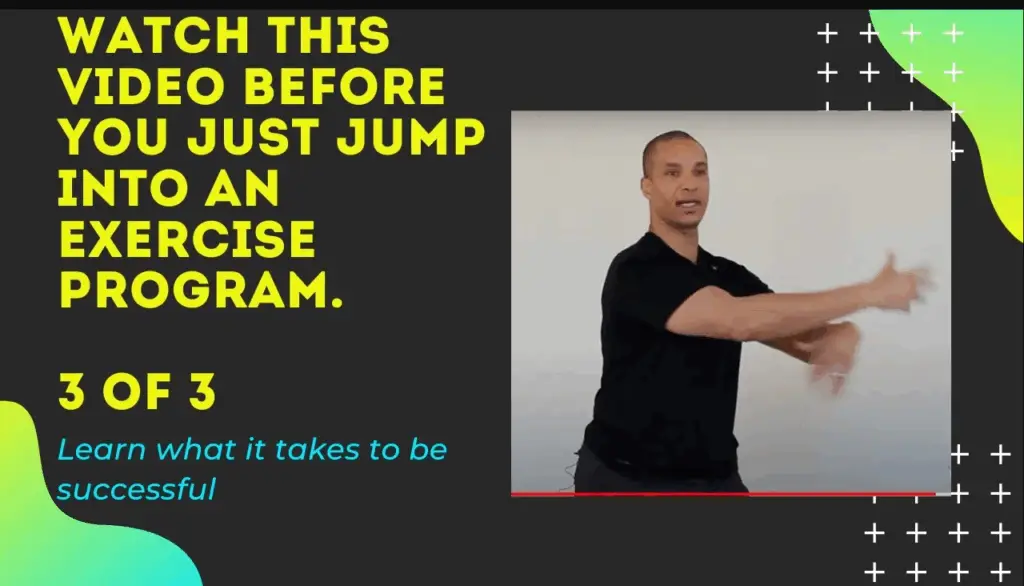
Click on the image to watch the full video

How to Choose the Right Personal Training Program—Santa Fe’s Expert Guide

Let’s start with a simple fact: your workout should help you move better in life—not just in the gym. That means focusing on full-body, functional movements. At SolCore Fitness, we use the seven primal moves (squat, lunge, bend, twist, pull, push, gait) because these patterns mirror how you live: sitting down, reaching, picking things up, rotating, and walking.

Why does this matter? If your routine is all about sitting on machines and isolating muscles, you’re not preparing your body for real-world demands. “If I just go to the gym and sit in a machine, it doesn’t translate into life at all. Life is more dynamic—movements work in combination, and your workout should reflect that.”

Don’t Stretch First! How to Warm Up and Train Smarter

One of the biggest misconceptions is stretching before you begin. Performance and safety actually improve if you start with cardiovascular activities like walking or jumping jacks, then move every joint through all three planes of motion—sagittal, frontal, and transverse. “Don’t stretch first. Warm up with movements that get your blood flowing, then activate your muscles through a variety of directions before you train.”

During your workout, focus on balancing push and pull movements, and make sure you include what your body needs—not just what you prefer. “If you love stretching or yoga, try lifting weights for better balance. If you’re into bodybuilding, add mobility and flexibility work. We always gravitate to what’s comfortable, but success requires working on your weaknesses.”

Sets, Reps, and Progress—What’s Right for You?

How do you know how many sets or reps to do? Start with your goal:

  • Fewer reps, more sets = strength and power
  • More reps, fewer sets = muscle endurance
    Assess yourself monthly, and don’t rush the process. Real change takes time. “Meaningful results usually require at least 90 days of consistent effort, and true transformation—new tissue, better alignment—can take nearly 10 months. Be patient, assess regularly, and course-correct when needed.”

Stretch After—Normalize Your Body for Better Recovery

After your workout is the time to stretch and bring your body back to neutral. This helps prevent repetitive stress injuries and keeps muscles functioning smoothly. “Every activity creates tension in specific muscles—bring them back to normal before your next session for lasting health.”

System, Consistency, and Support

People succeed because they have a plan, openness to change, and a supportive system. Personalized coaching makes a huge difference—guiding you in movement patterns, progressive adaptation, and mindset. Looking for the right program? See how SolCore Fitness’ personal training and manual therapy can help:
https://www.solcorefitness.com/personal-training-and-manual-therapy/

Find out more @

Facebook

LinkedIn

Pinterest

Instagram

Youtube

Bluesky

How To Choose a Personal Training Fitness Program For You in Santa Fe #1

Santa Fe personal training vision and holistic approach

Click on the image to watch the full video

Real Results Start With Vision—Not Just More Workouts

SolCore Fitness was founded out of frustration with the sales-focused, quick-certification approach of most gyms. With over 20 years in fitness, the mission was simple: deliver science-based, holistic training that goes far beyond quick fixes or trendy routines. Fitness experience and visible results matter, but so does investing in ongoing education and understanding the body at every level—not just muscle size or calorie burn.

Before anyone talks about reps or exercises, the process starts with a clear vision. “What do you really want to achieve?” and “Why does it matter to you now?” are questions that shape effective and sustainable programs. Trying to “do it all” at once (lose fat, build muscle, reduce pain, improve performance) just leads to diluted effort and weak results. Every focus—pain relief, weight loss, or strength—needs a purpose-built plan.

True Holistic Programs—It’s More Than Exercise

The journey continues with honest assessment:

  • What are your obstacles? (Most often, they come down to fear or past setbacks.)
  • What are you truly willing to commit? (Time, effort, habits.)
  • Nutrition: Rather than a one-size-fits-all plan, SolCore Fitness uses a metabolic typing quiz and journaling to personalize nourishment and fuel. The key: how food makes you feel, how you perform, and the connection between meal quality and energy levels.

From there, an effective program integrates proper stretching, resistance training, clean nutrition and hydration, cardiovascular training, and targeted supplementation—only to fill true gaps, not fix basic habits. None of these work without a foundation of structure and readiness to absorb food’s nutrients.

Don’t Forget the Essentials—Sleep, Coaching, and Adaptability

Proper sleep is non-negotiable—restored circadian rhythms (9:30-10:30pm bedtime), allow for healing, hormonal balance, and readiness for the next day’s training demands. Supplements can occasionally fill holes, but only after real food, movement quality, and routine are in place.

Continual learning and expert coaching lift the entire process. Empowered clients become their own best advocates, modifying their routines and nutrition in-step with real feedback and changing needs.

Internal Link Want a holistic, personalized assessment and plan? Learn more or book a free consultation here:
https://www.solcorefitness.com/personal-training-and-manual-therapy/

Find out more @

Facebook

LinkedIn

Pinterest

Instagram

Youtube

Bluesky