
Core strength

Pelvic Health: The Key to Longevity and Strength

Pelvic health key to longevity and strength

If you ask the average person about the most important part of their body for lifelong movement and health, you’ll get all sorts of answers: “my back,” “my knees,” “my core.” Rarely will someone say “my pelvis”—and yet, the pelvis is the true crossroads of the body, the silent foundation for posture, motion, and force.

Why Pelvic Health Matters More Than You Realize

Think of your pelvis as Grand Central Station for movement. Every step you take, every time you sit, lift, run, or even breathe, forces travel through the pelvis—up from your legs into your spine and downward from your trunk. When the pelvis is aligned, strong, and mobile, the rest of the body thrives. But if even a small muscle is weak, tight, or unbalanced here, your risk for injury and pain skyrockets.

Case Study: “James” and the Unraveling Chain
James came to SolCore after years of recurring hip tightness. A frequent hiker and recreational runner, he first noticed pain in his lower back, then developed “glute amnesia”—trouble activating his core and hip muscles. Over months, this led to pains in his knees, plantar fasciitis, even headaches. One thorough assessment showed the root: he lacked pelvic alignment and core pelvic stability. Instead of treating just his symptoms, we rebuilt strength and mobility in his pelvis. Within a few months, James was hiking pain-free for the first time in years.

Anatomy: What Goes Wrong (and Why)

The pelvis connects the lumbar spine with the femurs, linking the “trunk” and “legs” via dozens of ligaments, muscles, and key nerves. An unstable pelvis can take many forms:

  • Imbalanced hip flexors or rotators
  • SI joint dysfunction (common in both athletes and non-athletes)
  • Weak glutes, tight adductors, or shortened pelvic floor
  • Asymmetrical or limited gait patterns

The cumulative effects? Poor force transfer, compensation in the knees, weak low back stability, even jaw and neck issues (yes, it can travel up the chain that far).

Clamshells & Band Squats Aren’t Enough

In the age of Instagram fitness, you’ll see “clamshells” and “band walks” prescribed for pelvic health. But the truth? While better than nothing, these often underwhelm—because the pelvis needs to train as a coordinated, 3D system.

  • Real pelvic health means:
  • Strengthening all layers of hip and pelvic floor muscles
    • Ensuring symmetric mobility from left to right
    • Mobilizing the SI joint with targeted movements
    • Teaching the body to resist, transfer, and generate force equally

Step-By-Step: How to Build Lasting Pelvic Strength

  1. Bilateral and Unilateral Movements
    Train both sides equally (bilateral), and also in isolation (unilateral). Single-leg bridges, standing hip mobility, lateral step-overs, and targeted dynamic stretches all help.
  2. Fascial Chain Integration
    Include the pelvis in the entire fascial network—integrate loading and lengthening movement patterns (think: myofascial stretches that travel from feet through the torso).
  3. Functional Movement Assessment
    A trained eye (often using hands-on methods, such as [osteopathic manual therapy]) can detect imbalances not visible in regular gym tests.
  4. Address Mobility as Much as Strength
    Most injuries stem from a loss of pelvic mobility, not just weakness—restore range, then layer in control.
  5. Pain as a Signal, Not a Sentence
    Stop “pushing through” if pain persists—see it as your body’s request for assessment and correction.

Gender, Age, and the Pelvis

  • Women experience increased pelvic health needs with pregnancy, postpartum, and hormonal changes. Weakness or tension here can affect not only movement, but bladder health, sexual health, even posture and digestion.
  • Men often ignore pelvic health, thinking it’s only about hip flexors or glutes—then end up with hernias, groin pulls, or chronic back pain.
  • Aging always highlights weak links. A stable, mobile pelvis is the #1 predictor of fall prevention, smooth gait, and even cognitive confidence (movement and balance affect brain health!).

Why Osteopathic Manual Therapy Is the Gold Standard

DIY work can only take you so far. Osteopathic manual therapy targets the root. At SolCore, that means:

  • Manual assessment to detect joint, ligament, or myofascial issues
  • Hands-on releases to realign and balance
  • Corrective exercise that builds resilience from the ground up
  • Education about movement, posture, and daily habits that support—not sabotage—your pelvis

Our results? Clients with decades of pain or recurring injuries become stable, strong, and able to return to running, lifting, hiking—and simply enjoying life.

Final Thoughts: The Silent Power of Pelvic Care

You can’t see your pelvis as easily as your biceps or abs, but when you invest in this foundation, everything else improves—strength, athletic performance, sex life, balance, and long-term independence.

Ready to reclaim your foundation for life? Book a consult for Osteopathic manual therapy and experience movement transformation from the center out.

It’s not just working out, it’s building a foundation for a better life.

Find out more @
Facebook

LinkedIn

Pinterest

Instagram

Youtube

Bluesky

Why Your Fitness Routine Feels Stuck

Why your fitness routine feels stuck

Why Your Fitness Routine Feels Stuck

You start out strong: New Year, new routine. Maybe you try HIIT on Mondays, Pilates on Tuesdays, run a few miles on Thursday, toss in a random YouTube yoga flow when you can. At first, you see some changes. Then, almost without warning, progress stalls. You feel heavier, stiffer—even uninspired. What’s going wrong?

The “Frankenstein Program” Trap

Many people string together attractive-sounding activities: a class here, a run there, a set of stretches they saw on social media. But the whole never becomes greater than the parts—often because the “parts” pull against each other.

Client “Sarah” came in after a year spent sampling everything: group cycling, barre, hot yoga, couch to 5K. She was fit, yes—but confused. What she gained in diversity, she lost in direction. She never improved her running times, always felt “tight,” and even developed new aches.

Why “Random” Fails in the Long Run

  • No Synergy:
    If Monday’s workout ignores what happened Sunday, you enter Tuesday with fatigue. A muscle you torched two days ago never recovers.
  • Competing Priorities:
    Workouts with radically different goals (strength, power, extreme stretching) sabotage each other.
  • No Overarching Structure:
    Training is most effective when each session scaffolds onto the last—mobility supporting power, strength supporting endurance.

The Brain-Body Disconnect

Just as problematic: when routines are too random, your nervous system never builds the “neural map” that ties strength, balance, and mobility into one coherent system.

  • Patterns don’t consolidate
  • Form adaptations are lost
  • Plateaus set in and become harder to break

The Solution: Holistic Integration

What’s the alternative? A [Holistic exercise program]—one that integrates recovery, mobility, strength, and specific skill-building. With holistic structure:

  • Every session is deliberate: You know why and how it fits.
  • Improvements compound: Mobility gains show up in squats, posture work improves running, core stability boosts yoga form.
  • Progress is measurable and sustainable.

How to Start Switching

  1. Assess Yourself:
    Get a movement and goals assessment. Where are you tight, where weak, where compensating?
  2. Map Your Week:
    Build your week so each session primes you for the next. Need to squat? Prep with mobility and tissue work the day before.
  3. Layer in Full-Body Routines:
    Train myofascial lines, fascial chains, and stabilizers holistically—not just muscle groups in isolation.
  4. Program Recovery:
    Prioritize recovery as much as work. More isn’t always better—better is better!
  5. Use Feedback and Adjust:
    Don’t fly blind. Adjust your plan monthly based on how your body responds.

Story: How Integration Changed “Sarah’s” Life

Once Sarah switched to a program that connected Monday to Friday—mobility work feeding into strength, healthy eating supporting energy—everything clicked. Her aches faded, her enjoyment returned, and her running times even improved.

Why Group Classes Alone Don’t Cut It

Group fitness is fun, but unless coordinated into a comprehensive program, it can leave gaps. At SolCore Fitness, our classes fit within a weekly, monthly, and yearly plan so you make cumulative, not just session-by-session, gains.

Lasting Results: What to Expect

When you switch to holistic programming, you’ll notice:

  • Faster recovery
  • More consistent energy
  • Reduced plateaus and fewer injuries
  • A renewed sense of what’s possible—because your body is working together, not against itself

The First Step

Ready to ditch randomness? Explore our Holistic exercise program—the proven way to put all the pieces together, tailored to you.

It’s not just working out, it’s building a foundation for a better life.

Find out more @
Facebook

LinkedIn

Pinterest

Instagram

Youtube

Bluesky

Be Patient With Your Body

Be patient with your body

Be Patient With Your Body

If you get a paper cut, you don’t watch it every minute expecting it to close before your eyes. You understand: healing is a process. But with fitness and wellbeing, we often forget this basic truth—and demand instant results. If you’ve ever started a training routine and caught yourself asking, “Why am I not seeing improvement yet?” or got discouraged when an injury lingered for weeks, not days, you’re in good company. The real secret to sustainable health is patience.

Why Progress Feels So Slow

The body is always working in cycles breaking down, rebuilding, adapting. Every time you work out, you create controlled, microscopic damage: tiny tears in muscle fibers, mild inflammation in joints and connective tissue, neural stress that needs rebalancing. This “good stress” is the very stimulus for growth but only if paired with enough rest, hydration, nutrition, and time.

Case Study: Dave’s Marathon Recovery

After his first half-marathon, Dave could barely walk down stairs. Stubbornly, he wanted to “push through.” But gentle movement, mobility work, sleep, and nutritious meals were what helped his body rebuild. Three weeks later, Dave ran even stronger with no injuries.

Patience in Injury Recovery

Compare a paper cut to a torn meniscus, a sprained ankle, or stubborn low back spasms. The deeper or more complex the tissue involved, the longer it takes to heal. Ligaments, tendons, and fascial tissues (critical to support and movement) receive less blood flow than muscles, so their repair cycles are slower often measured in weeks or months.

Rushing back too soon means:

  • Incomplete healing
  • Greater risk of re-injury
  • Frustration when symptoms return “out of nowhere”

The Power of Osteopathic Manual Therapy

Where does Osteopathic manual therapy fit? It’s a way to amplify your body’s natural healing cycles. Hands-on methods speed circulation, relieve tightness, and restore joint fluency—no shortcuts, just assistance through each phase:

  • Assessment pinpoints root imbalances
  • Gentle manipulation supports proper alignment
  • Education teaches you what to expect during recovery and beyond

Clients who embrace this model—rather than jumping from doctor to doctor or program to program, expecting miracles—consistently report smoother, fuller recovery. Sally, a SolCore client healing a chronic shoulder impingement, shared: “I finally gave myself weeks, not days, to heal. Ekemba’s guidance made me stop fighting my body every step.”

What Patience Looks Like Day-to-Day

  • Track improvements in mobility, not just in pain: Are you moving better, reaching higher, standing taller even if discomfort lingers?
  • Celebrate small wins: One more degree of shoulder flexion, deeper sleep after therapy, being able to walk an extra block
  • Adjust expectations midstream: Everyone’s healing curve is different; don’t compare yours to an influencer’s quick recovery.

Building the Foundation for Lifelong Change

Patient people don’t give up; they double down on healthy routines even when results come slowly. Pair patience with:

  • Smart, progressive movement and strength work
  • Active recovery (walking, myofascial stretching, ELDOA)
  • Consistent hydration and anti-inflammatory nutrition
  • Sufficient, quality sleep

Every cycle adds up. Years from now, you’ll see the benefit of patience every day in less pain, greater capacity, and deeper confidence.

When to Seek Help

If healing is stalled, or pain worsens suddenly, reach out to a specialist. Instead of guessing, let a pro check your progress, adjust your plan, and suggest interventions like osteopathic manual therapy to break plateaus and align your recovery with your life goals.

Final Thoughts

Don’t let impatience sabotage your progress. Remember: your body thrives on support, not force. Like a plant, you grow best with time, encouragement, and the right inputs. The harvest always takes a season.

Ready to work with your body instead of against it? Learn more about healing and progression with expert support at SolCore Fitness, and see what patient investment can unlock for you.

It’s not just working out, it’s building a foundation for a better life.

Find out more @

Facebook

LinkedIn

Pinterest

Instagram

Youtube

Bluesky

Break Free from a Workout Rut: Steps to Real Progress

how to bust overwhelm and stay on track

Have you ever felt trapped in the “Groundhog Day” of workouts, where every gym session or run feels like a repeat of the one before? If so, you’re not alone. Even the most enthusiastic exercisers trainers and coaches included hit ruts where motivation slips, progress flatlines, and that initial “glow” turns into monotony.

Why Ruts Happen and Why It’s Normal

Most ruts start innocently:

  • You find a set of exercises or a class pattern that feels comfortable.
  • Early progress is great energy rises, clothes fit better, pain subsides.
  • But eventually, your body adapts, the novelty fades, and you might skip, half-heartedly repeat, or get bored.

Routine is fantastic for habit building. But for growth? You need heightened focus, playful variety, and a clear path that evolves with your needs not endless repetition.

Sara’s Story: From Stuck to Strong

Sara, a longtime client, was a “routine queen.” She did the same strength circuit every Monday, ran the same loop on Wednesdays, and attended the same yoga class on Saturdays. Over time, she noticed her old knee pain creeping back, her pace dropping, and her sleep getting worse. The solution wasn’t “harder” or “more”—it was “smarter.”

Step 1: Identify & Own Your Stuck Points

A workout rut doesn’t mean you’re lazy—it means your body is ready for the next challenge or a new approach. Common signs:

  • Plateaued strength, endurance, or mobility
  • New aches in familiar spots (hips, back, shoulders)
  • Burnout, low motivation, or even dreading sessions

Tip: Write down what has changed over the last 3 months how you feel, where energy or results have dipped. Admitting it opens up options!

Step 2: Reverse Engineer Your Goals

Ask, “Why am I working out? What do I want to achieve in the next phase?” Generic answers like “get fit” aren’t enough. Get specific:

  • “I want to improve my squat mobility for gardening.”
  • “Run a 5K with my daughter injury-free.”
  • “Build core strength to reduce my back pain.”

Clear direction prevents autopilot and makes your training meaningful.

Step 3: Assess, Don’t Guess

When you’re stuck, your body may be signaling an underlying movement imbalance or weakness. At SolCore, we recommend a professional assessment for:

  • Postural patterns (are you always favoring one side?)
  • Range of motion (is something tighter or weaker than last month?)
  • Functional movement (can you hinge, squat, press, and twist efficiently?)

Tip: Self-assess by filming exercises and comparing with previous sessions or professional technique models.

Step 4: Change One Variable at a Time

Overhauling your entire routine is a recipe for overwhelm. Instead:

  • Tweak one routine (e.g., swap lunges for split squats; try tempo work instead of all-out speed).
  • Add one new class (e.g., mobility, fascia release, or integrated strength).
  • Make rest and recovery as important as training days.

Step 5: Mind-Body Connection and “Why”

Often, the mental rut comes from ignoring your body’s messages—pushing through pain, resisting needed rest, or disconnecting from true intentions. Make one day a “mindful movement session”—move slowly, notice breath-to-muscle connection, and jot a few notes about how movement feels (not just what it looks like).

Step 6: Commit to a Personalized and Evolving Plan

A static “one plan fits all” approach is where most people lose interest. Instead, invest in a Personalized online program where each phase is designed for your body, your goals, and your progress to date.

These programs:

  • Adapt every 3–4 weeks, keeping things interesting
  • Target weaknesses and build on strengths
  • Integrate assessments so you see real progress
  • Provide feedback, accountability, and community

Real World Win: How James Broke the Cycle

James, 47, was a routine “gym rat.” Stuck in a rut, he joined our online program. Week by week, we shifted variables, added new movement “puzzles,” and built in mindfulness. After three months, James reported not just physical gains, but renewed energy: “My old pain is gone, I look forward to every session—and, surprisingly, I’m more motivated at work and with my family, too.”

Final Thought: Progress Beyond Maintenance

Maintenance is fine—it keeps you from slipping backward. But deep down, you want progress—to discover new potential, get out of pain, or just LOVE moving again. The way out of a rut is personal, purposeful, and supported by structure.

Ready to break your own rut? Try our Personalized online program for a 13-week overhaul that renews results and puts you back in control body and mind.

It’s not just working out, it’s building a foundation for a better life.

Find out more @

Facebook

LinkedIn

Pinterest

Instagram

Youtube

Bluesky

Breaking Patterns of Self-Sabotage

Breaking patterns of self-sabotage

Everyone has an inner critic that voice whispering you can’t change, shouldn’t try, or don’t measure up. Self-sabotage isn’t just about comfort eating or skipping workouts; it’s deeper. It’s when you act against your own interests, often unconsciously, and then blame “circumstance.” Recognizing and breaking these patterns is the difference between stagnation and life-changing growth.

Self-Sabotage Hides in Plain Sight

Bruce Lee once said, “Don’t speak negatively about yourself, even as a joke. Your body doesn’t know the difference. Words are energy and cast spells, that’s why it’s called spelling.” Many of us “spell” our setbacks into being:

  • “This is torture” about a hard mobility session.
  • “There’s no way I can do that”—before even trying a new exercise or approach.
  • “I’m just not flexible/smart/strong enough” the hidden mantras that block change.

How Sabotage Shows Up in Fitness and Life

  • Pushing too hard too soon as a test (“Let’s see if my back is really healed!”)
  • Skipping sessions after the first miss (“I blew one day, so the week is wrecked.”)
  • Hiding from feedback—refusing to check progress, measurements, or videos.
  • Withholding effort (“I’ll just coast today…” that becomes every day)
  • Blaming others or circumstances endlessly

Patterns Often Rooted in Fear

Self-sabotage isn’t always laziness—it’s often fear: of failure, of being seen, or even of success. Fears can show up as perfectionism (“If I can’t do it right, I won’t do it at all”), procrastination, or chronic comparison to other, more “successful” people.

From Awareness to Action: Spotting and Halting the Cycle

Step 1: Radical Self-Recognition
Keep a running note of sabotage signals—negative self-talk, resistance, or “checking out.” When do these show up? In what context or around whom?

Step 2: Name the Fear
Most sabotage is about safety; your nervous system is wired to keep you “the same,” even if change is good. Dig deeper: am I afraid of judgment, of failing again, or losing my identity as the “sick one,” the “underachiever,” etc.?

Step 3: Plan in Writing
Put your key goals, your fears, and likely points of sabotage on paper. “If I start skipping evening routines, I’ll call my coach.” “If I miss Monday, I’ll get right back in on Tuesday.”

Step 4: Ask for External Support
Share your patterns with a trusted coach, physical therapist, or friend. Accountability and a second perspective defuse the confidence of your inner critic. At SolCore, those who break through sabotage almost always do so with outside guidance.

Step 5: Build New Patterns—Start Small
Plan for “little wins” over big perfection. If your self-talk says “I can’t,” add “…yet.” If you’d usually skip a stretch session, do five minutes instead of none.

Real-Client Example: The Victim Cycle

A long-time client, “Ben,” repeatedly injured his low back just as progress was stellar. Each time, his self-identity (“I’m the guy with back pain”) held him back. Together, we mapped out the sabotage: stress triggers, anxiety about “getting better,” family patterns of self-doubt. With new awareness and ongoing support, he now notices his old cycles and—slowly—lets progress stick.

Committing to the Plan—Even As the Critic Shouts

Self-sabotage never fully goes away, but your response can change:

  • Notice when you want to quit or “test” your limits.
  • Stick to the agreed plan; don’t negotiate with yourself in moments of doubt.
  • Celebrate every redirected step: “I followed through despite discomfort.”
  • Expect sabotage—it’s a sign you’re leaving your comfort zone.

Why Coaching Works

Breaking self-sabotage is hard alone. Our [Free Consultation] exists to help you spot your unique patterns and plan a strategy that’s resilient—not just motivational talk, but real accountability and action steps.

The Path to Self-Mastery

The most successful people in fitness, business, and life aren’t free from sabotage—they’re just skilled at expecting it, spotting it early, and shifting course. Progress is built in the micro moments: the repetition of “I’ll keep going. I can do this. I can change.”

Ready to see how far you can go without being blocked by your old stories? Book a Free Consultation and move from self-sabotage to self-mastery.

It’s not just working out, it’s building a foundation for a better life.

Find out more @
Facebook

LinkedIn

Pinterest

Instagram

Youtube

Bluesky

Building a Foundation for a Better Life

Building a foundation for a better life

Imagine your body as a house. The foundation determines if the whole structure will be strong, resilient, and able to weather any storm. When the ground is solid, everything you build on top fitness, mental clarity, emotional well-being stands the test of time.

But what does it really mean to build a “foundation for a better life”? Let’s dig deep into what it takes, why most people miss it, and how you can apply this wisdom to create a sustainable, thriving future—no matter your starting point.

Laying the Groundwork: It’s Not Just Muscles

Most people approach fitness like they’d approach a new kitchen: add shiny appliances, throw on some paint, and hope for the best. But if the foundation is cracked—poor posture, inflexible fascia, weak stabilizers—the house will always be at risk.

At SolCore, we start with the roots:

  • Structural Alignment: Are your joints stacked properly? Is your spine in a healthy curve?
  • Breath Mechanics: Are you using your diaphragm? Do you know how breath drives posture and stability?
  • Myofascial Balance: Are your muscles and connective tissues able to move, lengthen, and stabilize dynamically?

Real-World Client: “Lydia’s Foundation Shift”

Lydia, late 50s, wanted to “get fitter for a hiking trip.” She had tried group HIIT, jogging, and random stretching—always hitting a wall with pain and fatigue. On assessment, her posture revealed a forward head, collapsed arches, and shallow breathing. Instead of just adding squats or cardio, we rebuilt:

  • Diaphragmatic breathing and rib mobility
  • Myofascial stretching routines
  • Simple posture drills and slow, controlled stabilization

Within 3 months, Lydia had better energy, reduced aches, and—surprise—a new love for movement. By the time her trip arrived, she hiked longer, happier, and with zero injury setbacks.

The Pillars You Need for a Lifelong Foundation

  1. Posture Is Functional, Not Cosmetic
    Good posture isn’t about military rigidity; it’s about stacked joints and relaxed readiness. We fix alignment with:
  • Cueing neutral spine in every exercise
    • Balancing left-right movement
    • Training in positions you use (standing, walking, climbing stairs)
  • Breath Drives Movement
    Breath is your secret weapon:
  • Expands ribcage for better spinal movement
    • Engages stabilizing muscles without conscious “bracing”
    • Calms the nervous system (good-bye stress-induced tension)
  • Mobility Before Strength
    You cannot strengthen what does not move. Many adults, especially over 40, “lose range” yearly. Restoration through precise stretching, controlled joint rotation, and fascia release is required before strength gains are truly possible.
  • Strength That Transfers
    Isolation lifts matter, but resilience comes from multi-joint, integrated moves:
  • Deadlifts, lunges, reaches, loaded carries
    • Movements incorporating balance, rotation, and control
  • Daily Habits Hold the Gains
    What you do daily matters more than what you do rarely. 2-5 minutes every morning and night, small movement snacks throughout the day—these build the neural and structural “footings” of your foundation.

Avoid These Common Mistakes

  • “More is better”: Building without rest or skipping the mobility “boring stuff” is like piling bricks on unstable ground.
  • “Only strength matters”: Neglecting mobility guarantees you’ll eventually stall or injure yourself—especially as you age.
  • “Once I’m pain-free, the work is over”: Maintenance is forever. Your body needs regular tune-ups.

The Role of a True Holistic Exercise Program

At SolCore, building a foundation isn’t a slogan—it’s a science and an art:

  • Comprehensive assessment: posture, movement, breath, habit analysis
  • Programming that builds, not breaks down
  • Stepwise progression: structural drills, then mobility, then gentle strength, then power as appropriate
  • Integration of stretching, recovery, and education

Client story: “Daniel always skipped stretching. When he finally committed to fascia work and daily breath drills, he noticed both his deadlift and his shoulder aches improved. He called it his ‘five minute foundation fix’—and it kept him in the gym, injury-free, into his sixties.”

Your Foundation For Life

When you build from the ground up, everything changes:

  • Fewer aches and setbacks even as you push for bigger goals
  • Better balance and confidence in daily life
  • Improved mental resilience: a solid physical foundation quiets the mind
  • More adventure travel, sports, play without fear or fatigue

Ready to put first things first and finally experience the difference? Check out our Holistic exercise program the cornerstone to the better life you want.

It’s not just working out, it’s building a foundation for a better life.

Find out more @
Facebook

LinkedIn

Pinterest

Instagram

Youtube

Bluesky

Fear Disguised as Practicality: How to Recognize It

fear disguised as practicality

“Once I do X, then I’ll…”
“Things are chaotic—when it calms down, I’ll start.”
“This works for my schedule better than that…”

We’ve all justified inaction with logic. How often is “practicality” just fear whispering in a business suit?

Understanding Fear’s Tricky Disguise

Our brains crave safety—and often seek it through rationalizations:

  • Not booking that health screening because “it can wait until after this stressful month.”
  • Delaying a new fitness routine until “work slows down.”
  • Settling for an old, ineffective stretch routine because “switching now might throw everything off.”

But comfort (and its twin, “practicality”) can quietly block your growth, health, and happiness.

Why the Smartest People Get Tricked

“Mary,” a high-powered attorney, was a pro at planning. She never missed a deadline—with work. But her back pain program? “Not a good quarter to start.” Every season, the excuse shifted: a trial, a trip, a new training, the holidays. Behind her logic was fear—fear of failure, fear of discomfort, even fear of success (“What if I actually get better?”).

How to Spot Fear’s Favorite Phrases

  • “Now’s just not the right time.”
  • “Let me just fix X and I’ll start Y.”
  • “I just need more information/training/support before beginning.”
  • “What I’m already doing is fine—for now.”

These keep you in the comfort zone, repackaged as wisdom.

What’s Underneath Three Core Fears

  1. Fear of Judgment: “What if I try and fail?” So you never start, and no one can criticize your efforts.
  2. Fear of Discomfort: Change is work, and routines are cozy—even when unfulfilling.
  3. Fear of Losing Identity: Many folks make being “busy,” “always struggling,” or “injured” part of who they are; growth threatens that narrative.

How to Break Free Action Steps

1. Notice the Script
Any “practical but perpetual” reason should trigger a red flag.
Jot down what you tell yourself, and note how often these “valid” reasons push your real health, fitness, or growth to the back burner.

2. Name the Real Fear
Ask bluntly: “If there were no obstacles, what would I feel if I started today?” Surfacing the fear robs it of power.

3. Write a Tiny, Immediate Plan
Commit to one simple, uncomfortable first step—book a consult, attend a single class, spend 10 minutes on a new routine.

4. Expect Resistance and Walk Through It
Every meaningful change brings anxiety. It feels like danger, but it’s just stretching the edge of your comfort zone.

Client Story: “Michael’s Leap”

Michael wanted to correct long-standing shoulder pain. Every month, a new reason popped up to stall. Together, we spotted the deeper pattern (fear masked as “scheduling conflicts”), set a single appointment, and started small. A year later, he’s pain-free, stronger, and now tells others: “Action—especially when uncomfortable—is always the right time.”

Why Osteopathic Manual Therapy Breaks the Pattern

[Osteopathic manual therapy] isn’t just about hands-on healing; it’s about assessment, facing your starting point, and accepting change at a safe, expert-driven pace.

  • You’ll get support reframing fears (“Is this pain, or just the sensation of new movement?”)
  • Adjustments are gradual, not overwhelming.
  • Small victories build genuine confidence, making action easier the next time.

Final Thought: Practicality Is Only Practical…If It Moves You Forward

Real practicality is growth-oriented—it’s about choosing the safest steps to move toward your goals. If your plans never risk, never stretch, never make you sweat (a little), you’re not being “practical”—you’re being cautious, and likely letting fear hold you still.

If habitual stress, tension, or “one day” thinking still has you stuck, take the next practical step schedule Osteopathic manual therapy.
You’ll build resilience, confidence, and movement one real, meaningful action at a time.

It’s not just working out, it’s building a foundation for a better life.

Find out more @
Facebook

LinkedIn

Pinterest

Instagram

Youtube

Bluesky

The Irony of Wanting to Get Out of Pain

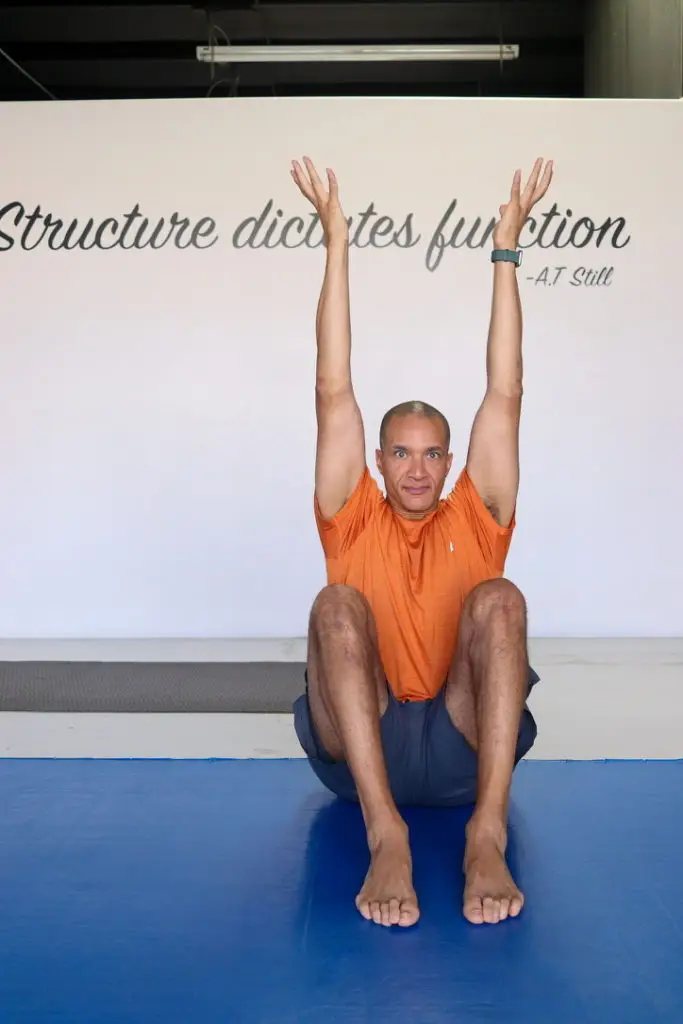
man doing seated ELDOA stretch with arms raised overhead for pain relief

I just want to be out of pain.” It’s a wish nearly everyone has uttered whether after a bad night’s sleep, a gardening mishap, or years of nagging aches. But the paradox is this: truly escaping pain long-term doesn’t involve avoiding it at all costs. It almost always means moving through discomfort, addressing the root cause, and correcting imbalances even when it’s challenging.

Pain: Not the Enemy, but a Messenger

Pain is your body’s dashboard light an alert that something is amiss. At first, it’s a whisper: a twinge while walking, dullness after a workout. Ignore it, and the volume rises: throbbing, stabs, or loss of mobility. Eventually, untreated pain will disrupt sleep, mood, relationships, and even your vision for the life you want.

Client story “Paul’s Pattern

Paul loved hiking but developed recurring knee pain that started as occasional stiffness and morphed over months into chronic swelling. He tried band-aid fixes NSAIDs, ice packs, even a cortisone injection. Pain diminished… briefly. But the problem wasn’t gone it simply went silent until the next adventure.

Two Roads: Mask or Correct

There are really only two options:

  1. Mask the pain: Medications, passive modalities (ice/heat), or quick treatments offer momentary relief but rarely address why the pain existed in the first place.
  2. Correct the root: This path is more challenging. It requires assessment, addressing movement patterns, building resilience, and yes—sometimes working through discomfort to restore function.

Why the Quick Fix Usually Fails

Covering up pain or chasing only comfort leads to…

  • Reliance on escalating meds or procedures (Tylenol > opioids > cortisone > surgery)
  • Greater tissue breakdown behind the scenes
  • Loss of confidence in your body, fear of movement, and in time… more pain

It’s like duct-taping over a check engine light.

The Courage to Correct

Story “Terri’s Turnaround

Terri, a runner, had low back pain off and on for years. Every time it flared, she’d skip core work and double down on “rest.” She never got lasting relief because she never addressed why her back hurt: weak glutes, stiff thoracic spine, and poor pelvic stability. With support at Sol Core, Terri committed to a program focused on mobility, core strengthening, and gradual progress sometimes through discomfort. Did it hurt at first? Sure. But within three months, her pain was gone, running was easier, and her confidence soared.

True Recovery Means Facing the Source

Long-term change relies on:

  • Assessment: Find WHY pain is present (movement dysfunction, imbalance, weakness, compensation).
  • Precision: Use corrective exercise and manual therapy to restore optimal patterns—don’t guess or self-treat randomly.
  • Consistent, Targeted Effort: Improvements take time. Your nervous system, joints, and fascia adapt only with persistent, quality input.
  • Learning Your Signals: Pain is rarely “fixed” overnight. Honor signals—differentiate productive discomfort from warning pain.

Why Even “No Pain” Isn’t Always Good News

Some clients say, “But I don’t hurt now—do I need to change?” Yes. The body is good at compensating (masking imbalances by overusing other tissues). Pain is sometimes the last sign. Like thirst, once it hits you, you’re already dehydrated.

Client Example: Maya’s “Hidden” Knee Risk

Maya, a hiker, had great energy no pain yet but her squat form and stair gait were off. Early intervention with a holistic exercise and fitness program corrected these patterns, preventing the injuries many of her friends later faced.

The Mindset Shift: See Discomfort as Positive

  • Productive Discomfort: Good pain is what you feel when a tight muscle finally stretches, or weak tissue begins to fire correctly.
  • Destructive Discomfort: Bad pain is sharp, stabbing, or worsening with good alignment—signal to stop and reboot.
  • Growth Mindset: Understand that challenge yields resilience. The short-term test leads to robust, pain-free living.

Blending Therapy and Training

At SolCore, our [holistic exercise and fitness program] uses a blend:

  • Assessment: Functional screens, posture checks, history review
  • Osteopathic manual therapy: To restore joint and fascial mobility
  • Corrective exercise: To teach your brain and body new, pain-free movement patterns (ELDOA, myofascial stretching, core stability)
  • Progressive overload: Safe intensity increases to develop strength and function for real life

When Rest Becomes Harmful

Rest is crucial in acute injury, but rest without re-training fosters stiffness, weakness, and recurrence. The right movement is medicine.

Facing Fear: Why We Procrastinate

Many fear discomfort—“What if I make it worse?” The right guide helps you differentiate helpful pain from harmful, and supports you one step at a time.

Results That Last

  • Pain relief that doesn’t return
  • More confidence and strength for life’s demands
  • Skills to manage future setbacks, instead of cycling back to square one

Ready for REAL Progress?

Don’t settle for fleeting relief. Take the courageous route: address the root, learn the signs, and embrace the wisdom of discomfort. If you’re ready to truly break the pain cycle, start with our holistic exercise and fitness program you’ll gain more than just comfort; you’ll unlock lifelong energy and freedom.

It’s not just working out, it’s building a foundation for a better life.

Find out more @

Facebook

LinkedIn

Pinterest

Instagram

Youtube

Bluesky

The Power of Contribution: How Giving Fuels Personal Growth in Holistic Health

The importance of contribution in holistic health and personal growth

Contribution” isn’t just the final chapter in personal growth models; it’s arguably the single force that expands and sustains all other areas of health, happiness, and fulfillment. As Tony Robbins (and research) remind us, giving is a human need—not just a virtue. But what does meaningful contribution look like in real life? How does it influence your well-being, body, and mindset?

Why Contribution Is the Keystone Human Need

All humans seek to grow, connect, and feel significant in their lives. But many find their deepest moments of fulfillment in contribution offering their time, skill, energy, or encouragement to others.

Contribution is:

  • The teacher staying late to help a struggling student
  • The friend who lifts you out of a rut
  • The fitness class member who cheers on a newcomer
  • The busy parent squeezing in time for a neighbor or volunteering at a community garden

Every gesture, big or small, ripples outward: “Living is giving,” as Robbins says.

Health Science: Giving Is Good for Your Body

Modern research proves what wisdom traditions intuited: giving triggers positive biochemistry boosting oxytocin, serotonin, immune response, and even longevity. Studies show people who volunteer regularly have:

  • Lower blood pressure
  • Improved self-esteem
  • Decreased rates of depression
  • Longer, more vibrant lives

The Shadow Side: When Giving Drains

But here’s the catch: giving without boundaries can lead to burnout. As Robbins and other experts teach, “You can’t pour from an empty cup.” Givers sometimes push themselves into patterns of over-extending, people-pleasing, or neglecting their own self-care.

The antidote? Contribution balanced with healthy self-worth and routines that fill your energy reserves.

Story: Maya’s Reframe

Maya, a SolCore member, loved volunteering at food banks and always put her children’s needs first. As months went by, she noticed a rise in exhaustion, daily aches, and resentment. “I was angry I didn’t have energy for my own health,” she said.

In coaching, Maya learned to “put on her own oxygen mask”—prioritizing three trainings weekly, carving out quick mindful walks, and recruiting her family into meal preps. Her mood lifted, pain receded, and suddenly, giving was again a joy instead of a drain.

True Self-Care: Give What You Possess

The most sustainable givers are those who prioritize their fitness, learning, nutrition, and wellbeing. Only when your cup is full can you “pour out” with abundance instead of depletion.

  • When you move and nourish your body, you show up energetically for your work and relationships.
  • When you seek education and support, you model healthy boundaries for friends, children, and community.

Concrete Habits That Expand Your Contribution

  1. Schedule Self-Check-Ins
  • One morning each week, note how your energy and mood feel.
    • Adjust routines to fill your tank (sleep, movement, rest) before it’s empty.
  • Involve Others in Your Wellness
  • Meal prep with children.
    • Stretch with partners or friends.
    • Share wins publicly not to brag, but to inspire.
  • Volunteer with Boundaries
  • Choose service opportunities that align with your values and availability.
    • Say no when needed remember, you are not an inexhaustible resource.
  • Practice “Micro-Giving”
  • Text encouragement.
    • Compliment a peer on their progress.
    • Offer to grab groceries for an injured neighbor.
    • Celebrate others’ victories, not just your own.

The Holistic Program: Multiply Your Impact

Take a look at [The Ultimate Guide For A Holistic Exercises And Fitness Program]. Our approach is about integration: we build your capacity, then teach you to support others through leadership, education, and encouragement.

At SolCore, we see it daily: clients who thrive in fitness naturally become helpers and leaders in group classes, family circles, and beyond. Their mood, clarity, and positivity attract others.

Giving as Healing

Contribution isn’t just an outward gesture—it’s healing for the giver. Serving others breaks self-absorption, shrinks anxiety, and anchors your sense of purpose.

Client Testimonial: “Helen’s Breakthrough”
Helen, a semi-retired nurse, lost her sense of impact after leaving the hospital. We helped her start a weekly stretching circle with friends, offering gentle cues from class. “I never realized that sharing what I learned for my own recovery would mean so much to others—and bring me so much joy,” she reflected.

Ways You Might Contribute (and Grow)

  • Host or invite others to join weekly walks or simple movement
  • Share recipes and meal prep tips with your community
  • Invite a hesitant friend to try a new class
  • Offer rides or check-in calls for those injured or recovering
  • Give genuine compliments—these cost nothing but mean everything

Fill Your Cup, Then Share

The more resilient, centered, and connected you are, the more you can give, love, and grow—creating ripples that last a lifetime.

Ready to build a well that overflows? Start with your own foundation The Ultimate Guide For A Holistic Exercises And Fitness Program is your next step.

It’s not just working out, it’s building a foundation for a better life.

Find out more @

Facebook

LinkedIn

Pinterest

Instagram

Youtube

Bluesky

How Do You Challenge Yourself to Grow? Balancing Goals with Holistic Wellness

Growth mindset and balance in holistic health

Growth is wired into us. Whether it’s a child’s urge to explore, an adult’s longing for new skills, or an elder’s wisdom in mentoring others, there’s a constant drive: Can I do more? Become better? Expand my world? But in the modern age, “more” often means faster, harder, busier… and too often, burnt out. Balancing growth with wellness body, mind, spirit is the true mark of a healthy journey.

The Double-Edged Sword of Ambition

Motivation sharpens the mind and lights the internal fire. But unchecked, it turns to restlessness—a need to hustle, a fear of stillness. It’s easy to fall into “not good enough,” always chasing the next target, never grounding in now.

At SolCore Fitness, we help clients shape ambition so it enriches every aspect of life not just one.

Tony Robbins’ Universal Need

Robbins identifies “growth” among the six core human needs, the pulse that once satisfied brings excitement and hope. But even he warns: pursue single-minded growth without balance, and you risk:

  • Missing out on present joys
  • Neglecting health or relationships
  • Sliding into chronic stress or even anxiety

Story: Brandon’s Burnout

Brandon, an executive and Sol Core client, loved progress. Five a.m. workouts, overtime at work, night school always “building.” He grew lean… until injury and fatigue forced a pause. Real growth, it turned out, included learning to rest, receive feedback, and enjoy victories without rushing to the next goal.

Stewarding Balanced Growth

1. Set Layered, Integrated Goals
Ask: Does this goal uplift your body, mind, and relationships? Consider a weekly health challenge plus quality time with family plus a new cooking experiment.

2. Pursue Depth, Not Just Breadth
Master one area—not just dabble in ten. If it’s deadlift technique, study it, film it, get coaching. Then, when ready, expand to a new activity.

3. Foster “Down” Cycles
Nature cycles so should you. Honor days for stretching, mindfulness, or even joyful skipping of routines. Growth solidifies in rest.

4. Track Emotional Fitness
Keep a journal: When am I happiest? Most stressed? What routines support or sabotage me? Emotional well-being is as vital as reps and heart rate.

5. Surround Yourself with Growth Minded Community
Join classes or groups with growth built in where mutual encouragement, shared learning, and honest feedback are the norm.

How Holistic Wellness Accelerates Growth

  • Mobility unlocks access to new skills and sports
  • Nutrition sharpens focus, immune strength, energy
  • Stress management allows you to rebound from setbacks, rather than spiral

Story: Janine’s Multi-Faceted Flourish

Janine arrived at SolCore seeking to “improve everything.” We coached her to grow wisely: setting seasonal priorities, learning to say no, and blending high-intensity sessions with restorative ELDOA and breathwork. One year: more muscle, more zen, fewer injuries, and—her words— “more laughter.”

Recognize the Signs: Too Much, Too Little

  • Overstriving: Sleep disruption, injury, mood swings, emotional “flatness”
  • Undergrowing: Boredom, stagnation, self-doubt, decreased energy

Balance is a dance a constant adjustment, not a static position.

The Six Human Needs in Action

  • Certainty: Build stable routines.
  • Uncertainty: Try new skills or classes.
  • Significance: Aim for a new milestone AND help others do the same.
  • Connection: Pursue shared activities.
  • Growth: Learn, challenge, adapt.
  • Contribution: Celebrate and serve.

Practical Tools for Balanced Growth

  • Monthly “mini-retreat”: Pause, review, reset.
  • Habit stacking: Attach new tasks to old routines (stretch after brushing teeth).
  • Meditate on gratitude—find joy in progress, not just outcomes.

Why Group Training and Science-Based Programs Sustain Growth

Unlike “DIY” fads, a [holistic exercise and fitness program] gives you:

  • Weekly fresh challenges that evolve with your gains
  • Feedback and camaraderie so you don’t go it alone
  • Progressions that span strength, mobility, nutrition, and mindset

Clients thrive when their environment supports ambition and rest.

Know When to Dial Back, Shift Gears, or Celebrate

Growth can mean digging in. It can also mean forgiving, pausing, or switching focus. Wisdom is knowing which today.

Get Support, Share Wisdom

If you crave balanced, sustainable, holistic growth body, mind, and spirit start by exploring The Ultimate Guide For A Holistic Exercises And Fitness Program. Ready for a human coach (not just an algorithm)? Reach out. We’ll train, pause, celebrate, and adjust so you not only grow, but flourish.

It’s not just working out, it’s building a foundation for a better life.

Find out more @

Facebook

LinkedIn

Pinterest

Instagram

Youtube

Bluesky