Fascia focused training

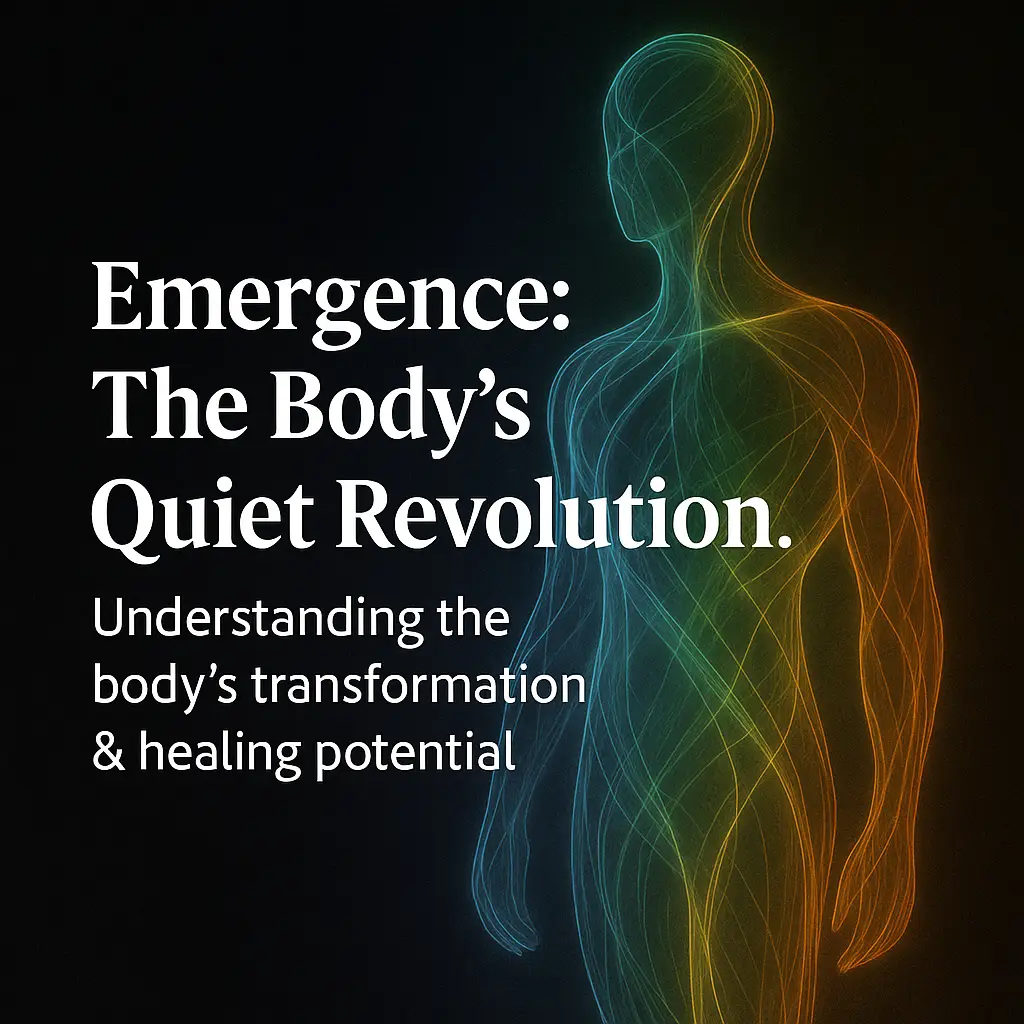
Emergence: The Body’s Quiet Revolution

Emergence: The Body's Quiet Revolution

We tend to think in straight lines. Start here, end there. Do the work, get the result. But the body doesn’t operate like a factory.

It operates like a forest.

In a forest, growth is not linear. Itโ€™s ecologicalโ€”emerging from networks of interdependence, seasons, decay, and surprise. This is how the body heals, evolves, and ultimately transforms.

This is emergenceโ€”when small, slow, often invisible processes suddenly produce something entirely new. A shift in posture. An absence of pain. The feeling of being organized from the inside out.

The Patience of Complexity

Weโ€™re conditioned to seek fast results. We want the “fix.” But when it comes to pain, performance, or even mental clarity, the body doesnโ€™t respond to force. It responds to presence.

Real change in the body comes from layered inputโ€”postural precision, fascial tensioning, nervous system reset, fluid movement, mindful breath. None of these alone are a magic bullet. But together, they build the terrain for something deeper to emerge.

Like in ELDOA, where you’re not just doing an exercise to open up space at a specific jointโ€”you’re turning on and integrating that joint with the rest of your spine, nervous system, and body. Itโ€™s a deliberate act of reconnection, aligning with the principles of PIT and DAM to allow for more fluid, intelligent movement. Or in myofascial stretching, where you find the restriction and *wait* for the tissue to yield. Or in proprioceptive re-education, where youโ€™re not just retraining musclesโ€”youโ€™re awakening forgotten intelligence.

Working “With” the Body, Not Against It

Techniques rooted in osteopathic principlesโ€”like ELDOA, MFS, segmental reinforcement, and fluid proprioceptionโ€”are not about overpowering dysfunction. They’re about partnering with the bodyโ€™s own capacity to reorganize.

Youโ€™re not โ€œfixingโ€ the body.
Youโ€™re giving it the information it needs to *emerge into coherence*.

This takes patience. Curiosity. And yes, repetition. But the rewards go far beyond relief. You move with more integrity. You live with more resilience.

This layered, systemic process is at the heart of our Osteopathic Exercise and Therapy Techniques, where youโ€™ll find tools that support the bodyโ€™s natural ability to adapt and reorganize.

More Than You Think You Are

Emergence reminds us that weโ€™re not limited by where we are now.

With the right input, the right environment, and the willingness to work with complexity, we donโ€™t just recoverโ€”we transform.

You may be showing up to resolve pain or feel better in your joints. But what if this process gave you more than that? What if you discovered strength, confidence, and alignment that you didnโ€™t think was possible?

Not by forcing your body to comply.
But by allowing your system to do what itโ€™s built to do: adapt, organize, and emerge.

Your body is not a project to be completed

Itโ€™s a living, dynamic system thatโ€”given the right relationshipโ€”can become more than you imagined.

Thatโ€™s the quiet revolution.

Thatโ€™s emergence.

Follow the Threadโ€”Where Movement, Fascia, and Freedom Align

Find more insight, reflection, and fascia-informed care across the platforms where we stay connected:
Facebook

Blue Sky

Pinterest

Instagram

Youtube

Fascia Healing vs. R.I.C.E: Why Movement Beats Ice for Recovery

R.I.C.E

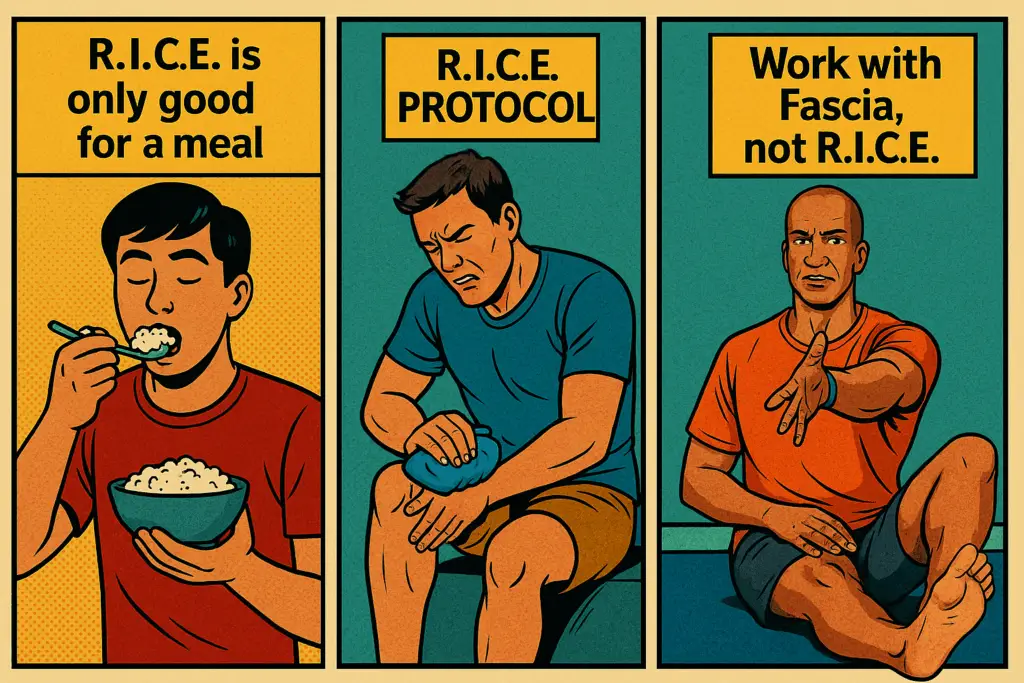
โ„๏ธ Why R.I.C.E. Isnโ€™t the Best Way to Heal

Most of us grew up hearing the same advice when we got hurt:

Rest. Ice. Compress. Elevate.

This is called the R.I.C.E. methodโ€”and while it once seemed smart, even Dr. Gabe Mirkin, who coined the term in 1978, has since retracted it. In his article โ€œWhy Ice Delays Recovery,โ€ Dr. Mirkin explains that excessive icing can hinder the bodyโ€™s natural healing process.

Why? Because fascia healing doesnโ€™t happen by stopping the body. It happens through flow.

๐Ÿ’ก Whatโ€™s Wrong With Icing Too Much?

Ice helps right after an injuryโ€”for the first 12 to 24 hours.
It slows swelling and bruising, and thatโ€™s useful.

But after that? โŒ
Too much ice can block the very process your body needs to heal.

It slows blood flow, pushes out the helpful cells, and delays your recovery.

๐Ÿ”ฌ Fascia Healing Happens in 3 Natural Phases

Letโ€™s break it down simply. When you get hurt or sick, your body starts healing in three steps:

1๏ธโƒฃ Vascular Phase(2 parts): First Comes the Swelling

When you get hurt, your body quickly sends more blood to the area.
This is called vasodilation, and itโ€™s the first part of the healing process.
All that blood brings oxygen, nutrients, and important โ€œemergency signalsโ€ that call for help.

๐ŸงŠ This is the short window where ice can help.
If there’s a lot of swelling or bruising, icing during the first 12 to 24 hours can slow it down and protect nearby tissues.

But then the second part kicks inโ€ฆ

Now, tiny blood vessels open up and allow special immune helpers to pass through.
These cells begin preparing the area for repair. This part needs flow, not freezing.

So ice is only useful in the very beginning.
After that, movement, hydration, and gentle pressure help your body do its job.

2๏ธโƒฃ Cellular Phase: The Cleanup Crew Arrives

Next, special immune cells move in.
They clean up the mess, fight off problems, and prepare your body for repair.

But if you keep icing?
Itโ€™s like putting a roadblock in front of those helpful cells.

3๏ธโƒฃ Repair Phase: Tissue Starts to Rebuild

Once your body starts to rebuild, the goal isnโ€™t to stay stillโ€”itโ€™s to support the process.

Your fascia, muscles, and joints need:

  • Movement to keep fluids flowing
  • Breath to improve circulation
  • Light pressure to guide repair without overload

These things donโ€™t just โ€œspeed upโ€ healingโ€”
They help your body do what it already knows how to do.

Cartoon illustration showing fascia healing responseโ€”red immune cells with weapons and green repair cells with tools working together inside the body

At SolCore Fitness we donโ€™t fight the bodyโ€™s response. We work with itโ€”through guided movement and hands on treatment with methods like ELDOA, myofascial stretching, fascia-based exercise and fascial pumping to help your body heal with its natural rhythm.

These are the tools that work with your fascia, not against it.

This is where fascia healing really begins.
New tissue is built. Fluid clears. Your body restores balance.

But hereโ€™s the key:
โœ… This only happens if thereโ€™s movement, hydration, and gentle pressure.

๐Ÿง˜โ€โ™‚๏ธ What Helps Fascia Heal Best?

  • Short-term ice (only in the first 12โ€“24 hours)
  • After that:
    • Breathing
    • Gentle movement
    • Techniques like pumping and stretching

At SolCore Fitness, we use methods like ELDOA, myofascial stretching, and fascial pumping to help your body heal with its natural rhythm.

These are the tools that work with your fascia, not against it.

๐Ÿšซ Donโ€™t Freeze the Flow. Support It.

Your fascia isnโ€™t just a tissueโ€”itโ€™s a system.
It thrives on movement, hydration, and flow.

The R.I.C.E. method stops that flow.
But fascia healing needs it to recover.

โœ… What You Can Do Today

  • Got an old injury that wonโ€™t heal?
  • Or a new one youโ€™re icing too long?

Try fascia-first movement instead.
Give your body what itโ€™s really asking for: flow, not freezing.

๐Ÿ’†โ€โ™‚๏ธ Want to Learn How to Take Better Care of Your Fascia?

If you want to move better, feel stronger, and truly support your body’s natural healing…

Discover the power of Osteopathic Manual Therapy.

Itโ€™s one of the most effective ways to restore balance, reduce pain, and help your fascia heal the way it was designed to.

Follow the Threadโ€”Where Movement, Fascia, and Freedom Align

Find more insight, reflection, and fascia-informed care across the platforms where we stay connected:

Facebook

Blue Sky

Pinterest

Instagram

Youtube

She Taught Me to Swim: Fascia, Stress Relief, and the Weight Mothers Carry

A personal momentโ€”and the message beneath it

She taught me to swim.

I was maybe two or three years old when this photo was taken.
My mom knelt beside me at the pool, smile wide, teaching me to float before I ever believed I could.

That memory has stayed with meโ€”and itโ€™s a powerful window into what fascia stress relief for mothers really means.

Because my mom wasnโ€™t just helping me stay above water.
She was holding our entire family afloatโ€”four kids, mostly on her own.

And like so many women, she carried the weight of care in her body.

What I didnโ€™t realize thenโ€ฆ
She wasnโ€™t just helping me stay above water.
She was holding our entire family afloat.

She raised four of usโ€”mostly on her own.

And like so many mothers, she carried the emotional and physical weight of the world without ever showing the strain.

Why Fascia Stress Relief for Mothers Matters

Your fasciaโ€”a web of connective tissue that surrounds every muscle, nerve, and organโ€”remembers everything. It responds to your environment, your posture, your stress… and your care.

When you’re constantly in output mode (like mothers and caregivers often are), that load shows up as:

  • Chronic stiffness or tension
  • Pain that shifts or lingers
  • A body that feels โ€œstuckโ€ or dehydrated from the inside out

Many mothers don’t realize that the stress they carryโ€”physically, mentally, and emotionallyโ€”directly impacts their fascia system. This dense connective tissue doesn’t just wrap musclesโ€”it helps manage fluid pressure, proprioception, and healing.

When fascia becomes overstressed or dehydrated, it loses its elasticity, its glide, and its ability to adapt. Thatโ€™s why fascia stress relief for mothers isn’t just a luxuryโ€”itโ€™s essential care.

The Causes of Fascia Stress in Mothers: Chronic Tension and Dehydration

1. Chronic stress
Fascia tightens under sustained emotional pressure, limiting circulation, mobility, and even breathing patterns. As described by researchers at Anatomy Trains, fascia forms an interconnected web that responds to everything from movement to mindset.

2. Dehydration
Fascia needs fluid movement to glide, adapt, and heal. Most people donโ€™t drink enough water to support it.

โœ… Hydration Guidelines:

  • Minimum: 1 liter/day
  • Ideal: Half your bodyweight in ounces
  • Best water sources: Artisan > Spring > Reverse Osmosis

Healing Is Possible. Care Starts With You.

Fascial health isnโ€™t just about flexibilityโ€”itโ€™s about freedom. The ability to move, feel, and live with less pain and more clarity.

With the right care, your fascia can:

  • Process emotional and physical tension more efficiently
  • Support better circulation and mobility
  • Help you feel grounded and strong again

This Motherโ€™s Day, Consider Thisโ€ฆ

Instead of flowers or brunch, what would it look like to give or receive:

  • Movement that restores
  • Hydration that heals
  • Space to be supported

***On second though also bring flowers***๐Ÿ˜‰

Want to feel more at home in your body?

Explore our approach to fascia, fitness, and real strength:

Follow the Threadโ€”Where Movement, Fascia, and Freedom Align

Find more insight, reflection, and fascia-informed care across the platforms where we stay connected:
Facebook

Blue Sky

Pinterest

Instagram

Youtube

Katy G – When All Else Failed, She Tried Again And Succeeded

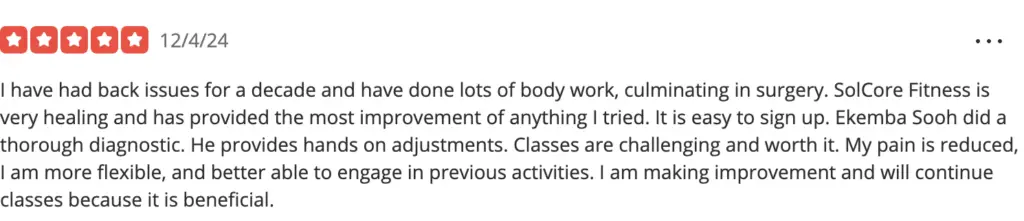
The big smile that Katy comes in with is always a joy to see. But situations with her body were trying to take that smile away. You see, 10 years ago, she was injured at work. The pain and limited activity were constant companions. 

She tried PT, Cranial Sacral, and all types of bodywork massage, including Rolfing, Feldenkreis, acupuncture, chiropractic, ergonomic office assessments, and yoga classes, and bought various DVDs specific to back issues. In 2023, I had spine surgery for sciatica and stenosis. She suspected her back would have been worse sooner without these efforts, but they didn’t fix matters.

Activities like gardening, bending, walking, and sitting were severely limited and painful. She had sciatica every day and neuropathy in her shin and foot. The walking distance was short, and her speed was slow. Sitting down really locked up her back and glutes. Standing was more comfortable. Lying prone with ice offered some relief.

Medicare cut off her PT five months after surgery, but she was still not okay. To make matters worse, and her frustration, PT had not helped much anyway. She was praying for direction when she saw an ad for a free SolCore Fitness trial class on Facebook (this is our Monthly Free ELDOA class).

She signed up online and attended the free Saturday group class, and since she found it so beneficial, she signed up for the 2-week trial to give SolCore Fitness a fair test. Ekemba Sooh did an assessment of my issues so he knows what is safe to do. Ekemba is active in class, hands-on, adjusting student postures, and he is very aware of our abilities and injuries. She also signed up for some individual sessions to include the manual therapy techniques because “I was desperate to get better.”

After six months of classes, she continues to improve. She walks better, moves easier, can sit longer, has reduced duration, is less frequent, and travels more efficiently. Since she continues to make progress, she is motivated to keep going and continue to improve her body, health, and life. So, She is sticking with the program that got her there.

Find out more @

Facebook

Blue Sky

Pinterest

Instagram

Youtube

Boost Immunity By Working Out Like This

Ever wondered how your bodyโ€™s connective tissueโ€”your fasciaโ€”could be playing a powerful role in your overall health and immune system?

We already know that exercise helps improve strength, posture, mobility, endurance, and even your mood. But whatโ€™s often overlooked is this: you can boost immunity by working outโ€ฆ if you do it the right way.

The key is specificity.

Click on the image to watch the full video

SolCore Therapy and Fitness

Why Random Movement Doesnโ€™t Cut It

I call it โ€œrandom acts of movement.โ€ You go for a walk, take a class, do a few stretches, maybe see a practitioner when something hurts. Youโ€™re doing somethingโ€”but thereโ€™s no strategy behind it.

And when there’s no strategy, your body doesnโ€™t respond the way you want. In fact, it can start to fall apart because neglected areas accumulate dysfunction.

If you want better immunity, you need a focused programโ€”just like youโ€™d need one to build strength or endurance.


How Structure Affects Immune Function

Your body functions best when its structure supports its purpose. Muscles, bones, fascia, ligaments, and organs all work together. If you want your body to think better, digest better, move betterโ€”and yes, respond better to threatsโ€”you need to make sure your structure is aligned and functioning well.

Letโ€™s look at the immune system specifically:

  • Your lymphatic system is a major player in immune defense.
  • It flows through key ganglion points: your clavicles, cysterna chyli (around T12), and cloquet ganglion (pelvic area).
  • These areas are surrounded by fascia, which influences how well everything moves and drains.

If your posture is misalignedโ€”like in a typical forward head posture from sitting all dayโ€”youโ€™re compressing areas like the clavicles, reducing lymph flow. That alone limits your immune systemโ€™s ability to function.


The Role of Fascia in Immune Health

Your fascia isnโ€™t just โ€œwhite stuffโ€ between muscles. Itโ€™s alive and intelligent, involved in protection, communication, and healing.

But many mainstream techniques abuse it. Take foam rolling: people roll aggressively over their inner thighs where many lymph nodes live, crushing tissue thatโ€™s meant to protect you. Thatโ€™s not recoveryโ€”itโ€™s self-sabotage.

To boost immunity by working out, you need to:

  • Understand fascial chains
  • Train with posture and structural integrity in mind
  • Avoid overstimulating or damaging key immune zones
  • Keep fascia hydrated and responsive through motion and therapyโ€”not abuse

Itโ€™s About Flow

Think of your immune system like a river. If it flows, itโ€™s healthy. If it stagnates, it festers. Inflammation is your body’s first line of defense, not a bad word. But it needs a clear path.

Your fascia, posture, and muscular balance createโ€”or blockโ€”that path.


Real Application: From Concept to Movement

Letโ€™s take the glute medius. It has three fibers, and each is connected via fascia from the foot all the way to the skull. A random clamshell isnโ€™t going to cut it. But if you train that muscle in the context of the full chainโ€”foot to hip to spine to shoulderโ€”youโ€™re strengthening tissue and improving flow.

Thatโ€™s the difference between isolated training and integrated immunity-supporting training.


Beyond Workouts: Food, Hydration, and Function

Of course, immune health isnโ€™t just about movement. Itโ€™s also about:

  • Drinking enough water (half your body weight in ounces daily)
  • Eating clean, organic, pasture-raised, nutrient-dense food
  • Supporting your gut, not just feeding it

But none of this works well if your body canโ€™t absorb it. If your GI tract is twisted from poor structure, your supplements turn into expensive urine. If your fascia is compressed, your organs canโ€™t perform their jobs. Thatโ€™s why structure dictates functionโ€”and why movement must support structure.


Final Thoughts

Iโ€™m not going to give you a quick fix or a miracle supplement. Thatโ€™s not what I do. But I will give you the truth:

โœ… You can boost immunity by working out
โŒ But not with random activity
โœ… It takes a specific, holistic program designed with fascia, posture, and organ function in mind

If you want to learn more, check out the free ebook below. Or book a free call with meโ€”weโ€™ll talk about whatโ€™s holding you back and what it would look like to train your body the way it was designed.

Drop any questions in the comments. Stay wellโ€”and keep your flow strong.

โ€” Ekemba Sooh, SolCore Fitness & Therapy


๐Ÿ“ž Want to Talk? Book a free call and letโ€™s figure out whatโ€™s next for you.

building a foundation for a better life.

Find out more @

Facebook

Blue Sky

Pinterest

Instagram

Threads

Youtube

Mastering the Push Pattern: It’s Not Just For Your Pecs

Mastering the push-pattern. The bench press. The chest press. The push-up.

Whatever you call it, this push pattern is one of the seven primal movementsโ€”and itโ€™s about a lot more than just building your pecs.

In this post (and video), weโ€™ll explore how mastering the push pattern isnโ€™t just a matter of technique, but of understanding the full-body biomechanics behind it. When you treat it as a holistic movement, you unlock strength, mobility, and injury resilience across your entire body.

Check out the full video by clicking on the image below.

The Push Pattern Is a Full-Body, Compound Movement

Yes, the push pattern trains your pecsโ€”but it also demands the coordination of your:

  • Lats
  • Deltoids
  • Biceps & triceps
  • Forearms, wrists, and hands
  • Elbows, shoulders, and spine
  • Rib cage, sternum, and even your pelvis

When you perform a push correctly, these systems integrate through your fascia to create a strong, stable, and safe motion.

But when you lack strength or coordination in any of these areas, your body compensates. Thatโ€™s where problems start.


Compensation = Cheating Your Body

Letโ€™s say your pecs are underdeveloped. You can still bench pressโ€”but your body cheats by overusing the lats, delts, or even your spine.

Over time, this imbalance leads to:

  • Shoulder pain
  • Poor posture
  • Limited progress
  • Injury

To avoid this, you must train the push pattern segmentally firstโ€”then globally.


Segmental Training Before Full Patterns

Instead of jumping straight into compound movements, train the individual components:

  • Pec flies at diagonal angles to match muscle fiber lines
  • Serratus anterior strength (fan-shaped movement)
  • Rhomboid work in glenohumeral-friendly positions
  • Posterior chain and thoracic posture development
  • Psoriatic joint mobilization and therapy (behind shoulder blades)

This builds neuromuscular coordination, muscle mass, blood flow, and fascial integrationโ€”giving your body the tools to execute the push without compensation.


Choosing the Right Push Pattern Progression

Once youโ€™ve built the foundation, you can progress the push pattern intelligently:

  • Open chain (free end movement): barbell bench press, dumbbell press
  • Closed chain (fixed end): push-ups from wall, bench, knees, or toes
  • Unilateral (one side): single-arm press
  • With rotation or combination: functional push + twist variations

Start with the basics. Donโ€™t jump into complexity without preparationโ€”your body will guess, and guessing equals injury.


Posture and Scapular Mechanics: Two Common Mistakes

Two things I see people get wrong constantly:

  1. Posture
    • Arching the back during a press
    • Leading with the head during push-ups
    • Lifting the head off the bench
    • Dropping the pelvis or changing spinal curves
    ๐Ÿ‘‰ Your posture is your training. What you teach your body under load is how it will behave.
  2. Scapular Mechanics (Shoulder Blade Movement)
    • On the way down (eccentric), scapulae must retract
    • On the way up (concentric), they must protract

If your scapulae canโ€™t glide properly, your shoulders take the hit.


The Serratus Anterior: The Unsung Hero of Push Movements

The serratus anterior is critical for scapular protraction and stabilization. It fans out from the ribs to the shoulder blade and works alongside:

  • Rhomboids (between the scapulae)
  • Psoriatic joint (behind the scapula)

You must train it in multiple planesโ€”not just with โ€œpush-ups plus,โ€ but in diagonal and rotational movements to build full range and resilience.

We have a great guide to understanding holistic exercise and fitness


Why Mastering the Push Pattern Matters

This isnโ€™t just about looking better in a t-shirt. The push pattern shows up in:

  • Daily movements (pushing open a door)
  • Sports performance
  • Fall prevention
  • Structural balance
  • Joint health

When you rush into it without preparing the body segmentally, youโ€™re skipping stepsโ€”and your body will force you to pay attention later through pain or dysfunction.


Final Thoughts (and Your Next Steps)

Mastering the push pattern means respecting the complexity of your body.

โœ… Train weak links first
โœ… Stretch and mobilize where needed
โœ… Build strength from the ground up
โœ… Respect posture, control, and sequencing


๐Ÿ“ฅ Free Resource + Call Option

๐ŸŽ Want to train smarter, not harder?
Get my free guide: 4 Steps to a Strong, Pain-Free Body to Live the Life You Choose โ€” instant access.

Building a foundation for a better life.

Find out more @

Facebook

BlueSky

Pinterest

Instagram

Youtube

The Critical Link Between Therapy and Exercise for Peak Performance

Are you frustrated with not being able to perform at your best? Feel like you’re slowing downโ€”even though you’re staying active and getting treatment?

Age might not be the issue.

In fact, one of the most overlooked reasons for stagnation or recurring pain is the lack of specific exercises following therapy. Itโ€™s the critical link between feeling better for a momentโ€ฆ and functioning better long term.

Letโ€™s break it down.

Click on the image to watch the full video

Most Treatment Programs Miss This One Thing

Iโ€™m Ekemba Sooh, owner of SolCore Fitness and a Soma therapist and Soma trainer with over 30 years of experience. Iโ€™ve seen this pattern time and time again.

People receive treatmentโ€”massage, chiropractic, acupuncture, or even physical therapyโ€”and then one of two things happens:

  1. Theyโ€™re sent on their way with no follow-up.
  2. Theyโ€™re handed a generic exercise sheet thatโ€™s not specific to them.

Sound familiar?

These routines might offer temporary relief, but theyโ€™re built on a symptom-based system. And thatโ€™s the problem. Youโ€™re more than your symptom. Youโ€™re a whole body.


Symptom-Free โ‰  Problem Solved

When pain fades, most people assume the issue is gone. But unless the root cause is addressed, itโ€™s still thereโ€”just quiet. And it will come back. It always does.

Worse, each recurrence makes the issue harder to treat. Your body adapts to dysfunction just like it does to training. Without correction, poor structure becomes your new baseline.

Thatโ€™s why therapy and exercise for peak performance must go hand-in-handโ€”and both must be specific to you.


Why General Programs Fail (and Make You Worse)

Life brings wear and tearโ€”whether youโ€™re working at a desk, raising kids, or playing sports. That wear accumulates. If you donโ€™t balance your body along the way, the result is:

  • Tight hips
  • Back pain
  • Forward head posture
  • Decreased mobility
  • Chronic injuries

And if you keep exercising on top of this dysfunctionโ€”without addressing the imbalanceโ€”youโ€™re reinforcing bad patterns.


Example: My Own Injury and the Flawed System

In my 30s, I developed sciatic pain and disc compression at L4/L5, despite doing โ€œeverything right.โ€ I was eating well, staying hydrated, and working out. But I wasnโ€™t doing what my body needed.

I was given cookie-cutter solutions: press-ups, clamshells, stretches everyone gets. They didnโ€™t help. In fact, they made it worse.

Only when I found Soma therapy and trainingโ€”and began addressing my specific structureโ€”did my body begin to change.

I wish I had this great page on OMT to help me see more on what therapy should be like. Check it out


Real Case: IT Band Pain and the Specific Fix

A client came in with IT band pain. The usual answer? Foam roll it. Maybe do clamshells. But that misses the point.

The IT band is part of a fascial network involving the glute med, glute max, TFL, and fascia lata. Each has different fibers and insertion pointsโ€”and each needs to be treated differently depending on the cause.

Instead of loading an already inflamed area, we focused on:

  • Releasing tension with specific myofascial stretches
  • Avoiding overstimulation
  • Training fiber angles based on posture and tension patterns

Thatโ€™s the level of specificity you need to actually heal.


A Preventive Approach That Works Long-Term

Imagine youโ€™re 25, starting a desk job, and staying active. If you paired that lifestyle with monthly manual therapy and a 15-minute, personalized movement program 3x per week, youโ€™d stay mostly balanced for years.

Compare that to the common story:

You work hard, never pause to rebalance, train through dysfunction, and wake up at 45 with chronic pain and poor posture. Now, reversing decades of adaptation is a long, frustrating road.

It didnโ€™t have to be that way.


The Takeaway

You canโ€™t train your body like a machine and expect peak performance without maintenance. Your body needs love, balance, and the right kind of input.

โœ… Therapy without exercise is incomplete.
โœ… Exercise without specificity is damaging.
โœ… Togetherโ€”and done rightโ€”they unlock your potential.


๐Ÿ’ฌ What You Can Do Next

If you want a smarter, sustainable path forward, here are your options:

Letโ€™s stop reacting and start building a body that works for the long haul.

itโ€™s not just working out, itโ€™s building a foundation for a better life.

Find out more @

Facebook

BlueSky

Pinterest

Instagram

Youtube

LinkedIn

๐ŸŒŸ Unlock Your Full Potential: The Secret Link Between Stretching and Strength! ๐ŸŒŸ

Stretching is often seen as a warmup, cooldown, or just something you do when your muscles feel tight. But what if stretching and strength werenโ€™t oppositesโ€”but partners?

When done correctly, stretching not only improves mobilityโ€”it builds strength by enhancing posture, neuromuscular control, and the structural integrity of your body.

Letโ€™s dive into how this works and why most people are doing it wrong.

Click on the image to watch the full video

Stretching Isnโ€™t Just Passive Relaxation

The kind of stretching you see in most gymsโ€”grabbing your foot, throwing a leg on a bench, or flinging your arm across your chestโ€”is outdated and ineffective.

At best, it temporarily increases range of motion. At worst, it disrupts how your body generates strength.

But with the right approach, stretching can actually improve strength by working with the bodyโ€™s connective tissue systemโ€”specifically, your fascia.


Stretching vs. Warming Up: Know the Difference

Letโ€™s clear this up:

  • Warm-up: Prepares your body for activity
  • Stretching: Helps normalize tissues after activity
  • Foam rolling: Neither warming up nor stretchingโ€”and often harmful to fascia

Warm-ups increase your current potential. Stretching expands whatโ€™s possible over time. Thatโ€™s why you should never stretch before intense activityโ€”only after.


Why Fascia Matters for Strength

Fascia is the bodyโ€™s connective tissue matrix. It wraps every muscle, nerve, and organโ€”creating structure, transmitting force, and supporting movement.

If your fascia is:

  • Dehydrated
  • Stressed
  • Tangled from poor posture or injury

โ€ฆit will limit how your muscles function. Stretching properly hydrates, aligns, and restores fasciaโ€”giving your muscles a better โ€œcontainerโ€ to generate force from.


The Science Behind It: Tensegrity + Hillโ€™s Muscle Model

Your body works through tensegrityโ€”a balance of tension and compression. When fascia is out of balance, your strength output suffers.

According to Hillโ€™s Muscle Model, true strength depends on:

  1. Muscle fibers
  2. Tendons
  3. Fascia

Most programs only train the first two. The third componentโ€”fasciaโ€”is what holistic stretching trains directly.


Myofascial Stretching: What It Actually Does

Done correctly, myofascial stretching:

โœ… Aligns fascial chains across the body
โœ… Improves posture and neuromuscular communication
โœ… Boosts coordination within strength movements
โœ… Reduces injury risk by improving structural integrity

Think of it as strengthening from the inside out.


Why Most People Miss This

Stretching that leads to strength isnโ€™t generic. You canโ€™t Google a โ€œhip flexor stretchโ€ and expect it to improve your squat.

You need to:

  • Know which chain the muscle belongs to
  • Line up posture and joints correctly
  • Understand how it connects to your fascia and nervous system

Thatโ€™s why working with someone who understands fascia is so important. I help clients do just that.


Take Care of Your Fascia Like This:

  1. Hydrate โ€“ Plain water, ยฝ your body weight in ounces daily, away from meals
  2. Manage stress โ€“ Nature, meditation, journaling, breathing
  3. Stretch with fascia in mind โ€“ Post-activity, aligned to your bodyโ€™s specific needs

Want to Learn How to Do This Right?

If youโ€™re just going through the motions or skipping stretching altogether, youโ€™re missing a huge piece of the strength puzzle.

โœ… Download my free guide: 4 Steps to a Strong, Pain-Free Body
โœ… Book a free consult: Letโ€™s assess your body, your routine, and see whatโ€™s really holding you back
โœ… Keep learning: Explore my channel and blogโ€”everything here is built around a holistic, fascia-first approach

Let me know in the comments: Are you using stretching to support your strength? Do you train with myofascial chains in mind?

See you next week.

itโ€™s not just working out, itโ€™s building a foundation for a better life.

Find out more @

Facebook

BlueSky

Pinterest

Instagram

Youtube

Gardening. The Unwanted Effects On Your Body.

๐ŸŒฑ Gardening Hurts? How to Protect Your Body While Doing What You Love

Gardening brings joy to so many people โ€” the satisfaction of growing your own food or flowers, the quiet peace of working in the soil. But for many, it also brings back pain, neck stiffness, sore knees, or overall fatigue. It doesnโ€™t have to be that way.

Iโ€™m Ekemba Sooh, owner of SolCore Fitness. Iโ€™ve been in the health and fitness field for over 30 years, working under the osteopathic model. And hereโ€™s what I want you to know:

Gardening is a sport. Itโ€™s physically demanding. And like any sport, if you donโ€™t prepare your body for it, youโ€™ll pay for it.

In this blog, Iโ€™ll break down:

Simple things you can do to avoid injury and feel better

Why gardening leads to pain

Whatโ€™s really happening to your knees, back, and spine

Click on the image to watch the video

๐ŸŒป Gardening is More Demanding Than You Think

Hereโ€™s what most people miss: gardening places a huge load on the body.

Youโ€™re squatting, bending, twisting, lifting, and often holding these positions for long periods. Thatโ€™s a combination of:

  • External load (heavy pots, rocks, plants)
  • Postural load (static crouching, awkward angles)
  • Repetitive strain (hours of weeding, digging)

One of my clients โ€” an art teacher โ€” came to me years ago with chronic pain. After months of work, she felt great and was living her life againโ€ฆ until one weekend she gardened for five hours straight. No warm-up. No cool-down. She undid months of progress in one afternoon.

This isnโ€™t about fear โ€” itโ€™s about awareness.


๐Ÿฆต Your Knees: Why Squatting Hurts Later

Gardening involves constant squatting, both dynamic and static. The knee joint is most stable at 90 degrees โ€” but once you drop lower, things start to rub.

A law in biomechanics called Delpechโ€™s Law tells us that high pressure on a surface leads to the body producing more tissue. In the knees, this can lead to roughened cartilage, causing pain, grinding, and inflammation โ€” especially if you do it over and over without support.


๐Ÿงโ€โ™‚๏ธ Your Lower Back: Lever Arms & Fascia Fatigue

Ever notice how heavy things feel when you’re bent forward? Thatโ€™s the lever arm principle. The further out the weight (or your torso), the more strain on your lower back.

From your belly button to your pelvis, you donโ€™t have bones to hold things together. Your fascia โ€” soft tissue layers โ€” does the job. But fascia needs to be hydrated, supple, and trained to support load.

If your fascia isn’t prepped, long hours in bent-over positions can overwhelm it. That leads to tightness, spasms, or worse.


๐ŸŒ€ Your Spine: Why Flexing and Twisting Are Dangerous

Most gardening tasks involve two risky combinations:

  • Flexion + Rotation (scooping dirt, weeding)
  • Extension + Rotation (reaching up and twisting)

Both compress the spineโ€™s joints and increase the risk of disc issues like bulges, herniations, or pinched nerves โ€” especially if your spine isnโ€™t stabilized by surrounding muscles and fascia.

This isnโ€™t about avoiding movement. Itโ€™s about training your body to handle those movements safely.


๐Ÿ‹๏ธโ€โ™€๏ธ What You Can Do to Prevent Gardening Injuries

Here are the three keys to keeping your body pain-free while gardening:

1. Train Like Itโ€™s a Sport

You wouldnโ€™t try to deadlift 500 pounds without a program, right? Gardening is no different. Your body needs a holistic strength and mobility plan based on what youโ€™re asking it to do โ€” not just general workouts, but targeted prep for your spine, knees, pelvis, and fascia.

2. Warm Up Before Gardening

Your body is like an old car โ€” it needs a few minutes to โ€œrev the engine.โ€ A proper warm-up turns on your muscular and neurological systems, thins out the fluids in your joints and fascia, and helps prevent injury.

Hereโ€™s a short warm-up that targets the most stressed areas:

๐Ÿ‘ฃ Knees

  • Knee Circles (clockwise and counterclockwise)
  • Figure 8s (vertical and horizontal)
    These gentle movements lubricate the joint and prep ligaments for squatting.

๐Ÿง˜ Pelvis

  • Pelvic Rocks in a wide-stance position with knees bent and torso upright. Helps activate the hips and lumbar spine.

๐ŸŒ€ Spine

  • Torso Translations & Tilts with arms in external rotation. Warms the ribcage and mid-back while protecting from over-compression.

Just 5โ€“7 minutes of this can drastically improve how your body handles the demands of gardening.

3. Recover After Gardening

Youโ€™ve loaded the system โ€” now you have to unload it. Stretch the areas you used. Use fascia-specific movements or myofascial stretches to rebalance the body. Donโ€™t just sit down and let it tighten up.

Using Osteopathic manual therapy techniques like TTLS, work with the body and speed up healing to regain function.


๐ŸŒฟ Want to Keep Gardening for Life?

If gardening brings you joy, itโ€™s worth protecting. And if you want help, Iโ€™ve got 3 easy ways to start:

Let me help you garden smarter, not harder โ€” and keep doing what you love for years to come.

Building a foundation for a better life.

Find out more @

Facebook

BlueSky

Pinterest

Instagram

Youtube

The Pelvic Floor: A Holistic Approach to Strength and Mobility

Whether you’re a man or a woman, your pelvic floor is essential for a strong, mobile body โ€” yet itโ€™s one of the most overlooked systems in human movement. Your pelvic floor isn’t just “down there” โ€” itโ€™s the foundation for your spine, hips, and core.

But here’s the truth: Most people donโ€™t know how to train it. They rely on outdated approaches or ignore it completelyโ€ฆ until something goes wrong.

So letโ€™s take a look at what your pelvic floor really does โ€” and how to support it through a truly holistic approach.

Click on the image to watch the full video

Your Pelvic Floor: A Dynamic Foundation

Think of your pelvic floor like the foundation of a house. It needs to be solid to support everything above โ€” and adaptable to handle pressure from above and below.

Every day, your pelvic floor supports both:

  • Descending forces โ€” gravity, body weight, internal organ pressure
  • Ascending forces โ€” from walking, standing, lifting, and movement

If your pelvic floor isnโ€™t strong and balanced, your whole body compensates.


Why Most Pelvic Floor Training Fails

Most people only hear about Kegels โ€” and usually just for women. But men need pelvic floor training too. And even then, Kegels alone wonโ€™t fix dysfunction.

A true pelvic floor program:

  • Goes beyond isolated contraction
  • Addresses the muscles, fascia, and ligaments
  • Respects the nervous system and joint balance (especially the SI joint)

What Muscles Make Up the Pelvic Floor?

Itโ€™s more than just one muscle. Your pelvic floor includes:

  • Levator Ani group (puborectalis, pubococcygeus, iliococcygeus)
  • Coccygeus
  • Piriformis & Obturator Internus (side/posterior pelvic walls)
  • Glute max (deep fibers)
  • Iliopsoas (passing through the pelvis to your spine)

These all work together. But they donโ€™t function in isolation. You must also consider the fascia and ligaments that interconnect everything.


Ligaments: The โ€œSmart Tissueโ€ That Guides Your Body

Ligaments do more than hold bones together. Theyโ€™re the intelligent sensors that tell your body how to move โ€” or how not to.

Key ligaments affecting your pelvic floor:

  • Cooperโ€™s ligament (connects pelvic fascia to hip stabilizers)
  • Pubofemoral ligament
  • The sacro-recto-genital-vesicle-pubic ligament (yes, thatโ€™s one ligament!)
  • Anterior sacroiliac ligaments
  • Iliolumbar & pubic ligaments

These arenโ€™t just structural โ€” theyโ€™re sensory. If your ligaments arenโ€™t healthy, your body loses its ability to move smartly.


Fascia: The Connective Highway

Fascia connects your pelvic floor to:

  • Your diaphragm
  • Your spine
  • Your abdominal wall
  • Your hips, legs, and shoulders

Thatโ€™s why holistic pelvic floor care canโ€™t stop at squeezing muscles. You must address how fascia tensions pull and support the whole structure.


Start Here: How to Rebuild Pelvic Floor Health

1. Begin With the Ligaments

Healthy ligaments guide healthy movement. In my osteopathic practice, I use manual therapy techniques like pumping and double TLS to:

  • Improve fluid flow
  • Activate proprioceptors
  • Reset the tissueโ€™s baseline tone

This sets the stage for real, sustainable strength.


2. Use ELDOA to Reinforce & Integrate

ELDOA (a unique form of fascial tension exercise) is one of the best ways to train the joints, ligaments, and fascia together.

It helps:

  • Open restricted spaces
  • Activate deep stabilizers
  • Improve spinal and pelvic floor communication

3. Strengthen and Stretch the Muscles (Holistically)

Once the ligaments are awake, you can start training the key muscles:

  • Piriformis
  • Obturator internus
  • Glute max (medial fibers)
  • Iliopsoas

Use Hillโ€™s Muscle Model: work the fibers, the fascia, and the ligament to train effectively.


4. Now Add Kegels โ€” the Right Way

Only once youโ€™ve built a strong base should you begin isolated Kegel contractions. And even then, you must avoid compensation patterns.

When doing Kegels:

  • Do not squeeze your glutes, abs, or adductors
  • Train your brain to activate just the pelvic floor
  • Separate contractions from surrounding muscle groups
  • Progress to coordination patterns using glutes, adductors, and diaphragm separately

This is crucial โ€” especially for women during childbirth or anyone recovering from dysfunction.


Final Thoughts: The Pelvic Floor Is a Whole-Body System

Most people treat the pelvic floor like a switch โ€” either it’s “on” or it’s “off.” But the truth is, your pelvic floor reflects your entire bodyโ€™s condition.

If your SI joint is off, if your glutes are weak, if your diaphragm is tight โ€” your pelvic floor will suffer. And if you ignore it? Youโ€™ll feel the effects in your strength, mobility, and long-term health.


Ready to Train Smarter?

If youโ€™re ready to go deeper โ€” not just with your pelvic floor, but your whole-body health and longevity โ€” Iโ€™ve got 3 free ways to help:

Letโ€™s stop isolating and start integrating.

See you next week.

itโ€™s not just working out, itโ€™s building a foundation for a better life.

Find out more @

Facebook

Twitter

Pinterest

Instagram

Youtube