Fascia focused training

Amber SolCore Fitness and Therapy Success

SolCore Therapy and Fitness

Sometimes, what youโ€™re doing just stops working. For Amber, it took years of yoga, chronic pain, and a sudden breakdown to realize her body needed something different. This is her storyโ€”and how SolCore Fitness helped her shift from injury to healing.

When Pain Overrides the Pose

Amber had been practicing yoga since she was 19. It was more than a workoutโ€”it was a lifestyle. She loved the wildness, the philosophy, the breath work, and the physicality.

But over time, yoga shifted. The deeper, spiritual practice faded, replaced by fast-paced, athletic movements. Like many, Amber had flexibilityโ€”but not mobility or strength. She could move into poses, but her body couldnโ€™t support them.

Eventually, her back gave out.

โ€œIt was the day after Thanksgiving. I stepped out of the car and literally couldnโ€™t move. I crawled up the stairs to my momโ€™s house. It was terrifying.โ€

That moment wasnโ€™t random. It was the result of years of compensation, strain, and bypassing the bodyโ€™s needs. Her long-time bodyworker warned her:

โ€œYouโ€™re too stretchy. You need real strength.โ€


Why Yoga Alone Couldnโ€™t Help

Amber loved yoga. But she realized she had been using it to avoidโ€”not addressโ€”her deeper structural issues. Like many, she thought movement alone was enough. But flexibility without strength, and effort without direction, only made things worse.

โ€œI didnโ€™t want to bash yoga. But I had to admitโ€”it wasnโ€™t working. My body needed something more holistic, structured, and biomechanically sound.โ€

Enter SolCore Fitness.


A New Approach: Structured, Subtle, and Demanding

Amber admits it wasnโ€™t easy at first.

SolCoreโ€™s program required consistency and re-learning. The exercises were unfamiliar and subtleโ€”but also deeply challenging.

โ€œIt was counterintuitive. I had to unlearn how Iโ€™d been moving for decades. But the subtlety was powerful. Within six months, I was 75% better.โ€

Through personalized training and a focus on fascia, mobility, strength, and proprioception, Amber rebuilt her foundation. The back pain lessened. Her posture improved. Her nervous system regulated.

And maybe most importantly, she reclaimed her relationship with her body.


Lasting Changes and a New Way Forward

Amber still has a desk job. She still feels occasional pain. But now she knows how to manage it. Sheโ€™s no longer dependent on yoga poses to feel โ€œbetter.โ€

Sheโ€™s walking more, doing breathwork, meditating againโ€”and she can sit in silence without discomfort.

โ€œThis has helped me return to the real yoga: presence, breath, and awareness. I found a better balance.โ€

Her advice?

โ€œDonโ€™t wait until things break down. Be willing to change. What worked in your 20s wonโ€™t work forever. Find a system that evolves with you.โ€


Want to Explore a Better Path for Your Body?

Amberโ€™s story is one of many. At SolCore Fitness & Therapy, we help people get out of pain and into possibility through a method that combines manual therapy, fascia-based training, and deep biomechanical insight.

๐Ÿ’ฌ Curious if itโ€™s right for you? Click here to schedule a free consult.

๐Ÿ“„ Want the case study version? Click here to download.

Building a foundation for a better life.

Find out more @

Facebook

Bluesky

Pinterest

Instagram

Youtube

The Hidden Freedom in Habit Change for Long-Term Health

Solcore Therapy and fitness

I want to share a liberating paradox thatโ€™s brought me (and many of my clients) real peaceโ€”and I believe itโ€™ll do the same for you:

Habits give you freedomโ€ฆ even when you โ€œfailโ€ them.

It sounds backwards, but itโ€™s true.

Sometimes skipping a workout, missing a meditation, or veering off your nutrition plan isnโ€™t a failure. Itโ€™s part of the natural rhythm of building long-term health.

Life throws curveballs. Thatโ€™s not a matter of if, but when. What matters most is what happens next.

Do you get stuck in guilt or frustration?
Or do you pick yourself back up, adjust, and keep going?

Because real habit change isnโ€™t about perfection. Itโ€™s about steady recommitment.


Progress, Not Perfection: The 80/20 Reality

Letโ€™s stop chasing 100%.

No one hits every goal all the timeโ€”and trying to creates burnout. Instead, aim for 80/20.

If youโ€™re making good choices 80% of the timeโ€”whether thatโ€™s working out, eating well, or taking care of your mindโ€”thatโ€™s a massive win. Thatโ€™s consistency. Thatโ€™s transformation.

And when you โ€œfall short,โ€ itโ€™s not failure. Itโ€™s data.
You can:

  • Reflect: What threw you off?
  • Adjust: Can you create a backup plan?
  • Reconnect: Link new habits to familiar ones, like brushing your teeth.

Every stumble is a chance to refine.


True Habit Change Builds Over Time

Weโ€™re so conditioned to chase quick results. But true changeโ€”change that lastsโ€”comes slowly, through repetition, grace, and commitment.

If youโ€™re in this for the long haul (and I hope you are), treat your goals like a relationship with your bodyโ€”not a checklist.

That relationship deserves:

  • Patience when things donโ€™t go as planned
  • Support from others when motivation dips
  • Vision that sees beyond todayโ€™s setback

This is a marathon, not a sprint. And yesโ€”youโ€™re allowed to walk parts of it.


Need a Professional Support System?

You donโ€™t have to do this alone.

As a therapist and trainer with 30 years of experience, Iโ€™ve helped people build sustainable, science-based programs that work with the bodyโ€™s designโ€”not against it.

If youโ€™re ready to commit to real, holistic habit change and long-term health, Iโ€™d love to help you do it the right way.

๐Ÿ‘‰๐Ÿฝ Click here to get started with support.

Letโ€™s build something lastingโ€”one habit at a time.

Building a foundation for a better life.

Find out more @
Facebook

Bluesky

Pinterest

Instagram

Youtube

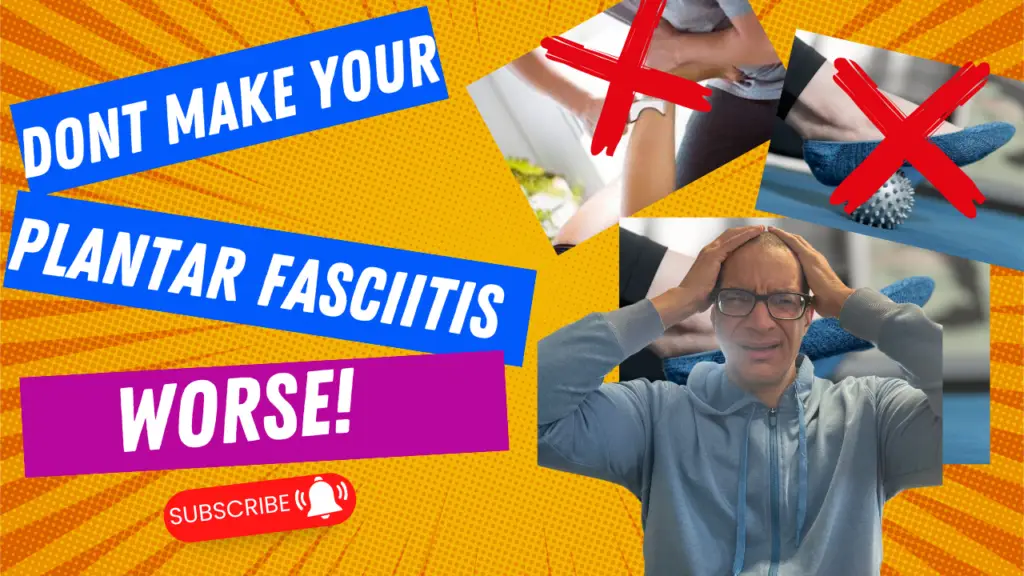
How To Overcome Plantar Fasciitis And Reclaim Your Mobility

rying to live your life with plantar fasciitis is no funโ€”especially when the treatments you find make things worse. Sound familiar?

Maybe you’ve searched for plantar fasciitis exercises or plantar fasciitis treatments, but instead of relief, you ended up in more pain. Thatโ€™s because most approaches only treat the symptom, not the cause.

I want to help you change that.

Click the image to watch the video

What Is Plantar Fasciitisโ€ฆ Really?

Letโ€™s keep it simple:
Plantar fasciitis is an inflammatory process in the fascia and soft tissue layers of your feet. These layers are supposed to slide and flow freely. When they stick together, inflammation buildsโ€”and pain follows, especially in the heel and bottom of the foot.

The worst part? You have to walk, so youโ€™re constantly irritating the area.


Why Most Treatments Fail

Letโ€™s get real: a lot of common plantar fasciitis treatments do more harm than good.

Hereโ€™s why:

  • Graston Technique:
    A metal tool that scrapes tissue like you’re removing paint. It crushes fascia tubes instead of helping them glide. Avoid it at all costs.
  • Rolling on a Ball or Foam Roller:
    Might feel good temporarily, but it only treats the symptom. It doesn’t restore flow or sliding.
  • Heat & STEM:
    Brings warmth, but doesnโ€™t address fascia mechanics. Mostly a waste of time.
  • Ice After 24 Hours:
    Stops the bodyโ€™s natural healing response. Good for initial injuries onlyโ€”not ongoing issues.
  • Generic Strengthening or Stretching:
    Without understanding fascia connections, these can be ineffectiveโ€”or make things worse.

The truth? The body isnโ€™t isolated partsโ€”itโ€™s a complex system. And plantar fasciitis is often just the tip of the iceberg.


The Fascia Chain: A Holistic Perspective

Your foot contains three fascial layers that should slide smoothly. But those layers connect up your bodyโ€”through your Achilles tendon, calf muscles (soleus and gastroc), hamstrings (especially biceps femoris), glutes, spine, and even arms.

When one area in that chain gets tight or dysfunctional, the whole system suffers. Thatโ€™s why simply focusing on the foot wonโ€™t fix the problem. You need to treat the cause, not the symptom.


The Right Way to Treat Plantar Fasciitis

At SolCore Fitness & Therapy, hereโ€™s how Iโ€™ve helped clients overcome plantar fasciitis:

1. Myofascial Stretching

Targeted stretches for:

  • Soleus and Gastroc (calf muscles)
  • Biceps Femoris (outer hamstring)
  • Glute Max, Latissimus Dorsi, and Transversospinalis
    These open up the entire chain and restore flowโ€”often bringing 50โ€“70% relief with just the first few exercises.

2. Manual Therapy

I release the three stuck layers of fascia in the foot by handโ€”no tools, no trauma. Then I work up the leg, releasing the connective fascia from the calves to the hips and beyond.

3. Customized Progression

Each body is different. Thatโ€™s why I donโ€™t offer cookie-cutter plans. Exercises must be taught and progressed based on your structure and specific needs.


What Gets in the Way of Healing?

Even with the right approach, some factors can slow your progress:

  • Walking Too Soon After Treatment:
    It disrupts flow and resets your gains.
  • Excess Weight:
    More load = more compression on the fascia.
  • Supportive Shoes (like Hokas):
    May ease pain short-term, but limit natural foot movement and long-term recovery.
  • Poor Movement Patterns or Posture:
    Dysfunction up the chain leads to recurring issues.
  • Lack of Muscle:
    You canโ€™t stretch a muscle that isnโ€™t there. Strength training matters tooโ€”done correctly.

Want to Move Without Pain Again?

If you’re struggling with plantar fasciitis and want a real, lasting solution, Iโ€™ve got options for you:


Plantar fasciitis doesnโ€™t have to be a lifelong sentence. When you work with your bodyโ€”not against itโ€”you can regain freedom, movement, and strength.

Like this? ๐Ÿ‘๐Ÿผ Share it. Subscribe. And keep showing up for yourself.

You got this.

Building a foundation for a better life.

Find out more @

Facebook

Bluesky

Pinterest

Instagram

Youtube

Why a Holistic Fitness Program Is the Real Solution

Solcore therapy and fitness

You canโ€™t expect the current system to take care of you.
The way most people approach fitness, health, and recovery simply doesnโ€™t lead to the results they expect.

Weโ€™ve been taught to:

  • Just โ€œget movingโ€ with random workouts
  • See a practitioner after something hurts
  • Rely on medical intervention when things get worse

But the biggest gap is right at the beginningโ€”what kind of movement you’re doing.

Not all activity is helpful. In fact, what you do in your workouts can either help your body adapt and healโ€”or create more imbalance and wear.

Most conventional fitness approaches ignore the cause of problems.
They wait until stiffness, pain, and postural breakdown show upโ€”and by then, itโ€™s harder (and slower) to fix.


Wear and Tear Happensโ€ฆ But You Can Choose What Happens Next

Every movement you do creates an effect.
Either youโ€™re adding more wear and tear or helping correct it.

Life itselfโ€”work, driving, sitting, sportsโ€”creates imbalance.
Over time, this shows up as:

  • Loss of mobility
  • Postural distortion
  • Chronic stiffness
  • A feeling that your body isnโ€™t keeping up

And stillโ€ฆ many people convince themselves that just being active means theyโ€™re getting better.
But if the foundation isnโ€™t right, theyโ€™re simply wearing down their body in a more organized way.


You Need a Targeted, Integrated Approach

If you had a financial crisis, you wouldnโ€™t just keep spending and hope things improve.
Youโ€™d face the cause, balance the budget, and change your habits.

Your body works the same way.

The longer you avoid addressing the root issuesโ€”weak posture, fascia imbalances, asymmetryโ€”the harder they become to correct.

But when you start a holistic fitness program, you can:

  • Restore posture, strength, and mobility
  • Support your long-term energy and vitality
  • Use osteopathic techniques to heal and stabilize
  • Prevent overuse injuries before they occur

Practitioners Should Support Youโ€”Not Rescue You

Imagine using therapy to support your workoutsโ€”not to fix damage caused by them.

When your training is intentional and integrated, you rarely need to rely on outside interventions.
You stay strong, adaptable, and clear in how your body works.

At SolCore Fitness, we guide clients through this shiftโ€”combining exercise, therapy, and fascia-based training into one personalized system.

Everything is designed to work together. No guesswork. No randomness.

Explore whatโ€™s possible when you commit to the full picture.
This guide to holistic fitness is a good place to start.


Letโ€™s Talk About Your Next Step

If this resonates with you, Iโ€™d love to talk with you more about what a holistic fitness program could look like for your body and your goals.

Use the consultation link below to find a time that works for you.

itโ€™s not just working out, itโ€™s building a foundation for a better life.

Find out more @

Facebook

BLuesky

Pinterest

Instagram

Youtube

Self-Love Promotes Physical Transformation โค๏ธ

When youโ€™re feeling good about yourself, chances are your healthy habits followโ€”and so does your appearance.

And hereโ€™s the best part: when youโ€™re consistent with your workouts and on point with your meals, your self-love and physical transformation reinforce each other. The more love you give your body, the stronger you feelโ€”and the better you look.

Self-Love Isnโ€™t Just Movementโ€”Itโ€™s Intention

Self-love in your workouts doesnโ€™t mean youโ€™re just staying active.
It means youโ€™re showing up for your body with care, focus, and commitment.

Youโ€™re not just movingโ€”youโ€™re giving your body what it specifically needs.

That means working on the difficult areasโ€”the ones that are:

  • Weak
  • Tight
  • Turned off
  • Lacking mobility

Whether you’re using segmental strengthening to activate weak muscles or myofascial stretching to release deep restrictions, youโ€™re creating transformation from the inside out.

When You Give, Your Body Gives Back

When you love your body enough to meet its unique needs, it rewards you.
You can keep up with the activities that bring joy and fulfillmentโ€”whether thatโ€™s dancing, hiking, lifting, or simply feeling great moving through life.

How awesome is that?

Itโ€™s a never-ending circle:

  • Self-love leads to action
  • Action leads to transformation
  • Transformation builds confidence and more self-love

Inside-Out Change Is Real

Have you felt it yet?

That incredible feeling when you do the workโ€”emotionally and physicallyโ€”and your body responds.

You feel better. You look better.
And you want to keep going.

And if you havenโ€™t experienced this yet, trust me: you will.
With a program thatโ€™s specific, supportive, and designed for real-life needsโ€”like we offer in our personal training and therapyโ€”youโ€™ll build habits that sustain your progress and deepen your connection to your body.


If youโ€™d like help discovering what your body needs, reach out anytime.
This journey is yoursโ€”and Iโ€™m here to support it.

itโ€™s not just working out, itโ€™s building a foundation for a better life.

Find out more @

Facebook

Bluesky

Pinterest

Instagram

Youtube

Back Mobility: Why Stretching Alone Isnโ€™t the Answer

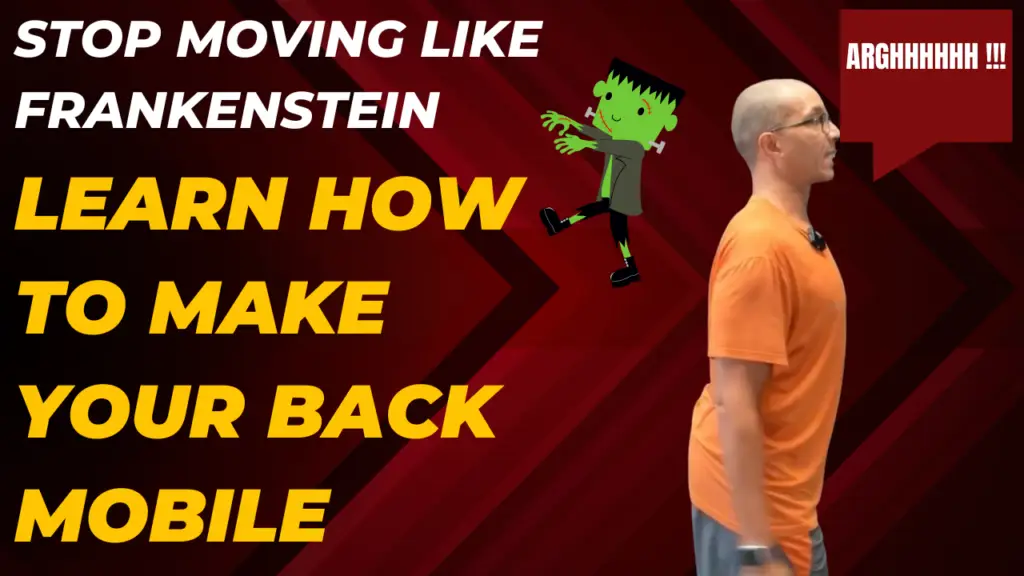
Click on the image to watch

If your back feels stiff and stuckโ€”and you’re tired of moving like Frankensteinโ€”itโ€™s time to look at back mobility from a deeper perspective.

Most routines you see online might feel good temporarily, but they donโ€™t address the root cause.
And in many cases, they can actually make things worse.

Hereโ€™s why.


What Is Mobility, Really?

Mobility is the ability of your joints and tissues to move freely in all the directions they were designed to move.

Itโ€™s not the same as flexibility.
You can be flexible (like touching your toes) without having true mobility (like moving smoothly under load or rotation).

Mobility is functional.
It helps your body perform well, stay pain-free, and move with strength.

But it requires more than a few stretches.
You need structure. You need muscle. And you need balance.


The Anatomy of Real Back Mobility

Your back isnโ€™t just one unit.
Itโ€™s a coordinated system of:

  • Four spinal curves (sacral, lumbar, thoracic, cervical)
  • Deep and superficial core muscles
  • Fascia, joints, and connective tissues

If you lose the natural curves in your spineโ€”say your lumbar spine flattensโ€”you lose structural integrity.
Your spine becomes weaker, more fragile, and less mobile.

Mobility isnโ€™t about forcing range.
Itโ€™s about having the right alignment and the right strength to support movement.

At SolCore Fitness, we rebuild that foundation with a fascia-first lensโ€”using tools like segmental strengthening and osteopathic training principles.


Why Routines Alone Donโ€™t Work

Most YouTube videos show the same spinal twists and cobra stretches.
They feel goodโ€”for a moment.

But twisting a compressed spine can make things worse.

Thatโ€™s because twisting compresses the discs between vertebrae. If your spine lacks space or alignment, youโ€™re grinding into vulnerable tissue every time you rotate.

Over time, this leads to:

  • Herniated discs
  • Nerve impingement
  • Chronic tension and compensation

Before you stretch or twist, your spine needs:

  1. Proper space and alignment
  2. Muscular balance and activation
  3. Awareness of how your body compensates

The Real Process for Unlocking Back Mobility

If you want lasting mobility, follow this sequence:

1. Rebuild Spinal Curves and Space

Mobility requires decompression. Without space between vertebrae, movement will always be restricted.
We use ELDOA, myofascial techniques, and postural re-education to reintroduce this space.

2. Strengthen in All Directions

Your core isnโ€™t just abs. It includes obliques, transverse abdominis, spinal stabilizers, and many supporting muscles.

You need to strengthen in rotation, side-bend, extension, and flexionโ€”not just planks.
Back and front must work together, not in isolation.

This approach is central to our personalized therapy and training plans.

3. Move with Intention

Only after steps 1 and 2 can you begin applying movement patterns that support your mobility.
Even then, it’s not about routinesโ€”itโ€™s about selecting movements that fit your bodyโ€™s needs and structural state.

Thatโ€™s why we donโ€™t give cookie-cutter programs.
Youโ€™re not a cake. Your body isnโ€™t built from a recipe.


You Need a System, Not a Shortcut

Youโ€™ve probably tried a few of those โ€œ10-minute mobility fixes.โ€
Maybe they felt goodโ€ฆ until they didnโ€™t.

True mobility is sustainable. It works with your bodyโ€”not against it.
And it honors the complexity of your spine, fascia, and nervous system.

Want to learn what a real back mobility program looks like?

Start with our free holistic fitness guide, or book a consult and weโ€™ll walk through whatโ€™s keeping you stuck and what needs to change.


You’re not meant to live in restriction.

With the right strategy, your back can feel strong, mobile, and freeโ€”so you can move the way life intended.

itโ€™s not just working out, itโ€™s building a foundation for a better life.

Find out more @
Facebook

Twitter

Pinterest

Instagram

Youtube

Own Your Power๐Ÿ’ช๐Ÿฝ

Solcore Fitness therapy and training

Pop quiz, hot shot!
Thereโ€™s just one question:

Whoโ€™s in charge of your life?

If you answered, โ€œI am,โ€ then congratulationsโ€”youโ€™re right.
You are the only person ultimately responsible for your outcomesโ€”good or bad, healthy or not, fulfilled or frustrated.

The power to create the life you want is within YOU. Thatโ€™s personal empowermentโ€”and it lives alongside the concept of responsibility.

I bring this up because I often hear from people who feel powerless.

โŒ They feel like something is happening to them
โŒ They shrink into little boxes, assuming this is โ€œjust how things areโ€
โŒ They want someone else to fix things without owning their part

So letโ€™s flip that script.


You Hold the Reins

Understanding that everything is your responsibility is the key to moving forward.
Yesโ€”even the hard stuff. Maybe it wasnโ€™t your fault. But itโ€™s still your opportunity to rise and reclaim direction.

The best part? You also get to take credit for all the good thatโ€™s come from your choices.

Letโ€™s build on that.


โœ… Harness the Strength of Your Past

Everything youโ€™ve survived, achieved, and endured is your fuel.
Your past challenges make you strongerโ€”and your past wins remind you what you’re capable of.


โœ… Set SMART Goals

Donโ€™t just aim. Aim well.
Specific. Measurable. Achievable. Relevant. Time-bound.
Track your progress. Adapt as needed. Celebrate small wins.


โœ… Boldly Declare Your Path

Stop mumbling your dreams.
Speak them. Share them.
Thatโ€™s personal empowerment in action.


โœ… Build a Supportive Network

Power doesnโ€™t mean doing it all alone.
Ask for help when needed. Offer support in return. Surround yourself with people who uplift and challenge you.

This is also what we build in our personal training and therapy programsโ€”a network that matches your ambition.


โœ… Take Care of Yourselfโ€”Fully

Body. Mind. Spirit.
Movement. Food. Sleep. Breath.
Emotions. Boundaries. Curiosity. Compassion.

At SolCore, we see all of these as training variablesโ€”and we tie them together using osteopathic techniques and fascia-first programming, outlined in our Holistic Fitness Guide.


This path isnโ€™t always easy.
But power builds on itself.

Every step you take reinforces the next.
Every choice becomes momentum.
And every moment is a chance to own your powerโ€”fully.

Itโ€™s always been in you.
Nowโ€™s the time to act on it.

itโ€™s not just working out, itโ€™s building a foundation for a better life.

Find out more @

Facebook

Bluesky

Pinterest

Instagram

Youtube

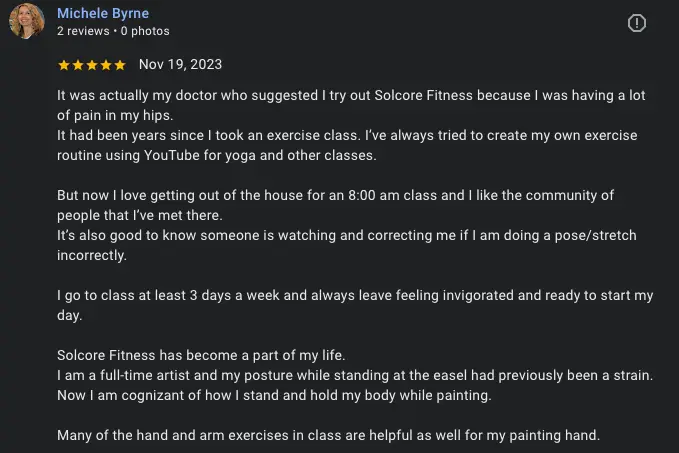
Michele Byrne SolCore testimonial

Michele Byrne SolCore testimonial

Real Progress from Real Commitment: Michele Byrneโ€™s SolCore Story

When Michele Byrne first came to SolCore Fitness & Therapy, she wasnโ€™t sure what to expect. Like many people, she was used to exercising at home โ€” yoga classes on YouTube, quick stretches, and the occasional bike ride. But after her doctor recommended something more targeted to help with her hip tightness and posture challenges, she gave SolCore a try.

And it stuck.

โ€œI just knew right away this would be good for me,โ€ Michele shared.
โ€œItโ€™s not far from my house, and I had no excuse not to come!โ€

Michele is an artist whoโ€™s spent over 30 years working solo. Just getting out of the house and into a structured environment was a shift โ€” but the results spoke for themselves. She noticed the difference not just during classes, but in the way she moved throughout her day.

From struggling to sit upright with her legs outstretched, to now practicing the 90/90 and figure-four stretches every morning, Micheleโ€™s transformation came from consistency, awareness, and dedication.

โ€œSome of the stretches are really difficult,โ€ she said.
โ€œBut I feel so much better after class. Iโ€™m more aware of my posture all day โ€” and I can tell Iโ€™m getting better.โ€

She had tried physical therapy before, but it wasnโ€™t until she combined specific fascia-based training with a supportive class environment that things really started to click.

Now, she comes to class regularly โ€” Monday, Wednesday, Friday, and sometimes Saturday โ€” and even finds herself practicing at home.
Thatโ€™s a big deal.

Micheleโ€™s story is about more than flexibility. Itโ€™s about reconnecting with your body and giving it what it needs to function better โ€” through smart training, community, and expert guidance.


๐Ÿ“Ready to Hear More?

If Micheleโ€™s experience resonates with you and youโ€™re curious about what this kind of training could do for you, check out her full case study:

๐Ÿ‘‰๐Ÿฝ Watch Micheleโ€™s full story here

โœ… Then download her case study here.

Building a foundation for a better life.

Find out more @

Facebook

Bluesky

Pinterest

Instagram

Youtube

Linkedin

Posture Corrector Brace: Will It Actually Fix Your Posture?

Posture Corrector Brace: Will It Actually Fix Your Posture? Discussing if it works and holistic exercise alternatives for it.

Click on the image to watch

We love gadgets here in the U.S. โ€” especially ones that promise fast results.

The posture corrector brace is one of them. It straps over your shoulders and pulls them back, claiming to fix forward head posture and kyphosis.

But does it work?
Or is it just another overpromised shortcut?

Letโ€™s break it down โ€” scientifically and holistically.


What Is a Posture Corrector Brace Supposed to Do?

The posture brace is designed to pull your shoulders back, which is meant to correct rounded posture. The idea is simple: if your shoulders are more upright, your head and spine will follow.

But posture isnโ€™t simple.

Forward head posture and kyphosis (over-rounded upper back) are complex conditions with deep structural, muscular, and neurological components. A strap wonโ€™t solve that โ€” not by itself.


The Problem With “Just Pulling Back”

Thereโ€™s a concept called the Law of 22 Degrees. Once your head shifts 22ยฐ forward relative to your shoulders, it changes the mechanics of your cervical spine. You donโ€™t just bend forward โ€” you slide forward โ€” and over time, that becomes permanent.

Thatโ€™s why you see older people stuck in that hunched-forward posture. Theyโ€™ve crossed the threshold. The brace doesnโ€™t reverse that.

And kyphosis?
That doesnโ€™t start at the shoulders. It starts in the spine, involves the ribs, and pushes the shoulder blades outward and forward. That dominoes into tight pecs, weak rhomboids, overloaded lats, dysfunctional breathing, and nervous system strain.


Why Posture Braces Don’t Fix the Real Issue

A brace might remind you to stand up straight โ€” but it doesnโ€™t retrain your body. And thatโ€™s the problem.

Real posture correction requires:

  • Opening and hydrating joints (especially the spine)
  • Strengthening the right muscles in the right biomechanical positions
  • Reprogramming your brainโ€™s โ€œpostural mapโ€ (a.k.a. motor engrams)
  • Restoring space in the rib cage and fascia
  • Training your feet, not just your upper body

None of that happens by pulling two straps.


What You Should Focus on Instead

Want better posture? Hereโ€™s what works โ€” and why.

๐Ÿ’ง Start with Tissue Health

Hydrate your fascia. Sleep well. If your tissue is dry or inflamed, exercise will just create more dysfunction.

๐Ÿง  Retrain Your Brain

You donโ€™t need to โ€œthink about postureโ€ all day. You need to educate your nervous system to hold better posture automatically.

That means:

  • ELDOA exercises for joint-specific spine awareness
  • Strengthening your rhomboids with your arms overhead
  • Training the levator scapulae to pull your head back
  • Stretching the pec minor, lats, and delts to open space
  • Re-aligning your gravity line: ear โ†’ shoulder โ†’ hip โ†’ knee โ†’ ankle

Most people think theyโ€™re standing straightโ€ฆ and theyโ€™re not. Thatโ€™s because the brainโ€™s postural map is distorted. But itโ€™s fixable โ€” if you train it intentionally.

๐Ÿฆถ Donโ€™t Forget the Feet

Your feet send constant feedback to your brain about balance. If you donโ€™t train them, your posture wonโ€™t hold โ€” no matter what you do up top.

๐Ÿซ Free the Ribcage

Tight ribs lock your thoracic spine. That limits shoulder mobility and forces your neck forward. You need mobility in your costovertebral and sternocostal joints to breathe and move correctly.


Soโ€ฆ Is a Posture Corrector Brace Worth It?

Short answer: No.

Even if it helps you remember to pull your shoulders back, it creates a false sense of progress. It bypasses the actual work โ€” which means your dysfunction continues to build underneath.

And the longer you stay in that dysfunction, the harder it is to reverse.

The body adapts. If you keep pushing it into artificial alignment without education or support, youโ€™re not solving anything. In fact, you might make it worse.


Train Your Body the Right Way

I get it. Gadgets are easy. Real training takes effort.

But your body is beautiful, adaptable, and designed to move well โ€” if you give it the right input.

If youโ€™re ready to do that โ€” we can help.


Your Next Steps

Youโ€™ve got options, depending on what works best for you:

โœ… Download the Free eBook:
โ€œGet Out of Pain, Get Mobile & Get to the Life You Wantโ€
Includes 4 core steps you can start right now. Instant download.

โœ… Schedule a Call with Me:
If youโ€™re ready to stop guessing and start training the right way, letโ€™s talk. Weโ€™ll map out where youโ€™re stuck, where you want to go, and Iโ€™ll show you whatโ€™s possible with a real, fascia-based approach.


Thanks for reading โ€” and for caring about your body.
If this helped, share it with someone who needs it.
And if youโ€™re still thinking about that brace… maybe leave it in the drawer. ๐Ÿ˜‰

Building a foundation for a better life.

Find out more @
Facebook

Bluesky

Pinterest

Instagram

Youtube

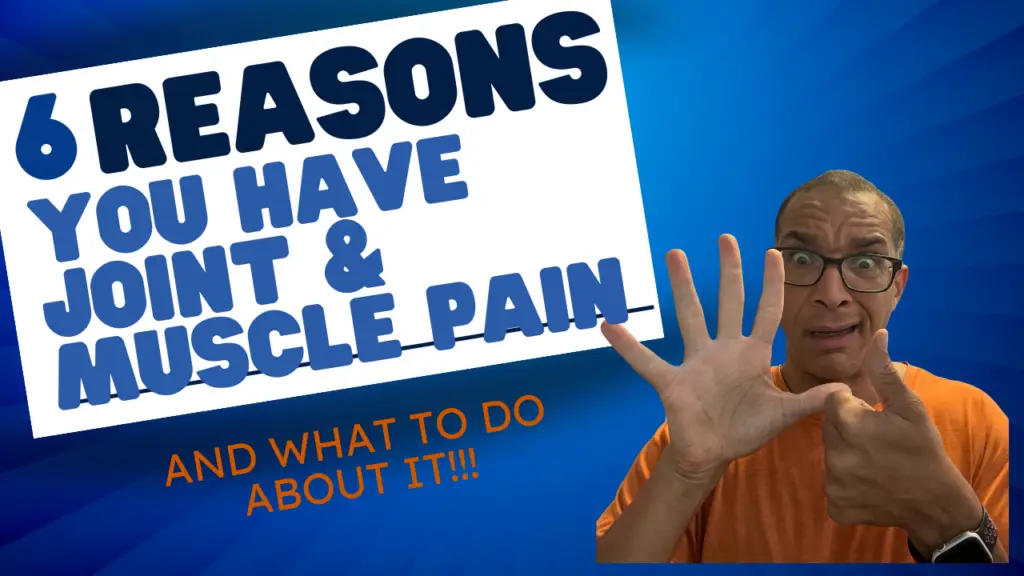
Joint and Muscle Pain in Active People: Real Solutions

Youโ€™re active. You want to stay active. But joint and muscle pain in active people is incredibly common โ€” and frustrating. Especially when youโ€™ve already tried everything: chiropractic care, acupuncture, foam rolling, ART, myofascial releaseโ€ฆ

And the pain keeps coming back.

Before you chalk it up to โ€œgetting olderโ€ or โ€œthis is just my body now,โ€ thereโ€™s one more thing you should try: a root-cause approach that looks at your body as a whole โ€” not just the parts that hurt.

In this post, weโ€™ll break down:

  • The real reasons active people get joint and muscle pain (even when doing all the โ€œrightโ€ things)
  • Why most treatments donโ€™t stick โ€” and what your body actually needs
  • What a holistic model looks like โ€” and how to assess yourself

Letโ€™s dig in.

joint and muscle pain in active people

Why Most Treatments Donโ€™t Last

Many people take a linear approach to pain relief. They chase the spot that hurts: knee, shoulder, low back. They get short-term fixes like adjustments, massage, or quick workouts. But they never look at the full picture.

Pain is often a symptom, not the actual problem.

Common band-aids include:

  • Manual therapies that release tension temporarily
  • Strengthening programs that ignore imbalance
  • Stretches that feel good but donโ€™t fix anything long-term

Unless you find and correct the primary root cause, your body will keep compensating. And thatโ€™s why the pain comes back.

6 Common Causes of Joint and Muscle Pain in Active People

  1. Overuse Without Balance
    Doing more isnโ€™t always better. Repetitive activity like walking, running, or gardening without balancing out your body leads to breakdown. Your body wants homeostasis โ€” but if you donโ€™t restore symmetry, it starts to hurt.
  2. Unresolved Minor Injuries
    That old ankle roll or back tweak you โ€œwalked offโ€? If it wasnโ€™t re-trained, your body adapted around it. This creates dysfunction and strain elsewhere.
  3. Poor Movement Patterns
    Bad form โ€” even in something as simple as squats or sit-ups โ€” leads to chronic tension and pain. More importantly, your deep stabilizing muscles may be shut off or undertrained, which causes poor control and alignment.
  4. Doing Too Much Too Soon
    Jumping from low activity to high-intensity training (CrossFit, extreme yoga, etc.) without proper progression overwhelms the body. Itโ€™s not about the activity โ€” itโ€™s about whether your body is ready.
  5. Dehydration and Stress
    Lack of hydration makes fascia stiff like beef jerky, not supple tissue. Chronic stress keeps you in fight-or-flight mode, locking your muscles and nervous system in a painful loop.
  6. Poor Posture and Body Positioning
    Plumb line off? Gravity line disrupted? SI joint unstable? These are red flags. If your base (pelvis and spine) isnโ€™t in balance, no amount of therapy or exercise will stick.

How to Identify the Real Root Cause

If you want relief that lasts, you must address the primary lesion โ€” the root issue thatโ€™s throwing everything else off.

Hereโ€™s how to start assessing it yourself:

  • Posture Check: Take a photo from the side. Are your ear, shoulder, hip, knee, and ankle aligned?
  • Movement Observation: Have someone watch you squat, walk, or perform other activities. You may feel โ€œnormal,โ€ but your brain often normalizes dysfunction.
  • Activity Review: What do you do most often? What areas of your body are doing the most work? Those overused chains are often the source.

Once you identify a likely root cause, focus on normalizing that area โ€” restoring mobility, strength, awareness, and function. If you choose correctly, many secondary issues will resolve more easily.

Why a Holistic Model Works

The most effective way to resolve joint and muscle pain in active people is to use a holistic model that integrates:

  • Movement assessments (not just static posture)
  • Manual therapy to address fascia, joint alignment, and soft tissue
  • Corrective exercise to restore deep stabilization and proper motor control
  • Lifestyle shifts including hydration, mindfulness, and nervous system regulation

This is how we work at SolCore Fitness & Therapy. We donโ€™t separate the body into disconnected pieces โ€” we work with the whole person.

When we understand your history, how you move, how youโ€™ve adapted, and whatโ€™s missing, we can finally address the real issue โ€” not just the symptoms.

Next Steps

You deserve to move, live, and train without nagging pain.

Hereโ€™s how to take action:

All the links are in the description. Pick what fits โ€” or try all three.

Building a foundation for a better life.

Find out more @

Facebook

Pinterest

Instagram

Youtube